EN — English
 TR — Türkçe
 DE — Deutsch
 RU — Русский
 FR — Français
 ES — Español
 AR — العربية
 SR — Српски

Iraq River Gravel Washing, Crushing and Screening Plant 100-200 TPH
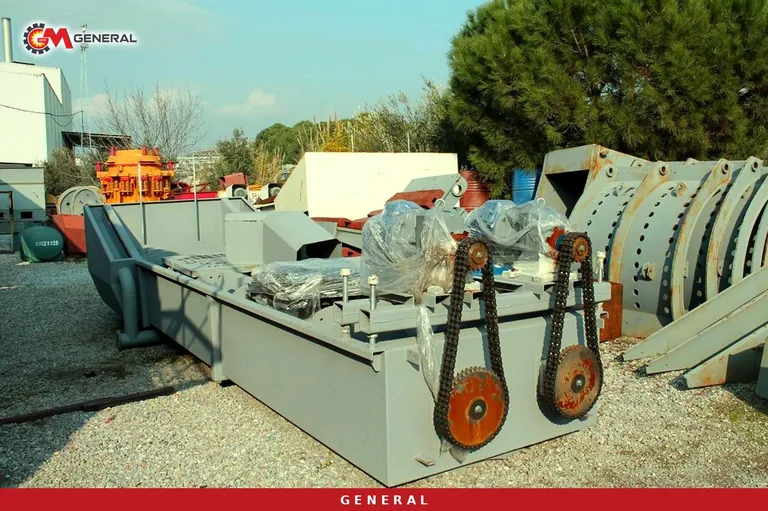
Ready-mix and precast producers in Iraq draw most of their aggregate from the gravel and sand laid down by the Tigris and the Euphrates. Dug from terraces and old channels, this material is abundant, easy to excavate and usually rich in hard quartz and chert. Fed straight from the pit to a batching plant, however, it causes three problems: clay and silt stuck to the particles, rounded stones that bond poorly in concrete, and in some areas gypsum and salt residues. This article explains, using the published figures of General Makina models, in which order an Iraqi pit should arrange washing, crushing and screening to deliver 100-200 TPH of clean concrete aggregate.
Reading Tigris and Euphrates gravel: what comes out of the pit?
Unlike blasted quarry rock, river gravel arrives in a very wide size range: a single bucket holds everything from dusty sand to rounded cobbles of 150-200 mm. The first design input is therefore not the rock type but the grading curve and the clay load. Those two results tell you how much of the material can be washed and sold without crushing and how much must go through a crusher.
Rounded particles and the crushed-face requirement
River stone is smooth and round. It gives workable fresh concrete, but in high-strength mixes and asphalt it grips the binder poorly, so many specifications ask for a share of crushed-face particles in the coarse aggregate. Passing the oversize through a jaw crusher and then a cone crusher meets that requirement and turns the hard-to-sell coarse fraction into valuable chippings. Confirm the required crushed-face ratio and grading limits in the specification of the relevant authority.
Clay lumps, gypsum and salt
In terrace deposits clay occurs as dust and also as hardened lumps that survive a dry screen and end up in the product as weak spots. Alluvium in parts of the Mesopotamian plain can also contain gypsum and salt; sulphate and chloride bring a risk of rebar corrosion and cement incompatibility. Washing removes most water-soluble salt, but if the sulphate sits inside the particle itself, washing alone is not enough. Do not finalise a machine list before the sample has been tested for Sand Equivalent (SE), Methylene Blue (MBV), sulphate and chloride.
Wash first or crush first? The rule that sets the flow
With river gravel the flow follows the clay load and the share of oversize. Light clay: crush first, then clean and size on a wash screen. Sticky, lumpy clay: heavy washing before the crusher, otherwise mud smeared between jaw and cone liners cuts capacity. Little oversize: keep the crushing stage small and put the investment into washing.
- Grizzly pre-separation: fines drop through the bars straight to washing; only oversize enters the crusher.
- Primary jaw crushing: breaks the rounded cobbles and creates the first crushed faces.
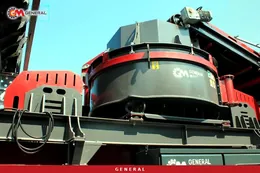
- Secondary cone crushing: works by compression rather than impact, so liner wear stays low on siliceous gravel.
- Wet screening: spray bars strip the clay and split the material into groups such as 0-5, 5-20 and 20-60 mm.
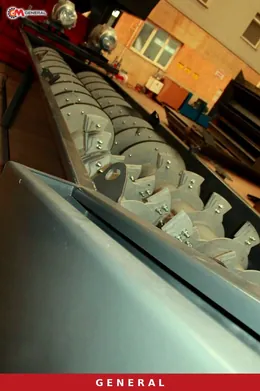
- Sand recovery by screw washer: fine sand is scrubbed, silty water overflows, clean sand goes to stock.
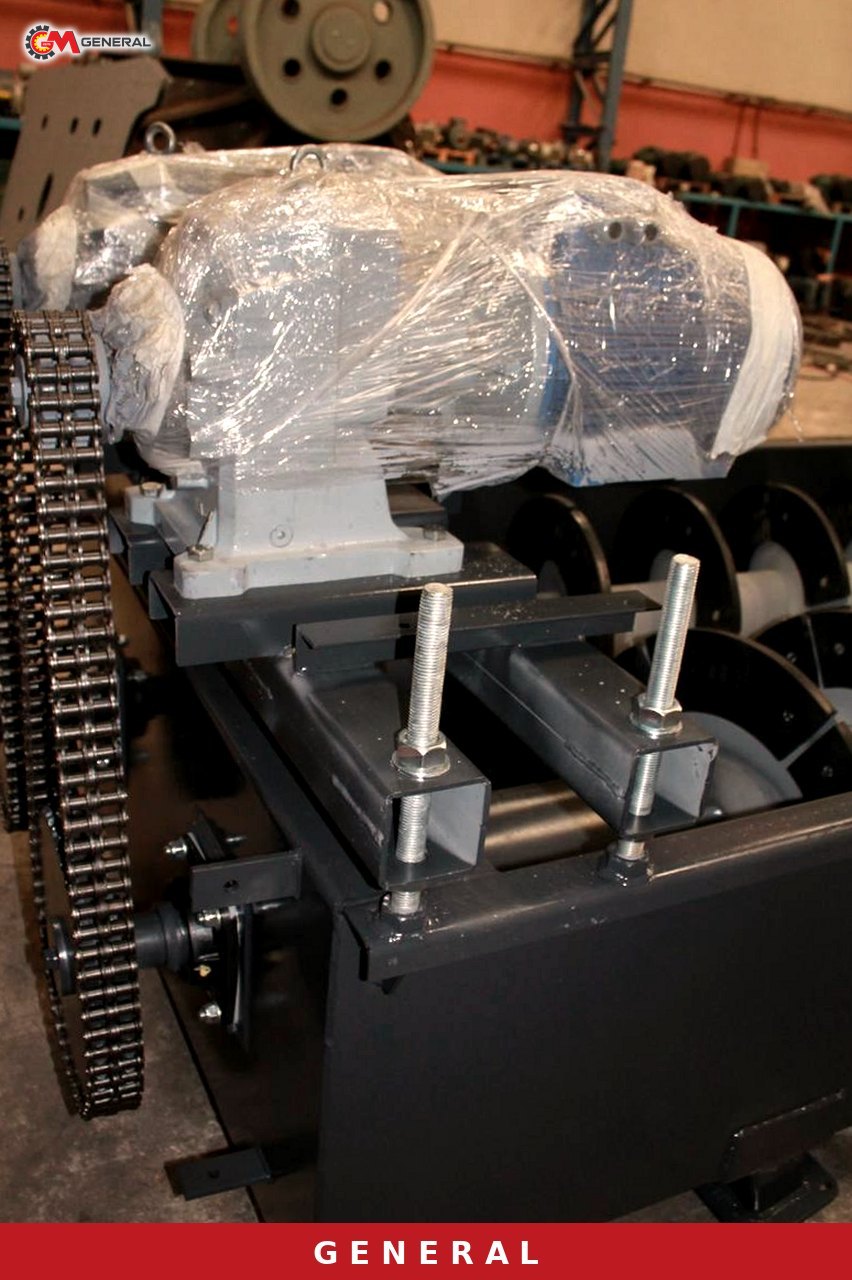
Three real configurations for 100-200 TPH
The table sets side by side the three layouts most often discussed for Iraqi gravel pits. Every figure is a published value of the named General Makina model; unpublished cells are left blank.
| Layout | Main machines | Capacity | Feed | Power / weight |
|---|---|---|---|---|
| A. Single chassis | Mobil 90: GPJ 90 jaw, 1600×5000 mm 3/4-deck wash screen, 600×6000 mm twin screw washer | 90-150 t/h | 800 mm | 350 kVA generator, 45,000 kg |
| B. Two units | Mobil 90 + GNR YM1650 washing-screening plant (sand hopper, wash screen, screw washer) | 90-150 t/h + 120-180 t/h | 800 mm / 0-100 mm | 350 kVA + grid or generator; 45,000 kg + 21,000 kg |
| C. Fixed line | GNR 90 grizzly feeder, GNRK 90 jaw, cone crusher, GNR 2050 screen, twin GNR 800 screw washer | Feeder 140~210 t/h, GNRK 90 60–225 t/h | GNRK 90 mouth 900×650 mm | GNRK 90 75/90 kW, screen 18.5 kW, screw 2×11 kW; cone, |
A. Mobil 90: crushing, washing and screening on one chassis
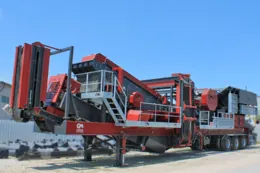
Mobil 90 carries a GPJ 90 primary jaw, a wash screen and a twin screw washer on a three-axle wheeled chassis. At 90-150 t/h it covers the lower and middle part of the target range and delivers 0-5 / 5-20 / 20-60 mm products. It suits operators who move along the terraces every few years. If the crushed-face share falls short, a cone or impact secondary can be added in front; on siliceous Iraqi gravel the cone is the better choice.
B. Separating the crushing line from the sand line
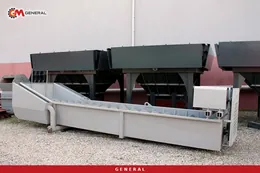
When the grading shows most of the material below 100 mm, it makes sense to wash that part without crushing on the GNR YM1650 the top model of our mobile washing and screening plants. YM1650 handles 120-180 t/h with 0-100 mm feed, while the oversize goes to Mobil 90. The crusher then sees only stone that really needs crushing, and the 200 TPH upper limit is reached by the two units together. The split is set by the sample's grading curve.
C. A fixed line for a long-life reserve
Where the reserve will last many years and the grid is close, a fixed line offers more screen decks and a wider product range. The GNR 90 grizzly feeder supplies 140~210 t/h, the GNRK 90 jaw takes the oversize through its 900×650 mm mouth and the cone crusher raises the crushed-face share. The cone's model table is issued per project, so its cell stays blank. On the sand side runs a twin GNR 800 screw washer, 800×8000 mm, 2×11 kW.
Water circuit: settling ponds, screw washer and sand recovery
Even a plant on the riverbank cannot use water without limit; flow drops in summer and abstraction needs a permit. Confirm intake conditions and discharge rules with the relevant authority. The design goal is to clarify wash water in settling ponds and return it to the circuit.
Discharge moisture of a screw washer is typically 15-30%. If sand goes straight to stock and trucks, a hydrocyclone and a dewatering screen are added and moisture falls to 8-20%. The hydrocyclone recovers fine sand in the 45-150 µm range from the silty water; that fine fraction matters for concrete workability, and if it escapes to the pond you lose product and the pond fills faster. According to the manufacturer data, the screw washer needs on the order of 190 L/min of water per t/h of silt; have the water budget calculated with this factor and your own silt content.
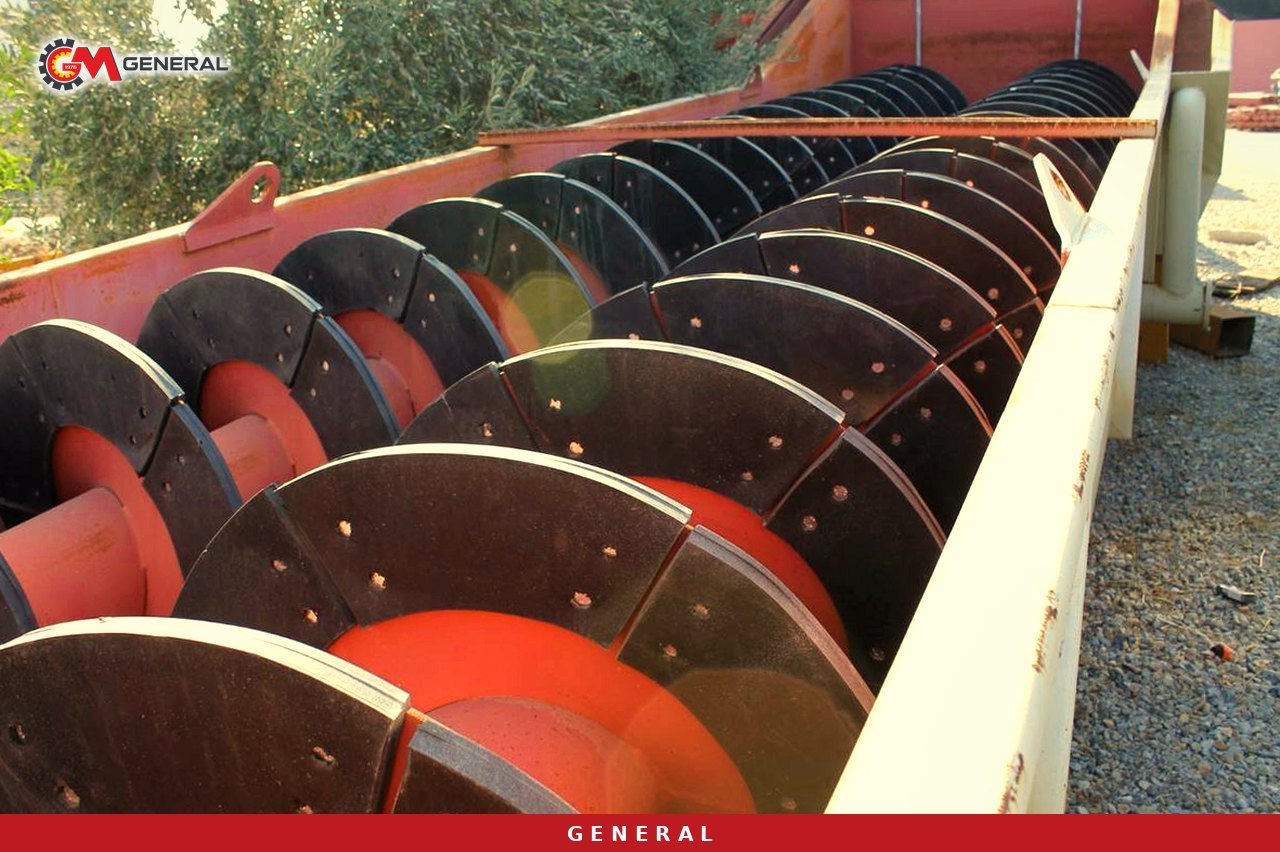
If the clay lumps are hard, a screw washer will not cope. That is the job of the log washer among our sand and log washing machines: it accepts 0-200 mm stone, runs at 50-250 t/h and breaks clay with two counter-rotating shafts fitted with manganese paddles. Its installation angle is adjustable between 0-14°; the angle is raised as clay increases to extend retention time.
Preparing for a hot, dusty site and long haulage
In central and southern Iraq summer heat and fine dust stress the crushing side more than the washing side. On a wet line the screen and screw washer run wet, so dust comes mainly from the dry feed hopper, the crusher discharge and belt transfer points. Water-spray dust suppression and belt covers can be added there as project options.
- Plan shade, generous airflow and frequent air-filter changes for the Mobil 90's 350 kVA generator.
- Place the control panel on the side away from direct sun; discuss panel cooling at the order stage.
- Mobil 90 transport size is 3600×15700×4500 mm and it weighs 45,000 kg; check bridges and road permits on the route in advance.
- Position washed-sand stockpiles with the wind direction in mind; a drying surface creates dust again.
- Plan a stock of jaw plates and screw washer segments with the first order.
The sample file to prepare before requesting a quote
A correct machine list starts with site data. Add the following to your enquiry and the configuration settles in the first round:
- Pit-run grading (several samples across 0-200 mm)
- SE and MBV results, sulphate and chloride tests
- Target products such as concrete sand, 5-20 mm, 20-40 mm, and daily operating hours
- Distance to the grid or generator preference
- Water source, pond area and discharge limits
- How many years the pit will stay in one place
For a detailed comparison of crusher choices for river material, see our guide on river-bed aggregate production.
Frequently asked questions
Can river gravel become concrete aggregate by washing alone?
Fine and medium fractions often become concrete sand and fine chippings through washing alone. The coarse fraction is usually crushed, both because it is hard to sell and because specifications demand crushed faces. The grading analysis sets the ratio.
Can an impact crusher be used on siliceous gravel?
It can, but with a high share of quartz and chert the blow bars wear quickly. A jaw and cone pair working by compression keeps wear-part cost low; if manufactured sand is needed, a VSI is considered as the last stage.
Mobile or fixed?
If the pit advances along the terraces or the operating permit is short, Mobil 90 or the Mobil 90 + YM1650 pair keeps relocation easy. With a long reserve and grid nearby, a fixed line gives more product sizes.
What determines the plant price?
The layout (single chassis, two units or fixed line), extras such as hydrocyclone and dewatering screen, the need for a generator or a log washer, and the transport method. A project-specific quote is prepared from your sample data.
Conclusion
Producing specification-grade concrete aggregate from Tigris and Euphrates gravel means reading clay load, oversize share and water availability together. For 100-200 TPH the options are Mobil 90 on one chassis, Mobil 90 + YM1650 for sand-rich material, or a fixed jaw-cone line with screw washers for a long-life pit. General Makina, manufacturing in Izmir since 1976, combines crushing, washing and screening in one project with CE and ISO 9001 certified machines. Send your sample results through our contact page and we will work out the right configuration for your pit together.
Definitions of technical terms: Glossary