EN — English
 TR — Türkçe
 DE — Deutsch
 RU — Русский
 FR — Français
 ES — Español
 AR — العربية
 SR — Српски

Gulf Countries Gabbro Aggregate Crushing Plant Guide 250-500 TPH
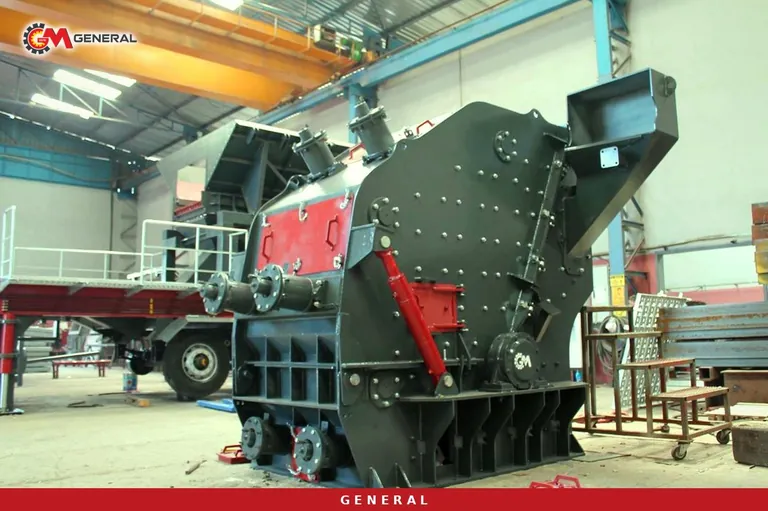
Along the belt that runs from Oman's Hajar Mountains to the Fujairah and Ras Al Khaimah slopes of the United Arab Emirates, gabbro is one of the hard aggregate sources Gulf concrete and asphalt producers ask for most. Several coastal states on the peninsula have few hard-rock quarries of their own, so a large share of this stone moves to neighbouring markets through ports. If you are planning a line that processes 250 to 500 tons of gabbro per hour, settle one question before you open any machine list: will your product go to your own sites, or to a buyer whose specification defines particle shape and grading?
This guide is written for the investor who answers "yes" to the second question. It sizes the line backwards from saleable product, shows which real model works in which range at each stage and gives the shaping stage its own section. Capacity, feed opening and motor values in the table come from our product pages. Results specific to your quarry only come from sample testing; please confirm permits, tender terms and environmental conditions with the authority of the country concerned and the project specification.
Gabbro for a specification buyer: shape comes before tonnage
Gabbro is a dark, coarse-grained plutonic rock made mostly of plagioclase and pyroxene. In most quarries its free quartz content is lower than granite's, yet the rock is tough and dense. Read the two properties together: low quartz can keep wear-part consumption reasonable, while toughness raises breaking energy and makes block behaviour at the primary mouth harder to manage.
Ready-mix and asphalt buyers in the Gulf judge aggregate not by size alone but by flakiness and elongation index, cleanliness of fines and continuity of grading. Compression crushers, especially at a wide setting, can raise the share of flaky particles in tough rock. On a 250-500 TPH gabbro line, deciding at which stage and with which machine you solve the shape problem matters as much as the tonnage calculation.
In the ophiolite belt of Oman and the Emirates, gabbro can occur interleaved with dolerite dykes, peridotite and weathered zones. Rather than deciding on one sample, have samples from different benches tested for free silica, Bond abrasion index (Ai), compressive strength and Los Angeles abrasion. These four values drive every choice below.
250 or 500: sizing the line backwards from saleable product
The capacity target is often confused with the figure on the primary crusher's plate. The correct route is to start from the fractions you want to sell and work backwards. The real load on each crusher is: crusher load = fresh feed + oversize returned from the screen. A hypothetical example: if 250 tons of fresh gabbro per hour enter the primary and 80 tons of oversize return from the screen to the secondary, the secondary and shaping stage must be chosen to carry a 330 t/h load. The return rate changes with the setting and the target product distribution; the exact value comes from sample testing and the screen balance.
Lower band: 250-300 TPH
In this band the line can start with a single jaw crusher. Within the GNRK series jaw crushers the GNRK 110 covers the whole band with a 1100×850 mm opening, a 110/132 kW motor and 200-350 t/h capacity. A GNR 110 vibrating feeder (1100×4750 mm, 200~300 t/h, 2x7.5 kW) works ahead of it. The largest block a jaw crusher accepts is about 0.8-0.9 of the opening width; if blasting is not designed to that limit, the mouth bridges and feed interruptions begin.
Upper band: 400-500 TPH
The upper band has two options. The GNRK 130 (1300×1000 mm, 160 kW, 400-500 t/h) meets the target on its own; the GNRK 140 (1400×1100 mm, 200 kW, 500-600 t/h) leaves headroom above the target and copes more easily with large blocks. A GNR 140 feeder (1400×5000 mm, 350~600 t/h, 2x9.2 kW) suits a primary of this size. On all our feeder models the maximum feed size is 1500 mm and hopper volume ranges from 15 to 100 m³.
The first two stages by compression: jaw and cone
The threshold stated on our jaw crusher page is to turn to compression crushing when free silica exceeds 10% or Ai exceeds 0.15. Even if gabbro stays below that threshold, its toughness makes compression the more predictable choice for part life at the primary and secondary stages. A jaw crusher's typical reduction ratio is 4:1-9:1; jaw plates are made of work-hardening austenitic manganese steel (Mn13/Mn18), with Mn18/Mn22 preferred at high silica.
The General cone crusher takes over at the second stage. It reduces 6:1-8:1 in secondary duty and about 10:1 in tertiary duty; feed size is 50-250 mm, product 0-60 mm and power 90-500 kW. The setting is changed hydraulically, and a hydraulic cylinder protects against sudden packing. Because model-specific capacity tables are issued per project, those cells are left blank in the table below. The most effective setting for better particle shape in a cone is choke feeding; a half-empty cone produces more flaky gabbro.
Shape at the last stage: choosing between DMK and cubicizer
The real debate on a gabbro line happens at this stage. There are two routes, and which one you take depends on the abrasiveness value from sample testing.
GNR DMK: reduction and shape together
The GNR DMK secondary impact crusher turns primary product by impact into cubical, well-graded aggregate; its typical reduction ratio is about 10:1. The DMK03 has a 1100×1500 mm rotor, 250-300 t/h capacity and a 250 kW motor; the DMK05 moves up to a 1400×2000 mm rotor, 250-500 t/h and 500 kW. Maximum feed is 800 mm on both. As our product page states plainly, the DMK is not recommended for high-silica granite and basalt. If your gabbro tests low in quartz, the DMK is a strong option; if the result sits near the threshold, plan ceramic-reinforced (MMC) blow bars and frequent wear measurement.
GNR K cubicizer: shape correction, not reduction
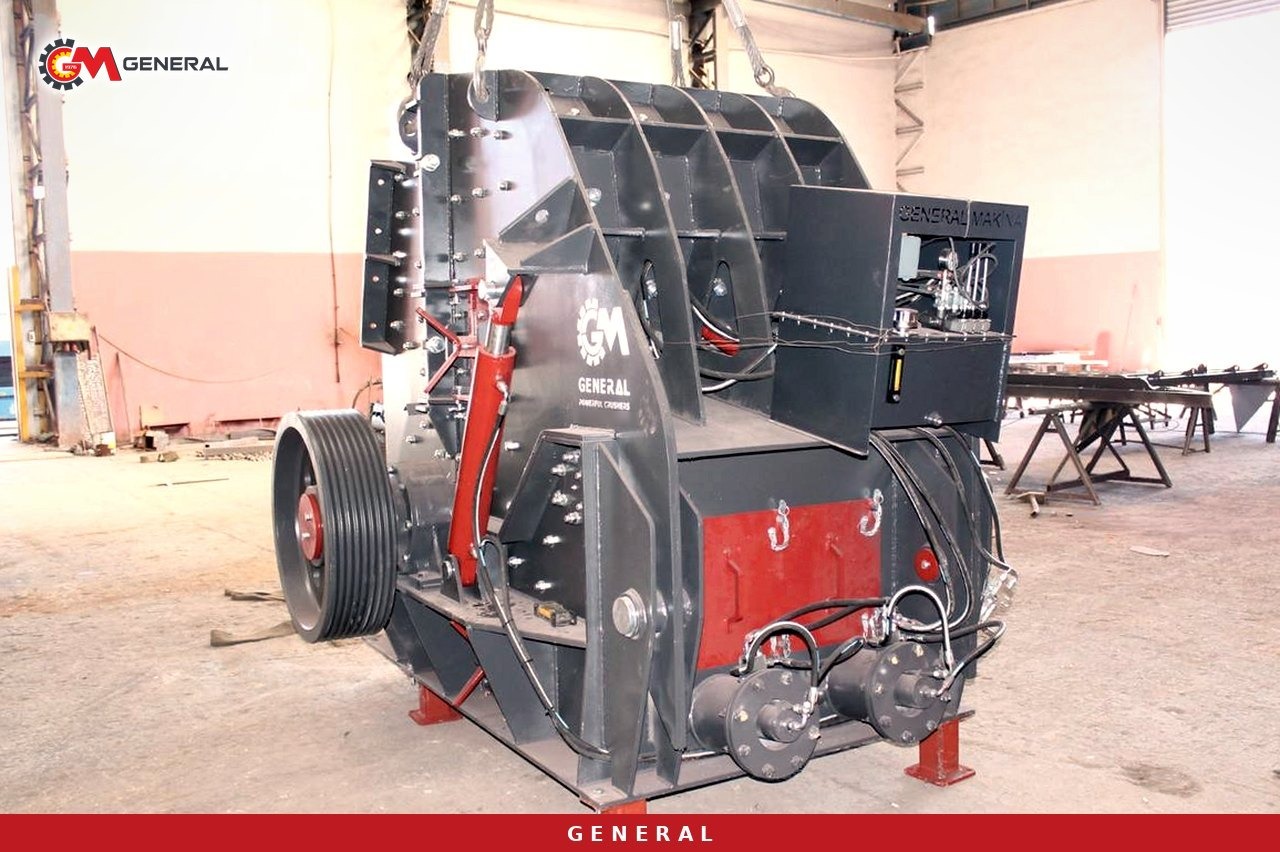
The GNR K series cubicizer crusher is used not to reduce size but to turn flaky and elongated grains cubical and lower the flakiness index. The K100 has a 1550×1200 mm rotor, 180 mm maximum feed, 90-130 t/h capacity and a 90 kW motor; the K110 has a 1550×1800 mm rotor, 210 mm feed, 160-250 t/h and 160 kW. The cubicizer takes only the fraction whose shape needs correcting after the cone, so even on a 500 TPH line it is sized to the tonnage of that branch, for example the chippings stream, not the whole flow. Part cost rises with silica, calling for high-chrome or ceramic-reinforced parts.
Two line layouts with real models
| Stage | 250-300 TPH layout | 400-500 TPH layout |
|---|---|---|
| Feeder | GNR 110: 1100×4750 mm, 200~300 t/h, 2x7.5 kW | GNR 140: 1400×5000 mm, 350~600 t/h, 2x9.2 kW |
| Primary jaw | GNRK 110: 1100×850 mm, 110/132 kW, 200-350 t/h | GNRK 130: 1300×1000 mm, 160 kW, 400-500 t/h or GNRK 140: 1400×1100 mm, 200 kW, 500-600 t/h |
| Secondary cone | General cone crusher, capacity per project () | General cone crusher, capacity per project () |
| Shaping (low silica) | GNR DMK03: 250-300 t/h, 250 kW | GNR DMK05: 250-500 t/h, 500 kW |
| Shaping (high silica) | GNR K110: 160-250 t/h, 160 kW | Two GNR K110 units or one unit sized to the branch tonnage |
| Screening | Twin vibrating screen: 100-500 t/h | Twin vibrating screen: 100-500 t/h |
On the screening side, when a single screen chokes at high flow, the twin vibrating screen runs two screen bodies together, doubling screening area and lowering the recirculating load. The model table runs from GNR 1020 to GNR 2470; the GNR 2460 body, for example, measures 2400×6000 mm with a 22 kW motor. Deck count and apertures are fixed at order according to the fractions your buyer wants. You can review all fixed plant options on our stationary crushing plants page and stage-by-stage machines on our rock and stone crushers page.
Gulf site checklist: heat, dust, water and port
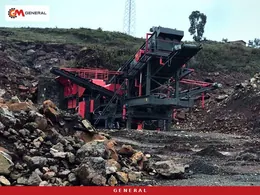
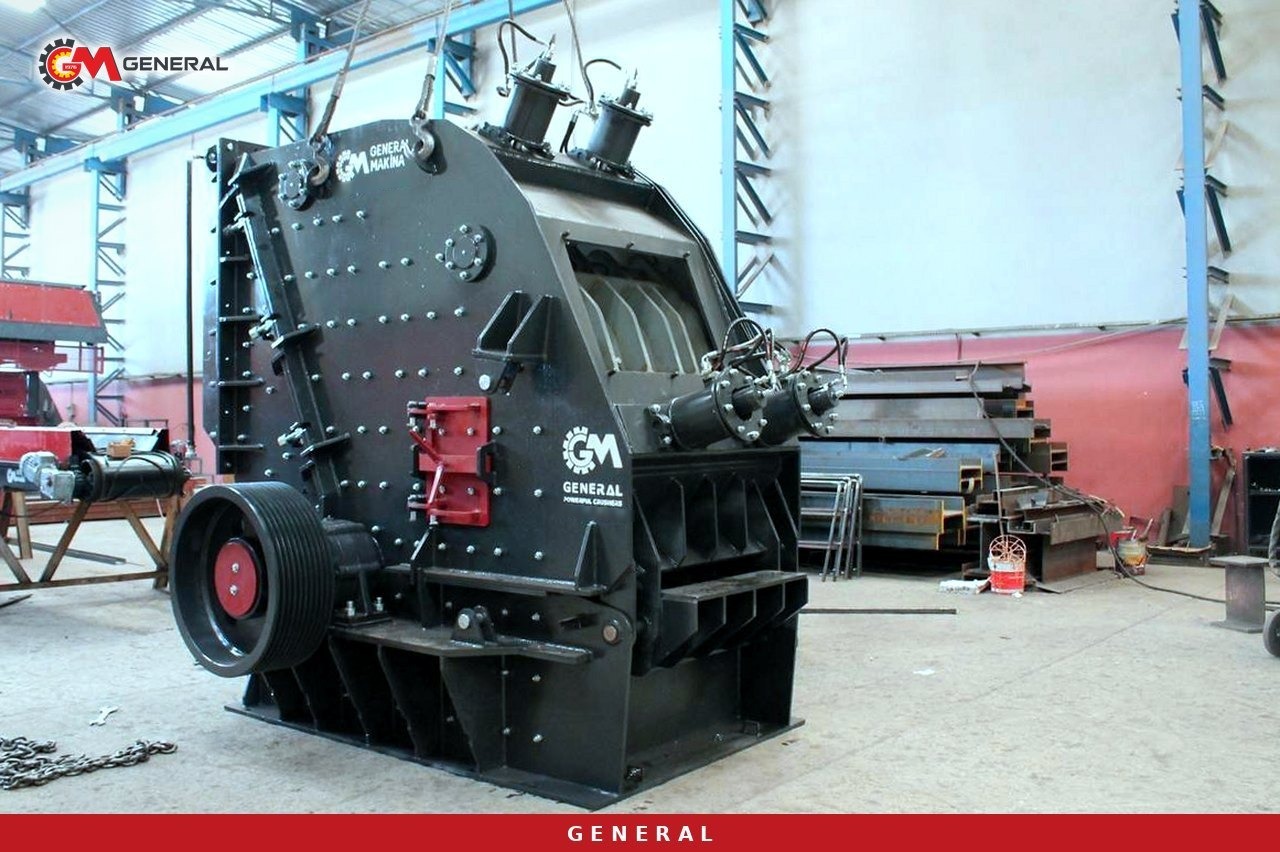
As an installed example in the region, our 250 t/h GNR PDK 02 stationary plant in Saudi Arabia works in desert conditions; its primary type differs, but it shows how a fixed line is laid out on a hot, dusty site. For a gabbro line, put these items in the file at quotation stage:
- Cooling and filtration: ventilation, dust filters and shading for motors, electrical panels and hydraulic units.
- Dust control: spraying at crusher discharges and conveyor transfer points, enclosed belts where needed; fine-droplet nozzles where water is limited.
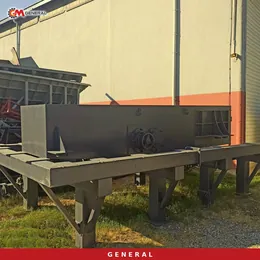
- Pre-scalping: separating clayey fines from weathered zones ahead of the primary with the feeder's grizzly by-pass section.
- Power: without a grid connection, generator capacity is calculated in the project from the total installed motor power.
- Shipping: a split assembly plan based on the dimensions in which main bodies travel by road to the port and the quarry.
- Wear-part plan: spare stock for jaw plates, mantle/concave and blow bars; the warranty is 1 year and does not cover wear parts.
- Documents: our machines carry ISO 9001 and CE; confirm any country-specific requirements with the buying authority.
Frequently asked questions
Can a single DMK05 shape the whole 500 TPH flow?
The DMK05 capacity range is 250-500 t/h; running near the upper limit uses up the margin once recirculating load is added. Your gabbro's silica and Ai values must also suit the DMK. If the test result is borderline, planning the shaping stage branch by branch with a cubicizer is safer.
Can specification-grade particle shape be reached without a cubicizer?
In some quarries a choke-fed cone with a narrow setting may be enough. The only way to know in advance is to test the sample against flakiness index. If your buyer's specification is tight, reserving space for a cubicizer in the line is less work than dismantling and adding one later.
Can 250 TPH of gabbro be processed with a mobile plant?
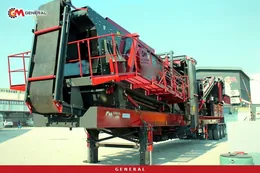
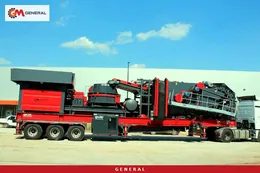
Among wheeled options, the GNR-MC110 carries a GPJ 110 jaw and a DMK03 impactor on two chassis, producing 200-300 t/h on 900 mm feed with a 750 kVA generator. Its second stage is impact, so it again depends on abrasiveness testing. For a long-life, single-quarry investment, a fixed line usually grows more flexibly.
What information should I send for a quote?
Target hourly tonnage, the fractions to be sold and the buyer's shape requirement, sample test results, the largest blasted block size, energy source and the site's distance to the port. Price varies with the number of stages, screen decks, motor power and wear-part alloy, and is calculated per project.
Conclusion: decision order for a Gulf gabbro line
Sample first, then saleable product balance, then primary size and the shaping stage last. A jaw-cone chain starting with the GNRK 110 for 250-300 TPH, or with the GNRK 130 or GNRK 140 for 400-500 TPH, is completed with a DMK or a cubicizer depending on how abrasive the gabbro is. Send your quarry's test results and target fractions through our contact page and we will prepare a stage-by-stage crushing and screening plant proposal and quotation.
Definitions of technical terms: Glossary