EN — English
 TR — Türkçe
 DE — Deutsch
 RU — Русский
 FR — Français
 ES — Español
 AR — العربية
 SR — Српски

Guinea Conakry Port & Road Aggregate Crushing Plant 150-250 TPH
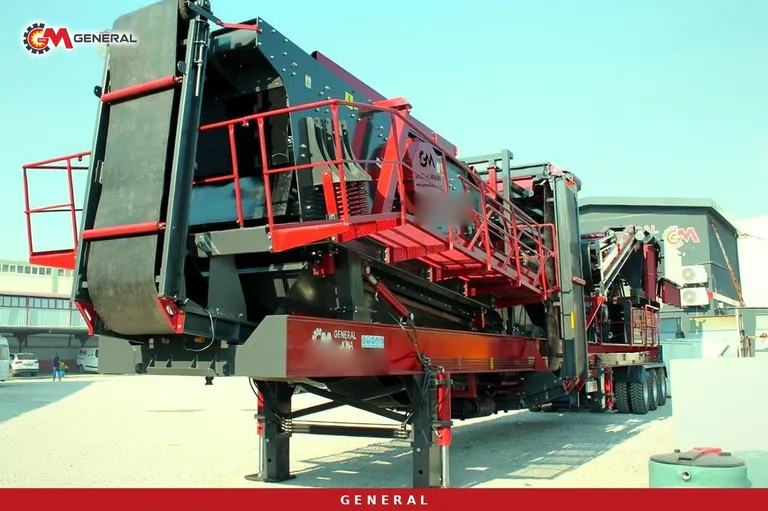
A contractor opening a quarry near Conakry usually has two customers at once: the port crews building quays, reclamation fill and precast concrete, and the road crews laying sub-base and surfacing on routes running inland from the capital. The first wants clean, cubical aggregate that fits a grading envelope; the second wants large, steady, low-cost volumes of road material. A target of 150-250 TPH is a sensible way to serve both from a single quarry, but the rock decides the machine before the tonnage does. This article starts from the rock types typical of coastal Guinea, builds a plant layout from real model data, and ties Guinea-specific issues such as shipping and the rainy season to the purchasing decision.
The rock around Conakry: dark igneous stone under a thick laterite cover
Geological maps of the Conakry peninsula and its surrounding hills show gabbro, dolerite and similar dark, dense igneous rocks. Further inland, granite and gneiss quarries are also common. What these rocks share is high compressive strength and noticeable abrasiveness. The red laterite that blankets much of the country is a separate material: clayey, iron-rich and damp in the upper layer. It can serve as road fill, but it is useless as concrete aggregate.
In practice this means significant overburden stripping before sound rock is reached, and the laterite removed in the process must be kept out of the crusher. The sound rock itself can be hard enough to consume impact blow bars quickly. To pin down the rock you will actually be working, have quarry samples tested for Los Angeles abrasion, compressive strength and silica content; those results settle the model choice.
One product list written by both the port and the road site
On the port side, the batching plant feeding quay concrete, pile caps and breakwater armour units needs 0-5, 5-12, 12-19 and 19-40 mm fractions, with tight specification limits on flakiness, clay and fines. On the road side, sub-base and base courses call for a continuously graded material of roughly 0-40 mm, and asphalt mixes need their own fractions. Rough fill and breakwater core use uncrushed quarry run directly; that material bypasses the crusher and puts no load on plant capacity.
The plant therefore needs a final screen able to split at least four fractions and, when required, stockpile a blended 0-40 mm product from a separate conveyor. If the specification calls for water and binder to be added to the blended base material, placing a pugmill plant for road base behind the crushing line removes a separate stockpile and loading cycle. Confirm the actual fractions and limits in the current specifications of the port authority and the road agency; the plant is designed around those documents.
Matching models to 150-250 TPH
The table below sets out the published data of the models worth considering for a Conakry scenario. Each value comes from the technical table on that model's own product page; unknown cells are marked "—".
| Model | Crusher layout | Capacity | Max. feed | Screen | Generator | Weight |
|---|---|---|---|---|---|---|
| GNR-MC110 | GPJ 110 jaw + DMK03 impact, twin chassis | 200-300 tph | 900 mm | 2000×6000 mm, four-deck | 750 kVA | 2 × 55,000 kg |
| General 944 | GPJ 90 jaw + GM430 cone | 120-180 tph | 800 mm | 1600×5000 mm, three-deck | 550 kVA | 70,000 kg |
| General 950 | GPJ 90 jaw + DMK01 impact | 120-180 tph | 800 mm | 1600×5000 mm, three-deck | 600 kVA | 70,000 kg |
| General 01 | GPS 1210 impact (primary+secondary) | 120-180 tph | 700 mm | 1600×5000 mm, four-deck | 550 kVA | 55,000 kg |
| General 02 | GPS 1413 impact | 250-300 tph | 1000 mm | 2000×5000 mm, four-deck | 660 kVA | 76,000 kg |
| Stationary plant | GNRK 110 jaw primary + project-specific secondary | 200-350 tph (GNRK 110) | 1100×850 mm opening | GNR 2060, 2000×6000 mm | — | — |
For hard gabbro and dolerite: the GNR-MC110
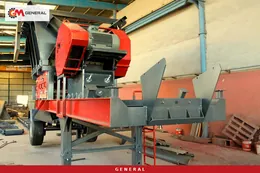
If your quarry yields sound gabbro or dolerite, a jaw crusher is essential at the first stage. The GNR-MC110 carries a GPJ 110 jaw primary and a DMK03 impact secondary on two separate chassis, covering the upper half of the target range with one plant at 200-300 tph. The ability of the primary group to run on its own matters in Guinea: during stripping and quarry opening you can set up just the primary to produce coarse material for breakwater or road fill, then bring the secondary group in when concrete aggregate orders begin. The impact secondary gives cubical grains, but in highly abrasive rock, estimate blow bar consumption from sample tests in advance.
When wear cost comes first: the General 944 and a two-unit layout
In a granite or gneiss quarry with high silica, metal life is the main driver of cost per tonne. The General 944 crushes by compression with its GM430 cone secondary and gives long part life in abrasive stone. A single unit delivers 120-180 tph, which suffices for demand around 150 tph; for a target approaching 250 tph, consider running two units in parallel or pairing one unit with a GNR-MC110. A two-unit layout has an added benefit: the quarry does not stop completely during maintenance. The General 950, in the same band, uses a DMK01 impact secondary for higher reduction and cubical product, a good alternative if the rock is only moderately abrasive.
When does a single impact body make sense?
If a site away from the coast offers limestone or another low-abrasion rock, or if the plant will mostly process demolition concrete and laterite-blended road material, a plant such as the General 01 which combines primary and secondary crushing in one GPS 1210 impactor, simplifies the investment. For higher tonnage the General 02 scales the same logic with a 1000 mm feed opening and a 250-300 tph band. For gabbro and dolerite, however, we do not recommend these single-impactor models as a first choice. All wheeled options can be compared on the wheeled mobile crushing plants page.
If the quarry has a long life and will serve several port and road contracts over many years, fixed crushing plants may be the better fit. The GNRK 110 jaw primary, with its 1100×850 mm opening and 200-350 tph capacity, accepts large blasted rock without pre-sizing; the secondary, tertiary and screening groups are designed around the product list.
Laterite, clay and the rainy season: the pre-screening decision
The rainy season on the Guinean coast is long and heavy. In those months laterite and clay mixed into the blast pile ball up in the feeder, blind the screen decks and push concrete aggregate over its clay limit. The countermeasure belongs at the very front of the plant. A vibrating grizzly feeder diverts the fine, clayey fraction through the bypass before it reaches the crusher, and that material can be stockpiled separately for road fill. Whether the concrete fractions need washing should be decided from samples taken in both the dry and the wet season: a quarry that looks clean in the dry months may fail an unwashed specification once the rains arrive.
If washing is required, adding a washing and screening group at the end of the crushing line uses less water and a smaller settling pond than washing ahead of the crusher. Water source, slurry pond and discharge permits are matters to confirm with the local authority.
By RoRo to the port of Conakry, then on to the quarry
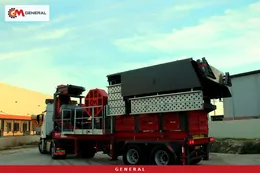
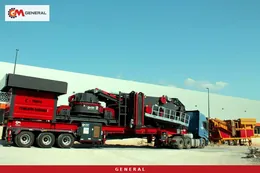
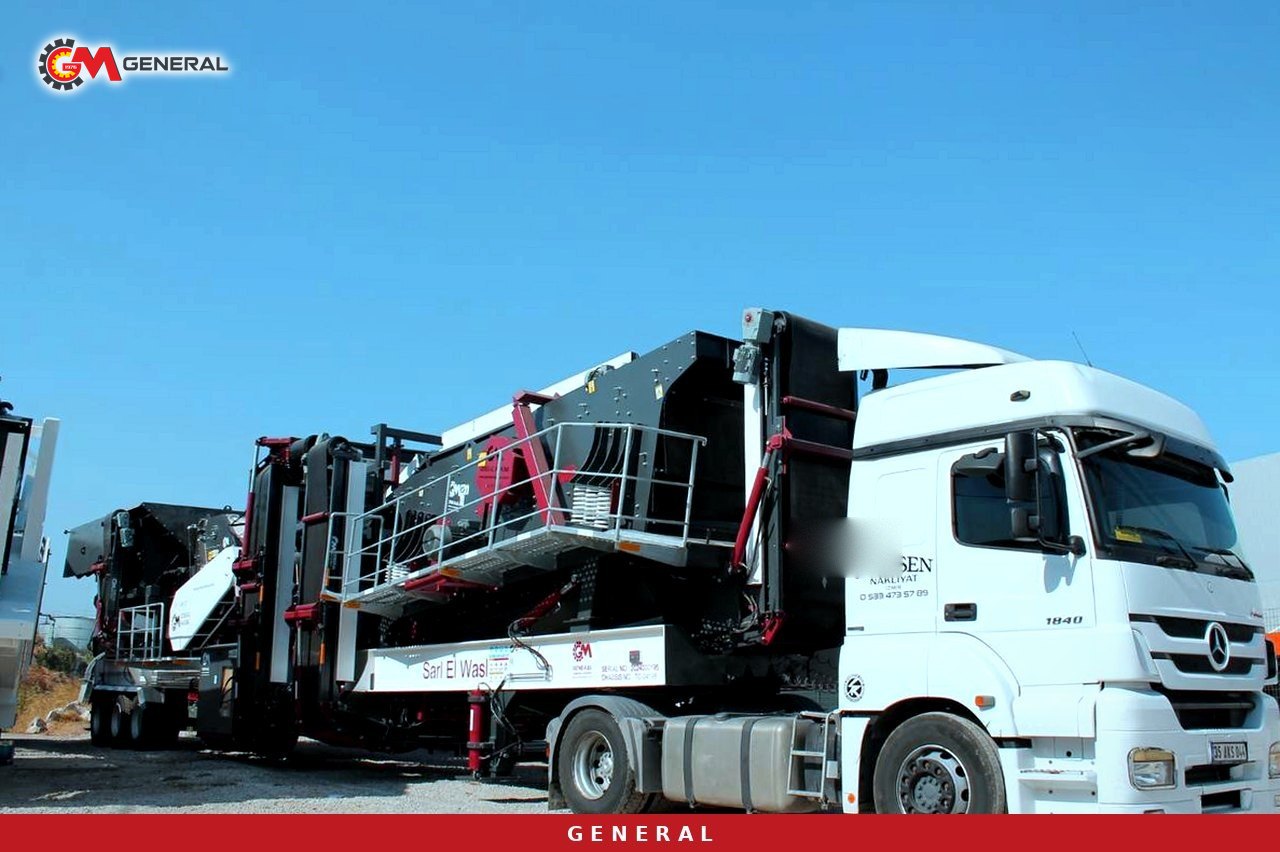
Wheeled mobile plants are usually shipped to Guinea on RoRo vessels: the plant is towed aboard on its own axles, lashed to the deck and towed off again at the destination port. Compared with dismantling and containerising, this greatly reduces reassembly work on site. At quotation stage, check with your forwarder which port has a RoRo service and what deck clearance the vessel offers.
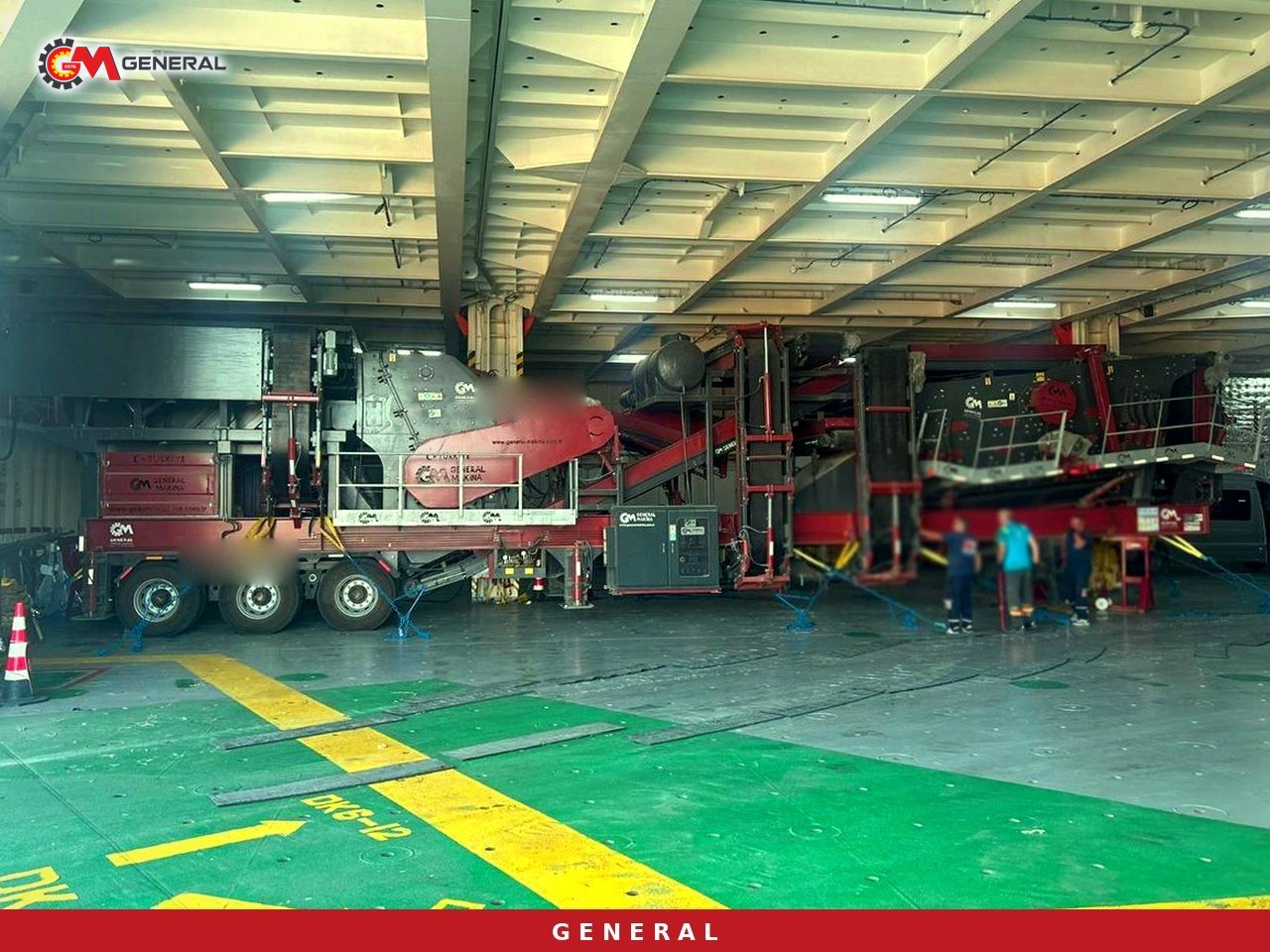
The road from the port to the quarry is a separate planning task. On the twin-chassis GNR-MC110 the weight is split across two platforms of 55,000 kg each, which gives more flexibility at bridges and tight bends than one heavy chassis. For the single-chassis General 944 and 950, the transport dimensions are 4130×20350×4500 mm. Find out bridge load limits along the route, the state of unsealed roads in the rainy season and abnormal load permits from the relevant authority in advance.
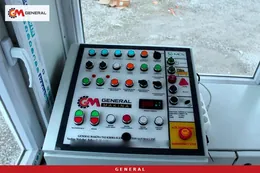
Quarry sites usually have no grid supply, or an unreliable one, so generator power is planned from the start. The kVA figures in the table are each model's own generator rating. Near the coast, salty and humid air speeds up corrosion in electrical cabinets and on bare metal surfaces; enclosed, ventilated cabinet positions and, in the dry season, dust suppression at conveyor transfer points are measures that can be selected per project.
What to prepare before requesting a quotation
An accurate quotation for a Conakry quarry can be prepared once the following information is complete:
- Rock type and lab results: Los Angeles abrasion, compressive strength, silica content.
- Largest block size after blasting and the share of laterite coming from stripping.
- Fractions, clay and flakiness limits required by the port and road specifications.
- Hourly production target and daily operating hours; one shift or two?
- Washing need, water source and space available for a slurry pond.
- Power: is there grid supply, or will the plant run on a generator?
- Arrival port, the route from port to quarry and its bridge limits.
- Whether the plant stays on one site or moves as the road advances.
For a closer look at which crusher layout delivers which road product, see our article on mobile crushing plant configuration for road construction.
Frequently asked questions
Can one plant produce both port concrete aggregate and road base?
Yes, with a layout whose final screen splits four fractions and stockpiles the blended product from a separate conveyor. The 2000×6000 mm four-deck screen of the GNR-MC110 suits this division of work. The clay limit for concrete aggregate may still require washing in the rainy season; check this with samples beforehand.
Can an impact plant handle the gabbro around Conakry?
An impact secondary can be used behind a jaw primary; the GNR-MC110 and the General 950 follow that layout. The General 01 and 02, which put primary and secondary crushing into a single impact body, are not the first choice for hard, abrasive gabbro because of blow bar cost.
What certificates and warranty are offered?
General Makina has been manufacturing in Izmir since 1976; the plants carry ISO 9001 and CE certification. A 1-year warranty applies, excluding wear parts. Confirm the documents needed for import and registration in Guinea with your importer or customs broker.
What determines price and delivery time?
The chosen model and number of chassis, screen decks, washing group, generator, additional conveyors and shipping method set the price. Delivery time depends on the production schedule at the time of order; both are given in writing in the quotation.
Conclusion
For a Conakry quarry aiming at 150-250 TPH, the rock decides more than the tonnage: the jaw-primary GNR-MC110 for sound gabbro and dolerite, the cone-secondary General 944 for granite where wear cost dominates, and the single-impactor General 01 or 02 for low-abrasion material. Laterite separation, rainy-season washing, RoRo shipping and the generator plan should be settled together with the quotation. If your sample results and specifications are ready, write to us via our contact page and we will work out the plant layout with you.
Definitions of technical terms: Glossary