EN — English
 TR — Türkçe
 DE — Deutsch
 RU — Русский
 FR — Français
 ES — Español
 AR — العربية
 SR — Српски

Equatorial Guinea Port & Road Aggregate Crushing Plant 120-180 TPH
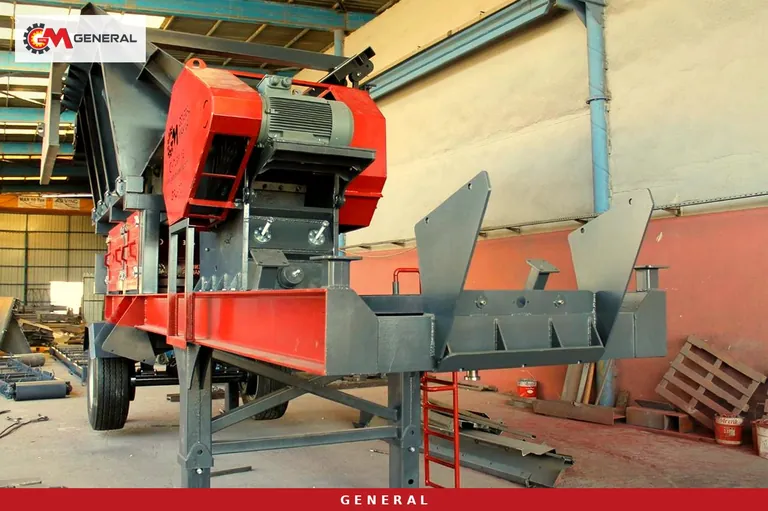
A contractor planning aggregate supply in Equatorial Guinea runs into a question that rarely comes up elsewhere: the country is not one piece of land. The capital, Malabo, sits on Bioko, a volcanic island in the Gulf of Guinea, while the port of Bata and the road network heading inland are on the mainland in the Río Muni region. Stone, machines and spare parts can only cross between the two by sea. Whether a 120-180 TPH aggregate requirement is met by one large line or by units split across the island and the mainland is therefore a decision to make before choosing any model. Below we work through that decision under rock, product list, climate and shipping, showing which real model enters each option and with which figures.
Island or mainland: split the capacity by geography first
A crew extending a quay, placing fill or building a coastal road in Malabo cannot be supplied from the same quarry as a crew opening a road inland from Bata. Moving chippings crushed on the mainland to the island means a vessel, port handling and a second round of truck loading and unloading for every tonne. In practice three set-ups stand out:
- One landmass, one line: if the work is only on the mainland or only on the island, a single wheeled mobile plant covers the 120-180 TPH band.
- Two landmasses, two compact units: with simultaneous work on the island and the mainland, a smaller plant on each removes the need to ship aggregate across the water.
- Two sites in sequence: the work on one landmass finishes first and the plant crosses by sea once. Here a single-chassis model towed by one vehicle keeps the move simple.
What decides the right set-up is how far the work programme overlaps in time. Confirm the section list and dates in the employer's specification before fixing the capacity.
Bioko's basalt, Río Muni's granite and gneiss
Bioko is volcanic in origin, so quarry hills there are expected to yield dark basalt and basaltic lava flows. This stone is dense, hard and abrasive. Some flows contain gas-pocketed (vesicular) layers that break more easily but can give flaky, weak particles. On the mainland, crystalline basement rocks dominate, namely granite and gneiss. Granite wears metal through its high silica content; the foliated texture of gneiss raises the share of flaky particles if the wrong crusher is chosen.
Both regions share a thick red laterite cover at the surface. This clayey material, stripped before sound rock is reached, coats the crusher mouth and blinds screen decks if it gets into the circuit. Rather than picking a crusher from average values, take samples at the intended quarry face and have Los Angeles abrasion and compressive strength tests run. The results decide directly which of the two main options below is cheaper to operate.
Real models that cover 120-180 TPH
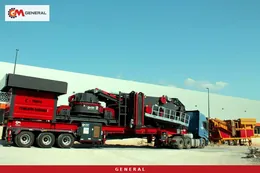
Among our wheeled mobile crushing plants three models meet this band on their own; the fourth row is the two-unit island-and-mainland set-up.
| Option | Capacity | Weight | Generator | Feed opening | Crushers | Screen |
|---|---|---|---|---|---|---|
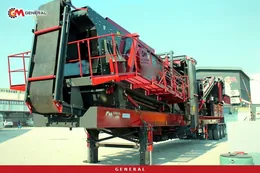
| General 944 | 120-180 t/h | 70,000 kg | 550 kVA | 800 mm | GPJ 90 jaw + GM430 cone | 1600×5000 mm, 3-deck |
| General 950 | 120-180 t/h | 70,000 kg | 600 kVA | 800 mm | GPJ 90 jaw + DMK01 impact | 1600×5000 mm, 3-deck |
| General 01 | 120-180 t/h | 55,000 kg | 550 kVA | 700 mm | GPS 1210 impact (primary + secondary) | 1600×5000 mm, 4-deck |
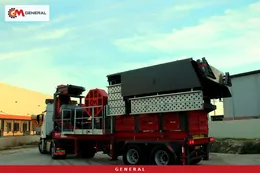
| 2 × General 640 (island + mainland) | Each 60-100 t/h, 120-200 t/h combined | 38,000 kg each | 300 kVA (optional) | 500 mm | Each GPJ 60 jaw + GNR 50 impact | 1200×4000 mm, 3-deck |
Details not in the table, such as screen media and final gradation, are set on each order to suit the rock being processed.
When metal life in basalt and granite comes first: General 944
The General 944 crushes by compression in its second stage with a GM430 cone. Compared with an impact rotor, this keeps manganese parts wearing far more slowly in siliceous, abrasive stone. It is the first model to look at for Bioko basalt and mainland granite. Product leaves in 0-5 / 5-12 / 12-19 mm fractions, and the 800 mm feed opening accepts large post-blast blocks.
When cubical shape and high reduction are required: General 950
The General 950 uses the same GPJ 90 jaw but carries a DMK01 impact crusher in the second stage. In stone that tends to break flaky, such as gneiss, an impact secondary produces more cubical particles; the price is more frequent blow bar and liner changes in abrasive basalt. Size and weight match the 944, so the choice rests purely on the character of the secondary crusher.
Why does the General 01 stay in second place?
The General 01 performs both stages with a single GPS 1210 impactor and delivers four fractions including 19-40 mm. It is economical on limestone and low-abrasion stone. On the basalt and granite of Equatorial Guinea, however, a single impact body drives up parts consumption quickly, so it is worth considering only if sample tests show low abrasiveness.
Quay, coastal fill and road: which fraction goes where?
Port work and road work draw different products from the same quarry. Precast concrete blocks, quay beams and pile caps consume clean, cubical 5-12 and 12-19 mm chippings that sit on the grading curve, plus 0-5 mm crushed sand. For breakwaters and shore protection, the large armour stones are selected straight from the quarry face, not from the crusher; the plant produces graded material for the filter and core layers of those structures. On the road side, base and sub-base mixes are prepared by blending fractions or by specifying screen media accordingly on the order.
Laterite can serve as fill in the road embankment, but where its bearing capacity falls short it has to be stabilised with cement or lime. For that job, pugmill stabilisation plants should be planned as a separate unit from the crushing line. The crusher does not process laterite; it separates it and sends it where it belongs.
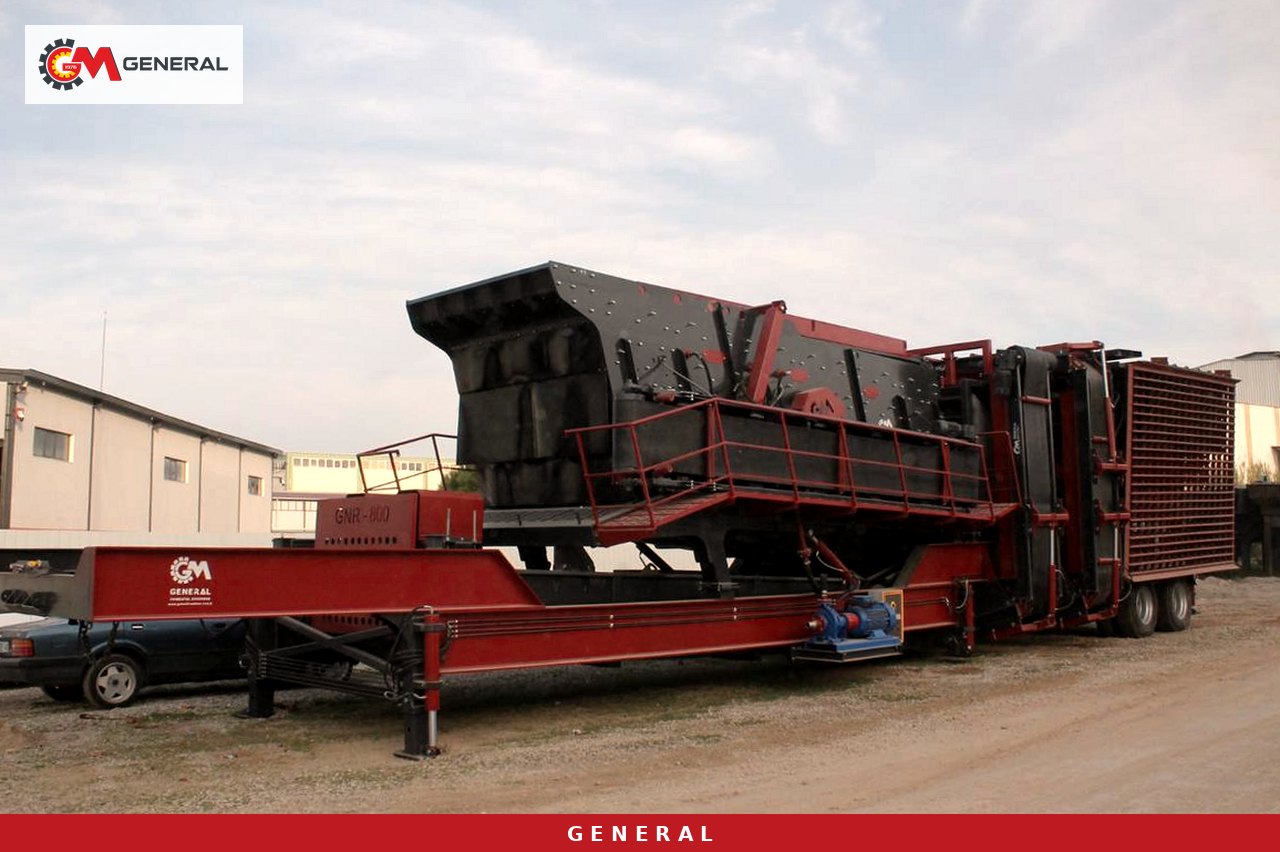
Equatorial climate: operating measures for rain, humidity and laterite
Equatorial Guinea is hot and humid all year, with long wet periods. That paints a different picture from the dust problem of arid regions: the real enemy is wet, sticky material. Measures that can be chosen for the project include:
- The grizzly by-pass section of the vibrating feeder removes fines and clay ahead of the crusher; bar spacing should match the laterite share.
- To reduce blinding on the screen decks, media type and aperture should be defined on the order from the sample results.
- Stockpile areas need drainage and firm ground; wet fines cause slipping and spillage on belts.
- Electrical panels, motors and the generator must be protected from moisture; panel doors and cable entries should be checked at every service.
- In dry spells, water-spray dust suppression at conveyor transfer points can be considered.
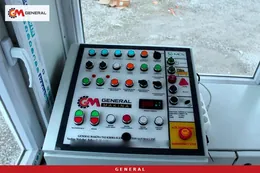
At quarries without grid power the plant runs on a generator. The kVA values in the table belong to each model's own generator; if extra conveyors and screens are added, the power demand must be recalculated.
Sea freight and moving between the two landmasses
A plant leaving Izmir travels to the Gulf of Guinea by sea; the discharge port is Malabo or Bata depending on where the work is. A wheeled chassis makes loading on its own wheels easier on suitable vessels, but confirm the loading method and size limits with the carrier in advance. The dimensions in the table matter here: transport size is 4130×20350×4500 mm for the General 944 and 950 and 3500×17000×4500 mm for the General 640. The 640 fits on a single truck, a real convenience for contractors who will move the plant once between island and mainland.
On the route from port to quarry, check bridge load limits, bend radii and the state of earth roads in the wet season. Plan spare parts with the island in mind as well: ordering the first set of jaw plates, cone mantles, impact liners and screen media from the wear and replacement parts range together with the plant cuts the risk of waiting for parts from overseas.
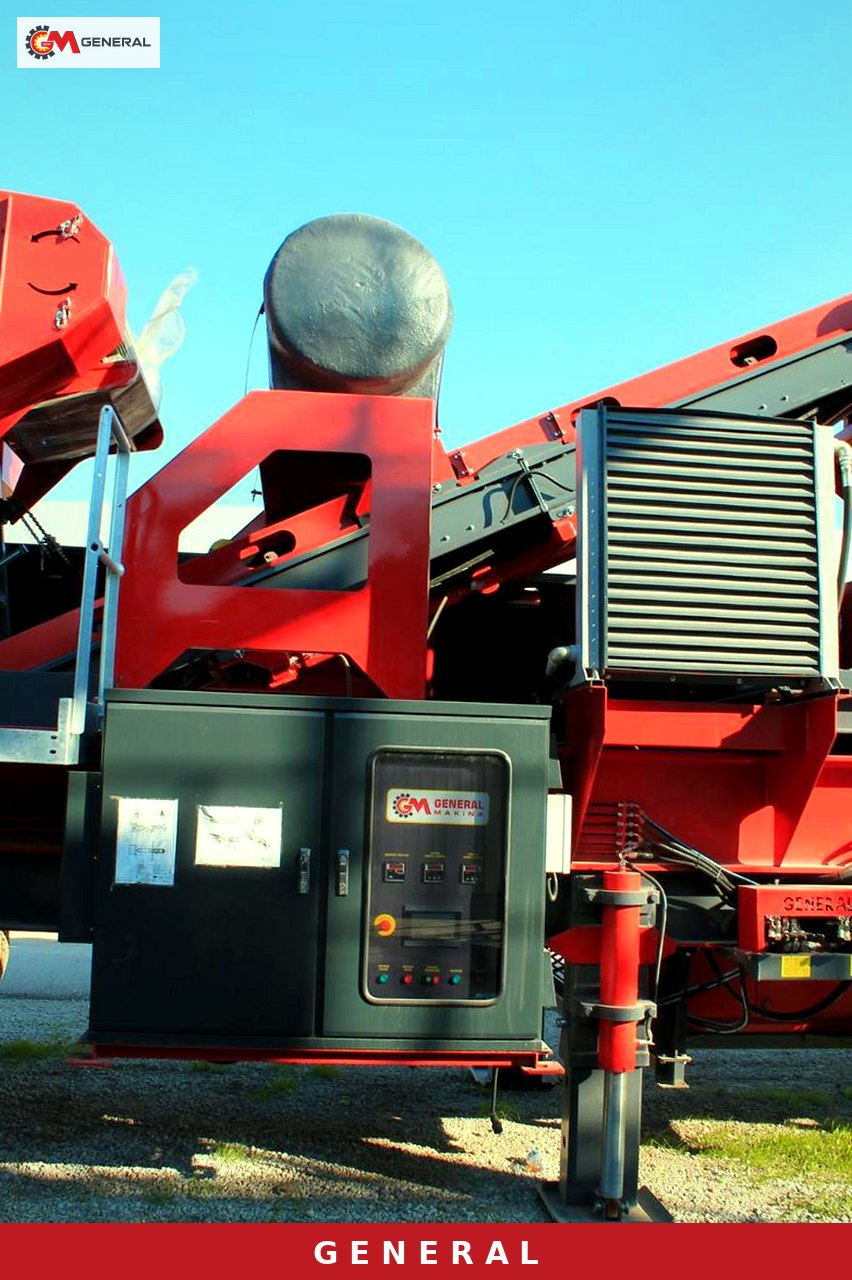
The file to prepare before requesting a quotation
For an accurate offer, sending the following together is enough:
- Which landmass the work is on, and whether there is a simultaneous second site.
- Rock type of the quarry sample and its abrasion and compressive strength test results.
- Specified fractions and the grading required for concrete and road layers.
- Daily operating hours and target tonnage; whether grid power is available.
- Discharge port and the restrictions on the road from port to quarry.
To go deeper into the model comparison, our article on choosing a mobile plant for basalt and granite covers the technical side of this decision in detail.
Frequently asked questions
Is one plant enough if there is work on Bioko and the mainland at the same time?
Technically yes, but chippings would have to cross the sea every day. With simultaneous work on both landmasses, two General 640 units of 60-100 t/h each remove that haulage cost and provide 120-200 t/h combined.
Cone or impact secondary for basalt?
In abrasive basalt, the General 944's cone secondary leads when parts life is the priority; the General 950's impact secondary leads when cubical shape is. The decision should follow abrasion tests on the quarry sample.
What can I rely on in terms of certification and warranty?
Plants ship with ISO 9001 quality management and the CE conformity mark. The manufacturer was founded in Izmir in 1976 and brings more than 50 years of experience. Cover lasts 1 year; jaws, mantles, blow bars, screen media and other wearing items fall outside it.
Which items drive the quoted amount and lead time?
The amount is built from the chosen model and its secondary crusher, the generator, added conveyors and screens, the first spare parts kit and freight to Malabo or Bata. Lead time is never guessed: it is written into the quotation after checking the workshop load in the week you place the order.
Conclusion
When choosing a 120-180 TPH aggregate plant for Equatorial Guinea, the first decision is how the work is split between island and mainland; the second is the secondary crusher type for Bioko basalt and Río Muni granite. For single-site jobs the General 944 or 950, and for work spread over both landmasses two General 640 units, are sensible starting points. Send your sample results and specified fractions via our contact page and we will prepare the configuration and quotation that fit your site.
Definitions of technical terms: Glossary