EN — English
 TR — Türkçe
 DE — Deutsch
 RU — Русский
 FR — Français
 ES — Español
 AR — العربية
 SR — Српски

Gabon Rainforest Sites Mobile Crusher and Screener Plant 80-150 TPH
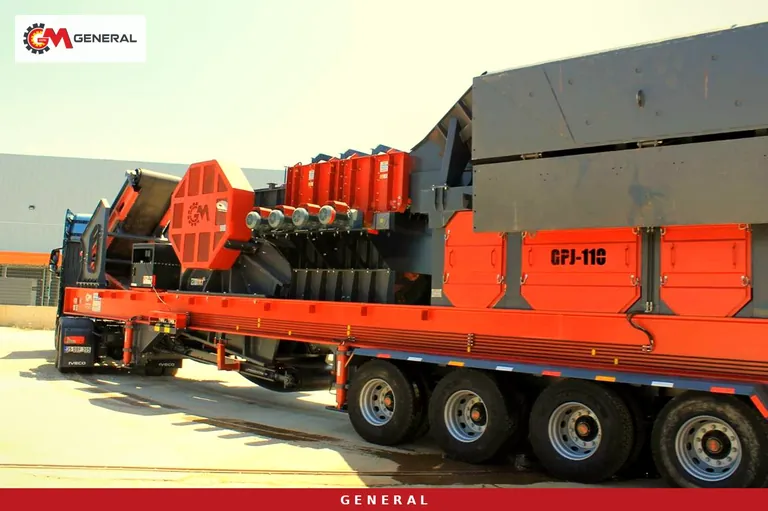
Opening a quarry in Gabon usually means cutting a road and a clearing through the forest first. With equatorial rainforest covering most of the country, three questions come before any capacity table when you pick a crushing and screening plant: can the machine cross that road and its bridges, will it fit the narrow clearing, and will it keep producing through mud and humidity in the two rainy seasons of the year? This article screens mobile crushers for an 80-150 TPH road, bridge or concrete-aggregate job against exactly those three questions. Every technical value quoted comes from our published product pages.
From the Libreville area to the Ogooué basin and on towards Franceville, Gabon's interior is dominated by old crystalline rock such as granite and gneiss, capped by red lateritic soil of varying thickness. That is only the general picture. The strength, abrasiveness and clay content of the rock in your own pit become clear only after compressive-strength, Los Angeles abrasion and methylene-blue tests on a sample, and the model decision should rest on those results.
Four constraints that shape a forest quarry
In a dry desert pit, machine choice is mostly driven by rock and tonnage. On Gabon's forest sites the plant has to clear four hurdles before the first stone reaches the crusher:
- Access: the last kilometres to the pit are usually laterite forest track. In the wet season its bearing capacity drops, and timber or light bridges may not carry a heavy low-loader. Axle load and total weight must be checked against the weakest bridge on the route.
- Clearing area: every extra square metre means felling, stump removal and drainage. A single-chassis plant with folding conveyors needs less ground than a spread-out layout of separate crusher and screen groups.
- Humidity and rain: in the wet months the feed carries clay, screen meshes blind and control panels face condensation. In the dry months the same site turns dusty.
- Power: most inland pits have no grid connection; the plant runs on its own generator, and the fuel comes along the same forest road.
Because of these constraints, the same 80-150 TPH target can call for a different machine in different pits. The comparison below therefore offers four routes matched to rock and site conditions instead of one "best model".
Candidate plants for an 80-150 TPH target
The four mobile solutions covering the band were chosen from our wheeled mobile crushing plants and tracked crawler crushers. The table holds only values stated on the product pages; unpublished cells are marked "—".
| Model | Capacity | Max. feed | Crusher layout | Power unit | Weight | Transport size (mm) |
|---|---|---|---|---|---|---|
| General 800 | 80-150 t/h | 600 mm | PDK 1280 primary impactor | 450 kVA | 35,000 kg | 3600×15500×4500 |
| General 944 | 120-180 t/h | 800 mm | GPJ 90 jaw + GM430 cone | 550 kVA | 70,000 kg | 4130×20350×4500 |
| Mobil 90 | 90-150 t/h | 800 mm | GPJ 90 jaw + washing screen + twin screw | 350 kVA | 45,000 kg | 3600×15700×4500 |
| GM 90JP (tracked) | 70-180 t/h | 700 mm | GNR 90 jaw, 95 kW (primary only) | 250 kVA | 35,000 kg | — |
Granite and gneiss pits: General 944
When the rock is hard and rich in silica, crushing the second stage by compression rather than impact keeps wear cost under control. The General 944 puts a GM430 cone behind a GPJ 90 jaw, accepts 800 mm feed and delivers 0-5 / 5-12 / 12-19 mm fractions over a 1600×5000 mm three-deck horizontal screen. Rated at 120-180 t/h, it meets a 150 TPH target with a comfortable margin, and running it below its ceiling also helps metal life. The price is weight: 70,000 kg and a transport length above 20 metres make road and bridge checks the most critical task with this model.
Thick, clayey laterite cover: Mobil 90
If sticky laterite stays on the rock after stripping, a dry plant will not deliver clean chippings. The Mobil 90 combines a GPJ 90 jaw, a 1600×5000 mm washing screen and a 600×6000 mm twin sand screw washer on one wheeled chassis, producing 0-5 / 5-20 / 20-60 mm at 90-150 t/h. Finding water on a rainforest site is rarely the issue; the real task is holding muddy water in settling ponds before it reaches a stream.
Limestone or soft rock: General 800
For low-abrasion rock in the coastal belt or sedimentary basins, the General 800 is the lightest package: PDK 1280 primary impactor, 600 mm feed, 80-150 t/h and 35,000 kg. A single chassis, folding hydraulic conveyors and hydraulic legs let it fit a tight clearing. In hard granite, however, impactor blow bars wear quickly, and the 944 becomes the better route.
Soft ground: tyres or tracks?
In forest pits the ground can change within a single day of rain. The wheeled plants (800, 944, Mobil 90) sit on hydraulic legs; they need no concrete foundation, but they do need a compacted, drained platform under the legs. That platform is built from a thick layer of crushed stone over the laterite and should be tested under rain before the plant is set up.
The GM 90JP by contrast, walks under its own power on Strickland tracks. It carries a 10 m³ hopper, an 820×3000 mm grizzly feeder and a GNR 90 jaw (95 kW), doing primary crushing at 70-180 t/h on 700 mm feed, so repositioning it as the face advances is easy. It is, however, a stand-alone primary: its 1000×2000 mm double-deck screen only pre-sorts, and when cubical second-stage product for roads and concrete is needed, a separate secondary unit is added behind it. Our article on tracked versus towable semi-mobile crushers compares both options in detail.
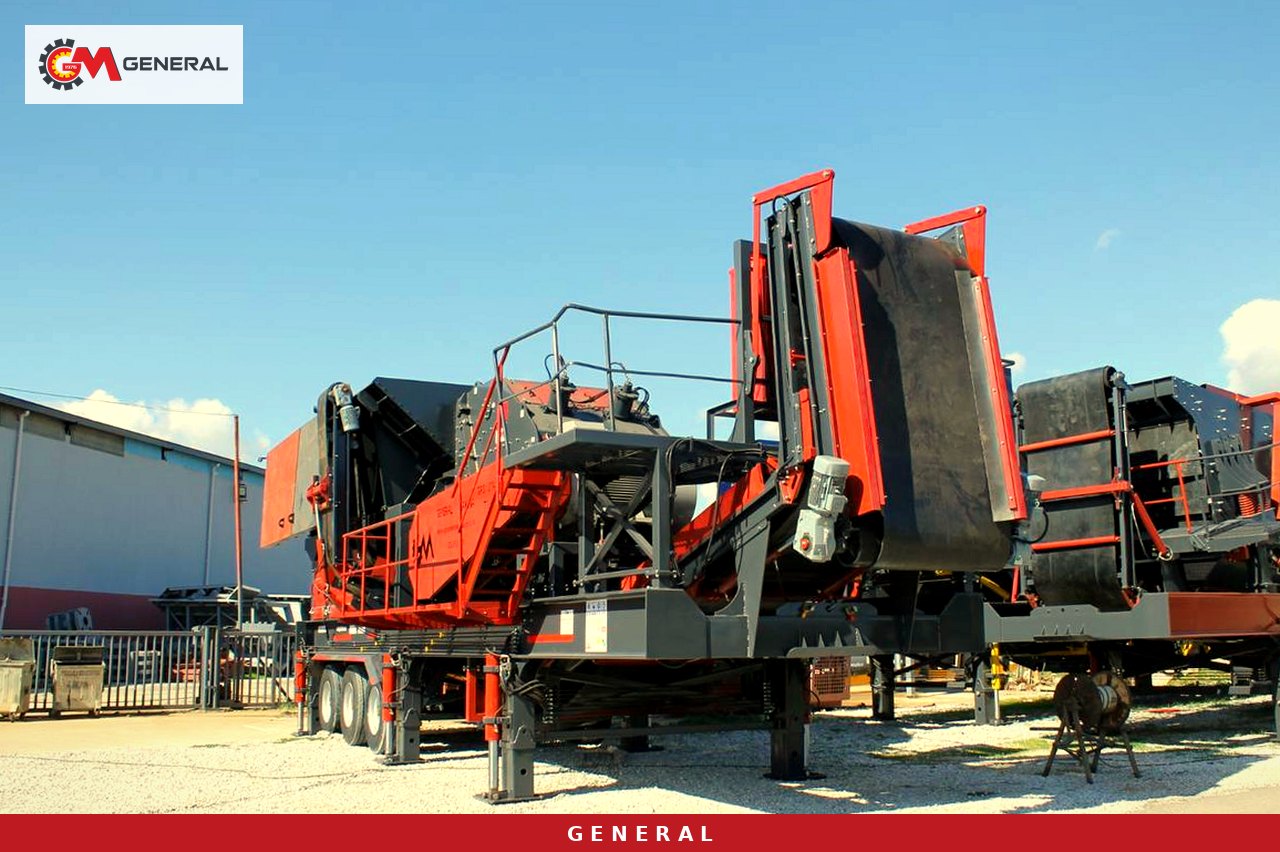
Panels, belts and screens under constant humidity
A rainforest climate stresses electrics and material flow more than the mechanical parts of the machine. These are the points that create the most work on site, together with measures that can be chosen per project:
- Control panel: day-night temperature swings cause condensation inside the cabinet. A well-sealed enclosure, an anti-condensation heater and cable entries from below rather than above should be discussed at order stage.
- Grizzly and hopper: wet, clayey fines pack the gaps of a static grizzly. Selecting the bar spacing to suit the clay and stripping carefully ahead of the crusher reduces the mud reaching the crusher mouth.
- Screen: fine apertures on the bottom deck blind with wet material. Opening the aperture slightly in the rainy season, or switching to a washing layout, limits the tonnage loss.
- Belt transfers: mud builds up in chutes and belts slip. Checking belt scrapers at the start of every shift and roofing transfer points reduces the effect of rain.
- Wear parts: jaw plates, cone liners and blow bars are manganese or high-chrome castings; sending a spare set with the first shipment avoids waiting time at a remote site.
From Owendo port to the pit: shipping and setup
Heavy equipment for Gabon normally enters through Owendo port near Libreville and reaches the interior by road or along the Trans-Gabon railway. Which route suits your pit, together with load dimensions, weight, bridge limits and permit conditions, must be confirmed with the relevant authorities and your haulage contractor. This sequence helps the planning:
- Send the plant's transport size and weight (values in the table) to the haulier and port agent early.
- Survey bridges and tight bends between the port and the pit, including wet-season conditions.
- Prepare the plant platform, stockpile areas and settling pond before the machine arrives.
- Size the generator against the plant's power-unit rating, and place fuel storage away from the drainage line.
- Plan one shipment that includes the first wear-part set, filters and screen meshes.
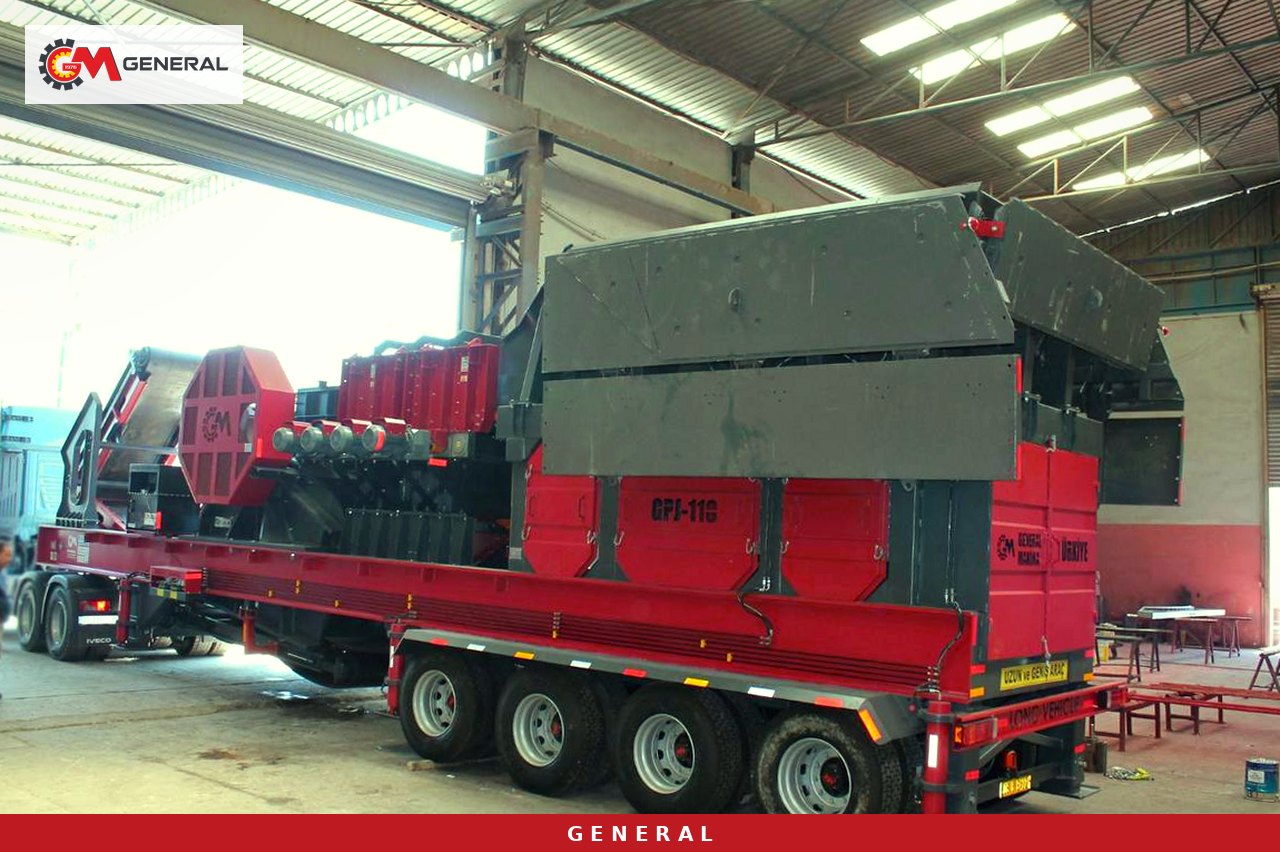
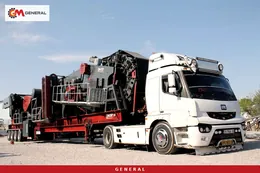
The GNR-MC110 in the photo belongs to the 200-300 t/h class and consists of two chassis of 55,000 kg each. It is too large for this article's band, but it shows well what kind of planning a heavy load needs on a forest road. In the 80-150 TPH band, the General 800 and GM 90JP are the lightest units at 35,000 kg.
Water, dust and noise at the forest edge
A pit cut into the forest is in direct contact with surrounding streams and vegetation. With a washing plant, muddy water should be held in staged settling ponds and returned to the circuit once clarified. In the dry season, water-spray dust suppression at belt transfers and stockpiles matters; in the wet season, sloped and drained stockpile areas take priority. Leaving a buffer strip between the plant and the forest cuts noise and keeps roots and falling leaves off the belts. For environmental and forest-use conditions, follow the current requirements of the competent Gabonese authority.
Frequently asked questions
Which model covers 80-150 TPH in a Gabon granite quarry?
For hard, abrasive granite or gneiss, the first candidate is the General 944 with GPJ 90 jaw and GM430 cone (120-180 t/h). If the rock has low abrasiveness, the General 800 (80-150 t/h) is a lighter, more economical package. The final decision comes from sample tests.
Is the tracked GM 90JP enough on its own?
The GM 90JP is a primary jaw crusher; at 70-180 t/h it produces coarse product and pre-sorted fines. If cubical chippings are needed for concrete or asphalt, a second-stage crusher and screening must be added behind it.
How is power supplied on an off-grid forest site?
The plants run on generators. The power-unit rating depends on the model: 450 kVA for the General 800, 550 kVA for the General 944, 350 kVA for the Mobil 90 and 250 kVA for the GM 90JP. Fuel supply should be planned with the risk of the road closing in the rainy season in mind.
What determines price and delivery time?
The chosen model, any additional secondary or washing unit, screen apertures, panel and humidity measures, spare-part scope and shipping method set the price. A firm price and schedule are given in a written quotation once we have your pit details and target products.
Conclusion and quotation
On Gabon's rainforest sites, the right machine for 80-150 TPH is chosen together with rock hardness, the clay load of the laterite cover, the bearing capacity of the access road and the area you can clear. The General 944 leads in hard granite, the Mobil 90 in clayey feed, the General 800 in soft rock and the GM 90JP in primary work that moves often. General Makina has been manufacturing in İzmir since 1976; its machines carry ISO 9001 and CE certification and a 1-year warranty excluding wear parts. Send your pit location, sample results and required fractions through our contact page and we will prepare a suitable configuration and quotation.
Definitions of technical terms: Glossary