EN — English
 TR — Türkçe
 DE — Deutsch
 RU — Русский
 FR — Français
 ES — Español
 AR — العربية
 SR — Српски

DR Congo Cobalt Mobile Jaw Crusher and Screener Plant 150-250 TPH
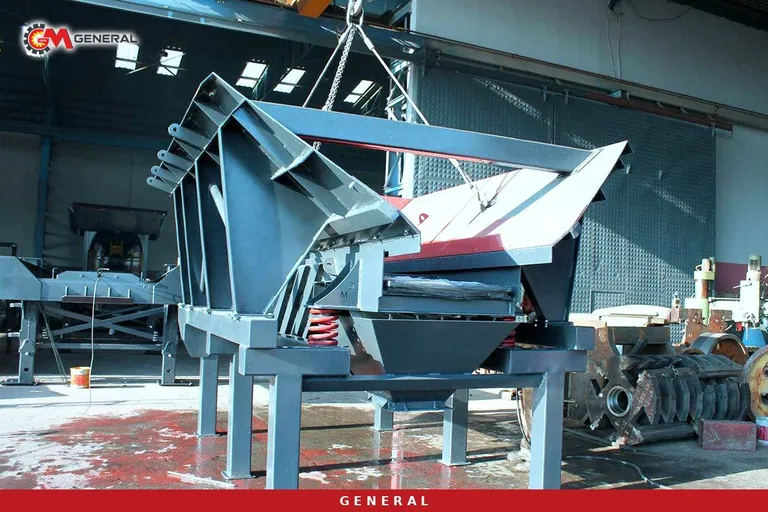
In the copper-cobalt belt of southern DR Congo, across Lualaba and Haut-Katanga provinces, an operator looking for a mobile jaw crusher for a cobalt site usually starts with two numbers: a target somewhere between 150 and 250 tonnes per hour, and the largest particle size the processing plant will accept. This article turns those two numbers into equipment. The focus is a single-chassis primary jaw unit with a mobile screening plant behind it, in other words a two-piece crusher and screener plant. We cover which model pair carries which tonnage, how to handle the size gap between jaw discharge and screen intake, and the dust and clay issues specific to cobalt ore, in the order you will meet them on site.
Every model figure comes from our product catalogue. We give no information on any licence, operator or tender in Lualaba or Haut-Katanga; the binding document for product size and capacity is the technical specification of the mine owner or the relevant authority.
Heterogenite, dolomite and clay: how cobalt ore behaves in the crusher
Cobalt in the belt occurs largely together with copper. In the near-surface oxide zone the main cobalt mineral is heterogenite, and this zone mostly yields weathered, crumbly, clayey material. The host rock is dolomitic shale and siliceous dolomite. In practice the same truckload brings soft, dust-making ore and hard, angular dolomite blocks together.
That mix affects the primary choice in two ways. Siliceous dolomite is abrasive, and in an impact primary the hammer and plate consumption climbs fast. A jaw crusher breaks by compression and keeps metal consumption low in abrasive rock. Its jaw plates are austenitic manganese steel (Mn13/Mn18), which work-hardens under impact. The clayey oxide ore, on the other hand, causes trouble at the feeder more than at the crusher: it packs the grizzly gaps and blinds screen wire. Choose the crusher with the hard dolomite in mind and the feeder with the clay in mind.
The 100 mm limit between jaw discharge and screen intake
This single figure explains the limits of a mobile jaw crusher and screener pair. The mobile screening plants in our catalogue (ME1650 and ME2060) accept 0-100 mm feed, and the ME2060 carries a 100 mm grizzly on its hopper. The primary jaw unit delivers 0-250 mm product. The catalogue output range of the GNRK 110 jaw is 150-225 mm, that of the GNRK 90 is 70-180 mm.
The consequence: part of the jaw product stays on top of the hopper grizzly of the screener. That coarse share is collected in a separate stockpile. If the processing plant's own crushing or milling intake accepts that size, the two-piece line is enough: coarse ore above 100 mm goes to one pile, and minus 100 mm is split into four fractions on the ME2060's triple-deck screen and sent to separate piles. If the plant wants a uniform product below 100 mm, a second crushing stage has to be added behind. Have the plant's feed specification in hand before making that call.
With oxide ore this layout has a bonus. A large part of the weathered, heterogenite-bearing material already arrives fine. When the screen pulls those fines onto their own pile, coarse dolomite and fine ore can be sampled for grade separately. The laboratory determines the grade distribution; the screen only makes the split possible.
GNR 90 and ME1650: around 150 TPH
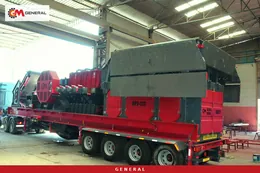
The GNR 90 primary unit carries a GNRK 90 jaw crusher (900×650 mm opening, 75/90 kW) and a 1000×3800 mm feeder; capacity is 70-180 t/h and weight 25,000 kg. Behind it sits the ME1650 dry screening plant rated at 120-180 t/h, built on an 18,000 kg one-piece chassis. This pair covers the lower end of the target range and suits sites that receive steady daily feed from a single pit.
GNR 110 and ME2060: the 250 TPH target
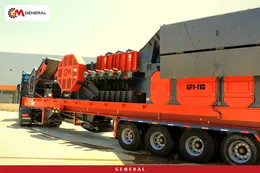
The GNR 110 unit puts the GNRK 110 jaw (1100×850 mm opening, 110/132 kW) on one chassis with a 1100×4750 mm feeder; capacity is 180-300 t/h and weight 55,000 kg. The ME2060 behind it handles that tonnage with 200-350 t/h capacity, a 20 m³ hopper and a 2000×6000 mm triple-deck screen. The screen motor is 22 kW, and the plant runs on a generator or mains. A capacity drop of about 10% on each lower deck is normal, so the finest aperture should be chosen against the tonnage of the fourth fraction.
Clayey oxide ore in the rainy season
A grizzly feeder works well on dry and medium-moisture ore. In the rainy season, sticky material from the oxide zone can plug the grizzly gaps. The mobile jaw unit with a wobbler feeder is designed for that case: stones advancing over rotating shafts rub against each other, clay and dust separate, and cleaner feed enters the jaw. Its capacity is 250-450 t/h, above the target band. For an oxide pit with high clay content it is an option to weigh against sample results.
Four set-ups from catalogue values
| Set-up | Primary unit | Primary capacity | Screening plant | Screen capacity | Screen feed |
|---|---|---|---|---|---|
| A | GNR 90 (GNRK 90, 25,000 kg) | 70-180 t/h | ME1650 (18,000 kg) | 120-180 t/h | 0-100 mm |
| B | GNR 110 (GNRK 110, 55,000 kg) | 180-300 t/h | ME2060 (2000×6000 mm, 3 decks) | 200-350 t/h | 0-100 mm |
| C | Jaw unit with wobbler feeder | 250-450 t/h | ME2060 | 200-350 t/h | 0-100 mm |
| D | GNR 110, no screen | 180-300 t/h | — | — | — |
Set-up D is for cases where the processing plant takes 0-250 mm coarse ore directly. B is the balanced pair closest to the 250 TPH target. In C the primary can outproduce the screen, so feeder frequency is set to the screen's capacity. All single-chassis primary units are listed under single-chassis mobile crusher unitsand the screening plants under sand washing and dry screening plants.
Moving between satellite pits and laying out the ROM pad
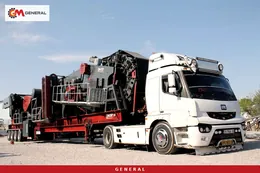
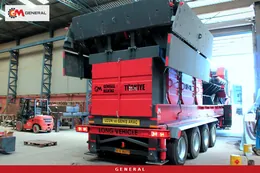
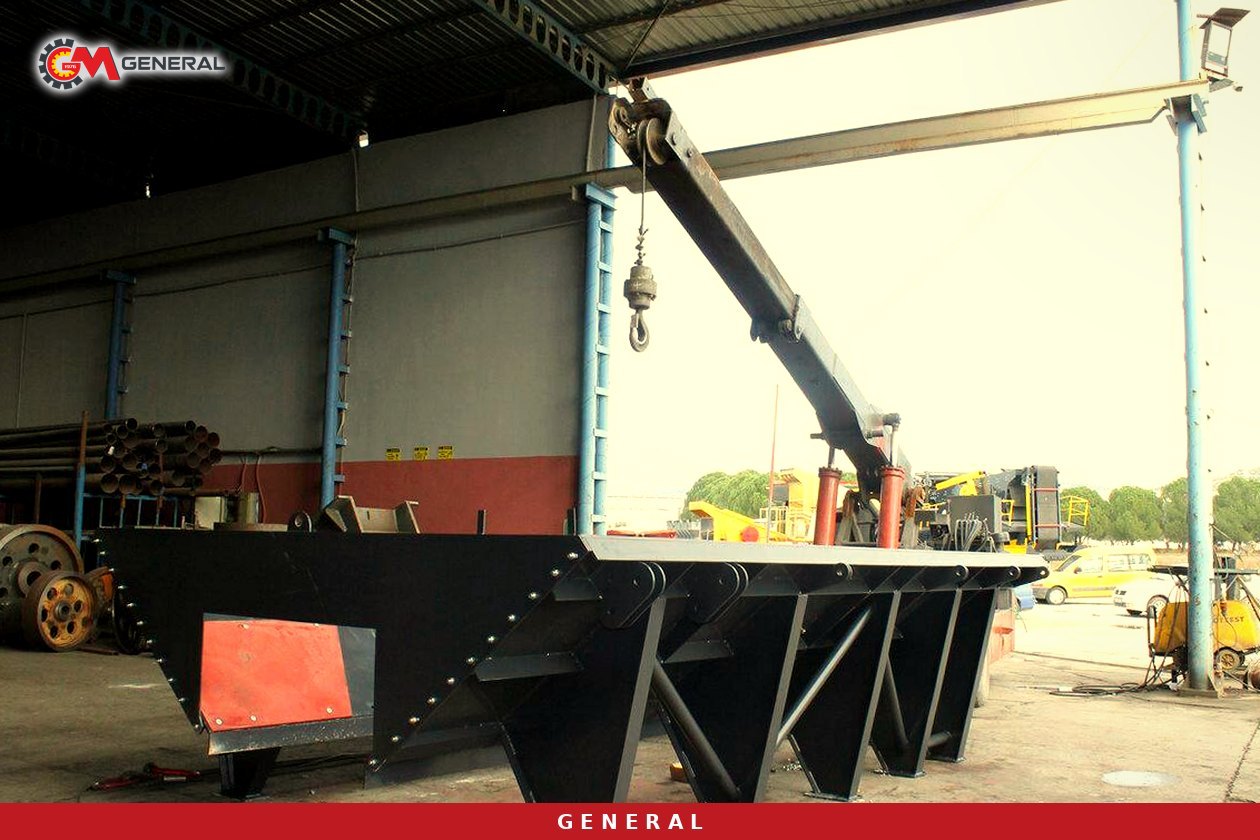
Many operations in the belt mine ore from several pits close to each other rather than from one large open pit. A stationary crushing plant then lengthens truck haul. A mobile line moves toward the pit that is producing. The GNR 110 unit is single-chassis, towed by one truck and set up on hydraulic legs with no foundation. The ME2060 has a twin-axle chassis (15 m × 4.10 m × 4.50 m), with remote control and a fan-cooled panel as standard.
Equipment usually reaches site by road from East or Southern African ports. Confirm route, bridge and road limits with your haulier and the relevant authority; for the 55,000 kg primary chassis the route plan should be settled before loading.
On site, keep the distance between the ROM pile and the primary hopper short. If loader cycle time grows, the jaw mouth empties and tonnage drops. A belt conveyor links the primary unit to the screen, and each fraction leaves the screen on its own belt to its own pile. If stockpile base drainage is not planned for the rainy season, the loader sinks into mud and the line runs without feed.
Cobalt dust and worker health
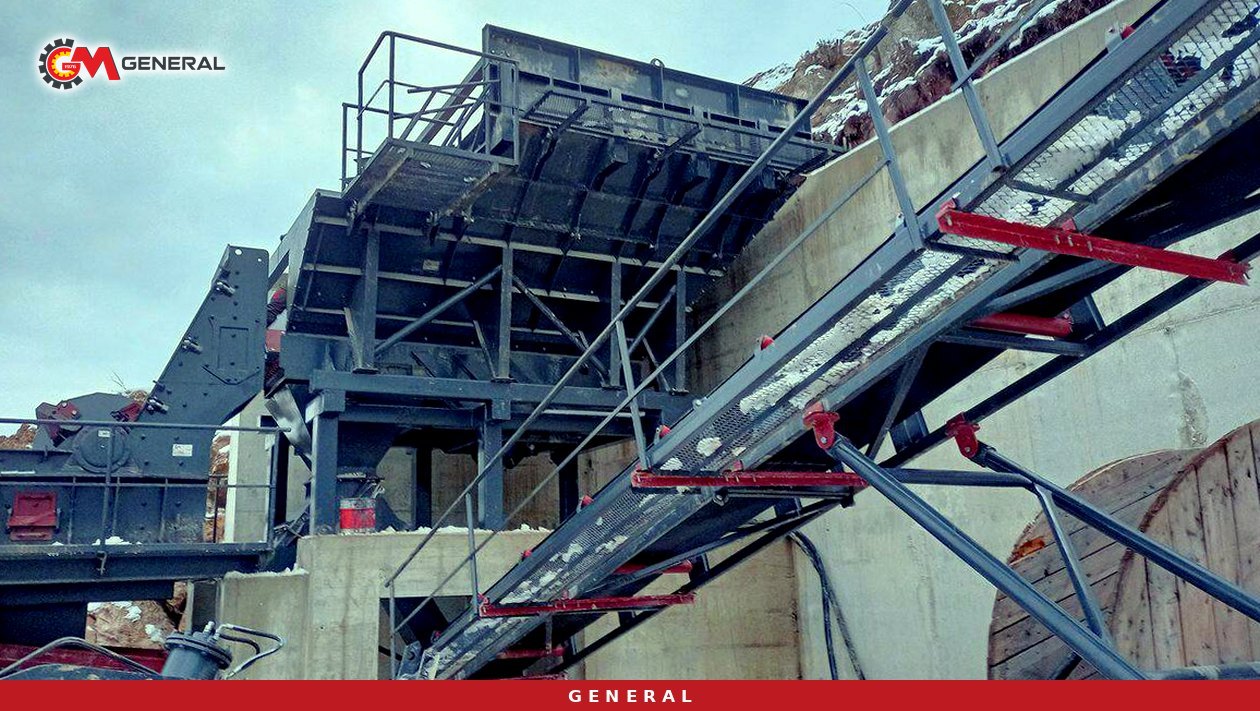
Inhaling cobalt-bearing dust is a health risk. On a cobalt site, dust control therefore belongs to occupational health as much as to environmental work. Dust is heaviest at the jaw discharge, at belt transfers and at screen discharge chutes.
Measures that can be chosen per project include water spraying at the jaw discharge and transfer points, covers on belt conveyors, dust curtains over the screen and suitable respiratory protective equipment for operators. In the dry season fine oxide ore makes a lot of dust; in the wet season the same material turns into mud. Spray water quantity should be adjustable between those two states, since too much water speeds up blinding of the screen wire. Set site-specific hygiene rules together with the operation's occupational health team.
Sampling, sieve analysis and plant intake: preparing the order
For the quote to arrive with the right configuration, we need the following:
- The largest block size in the ROM and the post-blast size distribution.
- The ratio of oxide ore to dolomite and how it changes from pit to pit.
- Abrasiveness and moisture values from a laboratory, and clay content where possible.
- The largest particle size the processing plant accepts and the fractions required.
- Daily operating hours and how the target tonnage is spread across shifts.
- Power source: generator or grid.
- How often the line moves between pits and the condition of site roads.
The rock properties of a given pit are never written from guesswork; sample testing is the basis of this list. Our article mobile screening plant or a crushing and screening combination also helps with the decision.
Frequently asked questions
Can an impact primary be used for cobalt ore?
If the pit produced only soft oxide ore, it could be considered. Once siliceous dolomite is mixed in, the wear parts of an impact primary are consumed quickly. A jaw crusher working by compression gives more predictable cost on the mixed feed of the belt.
Can the ME2060 screen the whole crusher product?
The ME2060 accepts 0-100 mm feed. The part of the jaw product above 100 mm is separated on the hopper grizzly and stockpiled on its own. If that part also has to be screened, a second crusher is needed behind the primary.
If clayey ore blinds the screen, is a wash plant needed?
The ME series screens dry. If clay causes serious blinding, the YM series with washing is considered. Washing, however, needs a water source and slurry management, so the decision should follow sample testing.
What determines price and warranty?
The chosen primary unit, screening plant, number of belts, generator requirement, dust measures and spare wear-part package set the price. Our machines carry a 1-year warranty; wear parts are excluded. The company has manufactured in Izmir since 1976 and holds ISO 9001 and CE certification.
Final assessment
For a 150-250 TPH target on a cobalt site in DR Congo, the most balanced pair is the GNR 110 primary unit with the ME2060 screening plant; around 150 TPH, the GNR 90 with the ME1650 is enough. The decision rests on the particle size the processing plant accepts and on the clay share of the oxide ore. For wheeled, fully equipped alternatives see wheeled mobile crushing plants; for details see the wheeled primary jaw unitthe jaw unit with wobbler feeder for clayey ore and the GNR ME2060 for screening. Send your sample results and plant intake specification through our contact page and we will prepare a configuration and quote for your crushing and screening plant.
Definitions of technical terms: Glossary