EN — English
 TR — Türkçe
 DE — Deutsch
 RU — Русский
 FR — Français
 ES — Español
 AR — العربية
 SR — Српски

Djibouti Port & Free Zone Aggregate Crushing Plant 150-250 TPH
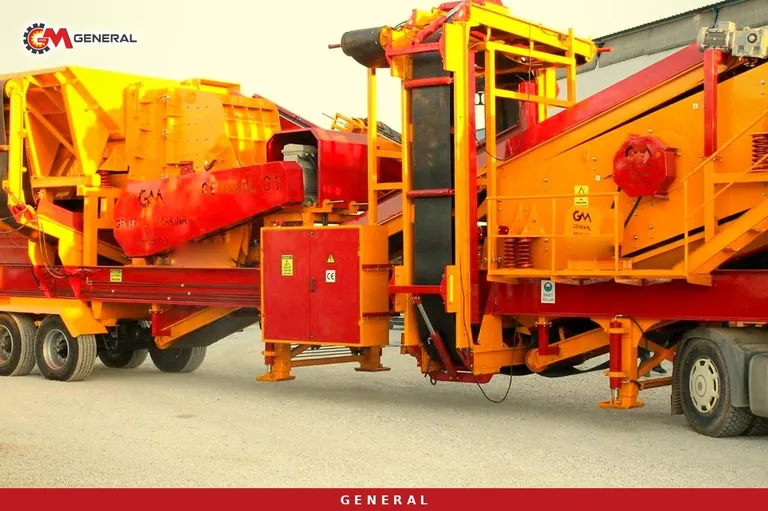
In Djibouti, aggregate demand starts at the coast: quay walls at container and bulk terminals, warehouse and factory buildings inside the free zones, and the logistics roads that tie them together. What these jobs share is that concrete and fill dictate the contractor's schedule; if stone runs late, so do crane rails, warehouse slabs and yard paving. A plant in the 150-250 TPH band is a realistic target for feeding a mid-size port expansion and the free-zone construction that comes with it from a single quarry. Below we start from Djibouti's volcanic ground, its hot and salty air and the route that ship-borne equipment takes to site, and show with real figures which General Makina configuration makes sense under which condition.
From quay concrete to warehouse slabs: the free-zone stone list
A port and free-zone package consumes aggregate in three separate items, each with its own specification. If the screen layout is not built to serve all three at once, the quarry either piles up stock or runs permanently short of one fraction.
Structural concrete: quay walls, pile caps, precast units
Concrete in contact with seawater is tightly controlled for particle shape, fines content and cleanliness. The need here is separate fractions such as 0-5, 5-12, 12-19 and 19-40 mm, with cubical material and a low share of flaky and elongated particles. This is the most sensitive output of the plant and the item that weighs most on crusher selection.
Industrial floors and yard paving
Warehouse and bonded-store slabs in the free zone are poured thick and wide because of forklift and racking loads. Container stacking yards and internal roads consume large volumes of well-graded material as sub-base and base course. For this material tonnage matters more than particle shape.
The third item is fill and rough rock, which is usually hauled straight from the face without passing through a crusher. Confirm exact fraction limits and quality criteria with the current specifications of the port authority, the free-zone operator and the project engineer; the screen decks and the return conveyor are designed around those documents.
Volcanic ground: the character of the rock that will meet the crusher
Djibouti lies within the Afar depression, and most of the country's surface is volcanic rock, basalt above all. Along the coast, coral-derived limestone and loose sediments appear in places. This duality drives the purchase decision: dense basalt is strong in compression and abrasive, while coral limestone is soft, porous and breaks easily.
For basalt the recommended line is a jaw primary followed by a cone secondary working on compression; wear parts last longer with this choice. An impact secondary also handles basalt and gives a more cubical product, but liners are changed more often and that cost has to be budgeted. In a limestone-dominated quarry a single-body impact plant is an economical option. Some of Djibouti's volcanic rock can be vesicular or glassy, and such material is not always suitable as concrete aggregate. So do not pick a model before sampling the candidate quarry and testing Los Angeles abrasion, water absorption and compressive strength. Our article on choosing a mobile plant for basalt and granite gives the background to this decision.
Three real routes to 150-250 TPH
Within the General Makina range, the jaw-primary mobile model that covers this band on its own is the GNR-MC110. Alternatively, two smaller units can run in parallel, or a stationary line can be built if the quarry will stay put for years. The table holds only verified values from the product pages; unknown cells are marked with a dash.
| Configuration | Capacity | Max. feed | Crushing stages | Screen | Power | Weight |
|---|---|---|---|---|---|---|
| GNR-MC110 (twin chassis) | 200-300 t/h | 900 mm | GPJ 110 jaw + DMK03 impact | 2000×6000 mm, 4-deck | 750 kVA generator | 2 × 55,000 kg |
| 2 × General 944 (parallel) | 2 × 120-180 t/h | 800 mm | GPJ 90 jaw + GM430 cone | 2 × 1600×5000 mm, 3-deck | 2 × 550 kVA | 2 × 70,000 kg |
| General 01 (limestone-dominated quarry) | 120-180 t/h | 700 mm | GPS 1210 impact (primary + secondary) | 1600×5000 mm, 4-deck | 550 kVA | 55,000 kg |
| Stationary line: GNRK 110 primary + cone secondary | Primary: 200-350 t/h | Mouth 1100×850 mm | Jaw + cone | — | Primary motor 110/132 kW | — |
For a single line: GNR-MC110
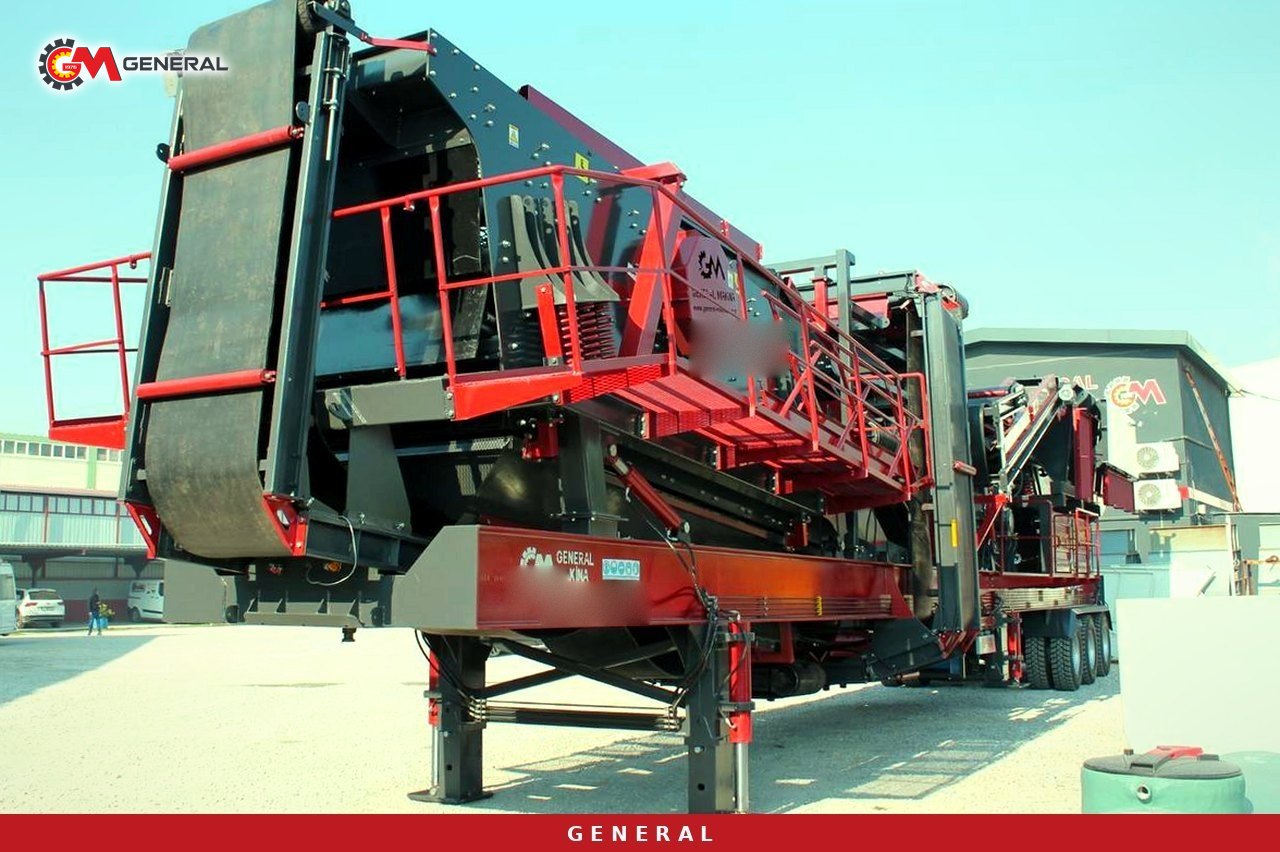
The GNR-MC110 splits the primary group and the secondary-and-screening group across two chassis. Because the primary chassis can also run alone, you can produce only rough fill and sub-base in the first months and bring the secondary group online once demand for concrete aggregate begins. The four-deck 2000×6000 mm screen separates the four fractions that quay concrete requires in a single pass.
When converting hourly capacity into a schedule, account for actual running time of generator and crusher, maintenance stops and the slower loading pace in the hottest hours. A nominal 200 TPH stays on paper if the quarry's truck and loader fleet is undersized; feeding equipment must be planned at the same capacity as the plant.
For redundant output: two General 944 units
If concrete pouring stops on a port job, penalties and idle-crane costs follow. With two General 944 plants installed in parallel, one keeps producing while the other is in maintenance, and only one runs when demand is low. The cone secondary limits wear in basalt. Since the screen has three decks, plan an additional screen if a fourth fraction is needed.
If coastal coral limestone is to be processed, the General 01 covers the lower end of the band with its single impact body; a second unit is needed to approach 250 TPH. If the quarry will serve a free-zone expansion for years, stationary crushing plants provide a larger feed opening and more screen decks; all mobile options are listed on the wheeled mobile plants page.
Heat, salt air and scarce water: keeping the plant running
Djibouti is very hot for most of the year, and coastal air carries moisture and salt. The two factors attack different parts of the machine: heat strains generator and hydraulic cooling, while salt accelerates corrosion on painted surfaces and electrical connections. Fresh water is also limited, so the water to be spent on dust suppression must be planned from the outset.
Measures that can be selected per project include hot-climate radiators and oil coolers for the generator and hydraulic unit, frequent checks of air filters, sealed electrical cabinets with regularly cleaned terminals, and a paint system suited to marine air. For dust, covers on conveyors and targeted spraying at transfer points use water far more efficiently than wetting the whole yard. The grizzly feeder ahead of the primary crusher removes fines at the start, cutting needless dust generation and wear inside the crusher.
On a remote site the most expensive stoppage is the one caused by running out of wear parts. Shipping at least one change set of manganese jaw plates, impact blow bars and cone liners with the first delivery is the simplest insurance for continuous output in a market like Djibouti, where parts arrive by sea. Screen meshes should be stocked the same way; a torn mesh on a fine deck pushes concrete aggregate out of specification.
Maintenance in the midday heat is both inefficient and risky. Guard-railed platforms giving safe access to screen and crusher make it easier to move work to cooler hours and finish servicing quickly.
From ship to site: unloading at Djibouti and road transport
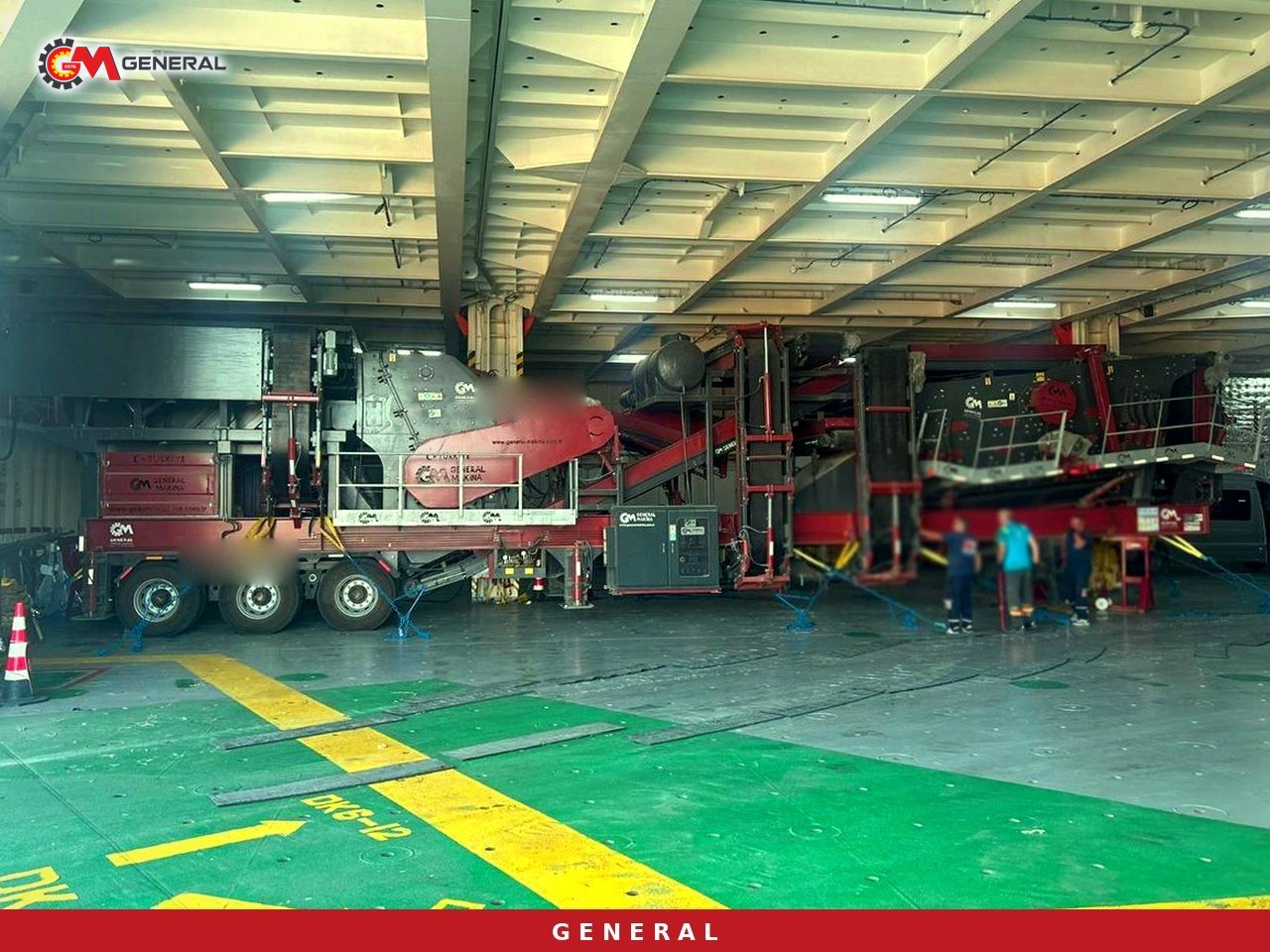
A wheeled mobile plant leaving Izmir can be driven onto a RoRo vessel on its own axles; this needs no crane lift and makes discharge just as easy. Plan the GNR-MC110 as two separate chassis and each General 944 as one vehicle. Exit from the port, import formalities under free-zone status and temporary admission depend on the current rules of the operator and customs; confirm the procedure with the importer's customs broker before ordering.
The quarry is usually outside town with no grid connection. The generator ratings in the table, fuel logistics and spare-parts stock therefore have to be planned together. Bridges, bends and height limits along the road may require heavy-haul permits; transport dimensions are given on the product pages.
Information to prepare before requesting a quote
- Location of the candidate quarry and sample test results (abrasion, water absorption, compressive strength)
- Fractions required for concrete, floors and road layers, plus daily tonnage
- Daily operating hours and shift pattern
- Whether grid power exists on site, and generator preference
- Water source and the volume available for dust suppression
- Whether the plant stays on one site or moves when the project ends
- Port of arrival, free zone and the importer's customs procedure
Frequently asked questions
Can one plant produce quay concrete aggregate and road base together?
Yes. The four-deck GNR-MC110 separates concrete fractions while well-graded base material is taken from a separate stockpile. In a two-unit setup one plant can be dedicated to concrete aggregate and the other to road material.
Can an impact crusher be used on Djibouti basalt?
It can, and it gives a cubical product, but wear-part consumption is higher than with a cone crusher. Decide once sample tests have clarified abrasiveness.
What warranty and certificates apply?
The machines carry ISO 9001 and CE certification, with a 1-year warranty excluding wear parts. General Makina has been manufacturing in Izmir since 1976.
What drives price and delivery time?
The chosen configuration, number of screen decks, generator, climate package and shipping method. Once these are defined, a tailored quote is prepared.
Final word
In Djibouti the right crushing and screening plant is chosen first by whether the rock is basalt or limestone, then by which fractions the port and free zone need and in what volume. The GNR-MC110 stands out for a single line, two General 944 units for redundant output and a stationary line for a long-life quarry. Send your sample results and tonnage needs through our contact page and our engineers will prepare the configuration and quotation accordingly.
Definitions of technical terms: Glossary