EN — English
 TR — Türkçe
 DE — Deutsch
 RU — Русский
 FR — Français
 ES — Español
 AR — العربية
 SR — Српски

Qatar Local Limestone Aggregate Crushing Plant 200-300 TPH vs Imports
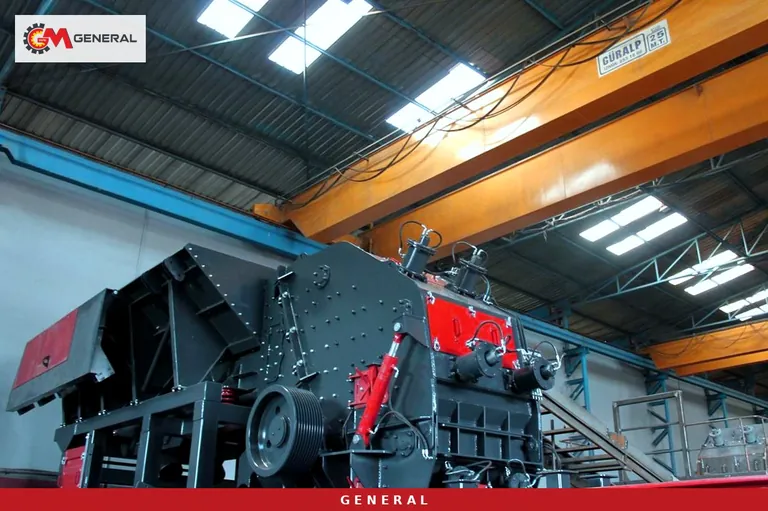
A contractor buying aggregate in Qatar chooses between two sources: hard rock arriving by ship or the peninsula's own limestone. Imported stone meets the toughest lines of a specification, but freight, port handling and vessel schedules are built into the cost of every tonne. Local limestone reaches site by truck in a short time, yet it does not suit every job. This article explains which products a local 200-300 TPH crushing line can take over from imports, which real models it can be built with, and which calculations should be done before committing capital. We give no information on any particular quarry licence, reserve or public tender volume; confirm those with the relevant authority and the project specification.
Qatar's aggregate equation: hard rock by sea, limestone underfoot
The surface of the Qatar peninsula is largely limestone and dolomite; igneous rocks such as granite, basalt or gabbro are not found locally. For that reason a large share of the hard aggregate used in high-strength concrete and asphalt wearing courses has traditionally been shipped in from neighbouring countries. Limestone, by contrast, can be crushed where it is quarried, close to the job site.
The decision is often framed as all or nothing, but the realistic question is different: which part of the total tonnage can limestone cover? Fill, sub-base, stabilised layers under pavements, block and paver production take up a big share of the tonnage, and their specifications are usually more open to limestone. Leaving imported hard rock only for the items that truly need it reduces dependence on shipping and the volume of material sitting in stockyards.
Where can local limestone replace imported aggregate?
The limit of limestone is set by the rock itself, and it changes from quarry to quarry even within the same formation. Hardness, water absorption, Los Angeles abrasion loss, sulphate and chloride content must be measured in a laboratory before any promise is made for any product. Before investing, take samples from several depths and run the tests your project specification calls for.
Items that usually suit limestone
Fill and backfill, sub-base and base course, ground improvement, low and medium grade ready-mix concrete, and production of hollow blocks, kerbs and pavers are where limestone performs well. In these products particle shape and grading matter more than rock hardness, and the cubical grain from an impact crusher is a real advantage.
Items best left to hard rock
For asphalt wearing courses, high-strength structural concrete and skid-resistant surfaces, specifications often demand abrasion and polishing values that limestone cannot reach. Imported hard aggregate will stay on the agenda for these items for some time. A well-planned local line does not eliminate imports; it narrows the tonnage that has to be imported.
Import or produce locally: which cost items decide?
Quoting figures here would mislead, because freight, exchange rates, quarry operating costs and haul distance vary from project to project. Instead we suggest a formula that puts both options in the same frame. The delivered cost of an imported tonne reads roughly as: freight + port handling and storage + haulage from port to site + vessel delay risk. The cost of a local tonne is: quarrying and blasting + crushing and screening operation (energy, wear parts, staff) + haulage from quarry to site + the investment's share per tonne.
A hypothetical example: if your line produces X tonnes of saleable product per year and the investment is Y units, the investment share per tonne is Y / (X × years of use). If this share plus operating cost stays below the delivered cost of an imported tonne, local production makes sense. Add these items to the calculation as well:
- Saleable yield: how much of the quarry dust and undersize fines can actually be sold?
- Wear part consumption: blow bar life is long in clean limestone, but siliceous bands upset that balance.
- Power source: grid connection or diesel generator?
- Stockyard: the safety stock kept because of port queues can shrink with local production.
- Service life: a single project lasting a few years or a long-term commercial quarry?
To run the per-tonne calculation with your own data, use our energy and wear cost calculator and set the two scenarios side by side.
Real configurations for limestone at 200-300 TPH
Because limestone is a low-abrasion rock, a line built around a primary impact crusher is the logical starting point in this capacity band: in limestone the impact crusher reaches reduction ratios of up to 20:1, reducing large blocks in a single stage and producing cubical grain. The table below brings together catalogue values of the models that cover the target range.
| Option | Main crusher | Capacity (t/h) | Max. feed (mm) | Power | Screen |
|---|---|---|---|---|---|
| Stationary line, GNR PDK02 | Primary impact, rotor 1400×1200 mm | 200–300 | 900 | 200 kW motor | Selected per project |
| Portable unit, M-PDK02 | Primary impact, feeder 1200×4750 mm | 200–300 | 1200 | 250 kW motor | Separate screen unit needed |
| Wheeled plant, General 02 | GPS 1413 primary impact | 250–300 | 1000 | 660 kVA generator | 2000×5000 mm, 4 decks |
| Wheeled plant, General 03 | GPS 1415 primary impact | 250–375 | 900 | 750 kVA generator | 2400×5000 mm, 4 decks |
| Growth margin, GNR PDK01 | Primary impact, rotor 1400×1500 mm | 250–500 | 1000 | 315 kW motor | Selected per project |
Stationary line for a long-life commercial quarry
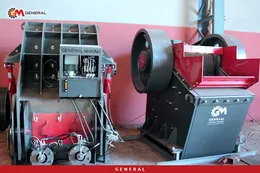
If the quarry will work in the same place for years, fixed crushing plants are the most flexible solution: on a concrete foundation you get a larger screening area, more stockpile conveyors and room to add a second crusher later. At the heart sits the GNR PDK series primary impact crusher; PDK02 is enough for 200-300 TPH, and PDK01 can be considered if tonnage is expected to grow. The GNR 110 vibrating feeder placed in front of it is also rated at 200~300 t/h in the catalogue, and its grizzly section removes soil before it reaches the crusher. As a Gulf example of a similar arrangement, see our GNR PDK 02 stationary plant producing 250 t/h in desert conditions in Saudi Arabia.
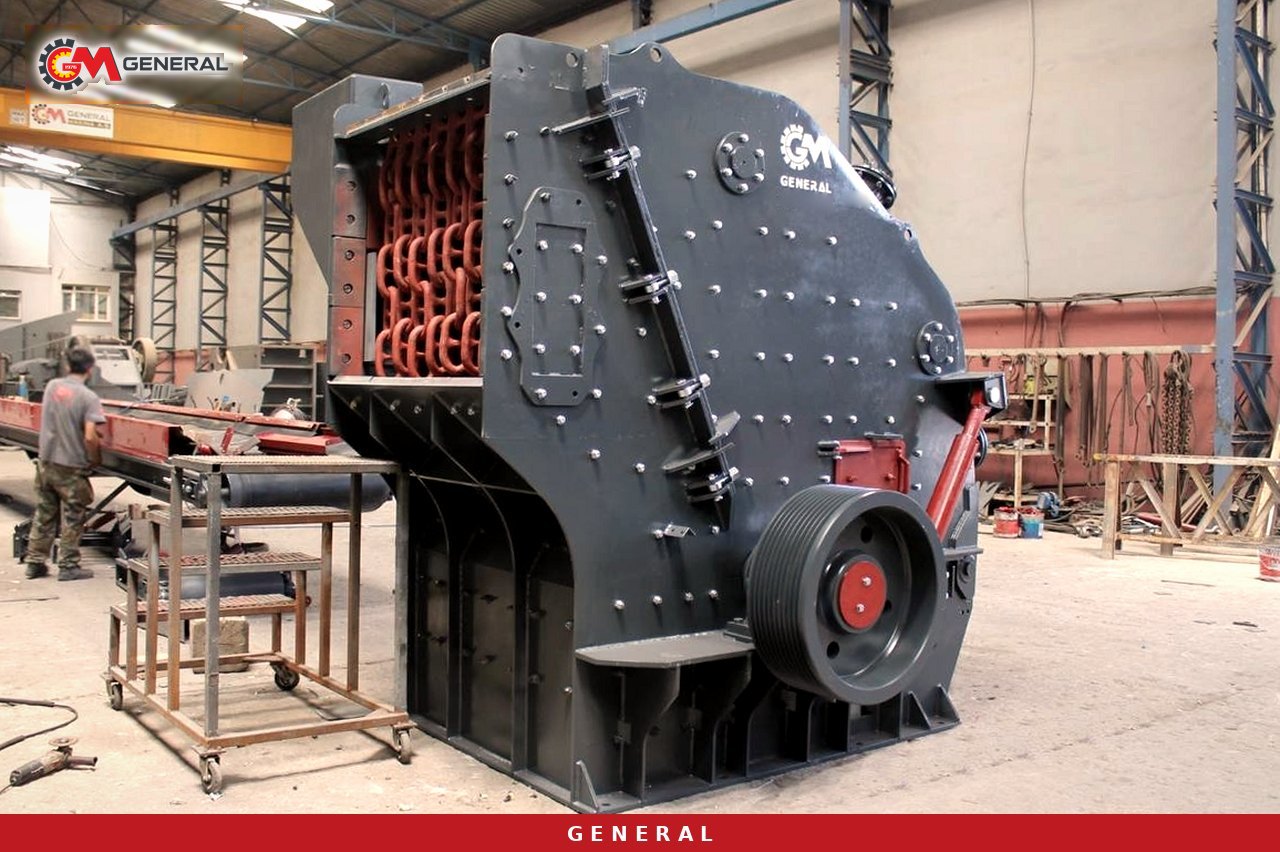
Wheeled and portable options for the life of a project
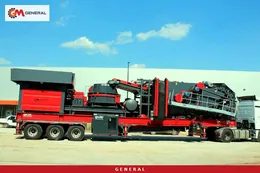
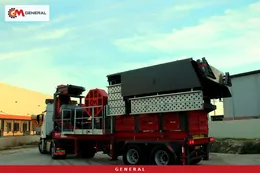
If crushing demand is tied to the lifetime of a specific infrastructure package, a plant that moves from site to site lowers investment risk. The General 02 wheeled mobile plant delivers 250-300 TPH on one chassis and splits output into 0-5, 5-12, 12-19 and 19-40 mm with its 4-deck screen; General 03 extends the upper limit to 250-375 TPH. For buyers who want their own screening layout, the M-PDK02 portable primary impact crusher combines the feed hopper and the crusher on one chassis. Further options are listed under mobile crushing and screening plants and portable crushers.
Limestone line flow: matching the standard of imported material
Whether local product can compete with imported aggregate depends on clean and consistent fractions. The flow has four links: vibrating feeder with grizzly, primary impact crusher, multi-deck screen and stockpile conveyors. Overburden soil and clay pockets are common in limestone quarries; if grizzly pre-screening does not remove them before the crusher, clay content rises in the fine fraction and the batching plant rejects the product.
If demand for manufactured sand is high, the line can be completed with a tertiary crusher that processes oversize in a second stage. Since the fines content and methylene blue value of limestone sand can be limiting in concrete, the need for sand washing should be judged from sample results. Blow bar alloy is also chosen to suit the rock: high-chrome white iron gives long life in clean limestone, while chert or siliceous bands in the quarry call for that choice to be reviewed.
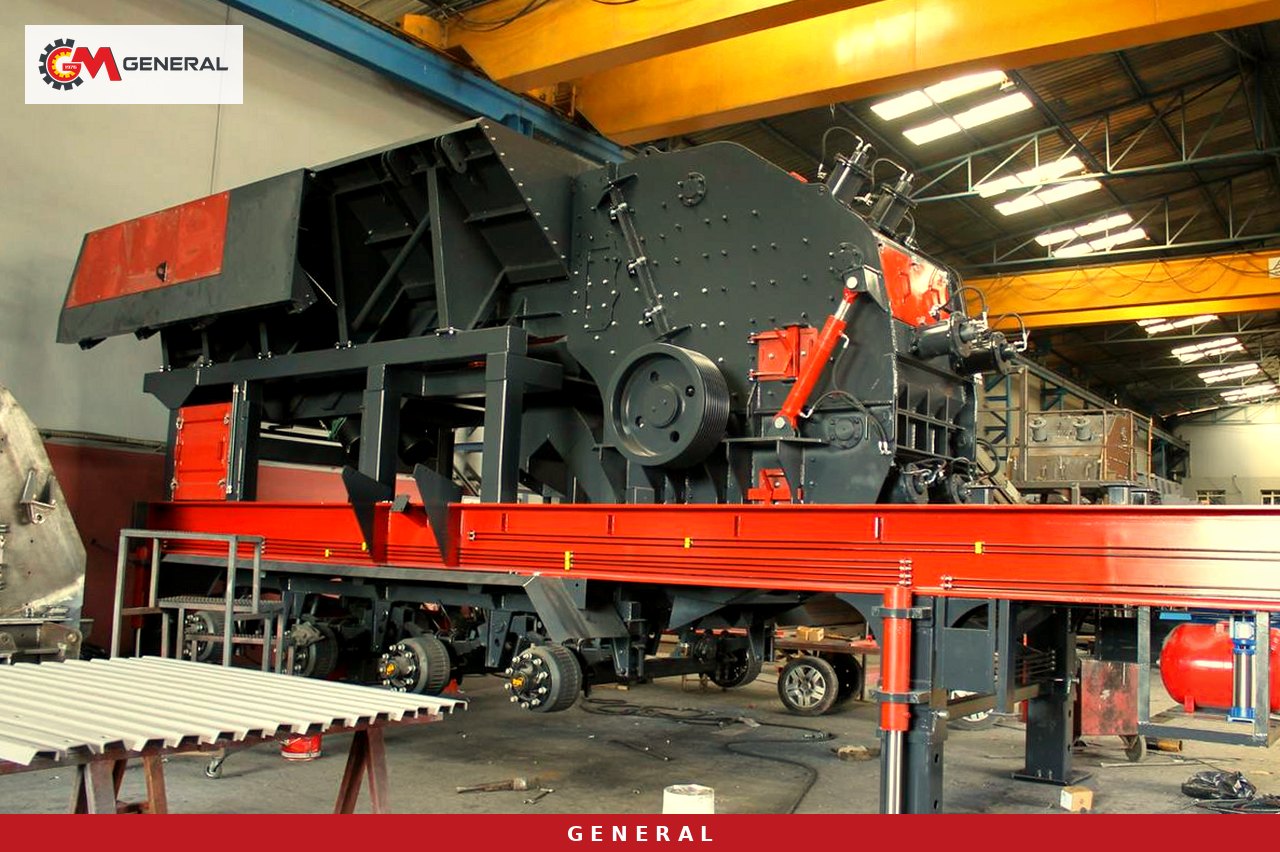
Keeping the line running in Gulf heat and dust
High summer temperatures and wind-blown fine dust in Qatar affect equipment selection as much as capacity does. Limestone generates plenty of fine dust when crushed, and it has to be managed for environmental permits as well as machine life. Measures that can be selected per project include:
- Water-spray dust suppression at the crusher discharge and conveyor transfer points; plan the water source and its quality from the start.
- Enclosed conveyors and covers at screens and transfer points.
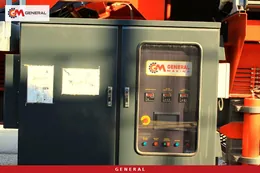
- Cooling and air filtration for the generator, engines and electrical panel sized for high ambient temperature; shading or an air-conditioned cabin for the panel.
- A maintenance plan with filter and oil changes more frequent than the manufacturer interval during dusty periods.
- Shift planning: limit outdoor maintenance during the hottest hours, and confirm local working-hour rules with the competent authority.
Information to prepare before requesting a quote
To propose the right configuration we need: test results from quarry samples (hardness, abrasion, water absorption, clay content), the target product list and monthly tonnage per fraction, the largest block size in the quarry, grid or generator preference, whether the site is permanent or temporary, and the dimensions of the installation area. With this information ready, the plant layout and equipment list come together much faster. Shipment to Qatar is planned by sea; since loading dimensions vary by model, we recommend planning port and customs steps together with your importing company.
Frequently asked questions
Can local limestone fully replace imported gabbro?
In most projects it cannot. It can replace it in fill, sub-base, blocks and low to medium grade concrete; for asphalt wearing courses and high-strength concrete the specification may require hard aggregate. Which items are open to limestone is decided by the project specification and sample tests.
Should I choose a stationary line or a wheeled plant?
If the quarry will operate in the same place for many years, a stationary line offers more screen decks and room to grow. If production is tied to a specific project and the machine will move to another site when the work ends, wheeled plants such as General 02 or General 03 are a better fit.
What warranty and certificates apply?
Our machines carry ISO 9001 and CE certification, with a 1-year warranty excluding wear parts. We have been manufacturing in Izmir since 1976 and export mainly to the Middle East and North Africa.
What do price and delivery time depend on?
The selected configuration, the number of screens and conveyors, generator or panel choice, extra equipment such as dust suppression and shipping terms determine the price. Delivery time depends on the production schedule at the time of order; both are settled in a written quotation based on your requirement list.
Conclusion
In Qatar, local limestone cannot cover all imported hard aggregate, but it can supply the fill, base and block items that make up the largest share of tonnage. For 200-300 TPH, a PDK02-based stationary line or a General 02 / General 03 wheeled plant are suitable starting points. Contact us with your sample results and product list, and we will prepare a written quotation with a plant layout and equipment list matched to your quarry.
Definitions of technical terms: Glossary