EN — English
 TR — Türkçe
 DE — Deutsch
 RU — Русский
 FR — Français
 ES — Español
 AR — العربية
 SR — Српски

Chad N'Djamena Stone Shortage: Aggregate Crushing Plant 150-250 TPH
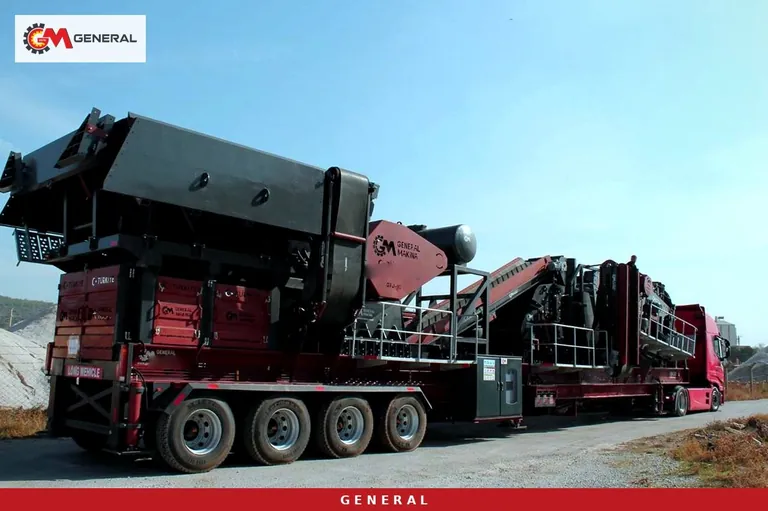
N'Djamena sits on a flat alluvial plain where the Chari and Logone rivers meet. Under the city there is clay, silt and river sand; the hard rock needed for concrete and roads does not outcrop anywhere close. The hills that hold granite and basalt lie in other parts of the country, and the road between them and the capital is long. That is why crushed stone on N'Djamena sites is both expensive and late against tender schedules. When a contractor in the city asks for 150-250 TPH of crushing capacity, the first job is not choosing a brand: it is deciding where the rock will be broken and which material is worth putting on a truck. This article works through that decision with real wheeled models, together with the haulage and power conditions that shape it.
Where the shortage comes from: plenty of sand, distant rock
Cities built on alluvial plains share one problem: fine material is everywhere, coarse sound stone is nowhere. In N'Djamena river sand can be won locally, but sub-base for asphalt, concrete aggregate and drainage fill all need crushed hard rock. Chad's crystalline basement rocks, such as the granite hills around Guéra or outcrops in the south-west, are far from the capital. As a result, most of the price of every tonne of aggregate is truck kilometres, not crushing cost.
This changes the job of the crushing plant. Besides reducing stone, the plant decides what goes onto the truck: only saleable, correctly sized material. Raw blasted rock carries overburden, soil and unusable oversize. Hauling that hundreds of kilometres and sorting it in town means paying to move dead load. Do not rely on general geology for the quarry: take samples from the candidate site and have abrasiveness and compressive strength tested, because the machine choice follows from those results.
Where to crush: at the quarry face or on the edge of town?
A city whose quarries are far away has two possible layouts. Both have their place, but at a high tonnage like 150-250 TPH the gap between them widens.
Crushing at the quarry
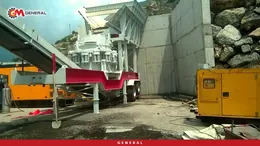
The wheeled plant is set up in the quarry, the rock is split there into commercial fractions such as 0-5 / 5-12 / 12-19 mm, and only finished product travels to the city. Overburden and soil stay behind, and trucks carry only the tonnage that is sold. The price is that power, water, fuel and wear parts must reach the quarry, and the crew works on a remote site.
Crushing on the edge of the city
Blasted rock is brought to town and crushed around N'Djamena. Power and logistics get easier, but moving large blocks needs heavy dump trucks, and part of the hauled load never becomes product. This layout only makes sense when the quarry is relatively close, or when the plant is also meant to process demolition concrete from inside the city.
What a wheeled mobile plant brings here is flexibility: a line that works at the quarry face in the first year can be packed up and moved when the deposit runs out or the tender work shifts to another region. A stationary plant is a risky investment until it is certain that one quarry holds enough reserve for many years.
Real models for a 150-250 TPH target
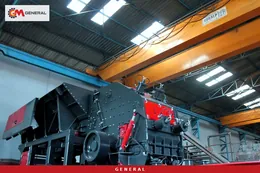
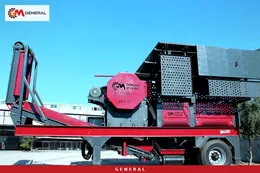
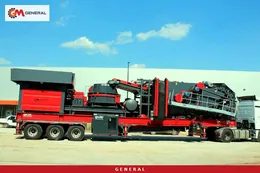
No single machine covers this range end to end; its lower and upper parts fall to different models. Among the wheeled mobile crushing plants these are the ones suited to granite and basalt:
| Model | Capacity | Feed | Crushers | Screen | Generator | Weight |
|---|---|---|---|---|---|---|
| General 950 | 120-180 TPH | 800 mm | GPJ 90 jaw + DMK01 impact | 1600×5000 mm, 3-deck | 600 kVA | 70,000 kg |
| General 944 | 120-180 TPH | 800 mm | GPJ 90 jaw + GM430 cone | 1600×5000 mm, 3-deck | 550 kVA | 70,000 kg |
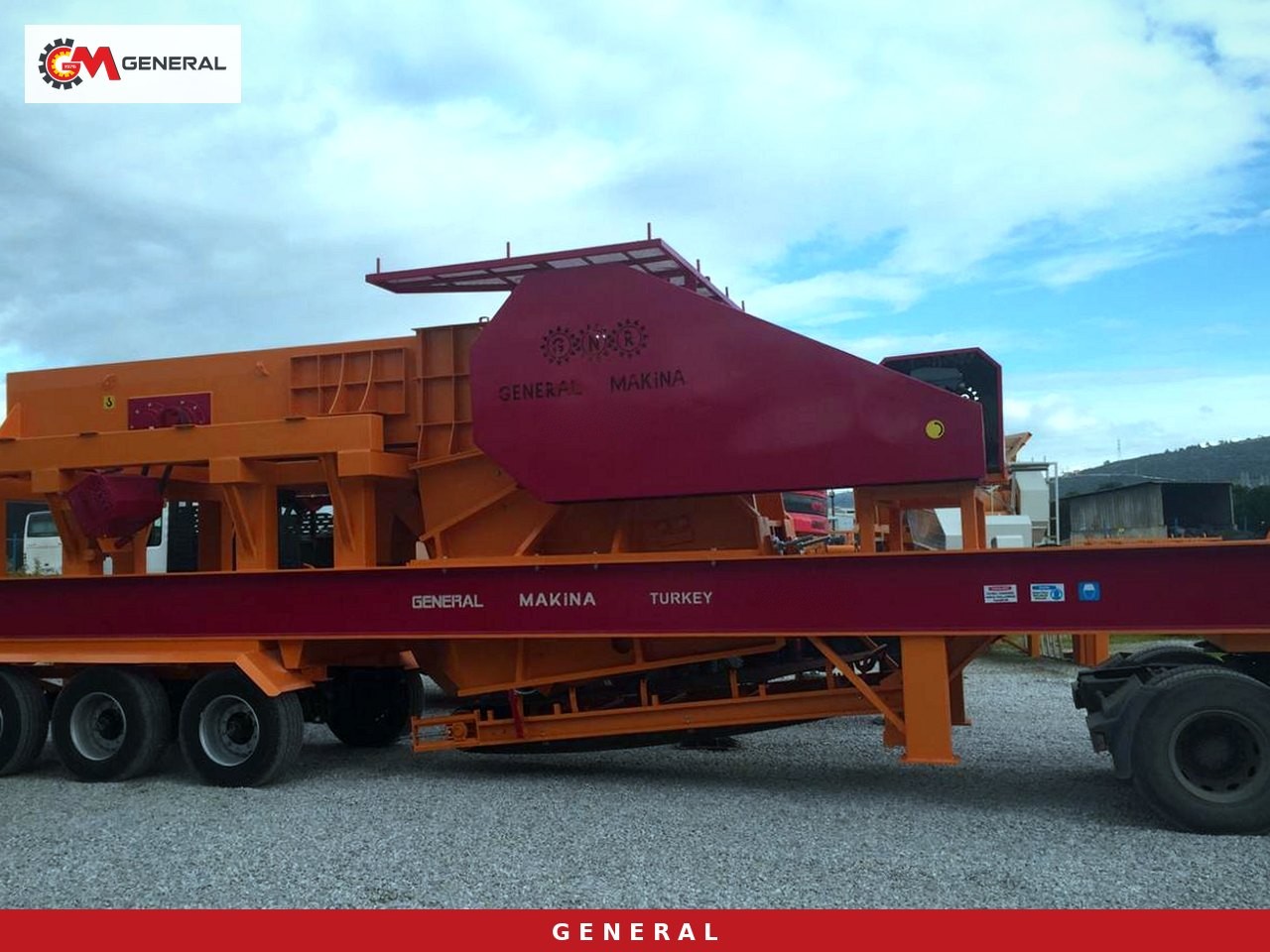
| GNR-MC110 | 200-300 TPH | 900 mm | GPJ 110 jaw + DMK03 impact | 2000×6000 mm, 4-deck | 750 kVA | 2 chassis, 55,000 kg each |
| General 800 | 80-150 TPH | 600 mm | PDK 1280 primary impact | 1300×4000 mm, 3-deck | 450 kVA | 35,000 kg |
If the target sits around 150-180 TPH, the General 950 brings a jaw and an impact crusher together on one chassis. If the target climbs to 200 TPH and above, the GNR-MC110 is in the right range: it is built on two separate chassis and the primary group can also run on its own. At a remote quarry this allows staged investment: first the primary chassis is set up and produces pre-crushed material, then the secondary chassis is added once sales volume is clear. If demand will stay above 250 TPH for long periods, running two wheeled units side by side in the same quarry, or a stationary configuration, should be costed separately.
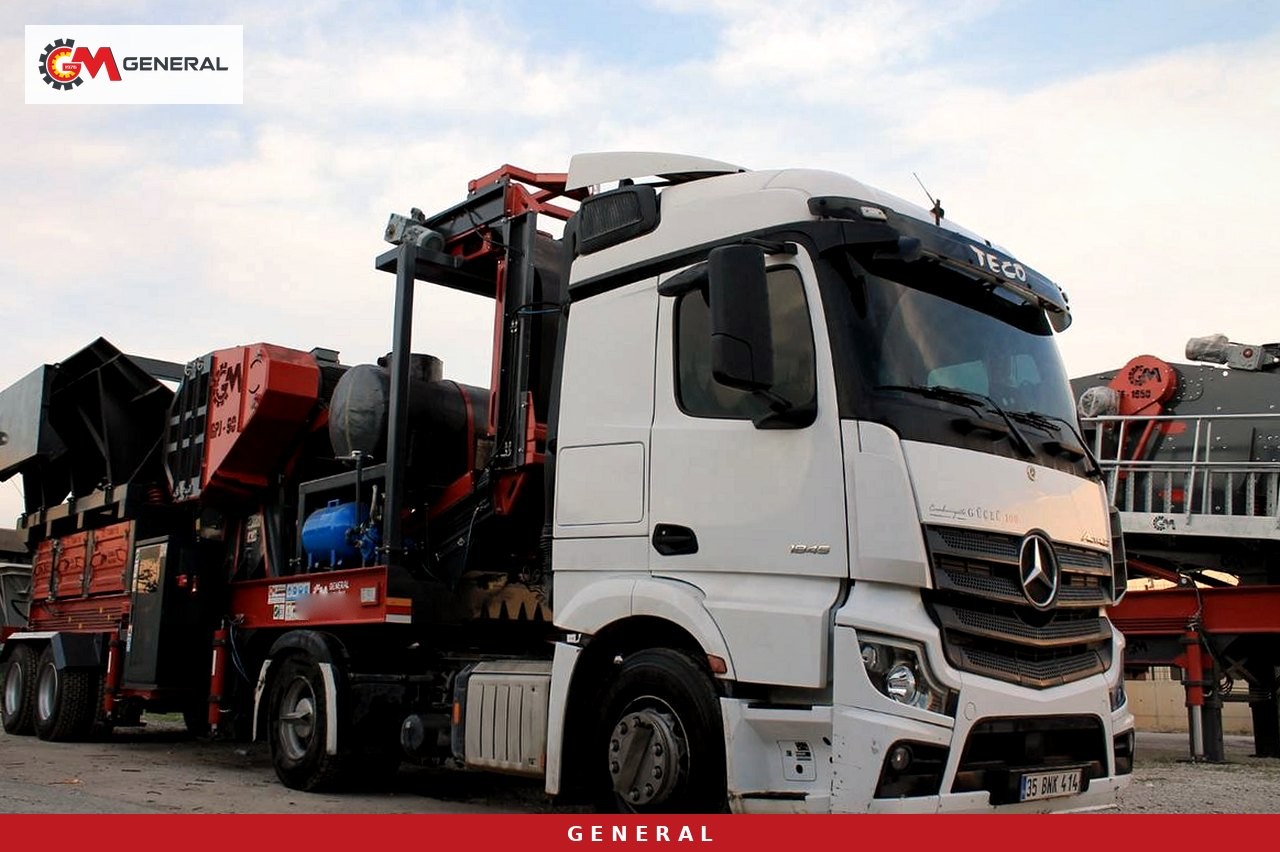
The General 800 is in the table to mark a limit: its primary impactor is efficient on limestone and low-abrasion stone, but in Chad's granite and basalt quarries wear costs would rise fast. A remote hard-rock quarry should be planned around a jaw-fronted line.
The second-stage decision for granite and basalt
The General 950 and General 944 share the same GPJ 90 primary jaw, the same 800 mm feed and the same 120-180 TPH capacity. The difference is the second stage. The DMK01 impactor on the 950 gives a high reduction ratio and cubical particles, an advantage when particle shape matters for concrete aggregate and asphalt chippings. The GM430 cone on the 944 crushes by compression and extends metal life in high-silica, very abrasive rock.
At a distant quarry this difference gains another dimension: if wear parts take time to reach site, the option needing less frequent changes eases the operating calendar. If sample tests show high abrasiveness, the cone secondary moves ahead; if the specification defines particle shape tightly, the impact secondary does. For a fuller comparison see choosing a mobile crushing plant for basalt and granite. As an example working in West African conditions, the General 950 project delivered to neighbouring Niger is worth reading.
From Douala to the quarry: haulage and power
Chad is landlocked. Heavy equipment usually travels by road from the port of Douala in Cameroon; the route and transport permits should be settled with the carrier before shipment.
Road dimensions and bridges
The General 950 travels at 4130 × 20350 × 4500 mm. On the GNR-MC110 the primary chassis measures 3000 × 13500 mm and the secondary chassis 4200 × 18300 mm, each at 55,000 kg. Splitting the weight across two chassis can help with bridges and with dirt roads that soften in the rainy season. Still, check bridge load limits and road width along the route with the haulier, and inspect the last kilometres to the quarry on site. Because plain roads around N'Djamena become difficult in the wet season, plan installation for the dry months.
Generator power and dust on an off-grid site
At a remote quarry, power comes from a generator. The ratings on the product pages are 600 kVA for the General 950, 550 kVA for the General 944 and 750 kVA for the GNR-MC110. Regular fuel delivery to the quarry and the size of the storage tank are planning items as important as tonnage. In the dry season Sahel dust quickly clogs generator and engine air filters; extra pre-filters, dust suppression sprays and covered belts are among the measures that can be chosen per project. Where water is scarce, spray points can be limited to the critical places such as crusher discharges and belt transfers.
If river sand needs dry screening on the city side, that can be handled by separate equipment: the GNR ME1650 dry screening plant, rated at 120-180 TPH, splits sand into fractions without washing. For sand with high clay content, washing options are on the sand washing and dry screening plants page.
The quarry file to prepare before asking for a quote
On remote-quarry projects, missing information is the most common reason for choosing the wrong capacity. Attach the following to your enquiry:
- Location of the candidate quarry and the road route to N'Djamena, including the final dirt section.
- Rock type and laboratory results: abrasiveness, compressive strength, clay and soil content.
- Largest block size after blasting (this decides between 800 mm and 900 mm feed).
- Required fractions and the monthly tonnage of each; the split between concrete, asphalt and sub-base.
- Daily operating hours, number of shifts and planned stoppage in the rainy season.
- Power source: generator or a nearby line; fuel and water supply.
- Particle shape and grading requirements in the tender specification; confirm these values with the contracting authority and the specification documents.
Frequently asked questions
Can a single machine reach 250 TPH?
Yes. The GNR-MC110 is rated at 200-300 TPH, so this target falls within its range. The General 950 and 944 work at 120-180 TPH; higher tonnage with these models is only reached by running two units in parallel.
Isn't crushing close to the city cheaper?
Power and logistics are easier, but large blocks and overburden get hauled too. When the quarry is far away, a quarry-face set-up where only finished product goes onto the truck usually lowers the cost per tonne; the final answer depends on a calculation using distance and rock data.
What warranty and certificates apply?
The machines are built with ISO 9001 and CE certification; the warranty is 1 year, with wear parts excluded.
How is the price set?
Price depends on the model, the type of second stage, the generator, additional equipment (pre-filters, dust suppression, extra belts) and the shipping method. A project-specific quote is prepared once the quarry file is complete.
Conclusion
The answer to N'Djamena's aggregate problem is to take the crushing to where the stone is. For 150-180 TPH the General 950, or the General 944 in abrasive rock, and for more than 200 TPH the twin-chassis GNR-MC110 are realistic choices. Once sample tests, a route check and a power plan are in hand, the model choice becomes clear. Send your quarry details through our contact page and we will prepare a configuration and quote for your project.
Definitions of technical terms: Glossary