EN — English
 TR — Türkçe
 DE — Deutsch
 RU — Русский
 FR — Français
 ES — Español
 AR — العربية
 SR — Српски

Central African Republic Road Compact Stone Crusher Plant 60-100 TPH
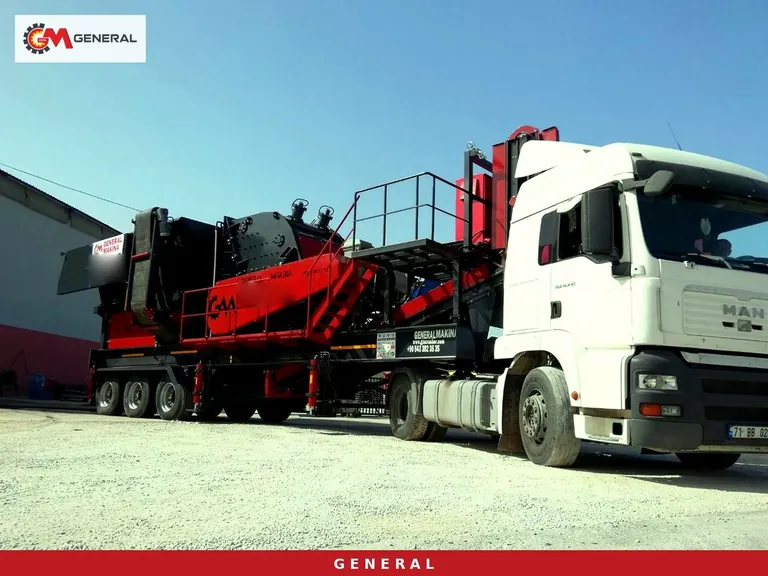
For a contractor building roads in the Central African Republic, the first bottleneck is rarely the paver or the asphalt; it is the crushed stone for the base course. Once you leave Bangui, commercial aggregate quarries are scarce, and even where one exists, hauling material hundreds of kilometres by truck pushes up cost and leaves the schedule at the mercy of the rainy season. This article explains, from a field engineer's point of view, how to select a compact mobile crushing and screening plant for a 60-100 TPH target, which real model actually covers that band, how the country's rock dictates settings and wear decisions, and what has to be settled before shipment.
From Bangui to the provincial roads: why crush next to the alignment
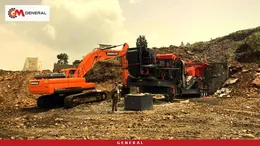
A large share of road work in the country runs along routes that leave the capital for the interior, in sections far apart from one another. Setting up a fixed quarry and distributing material from it lengthens the haul with every kilometre built. A compact mobile plant instead brings the quarry to the job, moving several times as the road advances. Two criteria decide the choice here: the machine must travel behind a single tractor unit, and it must start working at the new location without a concrete foundation.
For a road section handled by a single crew, 60-100 TPH is a sensible working scale. It is enough to build daily stockpiles of sub-base and base material while also splitting off fine fractions for surface dressing or concrete culverts. A larger plant multiplies the excavators, loaders and trucks needed to keep it fed; on a remote site, keeping all of that equipment running can be harder than running the crusher itself.
Granite and gneiss beneath a laterite cap: know your feed
Most of the country sits on an old crystalline basement, where hard, abrasive rocks such as granite, gneiss and quartzite are common. Sandstone plateaus also occur in some regions. Tropical weathering has left a thick red laterite layer over these rocks in many places. When a road quarry is opened, two different materials reach the crusher: soft, clay-rich laterite on top and hard bedrock below.
Laterite cap and clayey fines
Some laterite can serve on its own as fill or sub-base, but once it gets into the crushing line it blinds the screen with clay and spoils product cleanliness. Stripping and rock production should therefore be run separately in the quarry, and soil in the run-of-mine feed should be removed before it reaches the crusher. The by-pass grizzly on the General 640 feed hopper exists for exactly this: fines and soil are diverted to a separate conveyor before the crusher.
Hard bedrock and wear
Granite and quartzite carry a high free-silica content, and it is silica, not hardness, that drives wear. With such feed, a jaw crusher working by compression in the first stage consumes metal more slowly than an impact primary. Before deciding on a specific quarry, take samples and have abrasiveness and compressive strength tested; settings and the wear-parts stock should be planned around those results.
General 640: one chassis that covers the 60-100 TPH target
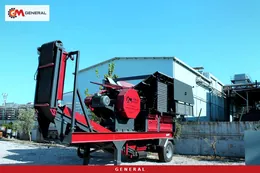
The model that matches the headline range is the General 640. It combines a GPJ 60 jaw crusher and a GNR 50 impact crusher on one chassis, processes 60-100 TPH and accepts feed up to 500 mm. A 1200×4000 mm triple-deck vibrating screen splits the material into 0-5, 5-12 and 12-19 mm fractions, while a return conveyor sends oversize back to the impactor. The machine therefore runs in closed circuit, crushing and screening in one unit.
A two-stage layout starting with a jaw is the right choice for abrasive Central African stone such as granite and gneiss. The General 800 from the same family uses a PDK 1280 impact crusher as its primary; it offers 80-150 TPH and 600 mm feed but is designed for limestone and low-abrasive stone. On hard rock, the blow bars of an impact primary wear quickly, so the 800 should only be considered when sample testing shows a low-abrasive rock.
| Specification | General 640 | General 800 |
|---|---|---|
| Throughput | 60-100 t/h | 80-150 t/h |
| Largest feed lump | 500 mm | 600 mm |
| Crushing stages | Jaw (GPJ 60), then impactor (GNR 50) | Single impact primary (PDK 1280) |
| Rock it is built for | Hard, abrasive stone incl. granite, gneiss, quartzite | Limestone and low-abrasive stone |
| Output fractions | 0-5, 5-12 and 12-19 mm | 0-5, 5-12, 12-19 and 19-40 mm |
| Vibrating screen | Three decks, 1200×4000 mm | Three decks, 1300×4000 mm |
| On-board power | Optional generator, 300 kVA | Generator, 450 kVA |
| Road dimensions, W×L×H | 3500×17000×4500 mm | 3600×15500×4500 mm |
| Machine weight | 38,000 kg | 35,000 kg |
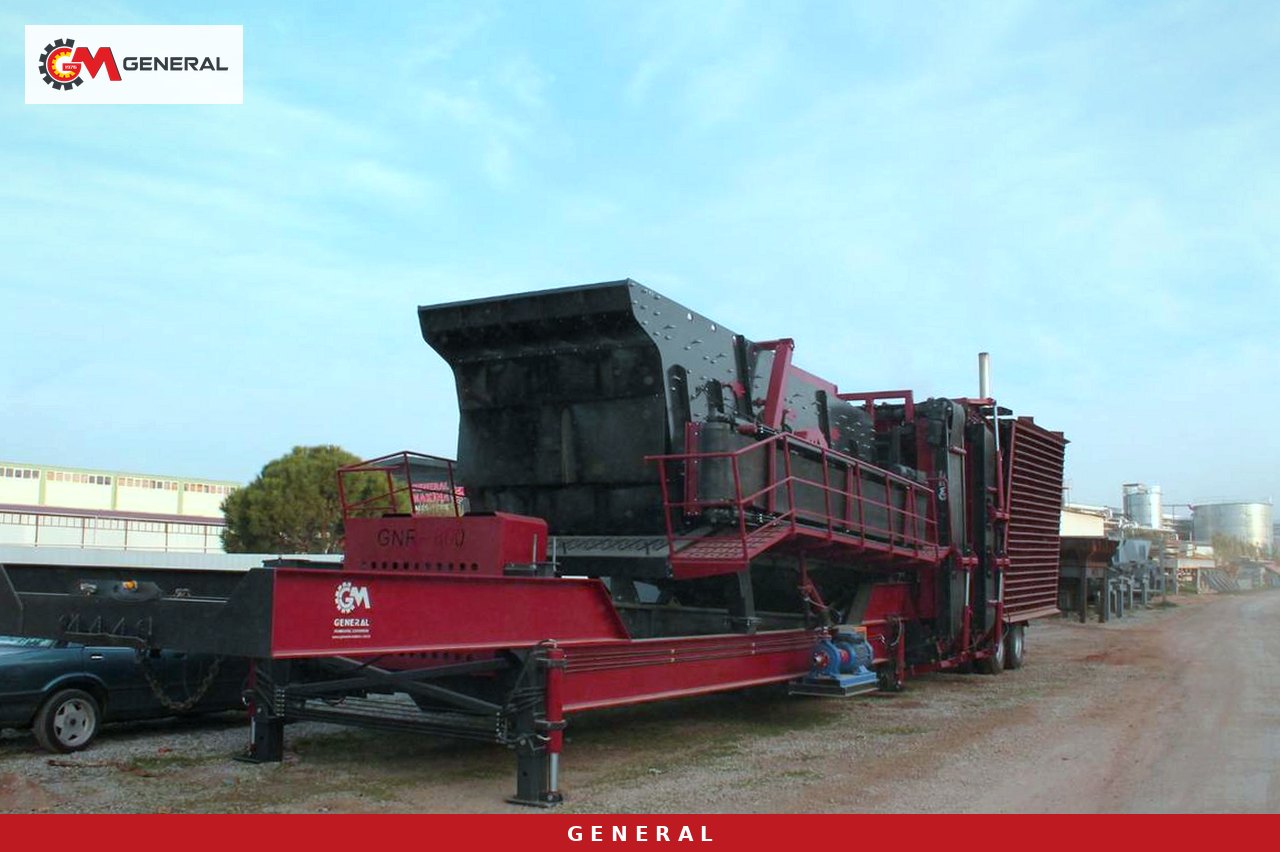
You can compare other configurations side by side on the wheeled mobile crushing plants page. Crusher type selection for hard rock is covered in detail in our article on the best mobile plant for basalt and granite.
Product plan by road layer: which fraction goes where
Before setting up the plant, put the grading envelopes from the project specification on the table. The General 640 offers an output setting of 0-100 mm; screen meshes and the final gradation are tailored to each job and the stone being fed. Planning layer by layer rather than product by product makes it clear which apertures the screen needs.
Sub-base and base courses take most of the tonnage; what matters here is a continuous grading that fits the envelope and freedom from clay contamination. Re-blending crushed fractions in the stockyard at the required ratio is often enough. If cement-stabilised base is specified, a pugmill can follow the crushing line: the mobile pugmill plant produces 200-600 TPH of plant-mix with 3-5 cold bins and a 2×22 kW twin-shaft mixer. Since that is more than the crusher delivers, the pugmill runs in campaigns from accumulated stockpiles rather than continuously. Options are listed on the road base pugmill plants page.
The 5-12 and 12-19 mm fractions can be set aside as surface dressing chippings and for concrete work such as culverts and retaining walls. Because the impact secondary yields cubical grains, flaky particle content stays low, which helps bitumen adhesion and concrete workability. The 0-5 mm fines can be stockpiled as concrete sand or joint filler.
The Douala corridor, the rainy season and off-grid sites
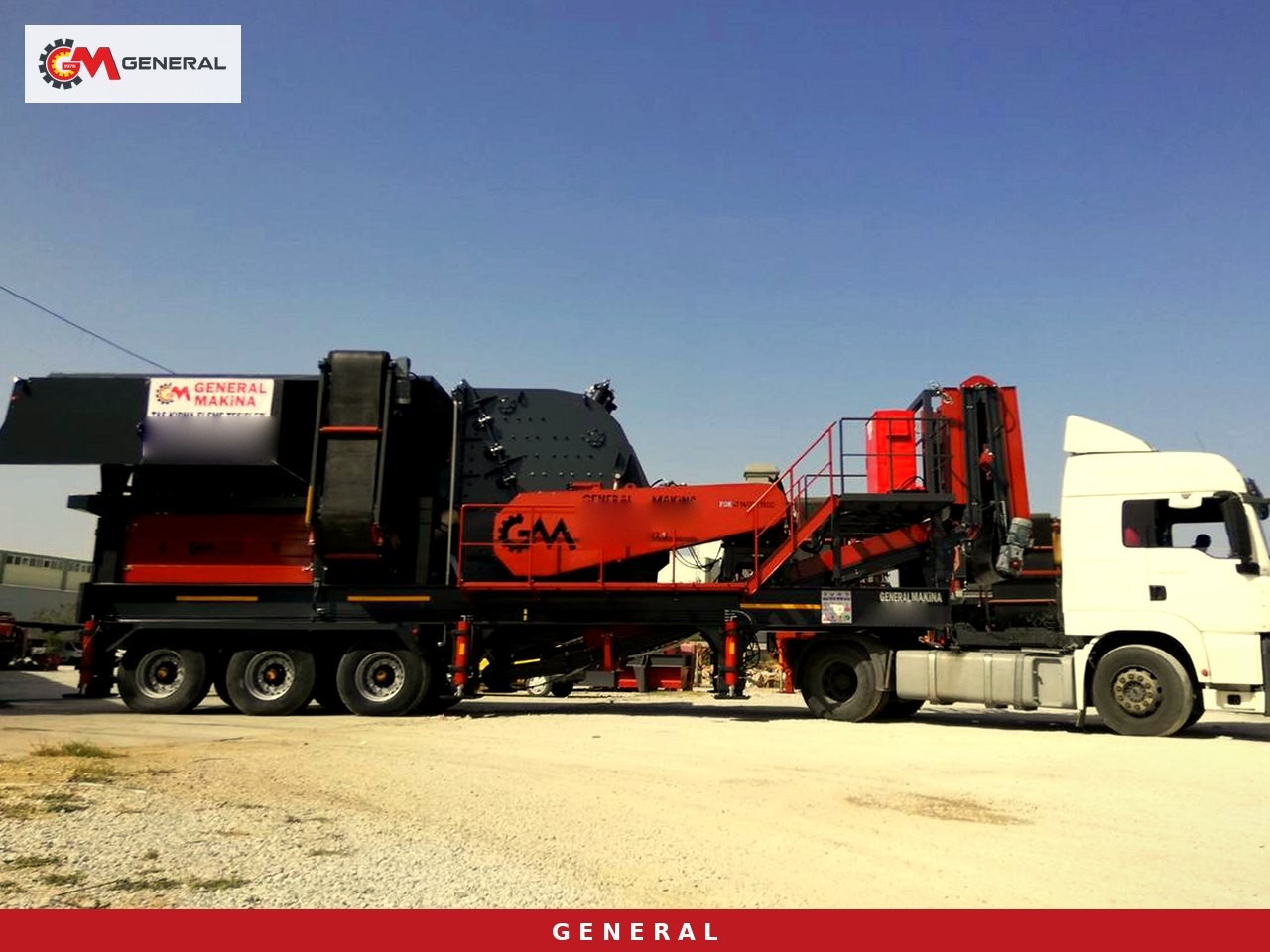
The Central African Republic is landlocked. Heavy equipment shipped from Türkiye is usually discharged at the port of Douala in Cameroon and then travels a long road route to Bangui or to site. The General 640 is carried on a single platform, but its 3500 mm width, 17,000 mm length and 4500 mm height must be checked in advance against bridges, bend radii and transit permits along the route. Give the haulier these dimensions and the 38,000 kg weight before signing.
Rainy-season mud and dry-season dust
During the long rainy season, laterite roads become difficult and quarry material turns wet and sticky. Scheduling crushing to build stockpiles in the dry months makes laying independent of the crusher when the rains arrive. With wet feed, the by-pass grizzly needs regular cleaning and screen apertures must be watched for blinding. In the dry season dust should be controlled at source: water sprays at feed and transfer points, conveyor covers and frequent checks of engine air filters are measures that can be selected per project.
Running on a generator
Most sites have no grid power. The optional 300 kVA generator for the General 640 lets the machine run independently of the grid. On a remote site, planning generator fuel, filters and oil is as important as stocking the crusher's own spare parts; decide at the quotation stage whether the generator belongs in the package.
Ten points to settle before requesting a quote
- Abrasiveness and compressive strength results for a rock sample taken from the quarry.
- Thickness of the laterite cap and how stripping will be kept apart from crushing.
- Grading envelopes for sub-base, base and surfacing in the project specification; confirm them with the relevant authority or tender documents.
- Hourly target and daily operating hours, and the number of feeding machines that follow from them.
- Maximum run-of-mine size: a breaking or blasting plan for blocks above 500 mm.
- Whether the generator is included in the package, and fuel logistics.
- Route, bridge and transit permit checks from Douala to site.
- Size of the first spare set for jaw plates, impactor blow bars and screen meshes.
- Need for a pugmill and stockyard space if stabilised base is required.
- Operator training and who will be on site during commissioning.
Wear-part metallurgy follows the rock: jaw plates are austenitic manganese steel that work-hardens under impact. For siliceous feed such as granite, manganese or martensitic blow bars are used, while high-chrome suits clean limestone. General Makina machines carry ISO 9001 and CE certification and a 1-year warranty excluding wear parts.
Frequently asked questions
Can the General 640 crush Central African granite and quartzite?
Yes. The GPJ 60 jaw in the primary stage works by compression, which suits hard, abrasive stone, and the GNR 50 impactor cubicises the grain in the second stage. We recommend sample testing to predict wear rates.
Will laterite choke the crusher?
Clayey laterite fed straight into the crusher can blind the screen and transfer points. Running stripping separately and removing soily fines ahead of the crusher with the hopper's by-pass grizzly greatly reduces that risk.
What if 100 TPH is not enough?
If demand stays consistently above 100 TPH, either a second unit is added or a larger model is considered. The General 800 offers 80-150 TPH but, with its impact primary, is meant for low-abrasive stone; on hard rock, models with a jaw primary come first.
What drives the price and the delivery date?
The price reflects the model, the generator and spare-parts package, screen equipment and shipping scope. Delivery time depends on the production schedule at the time of order; both are confirmed in a written quotation based on your project details.
Conclusion
For a 60-100 TPH road job in the Central African Republic, the General 640, which combines jaw and impact crushing on one chassis, suits hard crystalline rock and frequent relocation. A good result comes with sample testing, laterite management, logistics from Douala to site and a stockpile plan built around the rainy season. Send your project details through our contact page and we will prepare the right configuration and quotation for you.
Definitions of technical terms: Glossary