EN — English
 TR — Türkçe
 DE — Deutsch
 RU — Русский
 FR — Français
 ES — Español
 AR — العربية
 SR — Српски

Eswatini Road Projects Compact Stone Crusher Plant 60-100 TPH
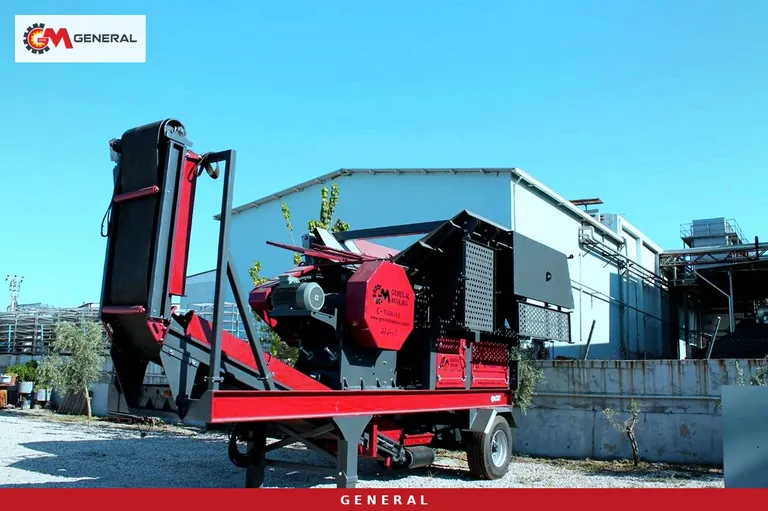
A contractor taking on a road section in Eswatini usually discovers within the first month that aggregate is the hardest line item to control. The country is small, but it is anything but flat: from the high plateau around Mbabane to the Lubombo ridge, alignments climb and drop constantly, and commercial quarries are rarely close to every section. Crushing stone right next to the works, at 60-100 tons per hour, is therefore cheaper and more predictable than hauling it in on most road jobs. This article looks at how to choose a compact mobile crusher for Eswatini's terrain belts and rock types, which real model meets that capacity, how to ship it to a landlocked country, and how to run it on narrow hillside platforms, from the point of view of an engineer who has set these plants up on site.
We do not comment on any specific tender, alignment or financing package. Layer thicknesses, grading envelopes and material acceptance tests must be confirmed against the technical specification of the road authority concerned; the recommendations below are about equipment selection.
From Highveld to Lowveld: the terrain belt decides the plant layout
Running roughly west to east, Eswatini splits into four belts: the high, rugged Highveld, the hilly Middleveld, the lower and hotter Lowveld, and the Lubombo ridge along the eastern border. A road crew may work in two of these belts within a few months, and each one asks something different of the crusher.
Highveld: steep cut slopes and a tight working platform
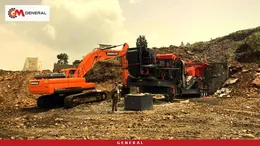
On alignments heading towards Mbabane and Piggs Peak, a level stockpile area is hard to find. A road cut or slope excavation beside the carriageway is often the only crushing point available. Here the length of the machine, the bearing capacity of the ground under its support legs and the ability of the tractor unit to climb a winding ramp matter as much as tonnage. Rather than lining up a multi-unit train along a hillside, a compact plant that carries the hopper, two crushers and the screen on a single chassis has a clear advantage: one footprint, one feed point, one stockpile face.
Middleveld and Lowveld: more room, more variable material
Around Manzini and on the roads descending eastwards, the terrain opens up; there is space for stockpiles and truck traffic flows more easily. The trade-off is that the material becomes more varied: the weathered granite overburden can get thicker, gravel and sand mixes appear in riverbeds, and in the Lowveld dry season dust becomes the main operating issue. Plan from the start for the same machine to run here with different screen meshes and a different pre-screening setting.
Granite, gneiss and dolerite: the rock picks the crusher combination
Most of Eswatini sits on old granite and gneiss basement rock, frequently cut by dolerite dykes. What these rocks share is high silica content and abrasiveness. A rotor-type primary impact crusher wears out blow bars and liners quickly in this material; a jaw that breaks the rock by compression in the first stage, followed by an impact crusher that shapes the product in the second stage, gives a more balanced result.
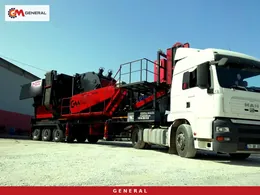
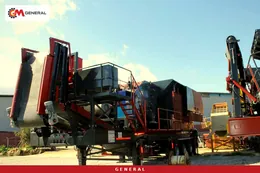
For a 60-100 TPH target, the model that offers this arrangement on a single chassis is the General 640 mobile crushing plant. The GPJ 60 jaw crusher reduces the large lumps in the first pass, the GNR 50 impact crusher gives the product its final size and cubical shape, and the 1200×4000 mm three-deck vibrating screen separates the output into 0-5, 5-12 and 12-19 mm fractions; oversize retained on the screen is returned to the crusher by conveyor. Maximum feed size is 500 mm and the discharge setting ranges from 0 to 100 mm. Moderate tonnage on hard rock means slower wear of jaw and rotor liners.
Weathered granite, or clay-contaminated material coming out of a road cut, should be separated before it reaches the crusher. The vibrating feeder with a by-pass grizzly under the 640's hopper removes those fines and soil at the start. We make no assumptions about the strength or abrasiveness of any particular quarry: before requesting a quote, having a few samples tested for compressive strength and Los Angeles abrasion puts the crusher settings and the spare parts plan on solid ground.
Capacity table: the 640, the 800 and a mobile primary jaw side by side
The values below are taken from our product pages. Where a value is not listed, we have not estimated one.
| Model | Crusher | Capacity (t/h) | Max. feed | Screen | Generator | Weight | Transport dimensions (mm) |
|---|---|---|---|---|---|---|---|
| General 640 | GPJ 60 jaw + GNR 50 impact | 60-100 | 500 mm | 1200×4000 mm, 3-deck | 300 kVA (optional) | 38,000 kg | 3500×17000×4500 |
| General 800 | PDK 1280 primary impact | 80-150 | 600 mm | 1300×4000 mm, 3-deck | 450 kVA | 35,000 kg | 3600×15500×4500 |
| Mobile primary jaw GNR 90 | GNRK 90 jaw | 70-180 | series: 0-1100 mm (output 0-250 mm) | — | — | 25,000 kg | — |
For granite and dolerite feed, the 640 is the first candidate. The General 800 with its primary impact design, is built for cubical product from limestone and low-abrasion stone; on Eswatini's hard rock, liner costs would dominate, so consider the 800 only on sites where a soft feed has been confirmed.
In a cut where blasted blocks regularly exceed 500 mm, there is a second route: first reduce the material to 0-250 mm with a mobile primary jaw crusher (GNR 90), then feed it to the 640. This two-unit arrangement lowers the reduction ratio each crusher has to handle and cuts the time spent breaking oversize with an excavator-mounted hammer. All similar units are listed in the portable rock crushers category.
Shipping to a landlocked country: the Durban and Maputo routes
Eswatini has no coastline; a plant leaving Izmir usually arrives at the port of Durban in South Africa or Maputo in Mozambique, then continues by road to the border post. The choice of port, the shipping line schedule and the transit documents are settled by the importer together with its freight forwarder; confirm current customs and transit rules with your forwarder.
A compact plant offers two concrete advantages here. The 640 is designed to be moved by a single tractor unit; there are no separate modules that need dismantling and reassembly at the port. With transport dimensions of 3500×17000×4500 mm, bridge and bend restrictions along the route can be checked against these figures before shipment. It weighs 38,000 kg, and port cranes and the lowbed trailer are selected on that basis.
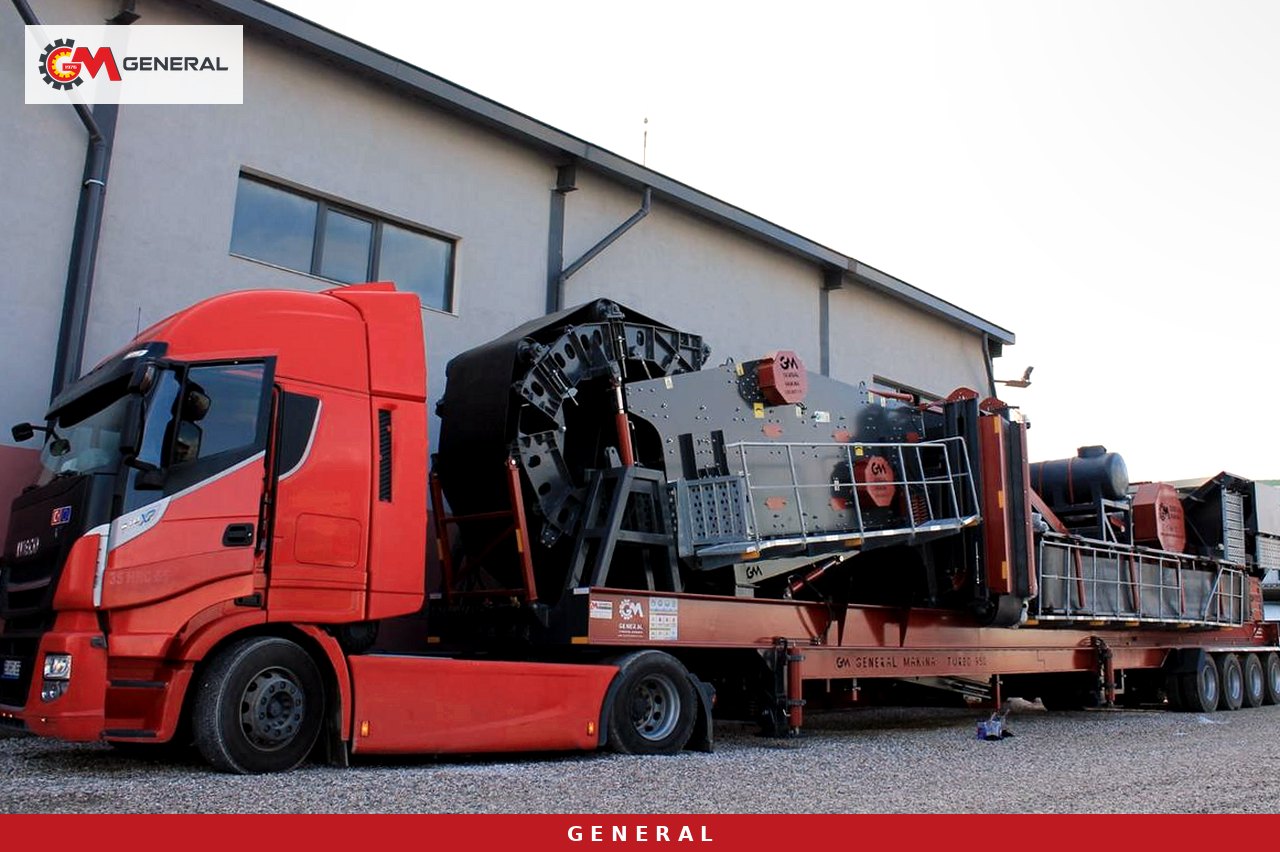
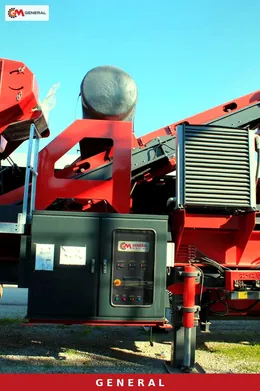
For sections far from the grid, a 300 kVA generator is available as an option for the 640. Whether the generator ships with the plant or is sourced locally changes the shipment volume and the commissioning sequence on site, so settle it at the quotation stage.
A product plan built around the road cross-section
A road project never asks a crusher for just one product. Subbase, base course, surfacing chippings and culvert concrete each need a different size and cleanliness. The 640's three-deck screen, closed-circuit return and 0-100 mm discharge setting make it possible to produce these one after another or at the same time; what matters is planning from the outset which product has priority in which week.
Subbase and base course
Most of the tonnage goes into these layers. The grading envelope in the specification determines the screen mesh selection; arrange the stockpile face as separate piles so that fine and coarse fractions can be blended to fit the envelope. If the specification calls for the base material to be stabilized with cement or another binder, mechanical stabilization plants can be added downstream of the crushing and screening plant.
Surfacing chippings and concrete aggregate
For surface dressing and concrete work, the 5-12 and 12-19 mm fractions take priority. Particle shape and clay content are critical for these products, so the cubical output of the GNR 50 impact crusher in the second stage and the pre-screening at the by-pass grizzly feed straight into quality. Review the grizzly spacing and mesh aperture by season so that clayey material does not blind the screen meshes in the rainy period.
Setting up and running on a hillside: a site checklist
The 640 is levelled on hydraulic legs and needs no concrete foundation. Even so, safe and productive work on a narrow hillside platform depends on a few decisions made before setup.
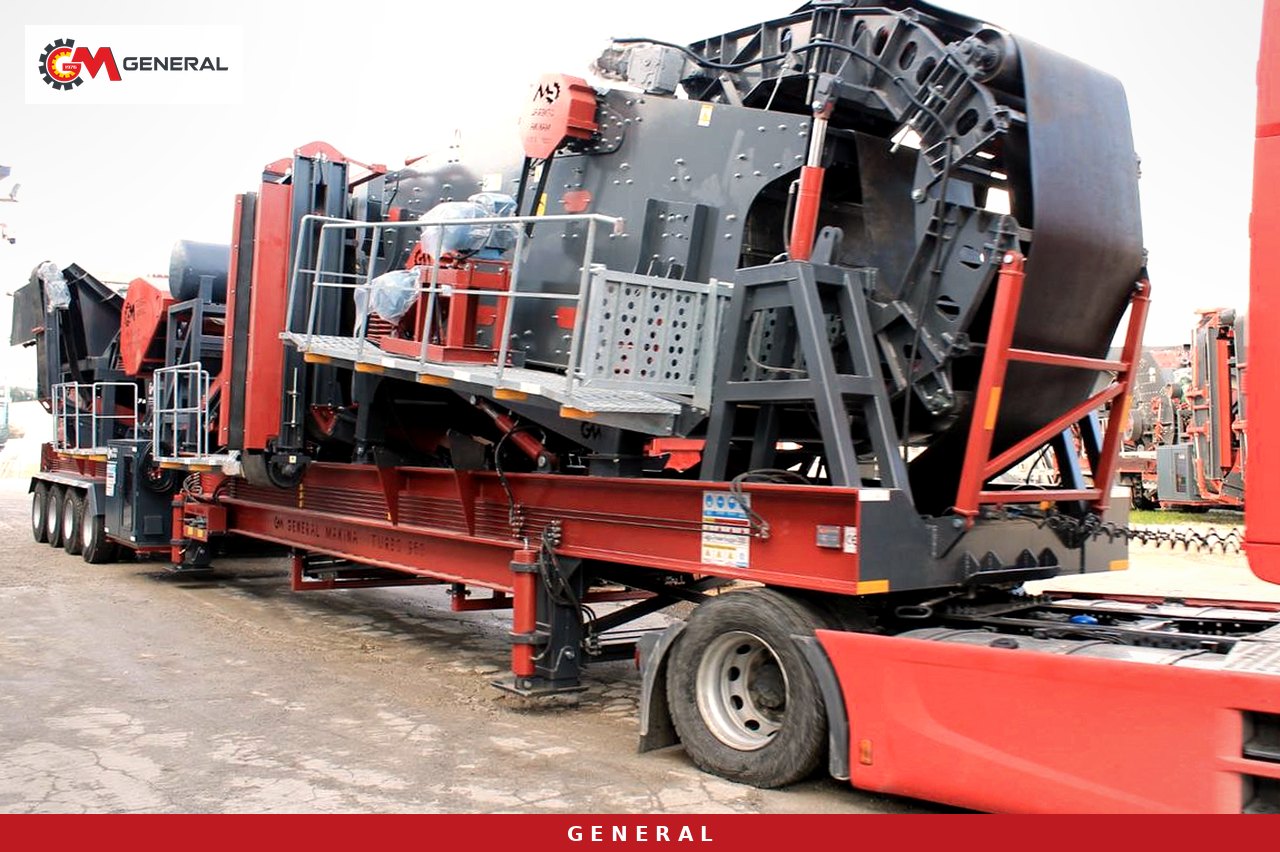
- Platform ground: the points where the legs rest must be compacted and levelled; never place a leg on the edge of fill.
- Feed direction: lay out the site so the excavator or loader approaches the hopper from a level ramp, not from upslope.
- Stockpile face: leave enough flat ground under the conveyor discharge points for a truck to turn.
- Water and dust: in the dry season, plan a water spray line at the feed point and conveyor transfer points.
- Rainy season drainage: dig ditches so that runoff from the platform does not pool under the crusher or around the stockpiles.
- Wear parts stock: keep spare jaw plates, blow bars and screen meshes on site; build the list from the spare and wear parts page.
- Power: if a generator is used, define the refuelling access and the distance between the generator and the plant in advance.
The warranty is 1 year, excluding wear parts; the plant carries CE marking and ISO 9001 certification. You can compare all wheeled models on the mobile crushing and screening plants page.
Frequently asked questions
Can the General 640 crush the granite and dolerite found in Eswatini?
Yes. The jaw first stage and impact second stage are combined to handle hard, abrasive rock. Liner life depends on how abrasive the rock is, so we recommend having samples tested and building the spare parts plan on the results.
What if blasted blocks exceed 500 mm?
Either secondary breaking is done at the face, or a mobile primary jaw unit is placed ahead of the 640. The GNR 90 delivers a 0-250 mm product, comfortably below the 640's feed limit.
How is the plant moved from one road section to the next?
The hydraulic legs are retracted and the plant is towed to the new location by a single tractor unit. No concrete foundation is needed at the new platform; ground preparation is enough.
How are price and delivery time determined?
Price depends on the model, the generator choice, the screen mesh set, the spare parts package and the shipping method. Delivery time depends on the production schedule at the time of order. Send us the rock type, target products and site details and we will prepare a project-specific quotation.
Conclusion
For a 60-100 TPH road project in Eswatini, three questions decide the crusher: how abrasive is the rock, how narrow is the platform, and how often will the machine relocate. For granite, gneiss and dolerite feed, the General 640, carrying a jaw and an impact stage on one chassis, answers all three together; in cuts with oversize blocks, it is backed up by a mobile primary jaw. Send us your rock samples, the product list from the specification and the site conditions, and request a project-specific quotation through our contact page.
Definitions of technical terms: Glossary