EN — English
 TR — Türkçe
 DE — Deutsch
 RU — Русский
 FR — Français
 ES — Español
 AR — العربية
 SR — Српски

Burundi Mountain Roads Truck-Transportable Stone Crusher Plant 60-100 TPH
When a road contractor in Burundi looks for a crusher, the map matters before the capacity line in any brochure. The country is landlocked and folded into hills and valleys; the aggregate is rarely needed on the Bujumbura plain and far more often on a slope at the end of the winding roads that climb towards Gitega and the interior. This article looks at how a 60-100 TPH crushing and screening plant gets onto that slope in one piece, which real models cover the band, and which dimensions must be on the table before shipment. The word "truck-transportable" in the title deserves an honest reading: the test here is that the plant leaves as one tractor-trailer load without being dismantled, and is set up on site without a crane.
Route first, machine second: the supply chain into Burundi
A mobile crusher shipped from Türkiye does not land directly in Burundi. The sea leg usually ends at the port of Dar es Salaam in Tanzania, followed by the road journey west along the Central Corridor; the alternative is the Northern Corridor from Mombasa in Kenya through Uganda and Rwanda. Bujumbura's port on Lake Tanganyika also links to lake transport. Which route you use depends on customs and transit arrangements as much as on machine size, so settle it in writing with your forwarder before the plant leaves the factory.
The last kilometres from corridor to quarry
International corridors are built for heavy freight; the real bottleneck sits at the end. Earth tracks leaving the main road, narrow bridges, tight bends and ground that softens after rain make the plant's length and axle load decisive. So a quote request should never say only "60-100 TPH": confirm the load limit of the narrowest bridge, the sharpest bend and the gradient of the site entrance with the local road authority, and pass that information to the supplier.
One load versus many
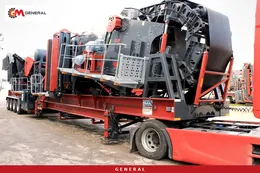
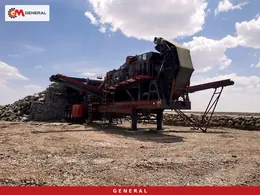
A stationary plant broken into sections means several trucks, a crane, concrete foundations and a long erection schedule. A single-chassis wheeled plant opens up on its hydraulic legs and moves on to the next quarry as the same load. In a country where jobs are spread across distant hills, that decides how many sites one crusher can serve in a year.
Comparing the numbers: what each model brings on the truck
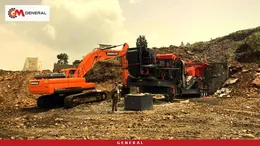
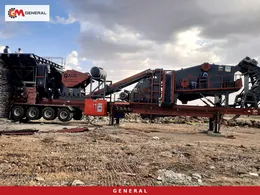
The one-piece plant that fully covers 60-100 TPH with a closed-circuit screen included is our General 640. For sites with even tighter access, lighter primary units are an option, but on their own they do not deliver a full gradation. The table below makes it easier to read the decision through weight and length.
| Model | Capacity | Max. feed | Weight | Transport size (W×L×H) | Screen |
|---|---|---|---|---|---|
| General 640 (GPJ 60 jaw + GNR 50 impactor) | 60-100 TPH | 500 mm | 38,000 kg | 3500×17000×4500 mm | 1200×4000 mm, triple-deck |
| General 800 (PDK 1280 impactor) | 80-150 TPH | 600 mm | 35,000 kg | 3600×15500×4500 mm | 1300×4000 mm, triple-deck |
| GNR 60 single-chassis jaw unit | 20-80 t/h | — | 15,000 kg | — | None (primary only) |
| GNR 90 single-chassis jaw unit | 70-180 t/h | — | 25,000 kg | — | None (primary only) |
Two points stand out. First, the General 800 is shorter and lighter, yet its primary is an impactor: efficient on low-abrasive stone such as limestone, but hungrier for metal in hard, siliceous rock. Second, the 15 and 25-tonne single-chassis jaw units slip into difficult sites more easily, yet a screen and a secondary crusher must be added separately. Their feeder hoppers measure 700×3000 mm on the GNR 60 and 1000×3800 mm on the GNR 90, with product in the 0-250 mm range. All single-chassis options are listed under our single-chassis mobile crusher units and closed-circuit plants under wheeled mobile crushing plants.
Stone of the hills: red soil cover over hard basement rock
Much of Burundi sits on an old Precambrian basement, and granite, gneiss, quartzite and schist-type rocks are common in the region. A good share of them is abrasive. On most slopes they are covered by a thick, reddish, clay-rich weathering soil. Together these two traits pull the machine choice in two directions.
For hard, siliceous stone a jaw primary is the right start, because compression does not wear metal as quickly as an impact primary. On the General 640 the GPJ 60 jaw reduces oversize rock in the first stage and the GNR 50 impactor sizes and cubicises the product, at a calm pace that is kind to wear parts. For the clay cover the critical point is feeding: the by-pass grizzly on the 640's vibrating-feeder hopper lets soil and fines leave before they reach the crusher. Every quarry is different, though; take a representative sample and send it for hardness and abrasion testing before you lock in the crusher.
Landing on site: setup, power and two rainy seasons
Once the plant arrives, the first question is ground bearing capacity. Hydraulic legs need no concrete foundation, but they do need a level, compacted pad. Burundi has two rainy periods a year, and fill platforms on hillsides soften during them. Ringing the pad with a drainage ditch, laying steel plates or compacted coarse aggregate under the legs, and placing the stockpile area with the runoff direction in mind all cut stoppages over the season.
On power, many interior quarries have no grid line. The General 640 can work off-grid with its optional 300 kVA generator. Decide early whether the generator ships with the plant or is sourced locally, how far fuel must travel, and where it can stand in shade, protected from dust, with enough cooling air. In the wet season damp, clayey feed can blind the screen mesh; because apertures and final gradation are set per job and per stone, state in the order which material will be processed in which season.
Belts and spares kit: preparation that cuts downtime at a distant quarry
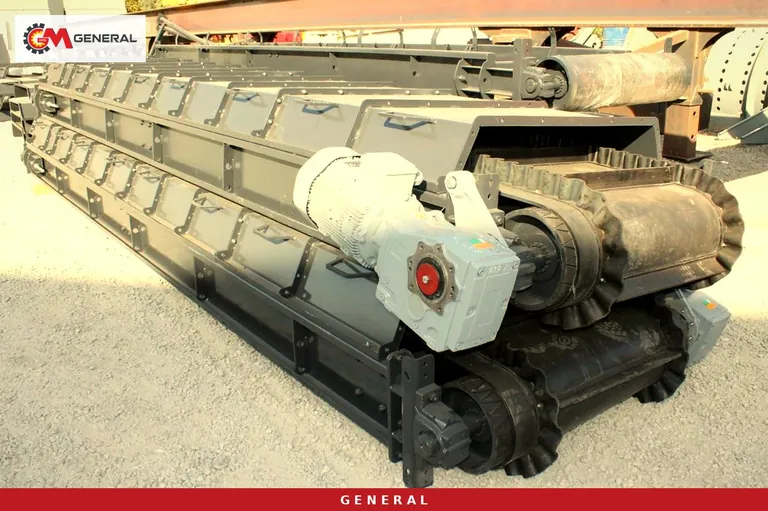
In a compact plant the belts work as hard as the crushers: feed, under-screen, return and stockpile conveyors. At a site at the end of a mountain road, any of them can stand idle for days over one missing part. That is why the belt line's consumables should be discussed as a separate line item at the order stage.
What to know about the belt line
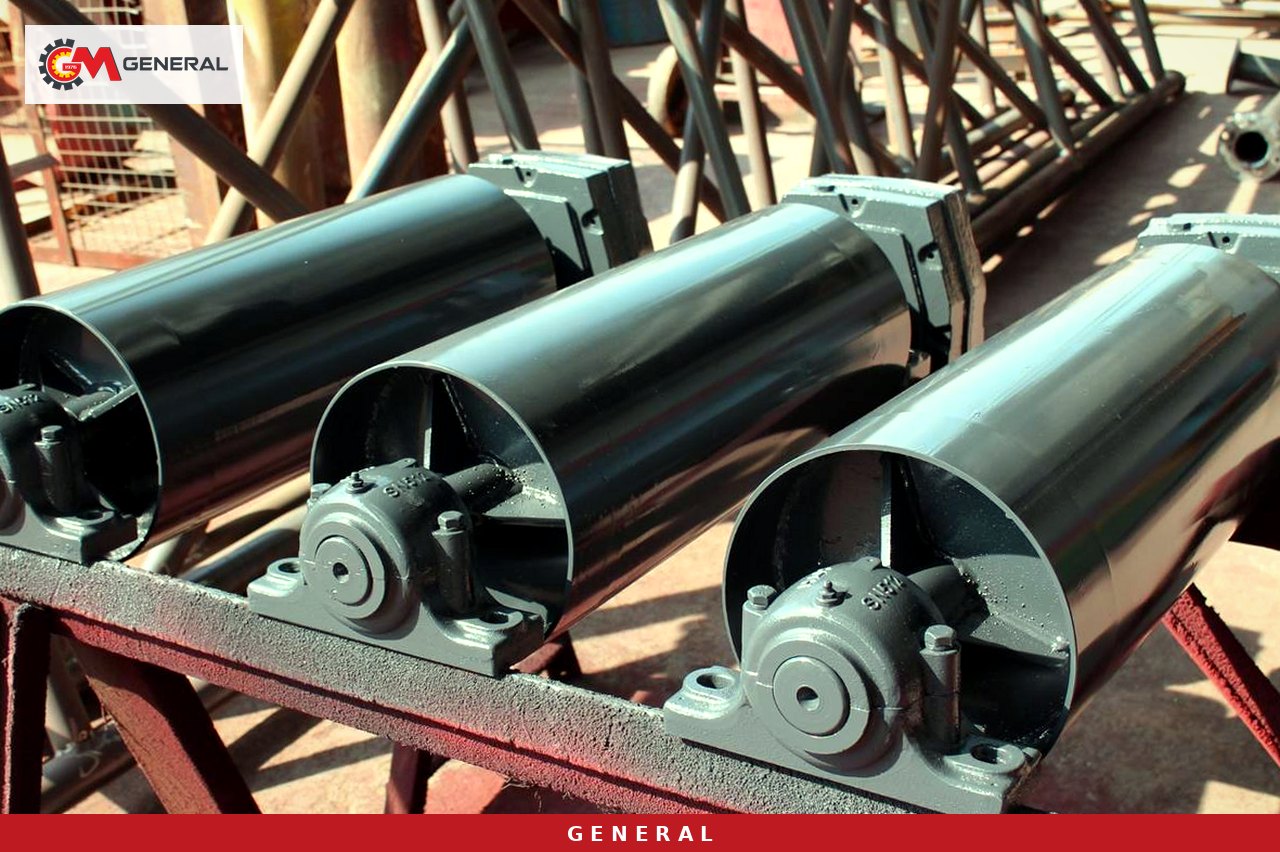
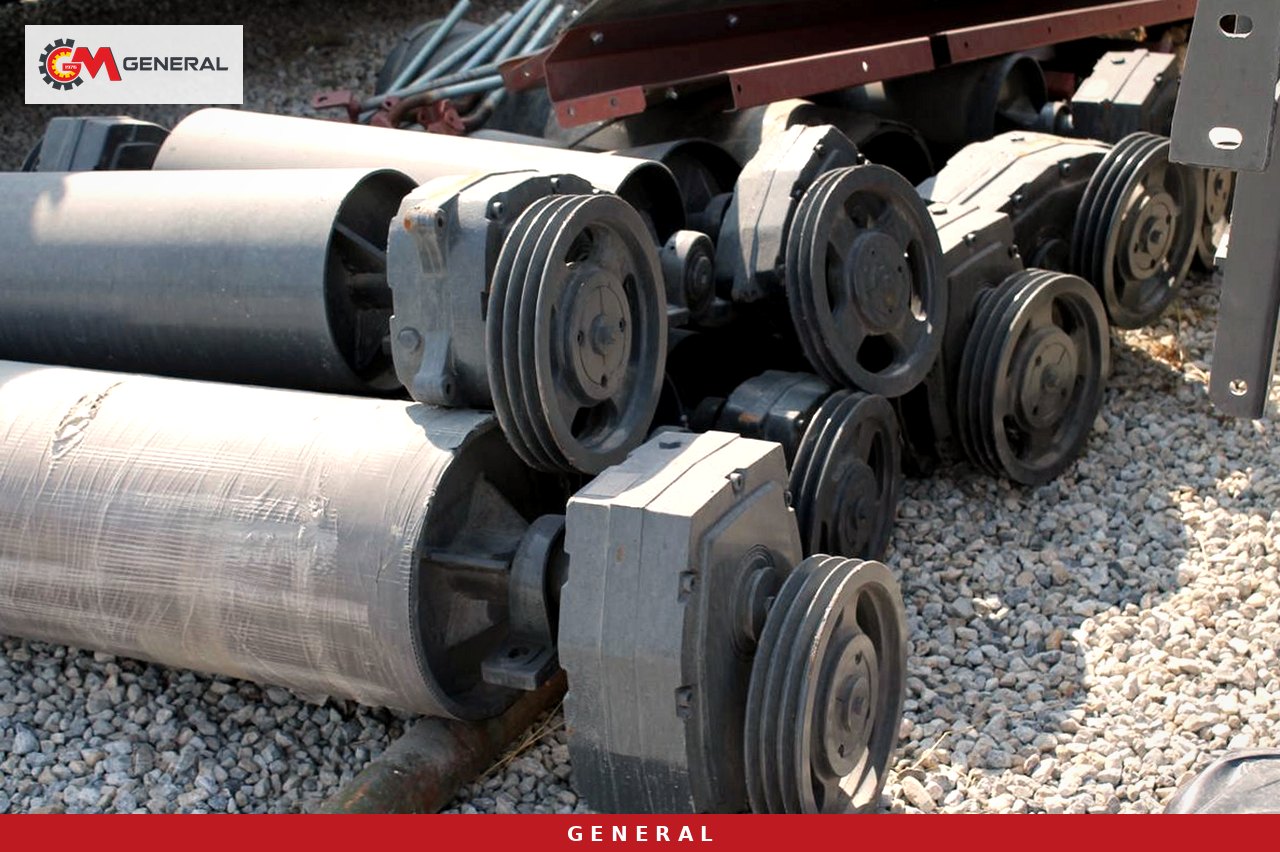
Our conveyor belts supplied with the plant or separately, come in 7 widths from 500 to 1200 mm and any required length. Carrying idlers are ø76 mm at a maximum 1 m spacing, return idlers sit at 3 m spacing. The drive pulley is rubber-lagged and bearings are SNH type. Standard belting is EP 100 four-ply; under impact crushers EP 125 four-ply is used. Steep stockpile conveyors need a chevron belt. On hillside sites, setting the stockpile conveyor along the slope saves space, but capacity drops as the incline rises; allow for that in the layout.
Parts worth keeping on hand
A part ordered via Dar es Salaam takes time to reach the site. A spares kit shipped with the first delivery is therefore insurance on the investment: carrying and return idlers, one drive and one tail pulley, scraper blades, a spare belt section, jaw plates and impactor hammers. The warranty runs for 1 year but excludes wear parts, whose consumption depends entirely on the stone.
Pre-shipment checklist
- Has the load limit of the narrowest bridge and weakest culvert on the route been obtained in writing from the competent authority?
- Have bends and overhead power lines been checked on the ground for a load 17 m long and 4.5 m high?
- Has a representative quarry sample been tested for hardness and abrasiveness?
- Do the target products (e.g. 0-5 / 5-12 / 12-19 mm) and annual tonnage match the specification?
- Are the pad, drainage and stockpile area prepared with the rainy season in mind?
- Are generator supply, refuelling and operator training planned?
- Is the first spares kit (idlers, pulleys, scrapers, jaw plates, hammers) written into the quote?
- Has the road project's aggregate specification been confirmed with the contracting authority?
For a wider comparison of models that keep haulage and setup short, our article on mobile crushers with the shortest transport and setup time is a useful companion.
Frequently asked questions
Can the General 640 travel to a Burundi quarry on one truck?
The plant folds onto a single platform and travels as one load. But 38,000 kg and 17 m of length require the whole route to be suitable; no firm promise is possible until the last bridges and bends have been inspected on the ground.
Which model is right for hard rock such as granite and quartzite?
On abrasive stone the General 640, starting with a jaw primary, is the better fit. The impact primary of the General 800 pays off in limestone and low-abrasive material but raises wear-part consumption in hard rock.
What if the road is very narrow?
The 15,000 kg GNR 60 or the 25,000 kg GNR 90 single-chassis jaw units offer a lighter start. They crush the primary stage only; a full gradation needs a separate screen and secondary crusher, which means extra hauls.
How are price and delivery schedule determined?
Price depends on the model, generator choice, screen configuration, spares kit scope and shipping route. The delivery schedule likewise depends on order scope; send your project details for a written quotation.
Bottom line
In Burundi's hilly interior, the success of a 60-100 TPH crusher starts with reaching the quarry in one piece. Weigh the route dimensions, the stone sample and the spares list together and the choice between the General 640 and the lighter single-chassis units becomes clear. To request a quotation that includes your route details from our team, building crushing plants in Izmir since 1976 with ISO 9001 and CE certification, use our contact page.
Definitions of technical terms: Glossary