EN — English
 TR — Türkçe
 DE — Deutsch
 RU — Русский
 FR — Français
 ES — Español
 AR — العربية
 SR — Српски

Burkina Faso Gold Ore Primary Crushing and Screening Plant 100-200 TPH
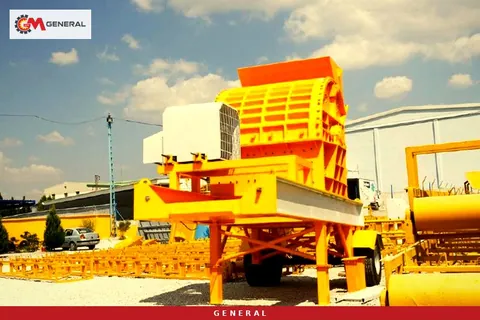
When a gold project in Burkina Faso budgets for crushing, the decision that gets the least discussion is often the first one: to what size will the opening step reduce the blasted block, and where will that intermediate product go next? This article covers that step: a primary crushing line rated for 100-200 TPH, built around a mobile jaw crusher with a feeder hopper and followed by a screening stage. Milling, leaching or secondary crushing are separate investments; if primary crushing is set up badly, every one of them is fed unevenly. Below we map real models to the target band using their product page figures, look at how the Sahel climate affects operation, and follow the shipping chain from a coastal port to an inland site.
What primary crushing must deliver: a steady 0-250 mm intermediate product
In gold ore, the primary crusher is not there to make saleable aggregate; it is there to give the downstream process a predictable feed. The product page of the mobile primary jaw crusher with feeder hopper sets the limits: 0-1100 mm feed, 0-250 mm output and a capacity that depends on the model. Jaw plates are austenitic manganese steel (Mn13/Mn18) and the typical reduction ratio is 4:1 to 9:1. In quartz-bearing gold ore a single crusher cannot be expected to reach mill feed size; the primary unit takes only the first big step.
So for an investor in Burkina Faso, the right question comes before “how many tonnes?”: where does the primary output go? It may go straight to a stockpile, then to a secondary crusher or to a grinding circuit built later. Whichever path is chosen, the closed side setting (CSS) follows from it, and throughput moves with that setting. The lower end of each tonnage range on the product pages corresponds to a tight setting and the upper end to an open one, which is why a site that wants 200 TPH at a tight setting usually picks one size up.
From lateritic cover to fresh rock: handling a changing feed
Across West Africa's gold belts, ore typically starts as a weathered, clay-rich cover near surface and turns into hard, quartz-veined fresh rock at depth. Burkina Faso sites often show a similar picture. For the primary line this has two consequences: in the first months the crusher receives soily, moist material with a high fines content; as the pit deepens, the feed becomes coarse, hard and abrasive. The same line has to cope with both. Only sampling and laboratory work can tell how your ore splits between these classes, so we recommend crushability and abrasion tests before committing to a model.
When is grizzly pre-screening needed?
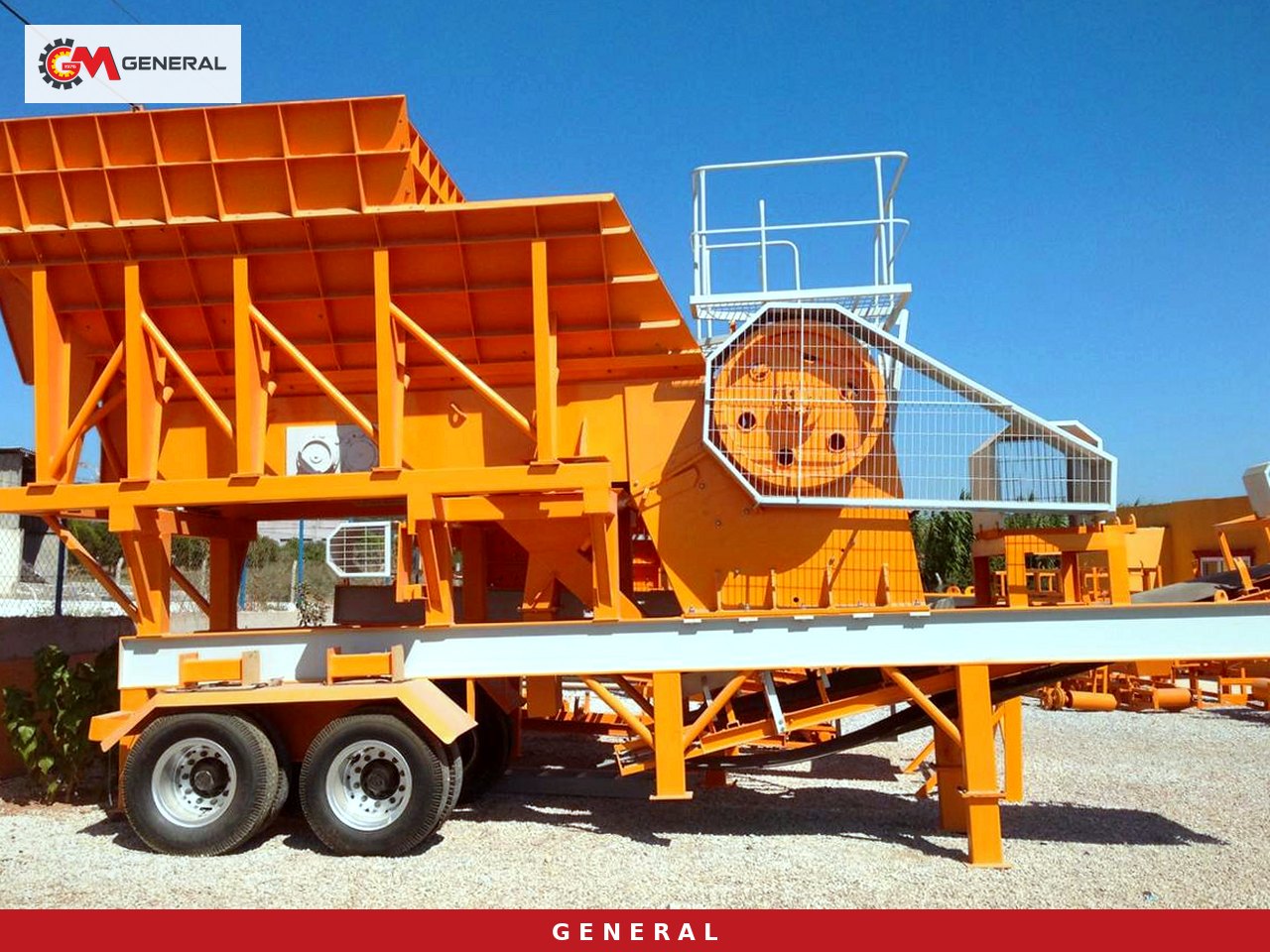
Letting fines and soil into the crusher wastes capacity and, with a high clay share, can pack the chamber. In a stationary layout this task falls to the vibrating grizzly feeder: its by-pass section drops fines onto the belt below without passing them through the crusher, while coarse rock keeps the jaw mouth choke-fed. The GNR 90 feeder is listed at 140~210 t/h with 2x4 kW, the GNR 110 at 200~300 t/h with 2x7.5 kW, and the series accepts up to 1500 mm feed. On the mobile unit, the armoured feeder with a frequency-controlled vibromotor regulates the flow; how pre-screening is solved is settled in the project according to the fines content. With very sticky, clayey feed the grizzly bars can blind, and the feeder type then has to be reconsidered.
Matching models to 100-200 TPH
The 100-200 TPH in the title is an operating band, not a single number. The table below sets real configurations that fall into that band side by side, using product page figures. Each value belongs only to the model it is listed for; unknown cells are marked “—”.
| Configuration | Crusher | Feed limit | Capacity (t/h) | Weight | Power |
|---|---|---|---|---|---|
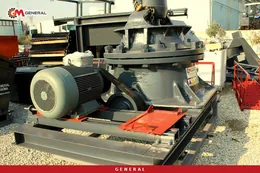
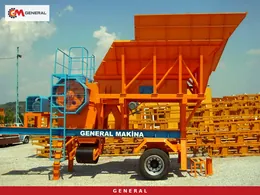
| Mobile GNR 90 unit (feeder 1000×3800 mm) | GNRK 90 | 0-1100 mm (series value) | 70-180 | 25,000 kg | — |
| Mobile GNR 110 unit (feeder 1100×4750 mm) | GNRK 110 | 0-1100 mm (series value) | 180-300 | 55,000 kg | — |
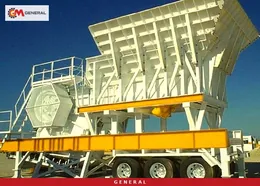
| GNR-MC110 primary chassis (secondary chassis added later) | GPJ 110 | 900 mm | 200-300 (plant) | 55,000 kg (primary chassis) | 750 kVA generator |
| Stationary: GNR 90 grizzly feeder + GNRK 90 | GNRK 90, opening 900×650 mm | Limited by jaw opening | 60-225 (crusher) | 11,400 kg (crusher) | 75/90 kW crusher motor |
Lower half of the band: GNR 90
If the target is around 100-150 TPH and the site will work mainly oxide ore in its first years, the mobile GNR 90 unit is a sensible start. Its 70-180 t/h range covers the target, and 25,000 kg keeps road transport simple. The limit is clear too: 180 t/h is the upper figure and is not reached at a tight setting. If 200 TPH is required once the pit reaches fresh rock, this unit alone will not be enough.
Top of the band: GNR 110 or GNR-MC110
On a site that targets 200 TPH continuously, the 180-300 t/h range of the mobile GNR 110 unit leaves headroom; even with a narrower setting it is likely to stay in the target band. If a second stage is planned soon after primary crushing, the GNR-MC110 opens a different route: the GPJ 110 jaw primary chassis runs alone today, and a second chassis carrying the DMK03 impact secondary and a 2000×6000 mm four-deck screen can be added later. Note that in gold ore the secondary crusher type should be assessed separately against the ore's abrasiveness.
In a stationary option, the GNRK series jaw crusher and a grizzly feeder sit on concrete foundations. This layout makes sense if the mine life is long and the crushing point will stay put for years; if feed will come from several pits across the deposit, the mobile unit's freedom to relocate is usually worth more. All wheeled single-chassis units can be compared on the portable rock crushers page.
The screening stage: splitting the intermediate product
In a primary line, “screening” usually means one job: removing the fines and the undersize from the crusher discharge and sending the coarse fraction to its own stockpile or to the next crusher. Circular-motion GNR screens are built with 1-4 decks and the series is rated at 100-400 t/h; the GNR 1540, for example, measures 1500×4000 mm with an 11 kW motor, and the GNR 1650 measures 1600×5000 mm with 15 kW. Deck count and mesh opening are chosen for the cut size the process needs. For by-pass ahead of the primary, ELKG type grizzly screens are used; their bars are high-manganese austenitic steel castings with adjustable spacing. The full screen range is in the vibrating screens category and feeder types are listed under vibrating feeders.
Harmattan dust and the rainy season: operating in the Sahel
Burkina Faso has two distinct operating regimes: the dry season, when the dusty harmattan wind blows from the northeast, and the rainy season that follows. In the dry months the main enemy is fine dust; engine air filters, electrical panels and bearing seals need more frequent checks. Dust suppression sprays, covered conveyor transfers and fan-cooled panels are measures that can be selected per project; which ones are needed depends on available water and wind direction on site. In the rains the clayey cover material gets wet, sticks in the feeder and builds up under belts. For that period the pre-screen opening and the feeder frequency should be adjustable.
Off-grid sites run on diesel generators. Generator size is calculated from the sum of crusher, feeder, screen and conveyor motors and their starting currents; the product page gives this value only for the GNR-MC110, at 750 kVA, while other configurations are sized per project. On wear, jaw plate life in quartz-rich ore is markedly shorter than in limestone; since bringing parts inland can take a long time, keeping at least one spare set of jaw plates on site prevents a stoppage that could last months.
From a coastal port to an inland site: shipping and installation
Burkina Faso is landlocked, so machines leaving İzmir reach the site by road through ports in neighbouring countries, such as Abidjan, Lomé or Tema. In this chain, dimensions and weight set the transport plan. The axled chassis of a mobile unit is hitched to a tractor; parts that do not fit into containers need open-top or flat-rack planning. Check current customs, transit and road permit requirements with the relevant authorities and your freight forwarder; routes and transit times vary from site to site.
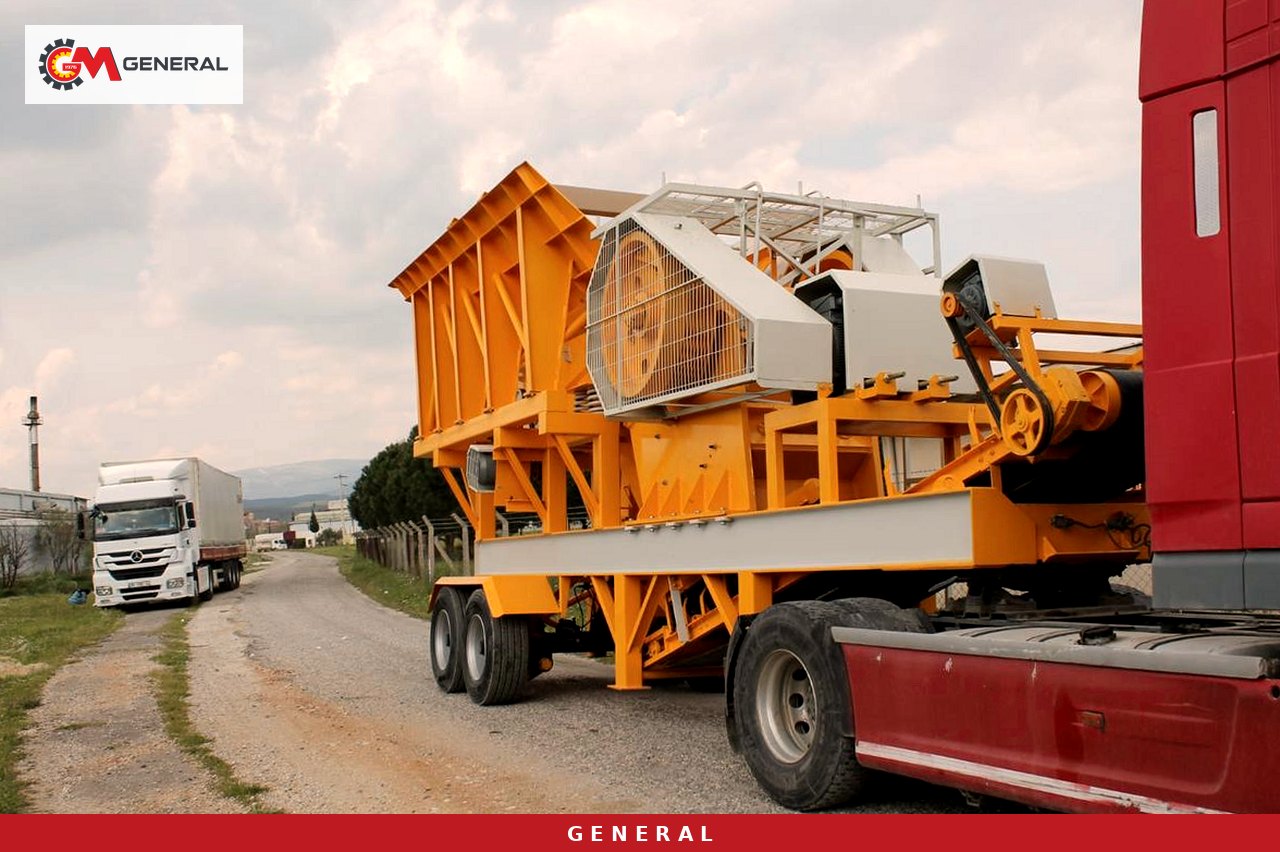
On arrival, the mobile unit is set up on hydraulic legs without a concrete foundation. The ground still has to be compacted, and the ramp where trucks or excavators approach the hopper, as well as the stockpile area under the discharge belt, must be prepared in advance. If ramp height, the block size dumped into the hopper and the truck body dimensions are not considered together, even the best crusher spends its time waiting.
Checklist to prepare before ordering
The clearer the information you provide at quotation stage, the fewer assumptions the proposed configuration will contain:
- Target hourly tonnage and daily operating hours (which end of the 100-200 TPH band you sit at).
- Largest block size after blasting and the machine that will feed the hopper.
- Share of oxide versus fresh rock, plus any crushability and abrasion test results.
- Where the primary output goes: stockpile, secondary crusher or grinding circuit, and the required top size.
- Number of fractions and cut sizes at the screening stage.
- Power source: grid or generator, and the rating of any existing generator.
- Water availability and dust suppression requirements.
- Preferred port of arrival and road constraints to site (bridges, bends, gradients).
A spare parts plan belongs on this list as well. An initial stock of jaw plates, screen meshes and conveyor wear parts should be agreed at quotation stage.
Frequently asked questions
Does a primary line reduce gold ore to mill feed size?
No. The mobile primary jaw unit delivers 0-250 mm output with a typical reduction ratio of 4:1 to 9:1. Mill feed usually needs one or two further crushing stages; ore tests and process design decide which.
Can a single mobile unit reach 200 TPH?
The product page capacity of the GNR 110 unit is 180-300 t/h, so 200 TPH is within its range. The GNR 90 unit tops out at 180 t/h and is not suitable on its own for a site targeting 200 TPH continuously. The real figure depends on the jaw setting and ore hardness.
What warranty and certificates apply?
Machines are manufactured with ISO 9001 and CE certification. The warranty period is 1 year; wear parts such as jaw plates are excluded.
How are price and delivery time determined?
Price depends on model and capacity, the scope of pre-screening and screening, the generator, dust measures and the spare parts package. Delivery time is stated in writing in the quotation, based on the production schedule at the time of order.
Conclusion: get primary crushing right first
For 100-200 TPH primary crushing at a gold site in Burkina Faso, the choice between the GNR 90, the GNR 110 and the GNR-MC110 primary chassis follows from how quickly the ore turns from oxide to fresh rock and where the intermediate product goes; the screening stage and pre-screening complete that choice. Our team in İzmir, building crushing and screening equipment since 1976, can prepare a configuration around your ore data and site constraints. For a quotation and a technical discussion, reach us through our contact page.
Definitions of technical terms: Glossary