EN — English
 TR — Türkçe
 DE — Deutsch
 RU — Русский
 FR — Français
 ES — Español
 AR — العربية
 SR — Српски

Sudan River Nile Gold Quartz Crushing and Screening Plant 100-200 TPH
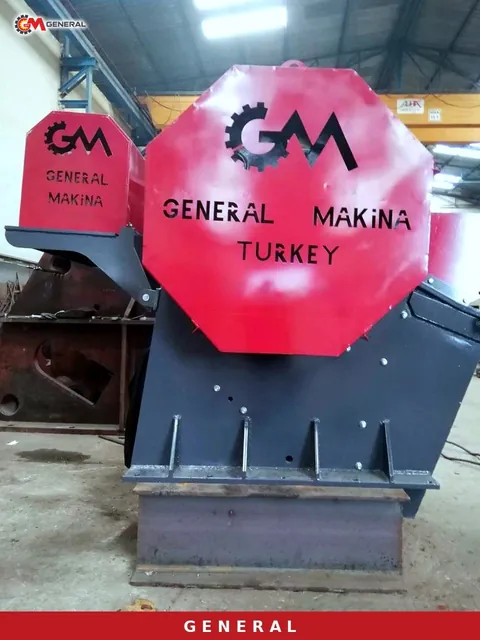
In Sudan's River Nile State, across the desert belt between Atbara and Abu Hamed, gold usually sits inside white or milky quartz veins, often as grains too fine to see. An operator processing this ore does not want saleable chippings from the crushing plant, as a quarry would. What matters is a steady, predictable feed at the size the grinding, gravity or leach circuit behind it demands. This article looks at which crusher combination makes sense for a mine that needs to crush 100-200 tonnes of quartz ore per hour, using real model data and allowing for the desert conditions found on site.
With quartz, abrasiveness decides, not hardness
Quartz is a hard mineral, but when choosing a crusher the figure that really counts is free silica content. Vein quartz is almost pure silica, so it grinds away every steel surface it touches. Our product data defines abrasive material as anything above 10% silica or a Bond abrasion index (Ai) above 0.15; the quartz on River Nile sites sits well beyond that threshold.
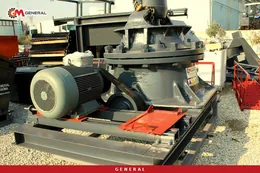
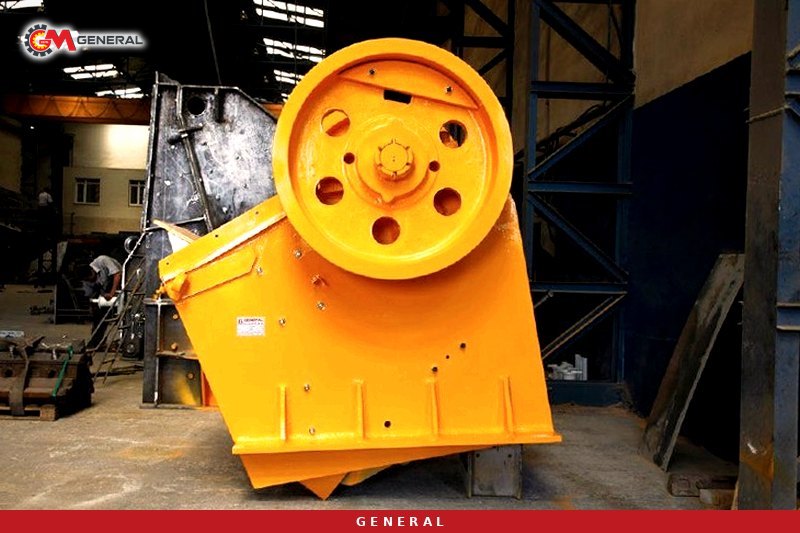
The practical consequence is simple. Rotor-type impact crushers burn through wear parts on this ore and push up the cost per tonne. Compression machines, meaning jaw and cone crushers, spend the energy of the quartz squeezing it between two surfaces instead of striking it with hammers or blow bars. That is why every configuration we suggest uses a GNRK series jaw crusher as primary and a cone crusher as secondary.
The second reality on site is that the ore is not uniform. Vein quartz often arrives mixed with schist, granite or weathered wall rock. Near-surface zones are dominated by iron-stained, friable material, while fresh, hard quartz increases with depth. The crushing line has to be sized for the toughest feed; the soft material will always pass more easily.
Lab data to request before choosing a model
Picking a crusher from a catalogue on a gold project means deciding without knowing the ore. Having the following information ready at quotation stage prevents the problems a wrongly sized line creates for years:
- Bond abrasion index (Ai) and crushing work index: these set the wear-part alloy and the motor power required. Vein quartz and wall rock should be tested separately.
- Run-of-mine size distribution: the largest block delivered by blasting or excavator ripping directly defines the primary jaw opening.
- Moisture and clay content: weathered-zone material can turn sticky in wet spells; this tells you whether a grizzly pre-screen will blind.
- Target product size: the top size wanted by the ball mill, gravity unit or heap leach determines the secondary crusher setting and the screen apertures.
- Daily operating hours: hourly capacity is the daily ore target divided by real running hours; without the shift pattern, the right point between 100 and 200 tph cannot be chosen.
These samples should be examined by an independent laboratory and the results attached to the enquiry. Working from test results rather than guessing the rock properties of a given licence area protects both the investor and the manufacturer.
Two real configurations for the 100-200 TPH range
Our range covers this band in two different ways. Which one fits depends on the life of the deposit and on whether the ore is scattered or concentrated at one point.
Single-chassis option: General 944
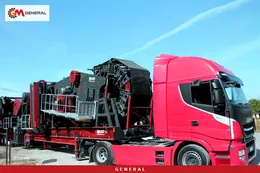
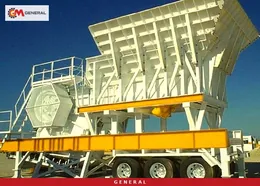
The General 944 carries a GPJ 90 primary jaw and a GM430 secondary cone on one wheeled chassis. According to its product page it runs at 120-180 tph, accepts feed up to 800 mm and splits material on a 1600×5000 mm three-deck horizontal screen into 0-5 / 5-12 / 12-19 mm fractions. Power comes from a 550 kVA generator and the plant weighs 70,000 kg. The manufacturer explicitly positions this model for abrasive materials such as quartz, chrome and iron ore. For mines working several vein sites in turn, or holding a short licence, this machine from the mobile crushing plants group stands out because it sets up without concrete foundations.
Staged stationary line: feeder, jaw, cone and screen
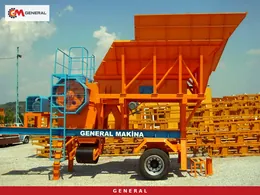
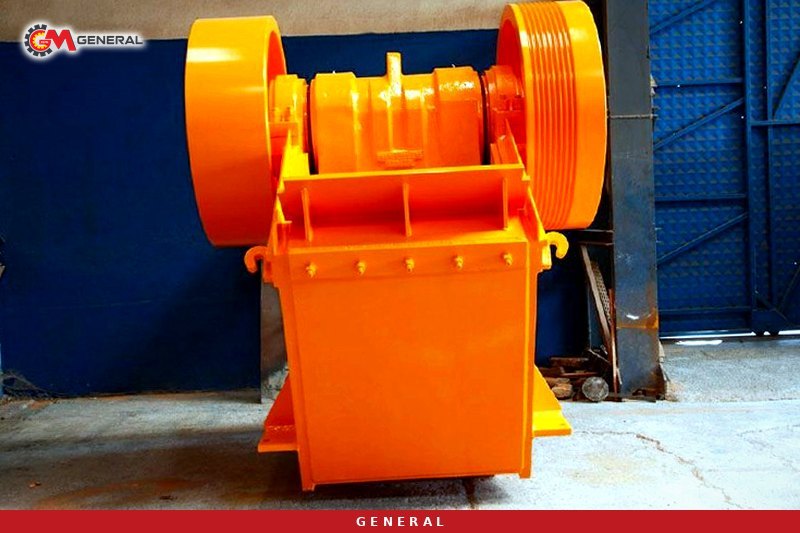
Where the main ore body is concentrated in one place and the operation will stay there for many years, stationary crushing plants allow a more flexible layout. A typical arrangement for 100-200 tph is: GNR 90 vibrating grizzly feeder (140~210 tph, 2x4 kW), GNRK 90 jaw crusher (900×650 mm opening, 75/90 kW, 60–225 tph), then a cone crusher in closed circuit with a GNR 1650 screen (1600×5000 mm, 15 kW). Model-specific cone capacity and power values are supplied per project; the product page only gives order-of-magnitude figures such as 50–250 mm feed and 0–60 mm product.
| Configuration | Primary | Secondary | Capacity | Max. feed | Power / motor | Weight |
|---|---|---|---|---|---|---|
| General 944 (wheeled, single chassis) | GPJ 90 jaw | GM430 cone | 120-180 tph | 800 mm | 550 kVA generator | 70,000 kg |
| Stationary line: GNR 90 feeder + GNRK 90 | GNRK 90 (900×650 mm) | Cone crusher (per project) | 60–225 tph (jaw) | — | 75/90 kW (jaw) | 11,400 kg (jaw) |
| Phased start: GNR 90 wheeled primary unit | GNRK 90 | Added later | 70-180 t/h | 1100 mm | — | 25,000 kg |
The third row suits buyers who want to spend capital in phases: the wheeled primary unit first produces a 0-250 mm intermediate product, and the secondary and screening stages follow once the ore reserve is confirmed.
Running a desert site: dust, heat and scarce water
Most mine sites in River Nile State lie away from the riverbank, in open desert where sandstorms are frequent. If the crushing line is not designed for this environment, motors, bearings and filters will cause trouble long before planned.
Haboob dust and quartz silica
Crushing quartz releases respirable silica dust, an occupational health risk that must be taken seriously. Measures that can be chosen per project include water-spray dust suppression at crusher discharge points, enclosed covers on belt conveyors and filtered ventilation in operator cabins. Where water is limited, spraying should be concentrated at transfer points. Air intakes of the generator and electrical panels should be placed so they can be reached and cleaned after a sandstorm.
Heat and power planning
On sites far from the grid, power almost always comes from a diesel generator. The 550 kVA need of the General 944, or the total motor load of a stationary line, should be calculated allowing for generator derating in hot weather; the generator maker's temperature correction table is the reference here. Hydraulic and gear oil grades should also match high ambient temperatures.
Shipping plan from Port Sudan to the Nile
Equipment sent from Türkiye typically enters through Port Sudan on the Red Sea coast and travels by road towards Atbara, then on to the mine. A wheeled plant can be towed on its own chassis behind a tractor unit, while a stationary line is broken down and shipped in open-top containers and on low-bed trailers. The General 944 transport dimensions of 4130×20350×4500 mm should be checked in advance against bridges and narrow passages on the route.
During planning, do not skip these steps:
- Confirm the current route condition and transit permits with the haulier and local authorities.
- For a stationary line, get the foundation drawings to site before shipment and add concrete curing time to the erection schedule.
- Send the first set of wear parts and filters in the same shipment as the main equipment; on a remote site a missing jaw plate stops the whole line.
- Verify customs and mining licence documents with the relevant Sudanese authorities, and settle the project specification requirements before the purchase decision.
The wear-part economics of quartz
On a gold site the largest crushing cost item is usually wear parts, not fuel. Jaw plates and the cone crusher mantle and concave are made of austenitic manganese steel, whose surface hardness rises under impact from about 200 HB to 550 HB. For high-silica material our product data recommends Mn18/Mn22 alloy. The right alloy is the first step to lowering part cost per tonne.
The second step is feed control. The largest stone fed to a jaw crusher should not exceed about 0.8–0.9 of the opening width; oversize blocks bridge, the crusher runs idle and the plates wear unevenly. A cone crusher, when choke-fed, gives a more cubical product and wears evenly along the mantle. A surge pile and metered feed are therefore not a luxury on a quartz line but a cost-control tool.
When planning spares, review the alloy options on the crusher spare parts page, record wear measurements during the first months on site, and base later orders on that real data.
Frequently asked questions
Why is an impact crusher not recommended for quartz gold ore?
An impact crusher breaks material with blow bars rotating at high speed. On high-silica quartz these bars wear very quickly. Jaw and cone crushers work by compression, so on the same ore they deliver longer part life and a lower cost per tonne.
Can the General 944 produce 200 TPH on its own?
No. According to its product page the General 944 handles 120-180 tph. If a steady 200 tph is required, a stationary line or a combination built around a larger primary should be considered; the right choice is made from ore test results.
What size should the crushing plant feed to the gold recovery circuit?
That value is set by the designer of the downstream mill, gravity unit or leach system. The crushing line is configured to that target through the cone crusher setting and the screen apertures. State the target size in your enquiry.
How are price and delivery time determined?
Price depends on the configuration, the size of the primary and secondary crushers, the number of screens and conveyors, the generator choice, the dust suppression equipment and the shipping method. Once these are clear, a project-specific quotation is prepared.
Conclusion
On the quartz veins of River Nile State, 100-200 tph runs efficiently with a compression-based jaw + cone combination and a line planned around wear and desert dust. For short-lived, scattered sites the General 944 makes sense; for long-life ore bodies at one centre, a staged stationary line is the better fit. General Makina has built crushing and screening equipment in Izmir since 1976; our ISO 9001 and CE certified machines come with a 1-year warranty, wear parts excluded. Share your ore test results and target product size through our contact page and we will work out the configuration for your site together.
Definitions of technical terms: Glossary