EN — English
 TR — Türkçe
 DE — Deutsch
 RU — Русский
 FR — Français
 ES — Español
 AR — العربية
 SR — Српски

Benin Granite Quarry Mobile Stone Crushing Plant 80-150 TPH
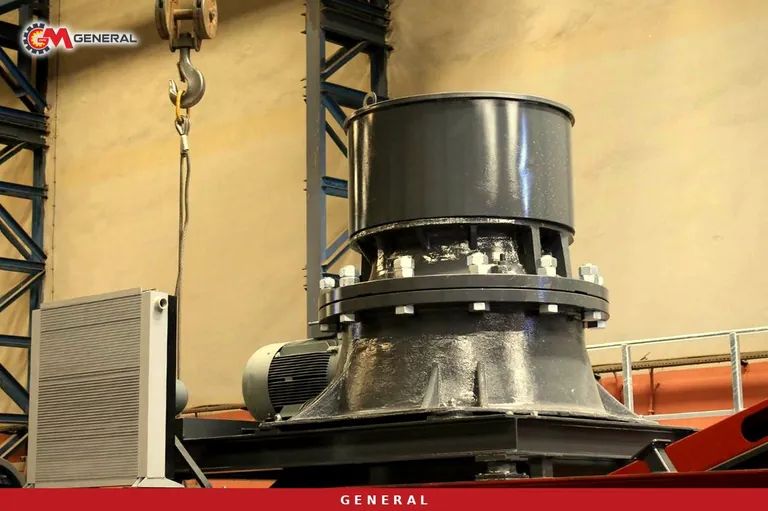
An investor opening a granite quarry in Benin, or expanding an existing one, usually starts the search for an 80-150 TPH machine by looking at the crusher's name. In granite, though, the decisive part is the second stage: the more evenly and fully the cone crusher is fed, the longer its metal lasts and the more cubical the chippings come out. This article reads Benin's rock and site conditions through the working logic of the cone crusher, and sets the real configurations that cover this band side by side with the values published on our product pages.
Everything described here is a pre-selection framework. The final line for your quarry is drawn once the sample analysis, the target fractions and the site's power situation are clear. If you will supply road, bridge or housing projects in Benin, confirm the required aggregate specification with the relevant authority's tender documents.
What Benin granite demands from a crushing line
Benin's coastal belt consists largely of sand and sedimentary units; granite and gneiss quarries are concentrated in the crystalline basement rocks of the interior. What these rocks share is a high quartz content. Quartz consumes the blow bars of an impact crusher quickly, while machines that crush by compression, such as jaw and cone crushers, wear far more slowly. The abrasion index of about 0.55 (Ai) quoted for granite on our cone crusher page explains on its own why this difference matters.
The second burden is the overburden on top of the granite. In many inland quarries a band of laterite and weathered rock must be removed before sound rock is reached. When this material gets into the line it blinds screen meshes, forms a sticky layer in the cone crusher chamber and cuts capacity. A granite line in Benin therefore succeeds or fails on how well soil and fines are separated before they reach the crusher.
The third is climate. Long rainy periods in the south and harmattan dust in the dry season in the north mean that the same plant faces wet, sticky feed in one part of the year and fine dust in another. Pre-screening, dust suppression and the maintenance plan must be designed for both extremes, just as carefully as the machine itself is selected.
Reading the 80-150 TPH band from the cone crusher's side
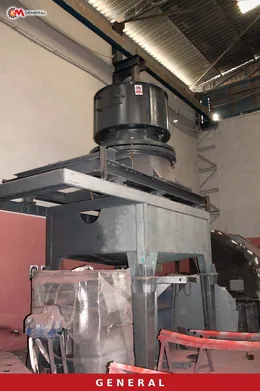
A cone crusher breaks rock by compressing it repeatedly between an eccentrically gyrating head (mantle) and a fixed bowl liner (concave). Our product page names choke feeding, meaning a chamber that is kept full at all times, as the preferred way to feed it. With a full chamber the particles also press against each other, which improves cubicity and stops the liner from wearing at one spot.
This has a direct effect on capacity selection. 80-150 TPH is a wide range, and its upper end is almost double its lower end. A line sized for the top of the band and then run at around 80 TPH starves the cone: the chamber turns half empty, the lower liner wears out and the product becomes flaky. So size the line by how many tonnes you will really sell for most of the year. If the target is 120-150 TPH, plan for the upper band; if it is 80-100 TPH, think in terms of a smaller line.
The second value to check is the feed size the cone crusher accepts, given on the product page as 50–250 (300) mm. In other words, the cone does not take run-of-mine stone but material that has already passed the primary crusher. If the primary jaw's product size is not set to this limit, bridging occurs at the cone inlet.
Candidate configurations and the figures
The table below compares four options relevant to the 80-150 TPH band using the values on the product pages. Values that are not given on a page are shown as "—"; they are calculated per project.
| Configuration | Crushers | Capacity | Max. feed | Screen | Generator | Weight | Suitability for granite |
|---|---|---|---|---|---|---|---|
| General 944 | GPJ 90 jaw + GM430 cone | 120-180 TPH | 800 mm | 1600×5000 mm, 3-deck | 550 kVA | 70,000 kg | High (compression) |
| GNR 90 jaw unit + General cone crusher | GNRK 90 jaw + cone | Jaw unit 70-180 t/h; cone | 0-1100 mm (unit) | — | — | 25,000 kg (jaw unit only) | High, staged growth |
| General 640 | GPJ 60 jaw + GNR 50 impact | 60-100 TPH | 500 mm | 1200×4000 mm, 3-deck | 300 kVA (optional) | 38,000 kg | Medium, at a modest rate |
| General 800 | PDK 1280 primary impact | 80-150 TPH | 600 mm | 1300×4000 mm, 3-deck | 450 kVA | 35,000 kg | Low (built for limestone) |
General 944: a single-chassis answer for the upper half of the band
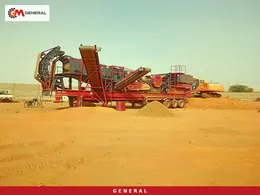
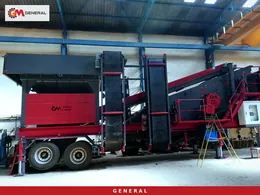
The General 944 brings a GPJ 90 primary jaw and a GM430 cone secondary together on one wheeled chassis. It accepts 800 mm feed and delivers 0-5 / 5-12 / 12-19 mm fractions over a 1600×5000 mm three-deck horizontal screen. Its 120-180 TPH working range fits a Benin quarry targeting 120-150 TPH directly. The 550 kVA generator figure is the starting point for sizing the power unit at off-grid inland quarries. The GNR 944 hard-stone plant listed among our projects works in Africa at 120-150 t/h; it is not in Benin, but it shows how the line is set up in the same rock class.
GNR 90 jaw unit plus a separate cone: a line that grows in stages
If your quarry will start at 80-100 TPH and move to 150 TPH later, a line that begins with the mobile primary jaw unit is more flexible. The GNR 90 unit carries a 1000×3800 mm feeder and a GNRK 90 jaw crusher, works at 70-180 t/h and delivers 0-250 mm product. That product size matches the 50–250 (300) mm feed limit of the cone crusher. Because the cone's model-specific capacity, power and weight values are supplied per project, those cells are left empty in the table. The product page gives a power range of 90–500 kW; the right model is chosen to suit the quarry's tonnage.
Why the impact models take a back seat
The General 800 covers this band exactly in terms of capacity, but its PDK 1280 primary impactor is designed for limestone and low-abrasion stone. In Benin granite, blow-bar consumption becomes the item that defines operating cost. The General 640 combines a GPJ 60 jaw with a GNR 50 impactor; its modest 60-100 TPH rate lets it work in abrasive stone, but it cannot reach the top of the band. It is worth considering only for a small quarry aiming at 80-100 TPH.
Keeping the cone efficient in granite
The yield from a cone crusher depends as much on its settings as on the machine. Our product page gives a reduction ratio of 6:1–8:1 for the secondary stage and about 10:1 for the tertiary stage. A hypothetical example: granite arriving from the primary jaw with a 180 mm top size leaves a cone working at 6:1 with a top size of roughly 30 mm. If the target is the 12-19 mm fraction, screen oversize is returned to the cone in closed circuit, or a tertiary stage is added.
Liner type and alloy choice
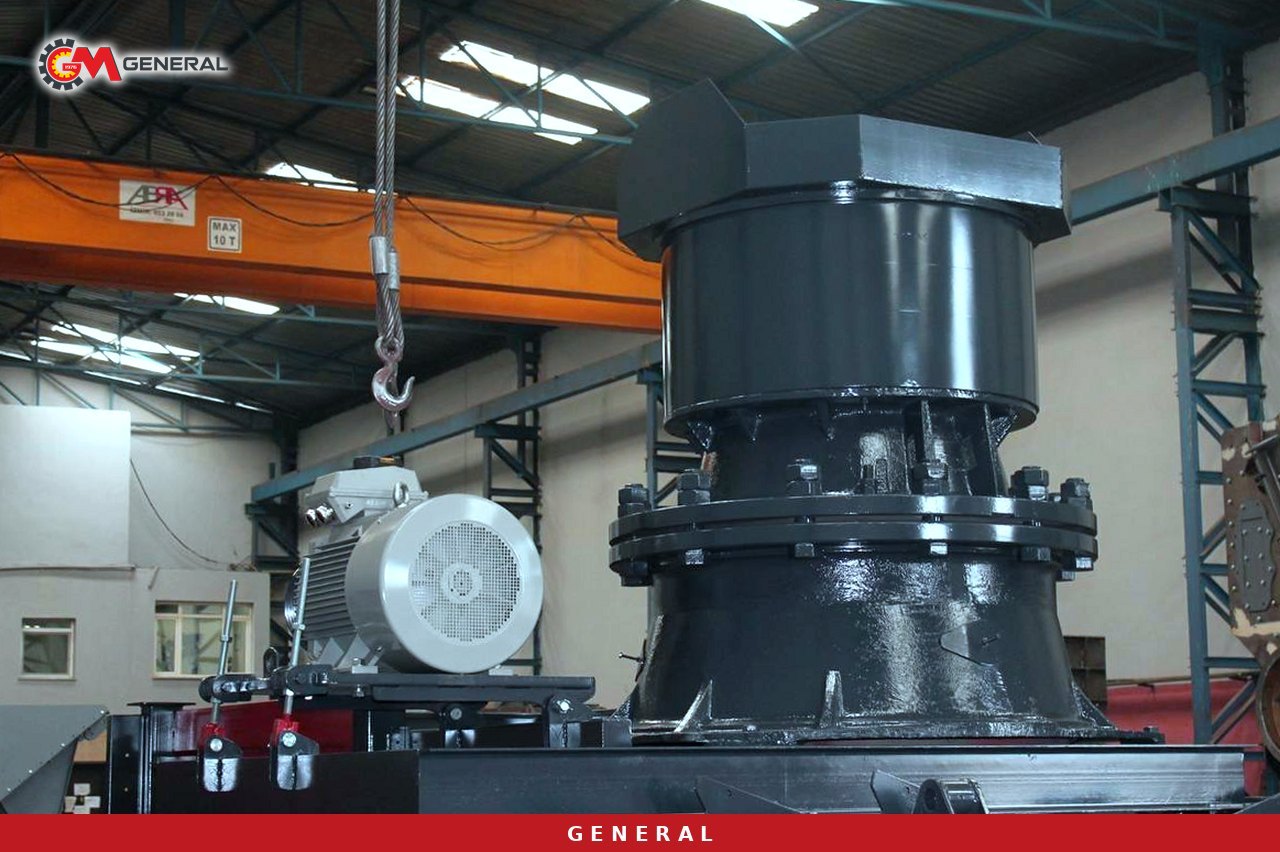
On a cone crusher the standard liner is used for the secondary stage and the short-head liner for tertiary and quaternary duty. Mantle and concave are usually manganese steel; with high-silica feed a high-chrome alloy may be preferred. Since the quartz content of Benin granite varies from quarry to quarry, base the alloy decision on a sample test.
CSS setting and hydraulic protection
Product size is set with the hydraulic CSS (closed-side setting) mechanism. When the chamber suddenly packs, for example when a bucket tooth or a piece of metal enters it, the hydraulic cylinder protection takes over. That matters at inland quarries where a spare part may be weeks away from the port. As the liner wears the CSS opens, so the operator should check the setting at regular intervals to keep the product curve stable.
From Cotonou port to the quarry, and two seasons on site
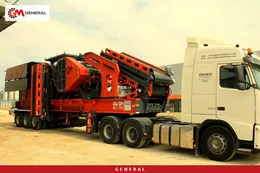
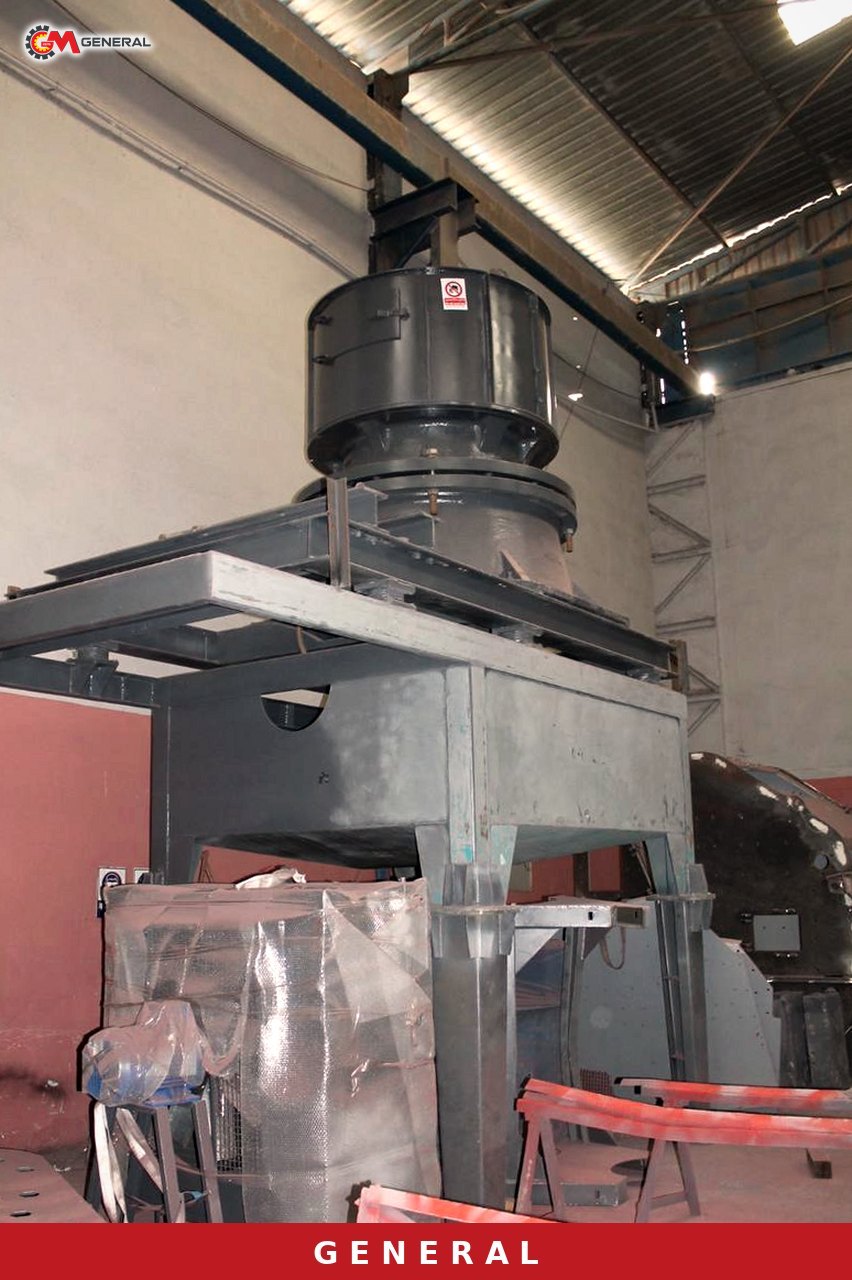
Machines coming from Türkiye are unloaded at Cotonou port and trucked inland to the quarries. The General 944's transport dimensions of 4130×20350×4500 mm and weight of 70,000 kg mean bridges and narrow passages along the route have to be checked in advance. The GNR 90 jaw unit, at 25,000 kg, is moved by a single truck and commissioned on hydraulic legs without a concrete foundation. A separate cone is installed on a steel support frame; a level, compacted ground is enough.
In the rainy season the biggest risk is feed mixed with laterite and clay. A grizzly pre-screen and by-pass ahead of the primary reduce how much of it reaches the cone. Check screen meshes for blinding at the start of each shift when the feed is wet. In the dry season, harmattan dust quickly fills engine filters and radiator cores. Water-mist dust suppression, covers at belt transfer points and shorter filter service intervals are measures that can be chosen per project.
At remote sites the most common cause of downtime is spare parts. Plan an initial stock of cone mantles and concaves, jaw plates and screen meshes together with the machine. Wear life changes with the rock, so measure consumption over the first three months and size later orders from it.
The file to prepare before asking for a quote
- A granite sample from the quarry and, if possible, abrasion and compressive strength test results
- Laterite and overburden thickness, and the expected soil share in the feed
- Largest run-of-mine block size and the blasting pattern
- Target hourly and daily tonnage through the year, number of shifts
- Fractions to be sold: 0-5, 5-12, 12-19 mm or another curve
- Whether grid power is available, generator preference
- Route from Cotonou port to the quarry and weight/size limits on the way
- The project the material is destined for and the relevant aggregate specification
With this information the right combination for your quarry becomes clear among our wheeled mobile crushing plants and single-chassis crusher units. Our guide to plants for basalt and granite covers model selection more broadly and is useful for comparison.
Frequently asked questions
Can an impact secondary be used instead of a cone in Benin granite?
It can, but in high-quartz granite the blow bars of an impactor wear fast. If the buyer insists on cubical product and the wear cost is accepted, an impact secondary is an option; in most granite quarries the cone gives a lower parts cost per tonne.
Which route makes more sense to start at 80 TPH and grow to 150 TPH?
If staged growth is planned, starting with the GNR 90 jaw unit and adding the cone and screen later gives flexibility. If tonnage is above 120 TPH from day one, the General 944 offers a faster set-up on a single chassis.
Can the plant run without grid power?
Yes. The product page lists a 550 kVA generator value for the General 944. In a line built from separate units, the generator is calculated from the motor power of the selected cone crusher.
How are price and delivery time determined?
Price depends on the configuration, the cone model, the number of screens and conveyors, the generator, the wear-part alloy and the shipping method. Delivery time depends on the production schedule at the time of order; both are confirmed in a written quote after your file is reviewed.
Conclusion
For a Benin quarry targeting 80-150 TPH in granite, the right choice is a line where the primary jaw keeps the cone crusher choke-fed. If tonnage is high from the start, the General 944 leads; if staged growth is planned, the GNR 90 jaw unit with a separate cone comes first. Send your sample, tonnage target and site details through our contact page and we will prepare a configuration and quote for your quarry.
Definitions of technical terms: Glossary