EN — English
 TR — Türkçe
 DE — Deutsch
 RU — Русский
 FR — Français
 ES — Español
 AR — العربية
 SR — Српски

Benghazi & Tripoli Wheeled Crushing and Screening Plant 120-180 TPH
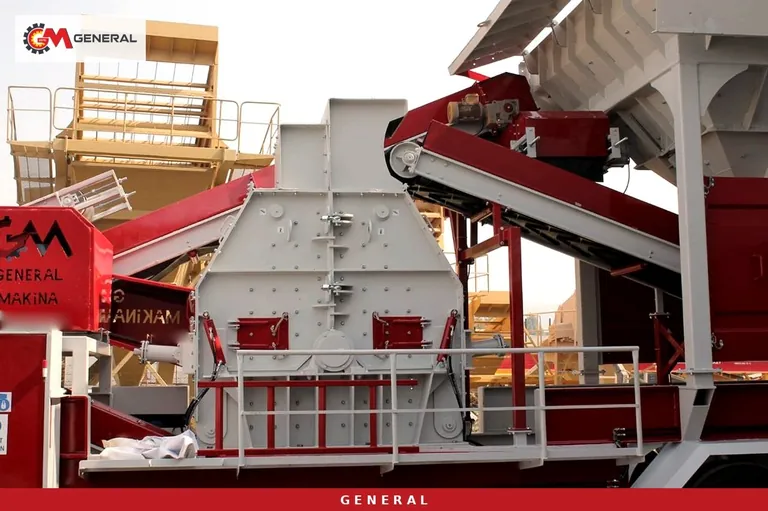
For a contractor running work between Benghazi and Tripoli, choosing a crushing and screening plant is a different calculation from buying a machine for a single quarry. The plant has to survive the long road haul between the east and the west of the country, cope with the different rock found around each city, and produce on both sites without relying on the grid. For a project targeting 120-180 TPH, this article compares three wheeled mobile models using their catalogue figures. We explain, from a field engineer's point of view, which model suits which rock and when one unit or two units make sense for a given work schedule.
Two cities, two kinds of rock: let the sample decide
Limestone is the quarry rock most often encountered along Libya's northern coastal belt. Moving inland and onto higher ground, dolomite, sandstone and, in places, hard rock of volcanic origin also appear. That general picture is not enough to pick a model. What determines the crusher type is the compressive strength, abrasiveness (silica content) and clay-moisture ratio of a sample taken from your own quarry. If you have laboratory results for these three values at the quotation stage, crusher selection rests on data rather than guesswork. If not, we recommend sending at least a representative sample of a few kilograms together with photos of the quarry face.
Around Benghazi: what impact crushing gives you in limestone
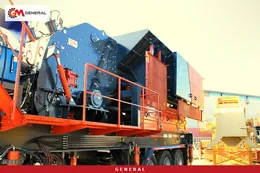
Limestone formations are widespread east of Benghazi, in the area rising towards the Jebel Akhdar plateau. In a low-abrasion rock such as limestone, an impact crusher delivers a high reduction ratio and cubical particle shape in a single pass. The shape required for concrete and asphalt aggregate is achieved without an extra shaping stage. The first model to look at for this site is the General 01: its GPS 1210 impact crusher handles primary and secondary duty in one housing, and the 1600×5000 mm four-deck screen produces four separate products. Where there is a clay-rich overburden layer, the grizzly bypass section on the feeder separates fines before they reach the crusher and eases the load on the rotor.
Around Tripoli: mixed feed and the chance of hard rock
South of Tripoli, towards the Nafusa mountains, volcanic rock such as basalt may be found alongside limestone. If you will be working with siliceous or basaltic stone, the blow bars and impact plates of an impact rotor wear quickly. In that case a model with a jaw crusher up front, the General 944 or General 950, is the better starting point. The choice between them comes down to the second stage. The 944 works on the compression principle with its GM430 cone crusher and extends the life of metal parts in abrasive rock. The 950, with its DMK01 impact secondary, gives higher reduction and a distinctly cubical product. If your Tripoli work is mostly road sub-base, the 944 comes first; if it is mostly concrete aggregate, the 950 does.
The numbers for wheeled models in the 120-180 TPH range
The table below is compiled from the technical data published on our product pages. All three models work in the same capacity range; the difference lies in crusher arrangement, feed opening and number of screen decks.
| Model | Crusher arrangement | Maximum feed size | Screen | Product sizes | Generator | Weight | Transport dimensions | Suited rock |
|---|---|---|---|---|---|---|---|---|
| General 944 | GPJ 90 jaw + GM430 cone | 800 mm | 1600×5000 mm, 3 decks horizontal | 0-5 / 5-12 / 12-19 mm | 550 kVA | 70,000 kg | 4130×20350×4500 mm | Basalt, granite, quartz |
| General 950 | GPJ 90 jaw + DMK01 impact | 800 mm | 1600×5000 mm, 3 decks horizontal | 0-5 / 5-12 / 12-19 mm | 600 kVA | 70,000 kg | 4130×20350×4500 mm | Hard abrasive rock, cubical product |
| General 01 | GPS 1210 impact (primary + secondary) | 700 mm | 1600×5000 mm, 4 decks | 0-5 / 5-12 / 12-19 / 19-40 mm | 550 kVA | 55,000 kg | 4300×18500×4500 mm | Limestone, mixed feed |
The practical takeaway: the General 01 is lighter and shorter, so it is easier on a long road haul, and it delivers the 19-40 mm fraction directly. The 944 and 950 accept larger blocks through their 800 mm feed opening. If you expect coarse run-of-mine from a blasted quarry, that 100 mm difference reduces the number of oversize blocks that have to be set aside in front of the crusher. For details see the General 01General 944 and General 950 pages. All wheeled options are listed in the mobile crushing and screening plants category.
One unit, or one unit per city?
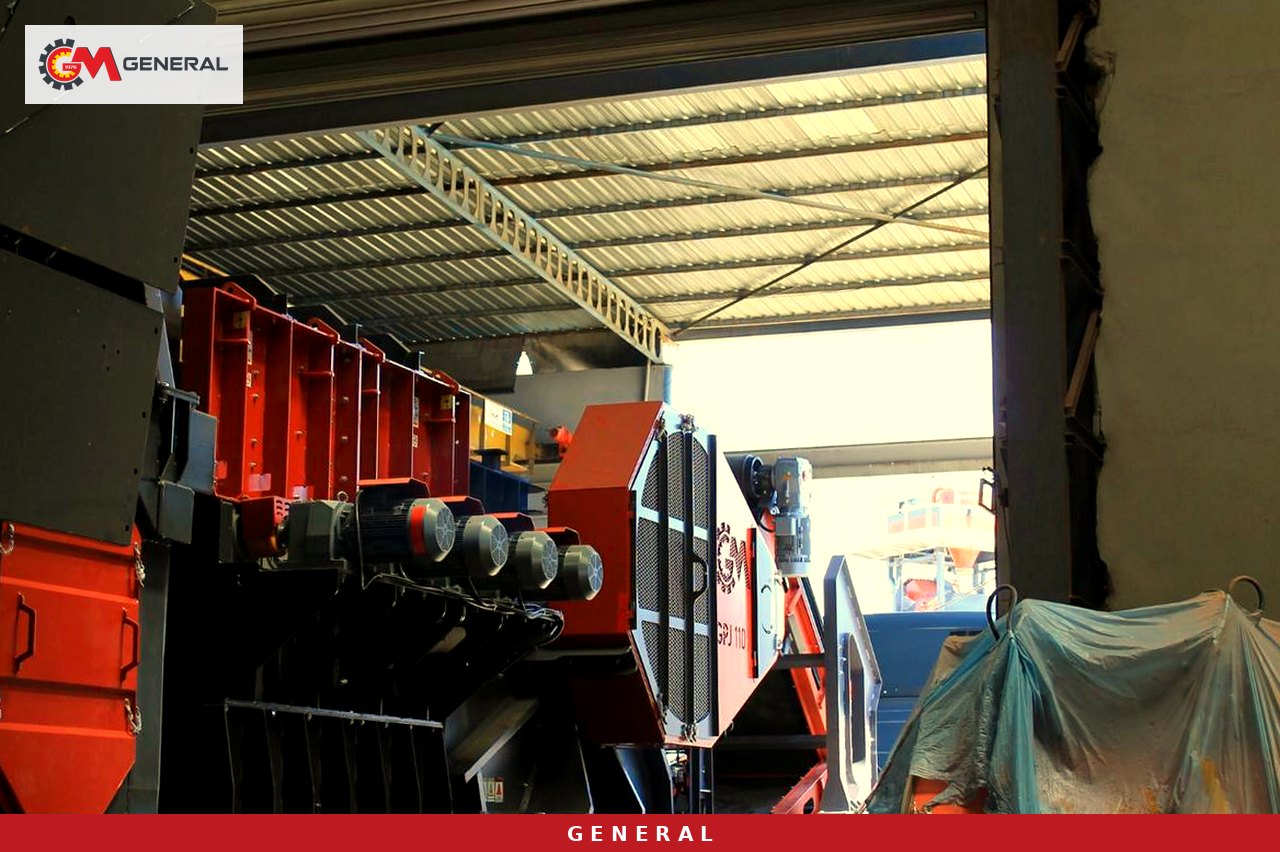
How many plants to buy depends on whether the work in the two cities runs at the same time or one after the other. Discussing models without answering this question against your contract schedule leaves the picture incomplete.
Working the sites in sequence with one plant
If the projects follow each other in time, a single wheeled plant may be enough. The choice is then made according to whichever site has the more demanding rock: a model that handles hard rock will also work in soft rock, but not the other way round. If basaltic material is possible on the Tripoli side, buying a 944 or 950 and also using it on Benghazi limestone is safer than buying a General 01 and fighting wear costs in hard rock. A jaw and cone arrangement crushes limestone too; it simply may not give the same cubical shape and reduction as an impact crusher. If particle shape is critical in the specification, state it clearly in your enquiry.
Producing in both cities at once
If aggregate is needed on both sites simultaneously, setting up two units is more efficient than keeping one plant on the road and in rigging for months. A sample arrangement: a General 01 in Benghazi for limestone and a General 950 in Tripoli for hard rock. Wear parts and filter stock for the two plants are then planned separately. Buying both units from the same manufacturer keeps spare-parts orders and technical correspondence in one channel. If total demand exceeds 180 t/h and is concentrated at one point, the twin-chassis GNR-MC110 working in the 200-300 t/h range becomes the next option on the table.
Transport along the coastal road and site layout
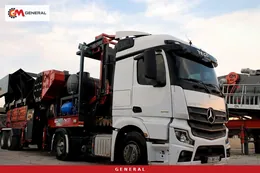
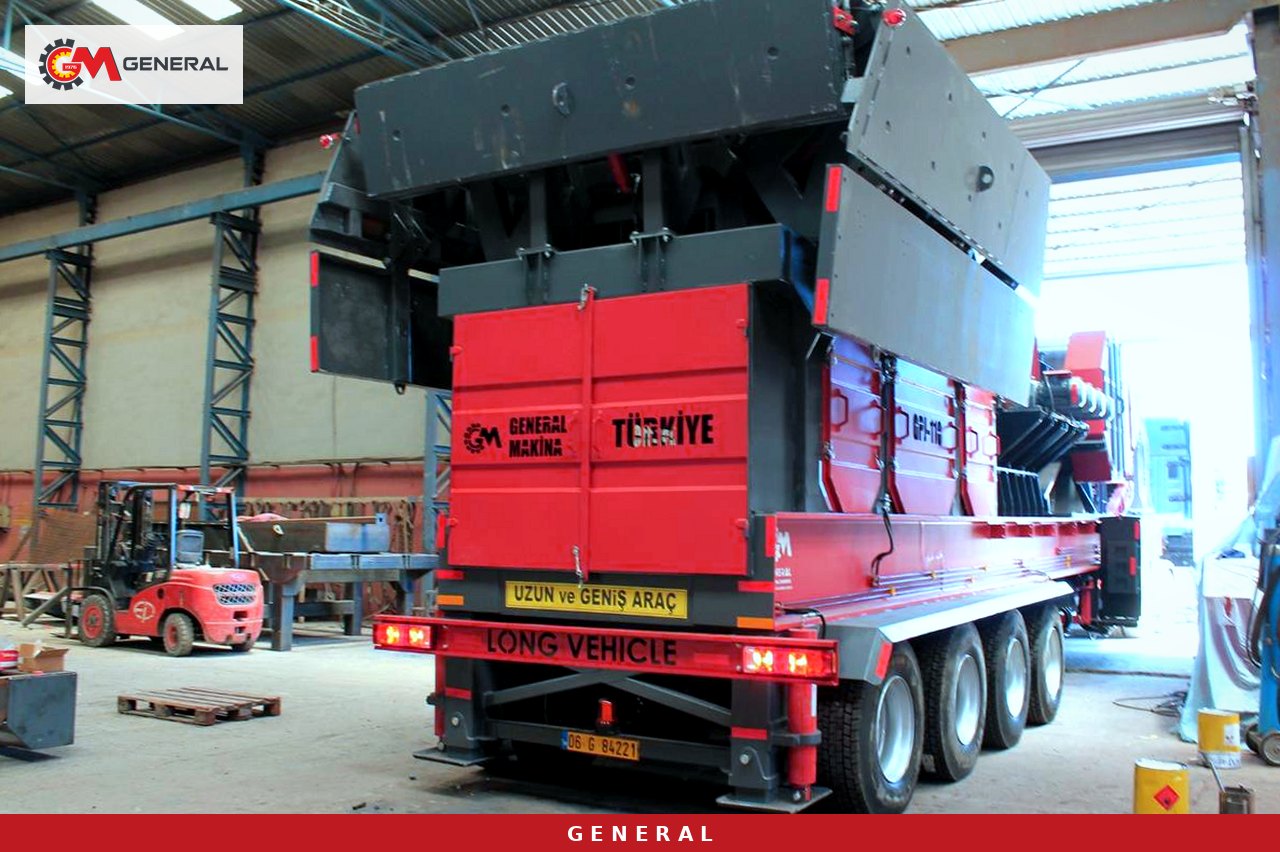
The real advantage of a wheeled plant is that it can cover the long distance between Benghazi and Tripoli in one piece, hitched to a tractor unit. In the transport dimensions in the table, height is 4500 mm for all three models. Confirm bridge, overpass and power-line clearances along the route, oversize-load permits and night-driving rules with the relevant local authority. For a plant arriving by sea, choosing the port closest to the first site, Tripoli or Benghazi, shortens the road leg. To compare models by transport and setup effort, see our article on the models with the shortest transport and setup time.
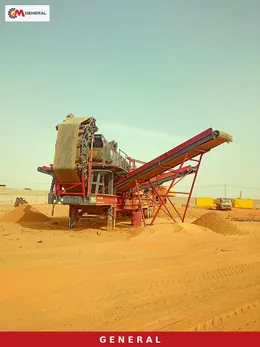
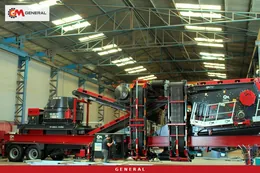
Once on site, the flatness and bearing capacity of the ground set the pace of installation. The product page for the General 950 gives 30 minutes to start production; that figure assumes prepared ground, a loader on site and generator fuel ready. If the stockpile area, truck turning space and feed ramp are laid out in advance to suit the hopper height, the same time remains realistic. Plants that General Makina has shipped to Libya appear on the GNR series mobile crushing plants – Libya project page.
Ghibli wind, heat and off-grid sites: operating measures
The ghibli wind that blows along the Libyan coast, especially in spring, carries dust and fine sand in from the desert. High ambient temperatures in the same period increase the cooling load on engines and the hydraulic system. The measures below should be treated as options selectable per project, not as standard equipment on General Makina models:
- Pre-cleaner air filters suited to the dust load for the generator and diesel engines, with spare filter elements kept on site.
- Dust protection for the electrical panel and control cabin; ventilation or air conditioning to limit panel temperature on hot sites.
- Water-spray dust suppression at the crusher discharge and conveyor transfer points, with the site water source planned from the start.
- Covers or enclosed belts on conveyors exposed to the wind, and stockpiles placed according to the prevailing wind.
- A spare set of manganese cast jaw plates, impact plates and screen meshes kept on site; see the crusher spare and wear parts page for the list.
On a quarry far from the grid, the plant generates its own power with the generator rating listed in the technical data: 550 kVA for the General 01 and 944, 600 kVA for the General 950. Because fuel consumption varies with rock hardness, feed regularity and operating hours, we do not quote a fixed figure; to calculate it for your conditions, use cost-per-tonne logic: total fuel and wear expense divided by tonnes produced.
Pre-order checklist for a Benghazi-Tripoli project
- Samples from both quarries: compressive strength, abrasiveness and clay-moisture values.
- The largest block size expected after blasting (700 mm or 800 mm sets the limit).
- Product sizes and particle-shape requirement in the specification; whether 19-40 mm is needed.
- Work schedule for the two sites: sequential or simultaneous?
- Port of first arrival and the height and weight restrictions on the route to site.
- Power source: is there a grid connection, or will the plant run on a generator?
- Water for dust suppression, fuel storage and space for spare-parts storage.
Frequently asked questions
General 01 or General 950 for limestone around Benghazi?
If the rock really is low-abrasion and you also want a 19-40 mm product, the General 01 is the more suitable and lighter solution. If the quarry contains siliceous bands or hard interlayers, the 950, with a jaw crusher up front at the same capacity, reduces the wear risk.
Does the plant have to be dismantled when moved between the two cities?
All three models are wheeled plants built on a single chassis and go on the road in one piece, hitched to a tractor unit. Before departure it is enough to put the conveyors in transport position, secure loose parts and prepare route permits.
What are the warranty and certificates?
The plants carry ISO 9001 and CE certification. The warranty is 1 year, excluding wear parts. Wear parts are planned separately because they are consumed according to operating hours and rock type.
Which items determine the price?
Model and crusher arrangement, options such as the generator and dust measures, the initial spare-parts package, port of arrival and scope of transport determine the price. Once these items are clear, a project-specific quotation is prepared for you.
Conclusion
The right plant for Benghazi and Tripoli is chosen according to the rock in the two cities and your work schedule. For limestone-dominated work that also needs a fourth product size (19-40 mm), the General 01 comes first; where hard or basaltic rock is possible, the 944 or 950 does; and two simultaneous sites mean two units. Contact us with your sample results and product list, and our engineers will prepare the configuration and quotation for your project.
Definitions of technical terms: Glossary