EN — English
 TR — Türkçe
 DE — Deutsch
 RU — Русский
 FR — Français
 ES — Español
 AR — العربية
 SR — Српски

Africa Off-Grid Sites: Generator Crushing and Screening Plant 120-180 TPH
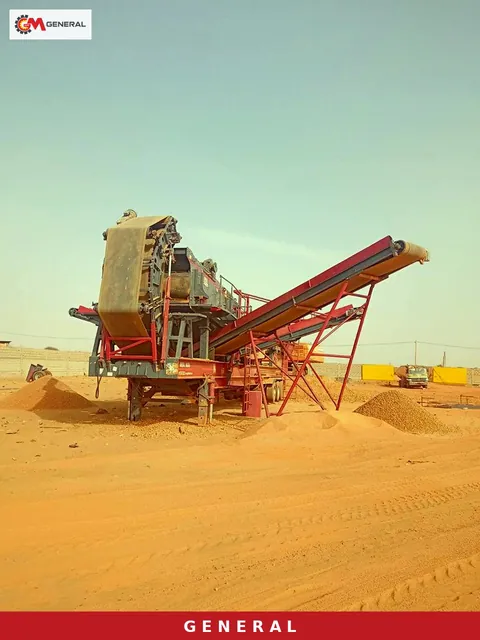
In Africa, demand for aggregate often begins exactly where the power line ends: a new road corridor across the Sahel, the access road to a mine, a bridge or dam site hundreds of kilometres from the nearest city. On such sites the output of a crusher is not decided by crusher type alone. It depends on whether the plant can produce its own electricity reliably, in what order it consumes that electricity, and how the power unit is protected through heat, dust and the days when fuel deliveries run late. This article looks at generator-powered wheeled plants for an off-grid African site targeting 120-180 TPH, from the point of view of a crushing and screening engineer. Every capacity, weight and kVA figure used here is taken from the technical tables on our product pages.
Three engineering questions for off-grid operation
On a site with no power line, three questions should come before capacity. First, can a single power unit carry the combined load of the crusher, screen, feeder and conveyors? Second, can that unit reach the site together with the plant, inside the same transport plan? Third, can the line keep running until the next delivery of fuel and filters?
The technical tables of our wheeled mobile crushing and screening plants list a generator rating for every model. This means the power unit is engineered together with the chassis and arrives on site without a separate energy project. The buyer's task is to compare that rating with their own operating plan: if a tertiary crusher, a washing unit or a long stockpile conveyor may be added later, saying so at the quotation stage lets the power budget be set correctly from the start.
Models in the 120-180 TPH band and their power ratings
Three real models cover this capacity range on a single chassis. The table below sets them side by side with their generator ratings, feed openings and transport dimensions; the General 800, which sits just below the band, is included for comparison.
| Model | Capacity | Crusher layout | Max. feed | Generator | Weight | Transport size (mm) |
|---|---|---|---|---|---|---|
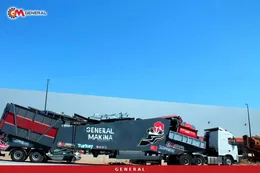
| General 01 | 120-180 t/h | GPS 1210 impactor (primary + secondary in one body) | 700 mm | 550 kVA | 55,000 kg | 4300×18500×4500 |
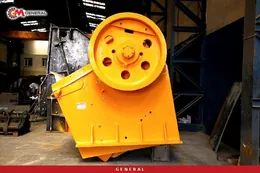
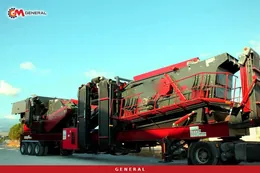
| General 944 | 120-180 t/h | GPJ 90 jaw + GM430 cone | 800 mm | 550 kVA | 70,000 kg | 4130×20350×4500 |
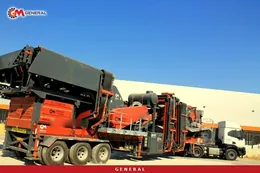
| General 950 | 120-180 t/h | GPJ 90 jaw + DMK01 impactor | 800 mm | 600 kVA | 70,000 kg | 4130×20350×4500 |
| General 800 (below the band) | 80-150 t/h | PDK 1280 primary impactor | 600 mm | 450 kVA | 35,000 kg | 3600×15500×4500 |
Two practical conclusions follow. The General 01 is 15 tonnes lighter in the same capacity band and runs on 550 kVA, which matters on a long shipment over poor roads. The General 944 and General 950 share the same dimensions and weight; the 50 kVA difference between them comes from using an impactor instead of a cone as the secondary.
Matching the model to African rock
The continent's geology is highly varied: basalt along the volcanic belt of East Africa, granite and gneiss in the south and west, limestone in North Africa and on coastal plains, and rocks of differing hardness under a laterite cover across the Sahel. Even within one country, abrasiveness can differ widely between two quarries. The matching below is therefore a starting point; the final choice should rest on laboratory results from a sample taken on site.
Limestone and mixed material: General 01
The General 01 performs primary and secondary crushing in one machine with its GPS 1210 impactor, and its 1600×5000 mm four-deck screen yields 0-5, 5-12, 12-19 and 19-40 mm fractions. With only one crusher there is less rotating equipment to maintain on site; on a remote site where spare parts arrive by shipments that take months, this shortens the stock list. The soft-starter and frequency control on the touchscreen panel are the features that soften the starting load on the generator.
Basalt, granite and quartz: General 944 or General 950
In abrasive rock a jaw crusher is preferred for the first stage. The General 944 crushes by compression with its GM430 cone secondary, giving longer metal life in high-silica rock. The General 950 delivers higher reduction and cubical product through its DMK01 impact secondary; it moves behind a single truck and, according to its product page, is ready to work in about 30 minutes. The project page GNR 944 Mobile Hard-Stone Crushing & Screening Plant 120-150 t/h - Africa shows this configuration in a real hard-rock application on the continent.
Start-up and shutdown sequence on a generator-fed line
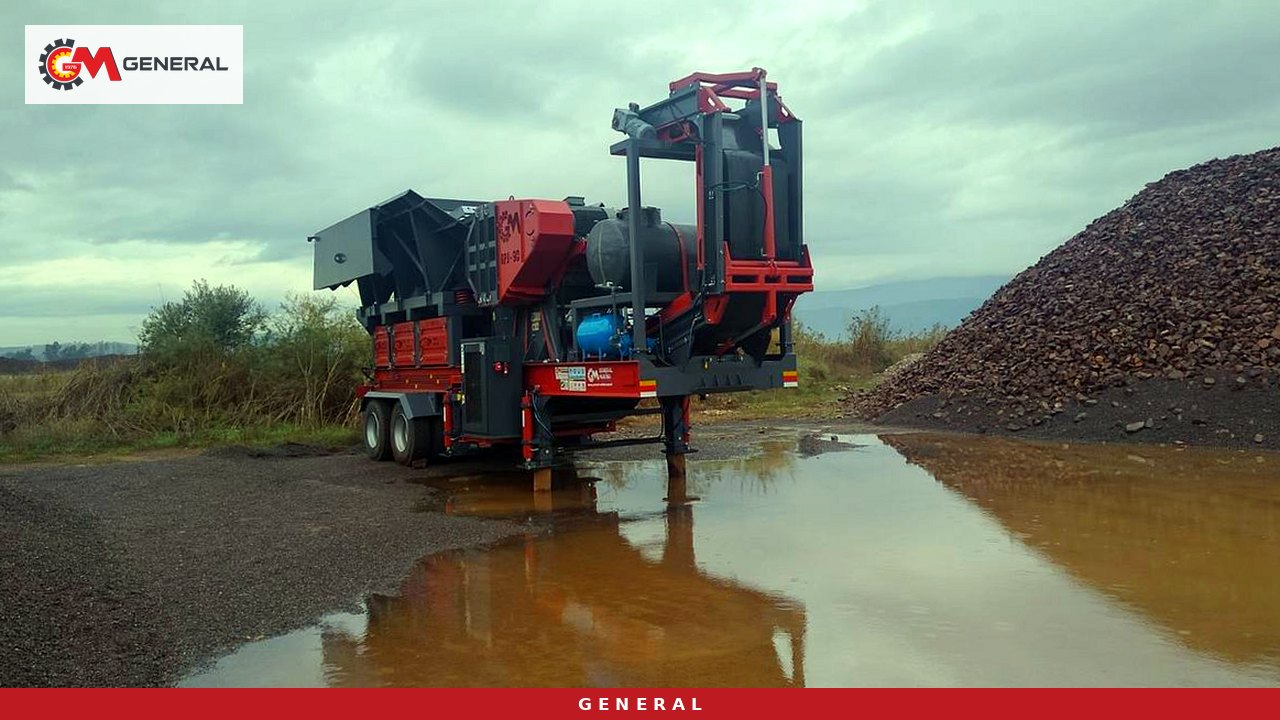
On a grid-connected plant the transformer absorbs the starting current; on a generator, every large motor start creates a sudden load spike on the unit. That is why the most valuable training for operators on an off-grid site is the order in which motors are brought online. The general engineering rule is to start against the direction of material flow:
- Start the stockpile and product conveyors first, so material falling under the screen has somewhere to go.
- Then bring the screen online and wait until its vibration settles.
- Next run the crusher empty; do not feed until the rotor or jaw reaches full speed.
- Open the feeder last and raise the feed rate step by step.
- At shutdown the order reverses: the feeder stops first, while the crusher and conveyors keep running until they are empty.
This discipline protects the generator from sudden loads and prevents the crusher from having to restart while full. A full-chamber restart is hard on equipment even with grid power; on a generator it can end with the protection circuit tripping the whole line.
Camp layout: fuel tank, cable routes and earthing
On remote African sites the plant is usually part of a construction camp, sharing space with the fuel tank, a container workshop, crew quarters and stockpile areas. If the layout is right from day one, many problems in the following months never appear.
- Place the fuel tank outside the manoeuvring zone of loaders and trucks, within reach of the refuelling hose and on bunded ground that contains leaks.
- Where power cables cross a haul road, run them through a protective duct instead of leaving them loose between conveyor legs.
- Earth the plant during installation and verify it by measurement on dry, sandy ground, which can raise earthing resistance.
- Orient the generator air intake so it does not sit downwind of the dust leaving the crusher and screen.
- Make sure stockpiles growing under conveyor ends never block access to the power unit and the control panel.
Maintaining the power unit through heat, dust and long supply intervals
Air filter and radiator
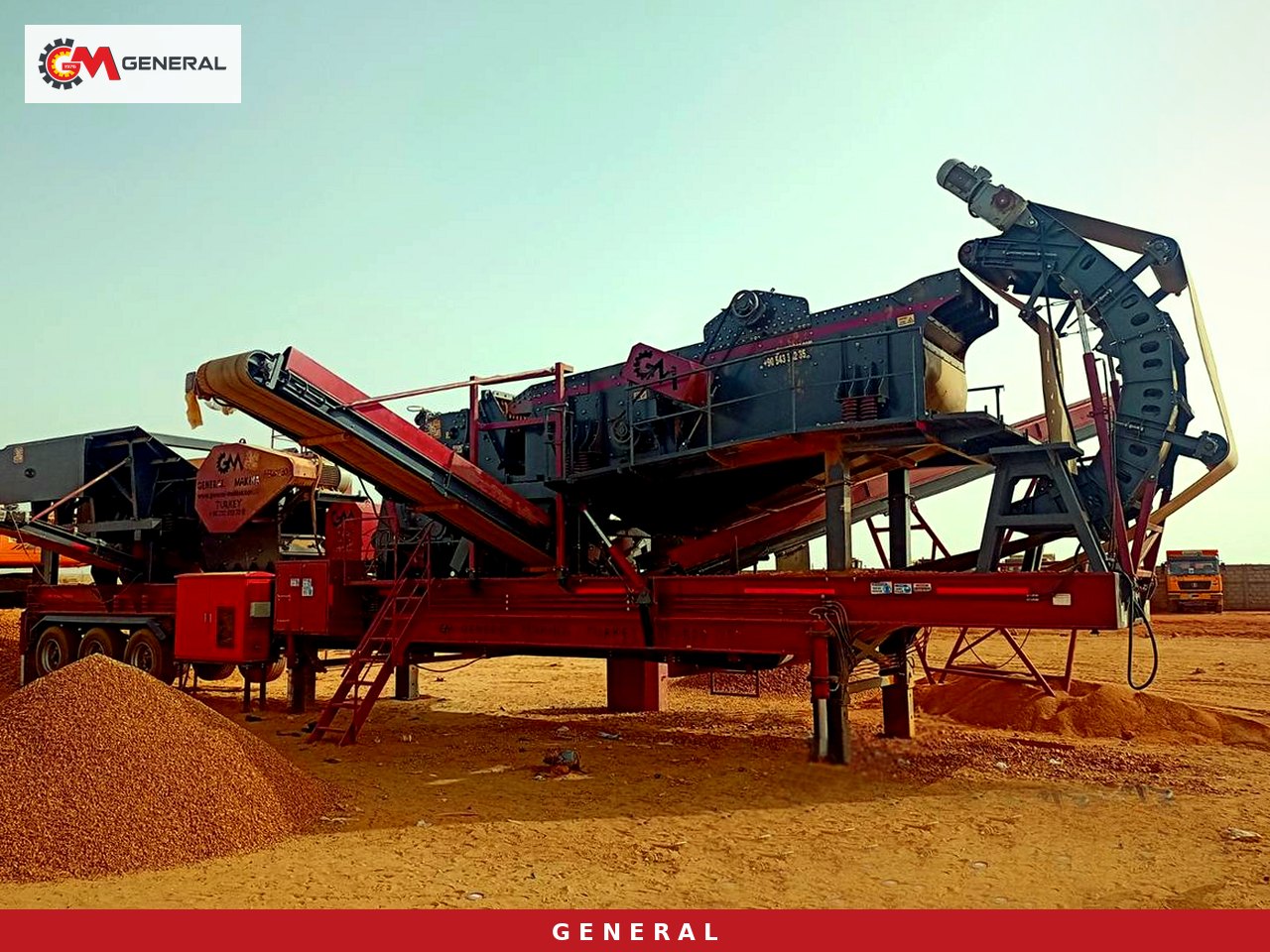
In the dry season the dust load in the air is high across the Sahel and the East African highlands. The generator air filter may need checking more often than any part of the crushing line. Its replacement interval should follow actual contamination on site, not catalogue hours. Radiator fins clog with the same dust; a visual check at the start of each shift and regular cleaning prevent overheating stops. Enclosed conveyors and a dust suppression system are not offered as standard on these plants, but they can be selected per project; reducing dust at its source directly extends the life of the power unit.
Fuel quality and the stock list
Fuel delivered by tanker to a remote site carries a risk of water and sediment. A pre-filter and water separator at the tank outlet reduce early clogging of the engine fuel filters. Fuel consumption depends on the rock, load factor and operating hours; rather than guessing, record real consumption in the first weeks and plan delivery intervals accordingly. Alongside jaw plates, blow bars and screen meshes, the spare parts list must include generator air, oil and fuel filters and belts. Wear part options across our crusher range are chosen according to the rock sample.
Information to collect on site before ordering
A sound quotation starts with knowing the site. The following details make the model and power budget proposal concrete:
- Rock type and, if possible, a laboratory report (compressive strength, abrasiveness, silica content).
- Largest block size after blasting; the choice between a 700 mm and an 800 mm feed opening depends on it.
- Required product fractions and monthly target quantity.
- Condition of the road between port and site, plus bridge and pass restrictions.
- Equipment that may be added later (tertiary crusher, washing, extra conveyor).
- Aggregate requirements in the project specification; confirm these with the relevant authority or the tender documents.
With this information we define the right configuration together from our wheeled mobile crushing and screening plants. All machines are ISO 9001 and CE certified and carry a 1-year warranty, excluding wear parts.
Frequently asked questions
Does the generator come with the plant, or must it be bought separately?
The technical tables on the product pages list a generator rating for each model: 550 kVA for the General 01 and General 944, 600 kVA for the General 950. The exact scope is stated in writing in the quotation; if equipment will be added later, tell us at the start.
Can the plant run fully independently on a site with no power line at all?
Yes, that is what the wheeled plants are designed for. Continuity of independent operation depends on correct planning of fuel supply, filter stock and start-stop discipline.
One plant or two smaller units for 120-180 TPH?
The General 01, General 944 and General 950 each cover this band on one chassis. If the site is spread over several points, or output will grow later, a different layout can be discussed; the decision follows site logistics.
What do price and delivery time depend on?
Model, secondary crusher type, screen layout, extra conveyors and port of shipment set the price. Delivery time is given in writing in the quotation according to the production schedule at the time of order.
Conclusion
A successful crushing plant on an off-grid African site begins with the right crusher and the right power unit on the same chassis; the rest is start-up sequence, camp layout and filter discipline. The General 01 for limestone and mixed material, and the General 944 or General 950 for hard, abrasive rock, are the real candidates in this band. Share your site's rock data and product targets through our contact page and we will prepare a quotation with a suitable model and power budget.
Definitions of technical terms: Glossary