EN — English
 TR — Türkçe
 DE — Deutsch
 RU — Русский
 FR — Français
 ES — Español
 AR — العربية
 SR — Српски

Bahrain Coastal Reclamation Aggregate Crushing Plant 150-250 TPH
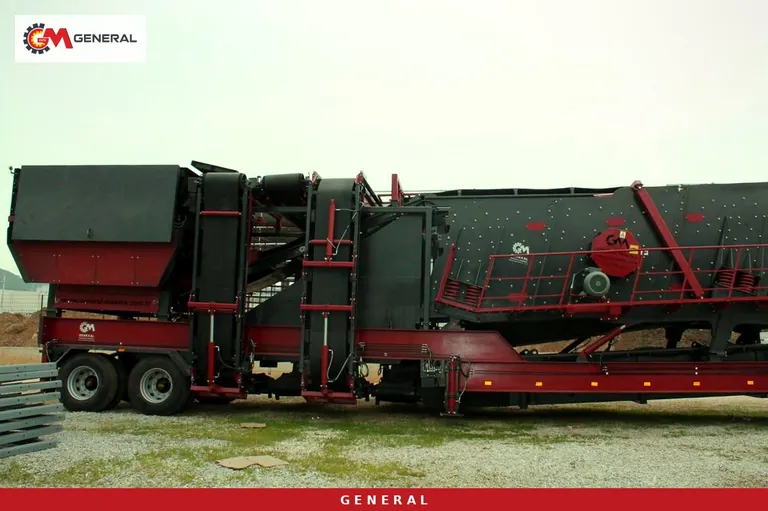
In Bahrain, coastal reclamation usually brings to mind the sand a dredger pumps ashore. Yet the slope protection, service roads, hardstands and concrete on newly won land cannot be finished without crushed stone. As the fill advances, the contractor handles two material streams at the same time: rock arriving from a quarry or by ship, and fine sand taken from the sea. An aggregate crushing plant of 150-250 TPH is a realistic scale for bringing order to both streams on one site. This article looks at the aggregate side of a reclamation job on the Bahrain coast under four headings: feed material, model matching, operating in salty, humid air, and setting up on loose fill. Project volume, material specification and schedule belong to the responsible authority and the tender documents; check this assessment against your own specification before you rely on it.
What crushed stone does on a reclamation job
The body of a coastal fill is mostly sea sand; the crushing plant's output is needed where sand alone will not do. Separating these points at the outset determines which fraction the plant produces, in what proportion, and how many screen decks it needs.
Filter layers behind the slope protection
Where the fill meets the sea, graded filter and transition layers are placed behind the large armour stone. These layers stop the fine sand from being washed out by wave action, so their grading is tightly bound to the specification. Armour blocks are selected straight from the quarry rather than produced by a crusher; the job of the crushing line is to turn out the intermediate sizes behind them consistently.
Roads, hardstands and utilities on new ground
Service roads, storage yards and utility trenches on reclaimed land need base and sub-base material. That calls for a continuously graded mix that compacts well. Being able to stockpile four fractions from 0-5 mm up to 19-40 mm separately and blend them later is the most practical way to correct a batch that misses the specification.
Aggregate for concrete and precast elements
Quay beams, culverts, channel units and structures on top of the fill need cubical chippings and clean sand at the batching plant. Because the salt and shell content of sea sand can create a risk of reinforcement corrosion in concrete, whether this stream needs its own screening or washing step should be decided from laboratory results and the limits in the specification.
Feed material in Bahrain: limestone, dolomite and dredged sand
Limestone and dolomite dominate Bahrain's surface geology. These rocks are generally low in abrasiveness, count as favourable feed for impact crushers and yield cubical particles. If the project needs harder rock for high-strength concrete or wear-resistant surfacing, the source and character of the stone change, and a line starting with a jaw primary comes into consideration. Do not settle on the crusher type before you know which quarry will supply which stone: testing samples for abrasion index, compressive strength and clay content costs far less than years of fast-wearing parts in the wrong crusher.
Dredged sand is a completely different material. Sand from the sea often carries shell fragments, salt and variable moisture; it does not go into a crusher but to a screen or washing line. That is why a plant for Bahrain reclamation should be drawn not as a single crushing line but as two streams: a crushing branch and a sand preparation branch. Their stockpiles must also be kept apart; fine sand drifting into crushed fractions is the most common mistake that ruins filter-layer grading.
Matching models to the 150-250 TPH band
The range in the title is a target band. The table below lists real models that cover it alone or complete it in a combination, side by side with manufacturer data.
| Model | Role | Capacity | Max. feed | Screen | Power | Weight |
|---|---|---|---|---|---|---|
| General 02 | GPS 1413 impact primary, limestone | 250-300 t/h | 1000 mm | 2000×5000 mm, 4 decks | 660 kVA generator | 76,000 kg |
| GNR-MC110 | GPJ 110 jaw + DMK03 impactor, hard rock | 200-300 t/h | 900 mm | 2000×6000 mm, 4 decks | 750 kVA generator | 2 × 55,000 kg |
| General 01 | GPS 1210 impactor, phased start | 120-180 t/h | 700 mm | 1600×5000 mm, 4 decks | 550 kVA generator | 55,000 kg |
| GNR ME1650 | Dry sand screening | 120-180 t/h | 0-100 mm | — | Generator or grid | 18,000 kg |
| GNR ME2060 | Dry screening, grizzly hopper | 200-350 t/h | 0-100 mm | 2000×6000 mm, 3 decks | Generator or grid | — |
| GNR YM1650 | Washing screen + sand screw | 120-180 t/h | 0-100 mm | — | Grid or generator | 21,000 kg |
Limestone-dominated feed: General 02
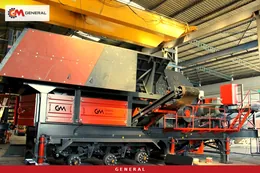
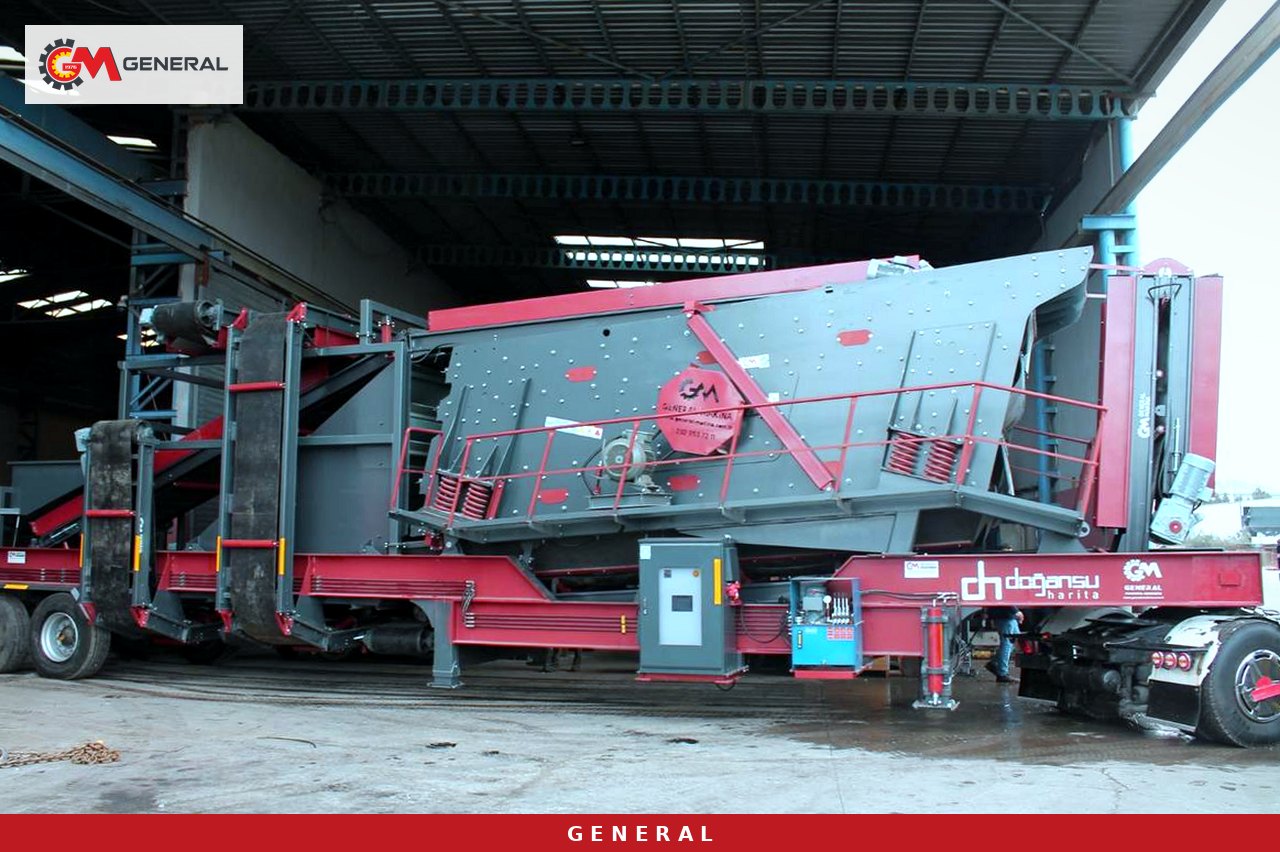
If the crushing branch will run on local limestone or dolomite, the General 02 covers the top of the band on a single chassis. Its GPS 1413 (GNR PDK02) impact crusher accepts blocks up to 1000 mm; the 4-deck screen separates 0-5, 5-12, 12-19 and 19-40 mm in one pass, and oversize returns to the rotor in closed circuit. Those four products give blending freedom between filter layers, road base and concrete chippings. Because an impactor wears out blow bars quickly in siliceous, abrasive stone, this choice depends on the feed test confirming limestone.
Hard or mixed rock: GNR-MC110
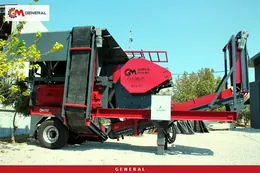
If the feed contains high-silica rock, or stone will arrive from different quarries over the life of the project, the GNR-MC110 is the safer route. Its GPJ 110 jaw primary takes 900 mm feed; the DMK03 impact secondary and the 2000×6000 mm 4-deck screen sit on the second chassis. Because the primary chassis can run on its own, the secondary group can be taken offline during periods when only coarse material is needed behind the slopes.
Phased setup: two branches starting with General 01
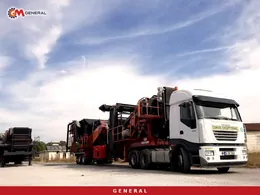
If the fill advances in phases, you can start with a General 01 (120-180 t/h) on the crushing branch and a GNR ME1650 (120-180 t/h) on the sand branch. These two units process different materials; their capacities do not add into a single product stream, each branch builds its own stockpile. When crushed-stone demand rises to the top of the band, a second crusher or a larger model is added. All options are listed on the wheeled mobile crushing plants page. If the fill will continue at one spot for years and a concrete foundation is possible, fixed crushing plants built around a GNRK 110 jaw crusher (200-350 t/h) or a GNR PDK02 impactor (200-300 t/h) are also worth putting on the table.
Preparing dredged sand: dry screening or washing?
The right machine for the sand branch depends on the moisture and contamination of the sand. The decision usually falls into one of three cases:
- Sand that has dried in stockpile, carries little clay and only needs shell and oversize removed: the GNR ME1650 dry screening plant is enough. Its sand hopper, vibrating screen and stockpile conveyors sit on one 18,000 kg chassis, fed by loader or conveyor.
- Where the same conditions call for higher throughput, the GNR ME2060 runs at 200-350 t/h; the 100 mm grizzly on top of its 20 m³ hopper removes oversize before it reaches the screen.
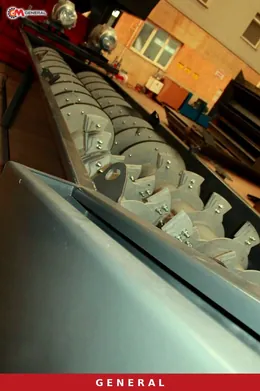
- Moist, silty sand, or concrete sand with a chloride limit: dry screen meshes blind and the salt stays on the grain. Here the GNR YM1650 with washing screen and sand screw is required, and the source, settling and recovery of wash water must be planned separately.
The acceptable salt limit in concrete is set by the specification; even after washing, do not send sand to the batching plant without a laboratory check. Every dry and wet option is in the sand washing and dry screening plants category.
Running a plant on the shoreline: salt air, humidity and dust
On a seaside plant, wear does not happen only inside the crusher. Salt-laden humid air attacks steel surfaces, electrical panels, motor connections and bearing housings, while summer heat raises the failure risk if the generator and electrical components are not cooled well. Measures that can be selected per project for these conditions:
- Panels: well-sealed enclosures with fan cooling; the GNR ME2060 already has a fan-cooled panel, for other units this should be discussed at order stage.
- Generator: shorten air-filter change intervals according to dust load rather than the calendar, and clean radiator fins of salt and dust regularly.
- Dust: limestone crushing produces fine dust; water-spray dust suppression at the crusher discharge and conveyor transfer points, plus belt covers, matter most near inhabited areas.
- Wear parts: manganese steel for jaw plates and cone liners, high-chrome castings for impactor blow bars on clean limestone; the choice follows the feed test.
- Screen meshes: watch for blinding with shelly sand and update mesh type and aperture to suit the material.
The point of this list is not to promise a measurable service life but to close off the usual sources of breakdowns on site from the start. Planning the spare wear-part list together with the first shipment avoids standing idle on an island while waiting for parts.
Setting up on loose fill and getting to site
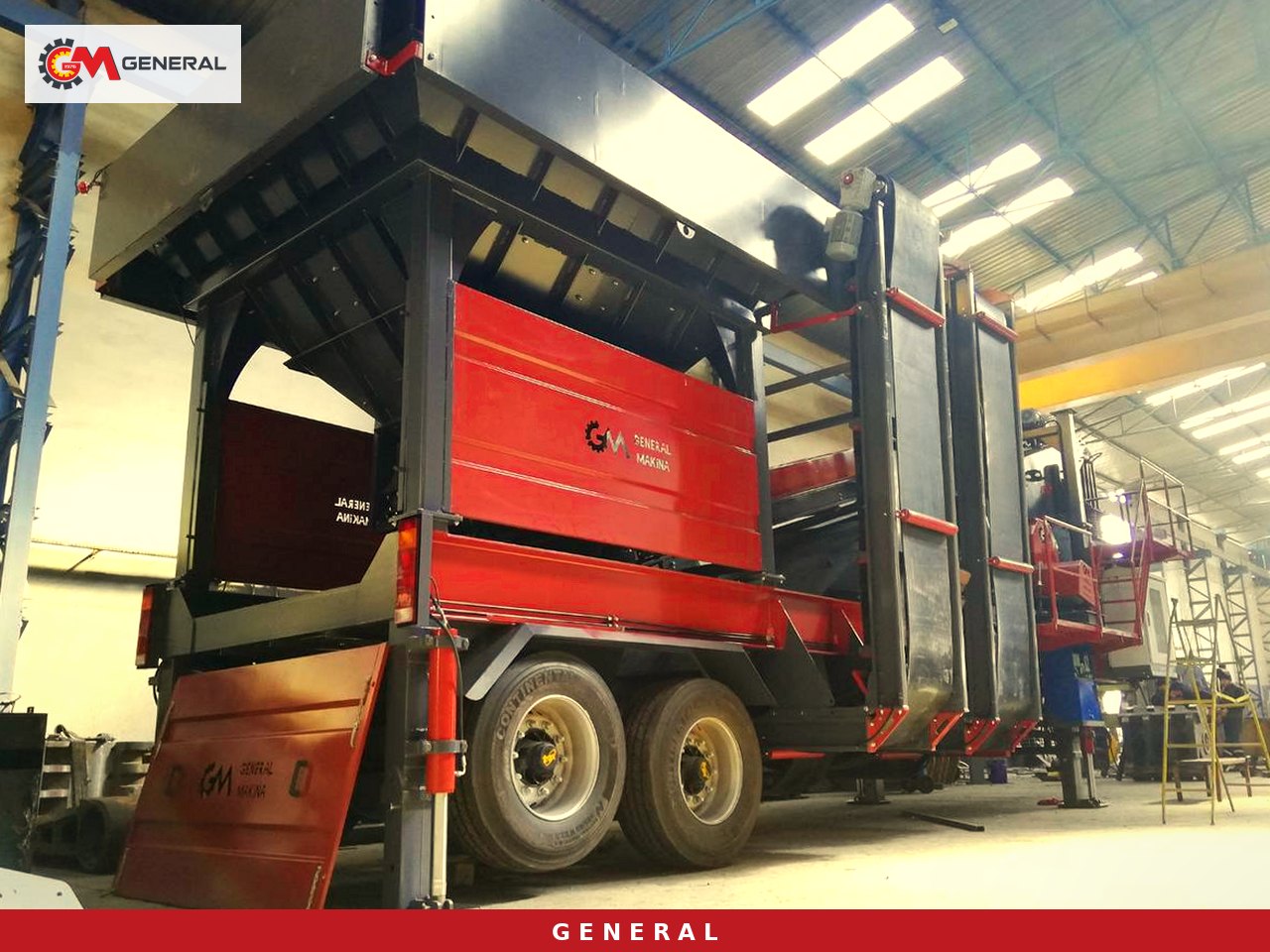
Newly reclaimed ground may not have settled yet. Placing the 76,000 kg General 02, or the GNR-MC110 chassis at 55,000 kg each, on loose sand brings the risk of the support legs sinking and alignment shifting under vibration. Before installation, prepare a compacted crushed-stone platform where the machine will stand, place load-spreading plates under the legs, and have the geotechnical team confirm the bearing capacity. Once production starts, base material from the crushing branch can also be used to strengthen the area where the sand branch and stockpile conveyors will go.
For access, loading dimensions are decisive: the General 02 measures 4340×20600×4500 mm and the GNR ME1650 3800×10800×4500 mm; the GNR-MC110 primary chassis is 3000×13500 mm and its secondary chassis 4200×18300 mm. Wheeled chassis are towed from port to site by tractor unit. Equipment can reach Bahrain by sea or overland via Saudi Arabia; which route suits depends on clearance, axle loads and transit permits, and should be confirmed with the relevant authorities before shipment.
Frequently asked questions
Can dredged sand be fed straight into the crushing line?
Not recommended. Fine sand takes up space in the crusher for nothing, lowers capacity and increases wear. Sand should go to the dry screening or washing branch; the crushing branch should be fed only with rock. Fines within the rock feed can also be split off by the feeder's grizzly by-pass section before they reach the crusher.
How do you choose between limestone and hard rock?
The sample test decides. On low-abrasion limestone and dolomite the impact-type General 02 gives high reduction and cubical particles. With high-silica rock or mixed feed, the jaw-primary GNR-MC110 keeps wear-part consumption more predictable.
Which certificates and warranty come with the machines?
General Makina has been manufacturing in Izmir since 1976 and holds ISO 9001 and CE certification. Machines carry a 1-year warranty, excluding wear parts.
Which items change the quoted price?
The selected models and number of branches, the need for washing, generator or grid power, options such as dust suppression and panels, the spare wear-part package and the shipping route set the price. A firm figure can only be given once these items are clear.
Decision list for a Bahrain reclamation job
For a coastal reclamation project in Bahrain, the right setup is a plan that treats crushing and sand preparation as two separate branches, picks an impact or jaw primary according to the feed stone, and takes the loose ground into account. Preparing the following before you ask for a quote speeds things up:
- Rock source and sample test results (abrasion index, compressive strength, clay content)
- Moisture and shell content of the dredged sand and the chloride limit allowed in concrete
- Fraction list and proportions for filter layers, road base and concrete aggregate
- Site power: generator or grid connection
- Ground condition at the installation area and the shipping route
With this information we can prepare a model proposal and quotation for the crushing and sand branches: reach us through our contact page.
Definitions of technical terms: Glossary