EN — English
 TR — Türkçe
 DE — Deutsch
 RU — Русский
 FR — Français
 ES — Español
 AR — العربية
 SR — Српски

Algeria Highway Stationary Stone Crushing Plant 300-500 TPH
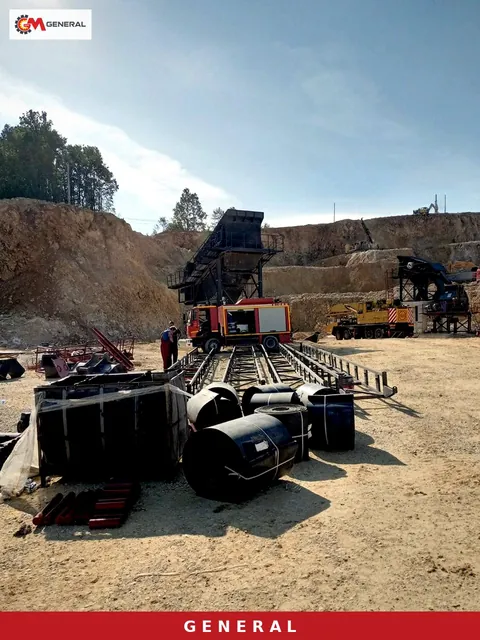
A plant feeding aggregate to a motorway section in Algeria does not work to one specification but to several at once: crushed rock mixes for embankment and subbase, graded granular material for the base course, chippings with controlled particle shape for the asphalt layers, and clean aggregate plus manufactured sand for bridge and culvert concrete. Covering that range at 300-500 TPH from the same quarry for years is, in most cases, a job for a stationary stone crushing plant. This article walks through real model combinations that reach this range, with their published figures, and through the rock and climate conditions typically met in Algerian quarries.
What a highway contract expects from the plant
Write down the product list before discussing capacity. A 400 t/h line making one fraction is a simple machine; the same line making five fractions is a very different one. Motorway work usually splits demand into three groups. The largest by volume is subbase and base material, where continuous grading and fines content matter more than particle shape. The second group is binder and wearing-course chippings for asphalt; specifications limit flaky and elongated particles, so a shaping stage is needed at the end of the line. The third is structural concrete aggregate and crushed sand, where clay and dust content decide whether a load is accepted.
A stationary plant has a clear edge here: with no chassis transport limit it can use a larger feed opening and more screen decks, and it can deliver eight or more products on one line, including fractions such as 0-5, 5-15 and 15-25 mm. The share of each fraction is written in the road specification; get those ratios in writing from the contracting authority or the supervising engineer before the line is designed.
Rock in Algerian quarries: the choice that shapes the line
Limestone and dolomite quarries are common along the Tell Atlas belt in northern Algeria, while some areas yield high-silica sandstone, quartzite or hard igneous rock. That distinction directly decides the type of primary crusher. Do not guess the rock in your own quarry; confirm it with samples and laboratory tests (abrasiveness, compressive strength, clay content). One of the two routes below is then chosen.
Impact primary line for limestone and dolomite
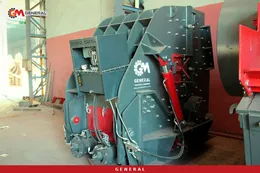
In low-abrasion limestone the GNR PDK series primary impact crusher comes first. The GNR PDK01, with a 1400×1500 mm rotor, 1000 mm maximum feed, a 315 kW motor and 250–500 t/h capacity, covers the whole target range with a single primary machine. Because it reaches up to 20:1 reduction in one stage on limestone, the secondary load drops and the product comes out cubical. For a field reference of the same crusher, see the 400 t/h stationary plant built with the GNR PDK01 in Belgrade.
Jaw + cone line for hard, siliceous rock
In high-silica rock the blow bars of an impact crusher wear quickly. There, the compression-type GNRK series jaw crusher works as the primary and a cone crusher takes the secondary and tertiary stages. The GNRK 130 (1300×1000 mm opening, 160 kW, 400–500 t/h) fits the upper half of the target, the GNRK 110 (1100×850 mm opening, 110/132 kW, 200–350 t/h) its lower end. Cone crusher capacity is given per project; secondary reduction is in the order of 6:1–8:1.
Real model combinations for 300-500 TPH
The table only contains values published on our product pages. The real output of a line is limited by its weakest link, so feeder, primary and screen must be assessed on the same flow.
| Model | Role in the line | Capacity (t/h) | Feed / opening (mm) | Motor (kW) |
|---|---|---|---|---|
| GNR 140 vibrating feeder | Primary feeding, by-pass scalping | 350–600 | up to 1500 | 2×9.2 |
| GNR PDK01 | Limestone primary crusher | 250–500 | 1000 | 315 |
| GNRK 110 | Hard-rock primary (lower range) | 200–350 | 1100×850 | 110/132 |
| GNRK 130 | Hard-rock primary (upper range) | 400–500 | 1300×1000 | 160 |
| General cone crusher | Secondary / tertiary | — | 50–250 | — |
| GNR K110 cubicizer | Shaping asphalt chippings | 160–250 | 210 | 160 |
| Twin vibrating screen | Sizing at high tonnage | 100–500 | — | up to 30 (GNR 2470) |
In a limestone quarry the leanest solution is GNR 140 feeder + GNR PDK01 + twin screen. In hard rock aimed at 400 t/h or more, a GNRK 130 primary followed by a cone crusher is recommended; if the target stops at 300-350 t/h the GNRK 110 may be enough, but it will run at the top of its range and leave no room to grow. Where the asphalt share is high, part of the product is routed through the GNR K110 cubicizer to correct particle shape; the whole flow does not need to pass through it.
Line layout: from feeder to stockyard
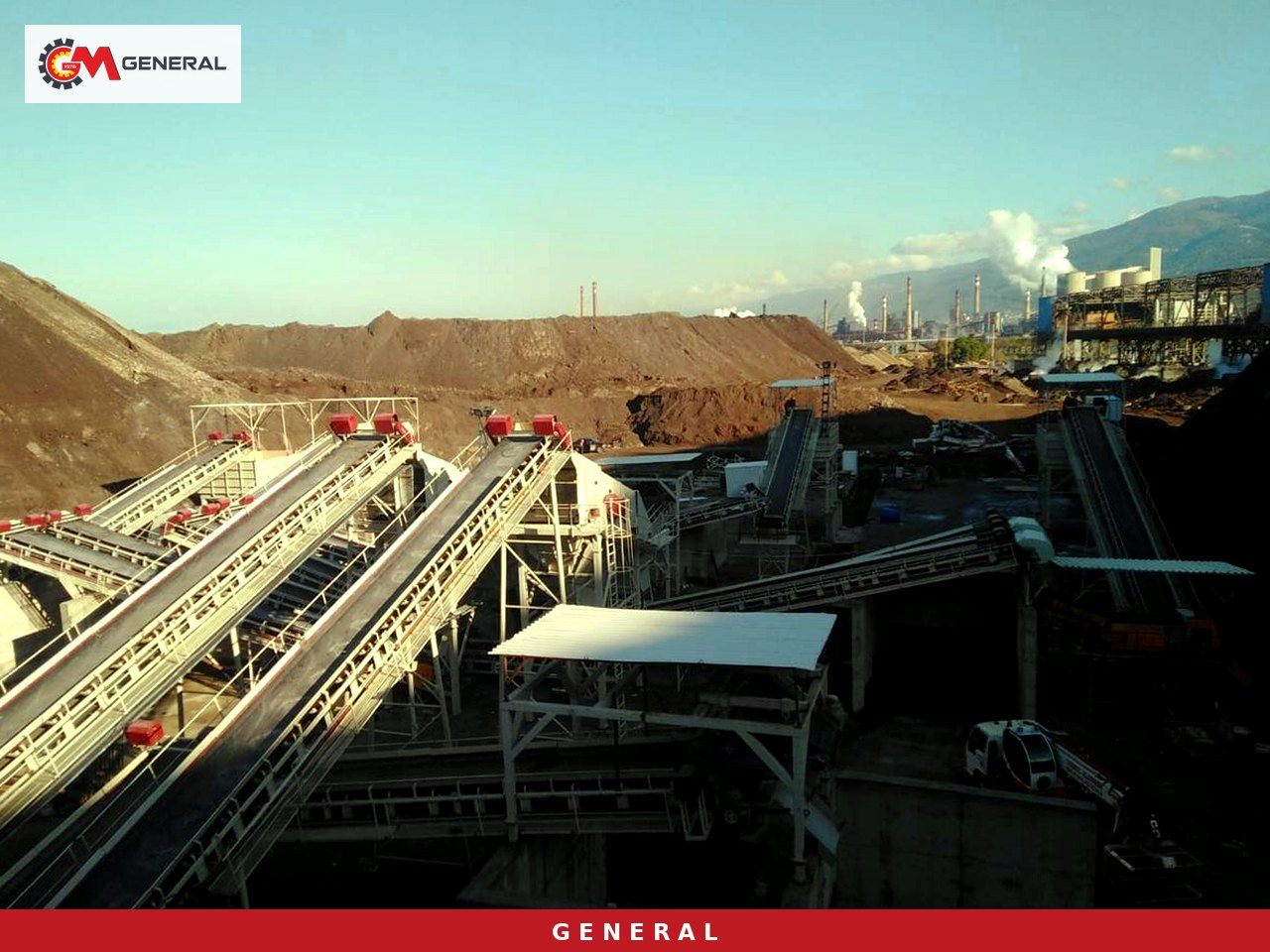
A stationary plant sits on concrete foundations, so the layout has to be right the first time. On motorway jobs the quarry is often several kilometres from the alignment, and placing the stockyard for truck traffic matters as much as placing the crushers. A typical flow: trucks tip into the hopper, the grizzly section of the feeder removes soil and fines, the primary reduces the large rock, a surge pile buffers the primary from the secondary stage, screens separate the fractions, and radial or fixed stockpile conveyors carry each product to its pile.
Why the surge pile and twin screen matter
Quarry feed fluctuates with blasting and loading. A surge pile behind the primary shields the secondary and screening stages from those swings and raises the line's average output. When a single screen starts to choke at high tonnage, a twin screen doubles the screening area with its two decks side by side and cuts the recirculating load. This removes the most common source of lost capacity on lines running above 400 t/h.
A mechanical stabilization plant at the end of the line
The second key link for a highway contractor is the plant that turns crushed aggregate into cement-bound or granular base mix. The stationary soil stabilization plant runs at 200-750 t/h with 3-5 cold aggregate bins and a 2×37 kW twin-shaft mixer, turning the crushing line's output straight into road base. If the crushing plant and the stabilization plant are planned in one project, the stockyard, conveyor routes and truck cycle are solved together.
Measures for hot, dusty operation
Summers in Algeria's interior are hot and dry, and dusty winds from the south are frequent. Both the environment and machine life have to be considered. Measures that can be selected per project include water-spray dust suppression at the crusher mouth and transfer points, covered belt conveyors, dust filters and ventilation for motors and control panels, and avoiding fines left on wind-exposed piles. These are not standard on every plant; they are defined at quotation stage according to the quarry location and the environmental clauses of the specification.
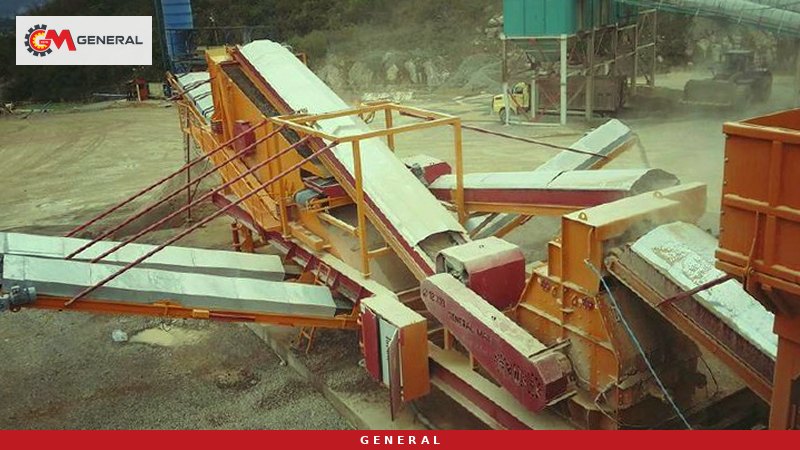
Wear is also driven by the rock. Jaw plates are made of manganese steel (Mn13/Mn18) that work-hardens under impact; on limestone, high-chrome alloy is preferred for the impact crusher's blow bars. The right alloy sets the wear cost per tonne crushed. If the stationary plant can be connected to the grid, the power side is simpler; if not, generator capacity must be sized separately from the total installed power and starting currents.
What the quotation file should contain
A stationary plant bound for Algeria travels through a port in containers and as break-bulk, then reaches the site by road. For an accurate quotation, settle these points first:
- Rock type in the quarry and laboratory results (abrasiveness, compressive strength, clay content)
- Maximum rock size after blasting and estimated fines share
- Target capacity: gross feed per hour or saleable product
- Fractions in the specification and the expected share of each
- Particle shape (flakiness) limit for asphalt chippings
- Whether grid power is available and, if so, the connection capacity
- Water source for dust suppression and, if needed, washing
- Size and slope of the plant area and space for the stockyard
- Arrival port and heavy-load condition of the road to the quarry
A hypothetical example makes the target concrete: a quarry that wants 4000 tonnes of saleable product per day and can crush for a net 10 hours needs a 400 t/h line. The formula is simple: required hourly capacity = daily tonnage target ÷ actual crushing hours. Maintenance stops and fines losses should be added as a margin. Confirm the highway project's volumes and timeline with the specification of the relevant authority.
Frequently asked questions
Have you delivered a plant to Algeria before?
Yes. A 150 t/h project with the General 01 mobile crusher in Algeria is listed on our site. The 300-500 t/h band, however, falls under stationary lines and is designed with the configurations in this article.
Why a stationary line rather than a mobile plant?
When the highway work runs for years and the quarry stays put, a stationary line offers a larger feed opening, more screen decks and longer equipment life. If the quarry will change often, a mobile solution is assessed separately.
Can one line handle limestone and hard rock together?
A primary chosen for the main rock is inefficient on the other. If the quarry has two rock types, the line is built for the dominant one; the share and wear effect of the minor rock are tested and stated clearly in the quotation.
How are price and delivery determined?
Price depends on crusher type, number of screen decks and products, conveyor lengths, dust measures, automation level and shipping method. A priced offer is prepared from the quarry data shared using the list above.
Conclusion
For a plant supplying 300-500 TPH of aggregate to a highway section in Algeria, the right starting point is the rock: an impact line with the GNR 140 feeder and GNR PDK01 in limestone, a jaw + cone line with the GNRK 130 or GNRK 110 in hard rock. A twin screen, a surge pile and, where needed, a cubicizer split the specified fractions without losses, while a stabilization plant turns the output into road base. Review our stationary crushing and screening lines and crusher rangethen contact us with your quarry data for a tailored layout and quotation.
Definitions of technical terms: Glossary