EN — English
 TR — Türkçe
 DE — Deutsch
 RU — Русский
 FR — Français
 ES — Español
 AR — العربية
 SR — Српски

Africa Spare Parts Planning for a 80-300 TPH Stone Crushing Plant
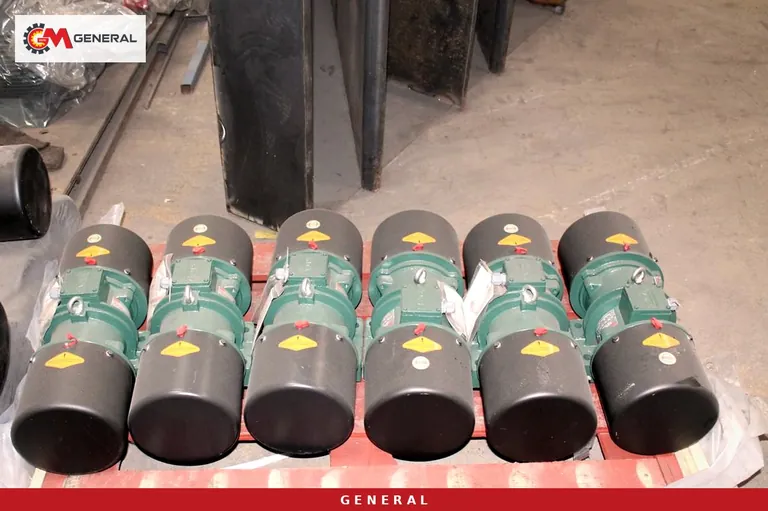
What stops an African quarry is rarely the crusher itself; more often it is the single part that is not on the shelf. When a jaw plate wears out on a line working hundreds of kilometres inland from the coast, the conveyor runs empty until the replacement has travelled through the whole chain of ship, customs and road haulage. This article explains how to build the spare and wear parts list for a crushing and screening plant targeting 80 to 300 TPH, how much buffer to hold on site and which data to provide when ordering.
In our method the parts list is not written before the machine is chosen. It is derived from the crusher type of the selected line, the rock being processed and the length of the supply chain. A limestone quarry on the North African coast and a basalt quarry on an East African plateau cannot run on the same list; they do not even consume the same parts.
Lines in the 80-300 TPH band and the wear items they create
The first planning step is to fix a real configuration that meets the target tonnage. The table below uses the technical data in our product catalogue to show five options covering this band and the main parts each one puts on the shelf. Since no single wheeled unit reaches 300 t/h, the upper end is covered by a stationary plant layout.
| Configuration | Capacity | Feed / opening | Power | Main items to keep on the shelf |
|---|---|---|---|---|
| GNR 90 feeder + GNRK 90 jaw crusher (stationary, lower band) | Feeder 140-210 t/h, jaw 60-225 t/h | 900×650 mm opening | 2×4 kW + 75/90 kW | Jaw plates, feeder body liners, by-pass grizzly |
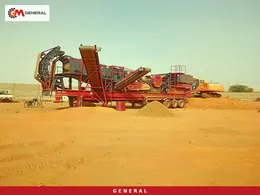
| General 944 wheeled mobile (GPJ 90 jaw + GM430 cone) | 120-180 t/h | 800 mm | Generator 550 kVA | Jaw plates, mantle and concave, wire cloth for the 1600×5000 mm 3-deck screen |
| General 950 wheeled mobile (GPJ 90 jaw + DMK01 impact) | 120-180 t/h | 800 mm | Generator 600 kVA | Jaw plates, blow bar set, impact plates, screen wire |
| GNR 110 feeder + GNRK 110 jaw + cone secondary + GNR 2060 screen (stationary, hard rock) | Feeder 200-300 t/h, jaw 200-350 t/h | 1100×850 mm opening | 2×7.5 kW + 110/132 kW +, + 18.5 kW | Jaw plates, cone liners, 2000×6000 mm screen wire, grizzly bars |
| GNR 110 feeder + GNR PDK02 primary impact crusher (stationary, limestone) | 200-300 t/h | 900 mm, rotor 1400×1200 mm | 2×7.5 kW + 200 kW | Blow bars, breaker plates, rotor protection parts |
The cone secondary cell is left blank because its model-by-model power and capacity table is issued per project. The practical lesson from the table: jaw + cone lines generate a parts budget dominated by manganese castings, while impact lines lean on blow bars. In Africa this choice also decides what sits on your shelf. As an example of a shipment to the continent, the GNR 944 hard stone plant sent to Africa (120-150 t/h) uses a jaw and cone layout, so its parts list is built around the liners of those two crushers.
Sort every shelf item into three groups
On a remote site, holding "a little of everything" ties up capital and still leaves you short of the part you need most. We advise our customers to sort parts by consumption rate and by the cost of not having them.
Fast-moving consumables
Air and oil filters, generator filters, grease, bolt and nut sets, belt splicing material and conveyor idlers. Each is cheap, but in the dusty dry season change intervals shorten. At a quarry in the Sahel belt or on the edge of the Kalahari, filter consumption rises noticeably compared with a humid coastal pit; set quantities from the site log of the first two months, not from catalogue ranges.
Wear parts with measurable life
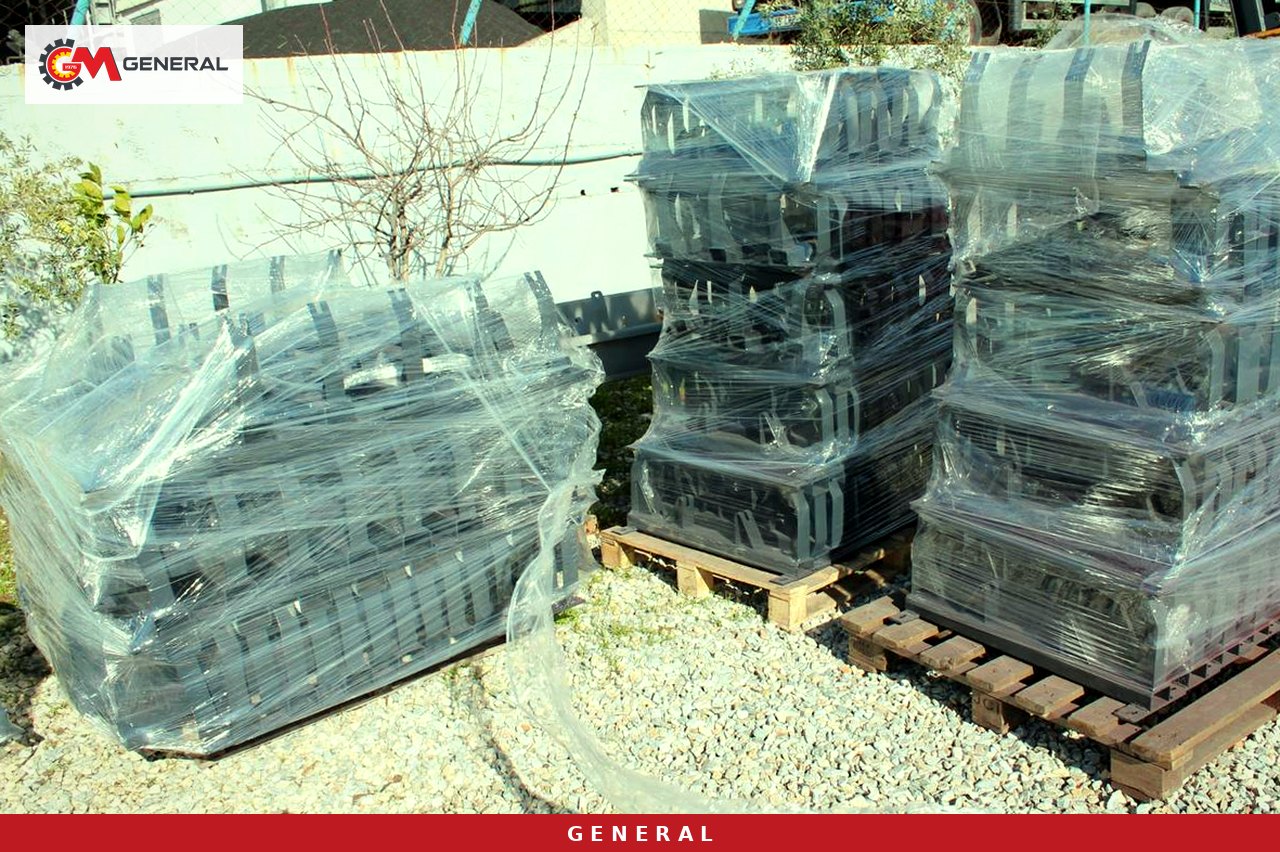
Jaw plates, blow bars, mantle and concave, feeder body liners, by-pass grizzly bars and screen media belong here. Because their life can be tracked in tonnes, this is the most calculable part of planning. The target is at least one full set of each item on site and a second one in transit.
Rarely failing parts whose absence costs weeks
Eccentric shaft bearings, vibrating motors, crusher V-belts, hydraulic adjustment cylinder seals and main contactors in the electrical panel. They may be needed once a year, yet at an inland site their absence stops the whole line. One set from this group should be added to the same shipment as the machine when the import file is opened.
The effect of rock type on parts consumption
Rock varies widely in Africa, even within one country. Basalt is common in the East African rift belt; granite and gneiss are frequent on the southern shield areas; limestone and dolomite quarries dominate the North African coastal strip. This diversity decides which metal your parts budget is spent on.
The real driver of wear is not hardness but the free quartz and silica content of the stone (Bond abrasion index). That is why we recommend having a sample from your own face tested in a laboratory before ordering; the rock type common in the region is not enough for a decision.
- Granite, basalt, quartzite: austenitic manganese steel jaw plates (Mn13, or Mn18/Mn22 at high silica); manganese mantle and concave in the cone crusher. Because an impact crusher's blow bars wear quickly in this rock, a jaw + cone layout makes the parts budget more predictable.
- Clean limestone and dolomite: high-chrome white iron suits the blow bars. A primary impact crusher such as the PDK02 gives a high reduction in one stage, and the weight of the shelf moves towards blow bar sets.
- Road-building feed that may contain metal: high chrome is brittle, so tough manganese or martensitic blow bars are chosen where tramp iron is a risk.
Details of alloy selection are on our jaw plate, blow bar and cone liner page. Practical methods for tracking replacement intervals on site are covered in our article on wear part life and replacement intervals.
Port, customs and road: the buffer is calculated from this chain
For a quarry in Europe, safety stock means a few days of consumption. For a site in the African interior, the resupply time is the sum of these links: production or sourcing, packing, haulage to the loading port, sea freight, discharge and customs at the arrival port, inland transport and acceptance on site. Landlocked countries add a transit border. Get a duration for each link from your own experience or your customs broker; the buffer quantity follows from the total.
The formula: Sets required = (monthly output in tonnes ÷ life of one set in tonnes) × resupply time (months) + safety set.
Hypothetical example: suppose a jaw plate set measured on site lasts 100,000 tonnes, monthly output is 40,000 tonnes and resupply through your chain takes 3 months. During that period 1.2 sets are used; rounding up and adding one safety set means 3 sets should be on site. The figures only illustrate the method; replace them with your own measurements.
A frequent error in this calculation is taking the life from a catalogue instead of waiting for the first site measurement. At the first change, weigh the removed plate, record its thickness and note it together with the tonnage crushed up to that day; place the second order on that basis.
Checklist for the minimum set held on site
Complete the list below together with the machine order and add it to the first shipment. It narrows or widens depending on which configuration from the table you choose.
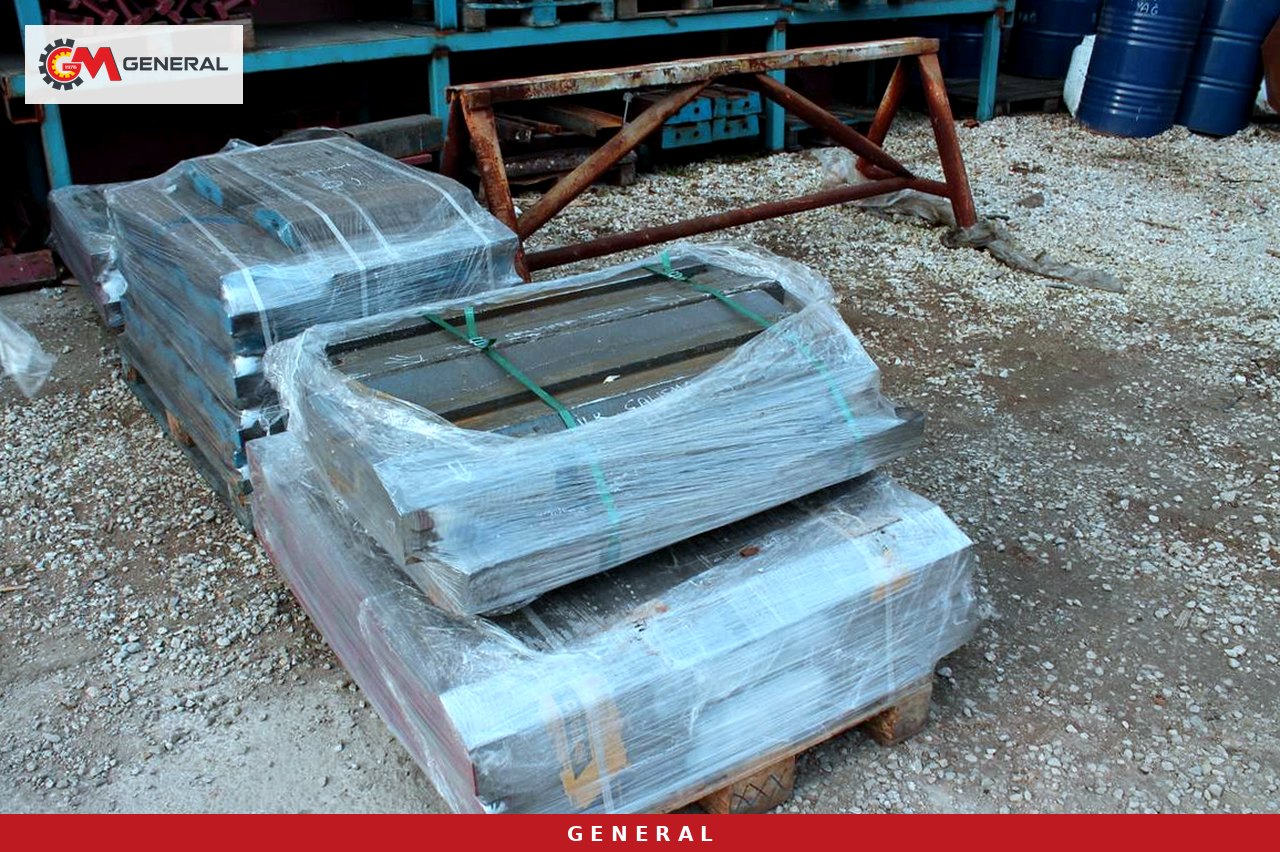
- At least two sets of jaw plates and one set of cheek liners for the primary crusher.
- For the secondary: one mantle-concave set on a cone line; two blow bar sets and one breaker plate set on an impact line.
- Bolted feeder body wear plates and by-pass grizzly bars.
- One set of wire cloth or polyurethane panels per screen deck, with apertures matched to the product grading.
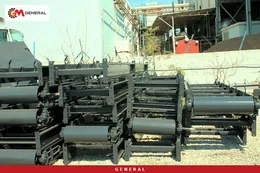
- Spare idlers, pulley lagging, belt splice kit and scraper rubbers for the conveyors.
- At least one spare vibrating motor or drive belt for the feeder and screen.
- Filters and oil for the generator and crusher motors, enough for at least one dusty season.
- Lifting tools, a torque wrench and part-specific bolt sets for changeovers.
- A list giving part number, machine serial number and drawing reference for every item; it saves time at customs and when reordering.
Settle the warranty side from the start: our machines carry a 1-year warranty, but wear parts are excluded. The wear budget should therefore be planned as an operating expense. For crusher options and the wear character of each, see the crushers category; for all part groups, see the spare and wear parts category. If you want a closer look at a hard rock line, the General 944 product page gives the technical table in full.
Frequently asked questions
Does it make sense to ship spare parts in the same container as the machine to an African site?
Yes, especially the first set of wear parts and the breakdown parts whose absence stops the line. A separate shipment means a second customs file and a second inland haul. Parts that arrive with the machine do not leave the site waiting at the first changeover.
Can parts be ordered without knowing the quarry rock?
They can, but it is risky. Choosing manganese steel because granite is common in the region often turns out right, yet a high-silica seam can change the alloy decision. Sending a sample to a laboratory costs less than a container full of the wrong alloy.
Do you supply parts for crushers of other brands?
Yes. As stated on our parts page, we supply parts that fit crushers of other makes; to get the size right we need the drawing or dimensions of the existing part, or the machine nameplate data.
What information should I share for a parts quotation?
Machine model and serial number, the rock crushed and any test result, monthly target tonnage, the nearest port to the site and the inland route. With this we can recommend both the alloy and the number of sets.
Conclusion: plan the parts together with the plant
Keeping an 80-300 TPH crushing and screening line running in Africa depends as much on the number of sets on the shelf as on the machine's capacity. Choose the line, have the rock tested, write your supply chain in months and calculate the buffer with the formula. For a spare parts list and quotation matched to your configuration, contact us.
Definitions of technical terms: Glossary