EN — English
 TR — Türkçe
 DE — Deutsch
 RU — Русский
 FR — Français
 ES — Español
 AR — العربية
 SR — Српски

Erecting a 110 Stationary Crushing and Screening Line in Relizane, Algeria
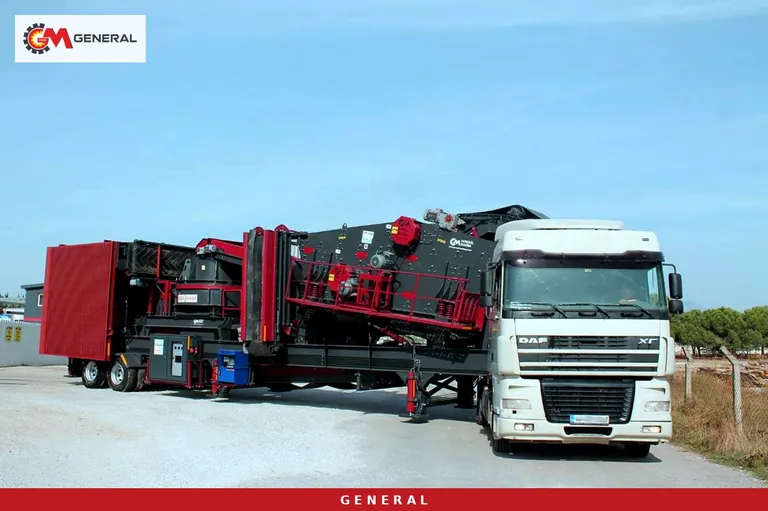
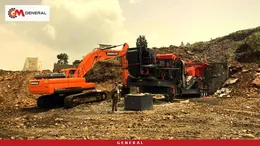
At a quarry in the Relizane region of Algeria, erection work has begun on the 110 stationary crushing and screening line that we manufactured in our factory and transported to site. Built as a heavy-duty structure meant to stay in one place for many years, the line will crush and grade 250 – 300 tonnes of stone per hour once it is running.
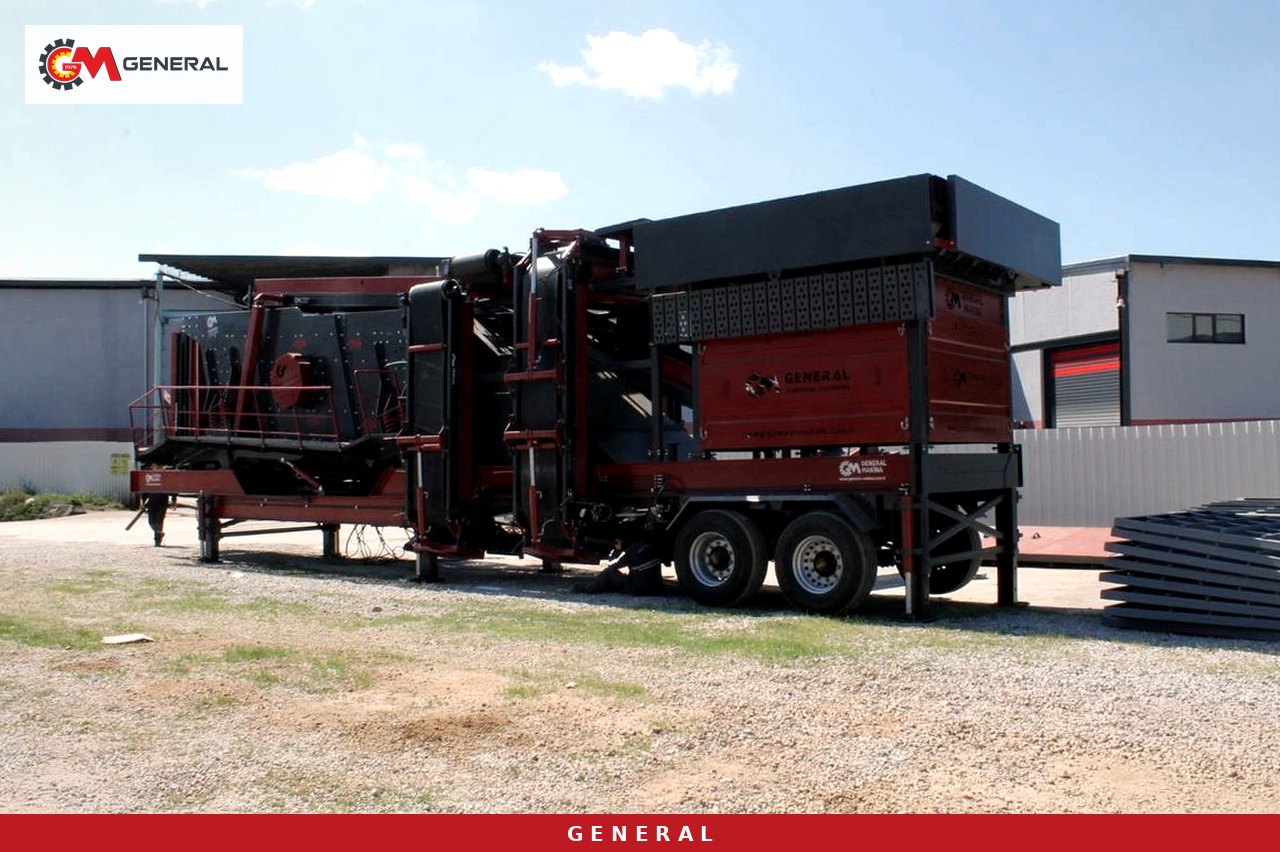
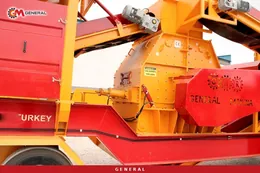
The layout uses three crushing stages. Large blocks arriving from the face are first taken by the 110 primary jaw crusher; the DMK03 secondary impact crusher then reduces that material one step further. At the end of the line sits a VSI 900 vertical shaft crusher, placed there to raise the share of 0-3 mm sand. Any grains still above 25 mm travel on a return conveyor back to the vertical shaft unit, so the finished product comes out at the required size and with a good shape.
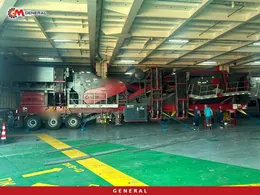
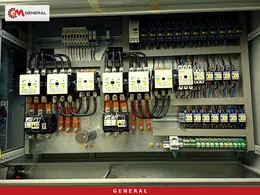
On site the work follows a fixed order. The foundation and chassis come first, then the crushers are set in position, the conveyor route is laid out, the screens are connected and, last of all, the electrics and automation are commissioned. Because a delay in one step holds up the next, we drew up the erection programme together with the shipping schedule.
At this tonnage the real limit of the line is usually set by the screen.
However much material the crushers deliver, if the screen deck cannot separate that flow, it piles up in front of the screen and the whole line slows down. That is why we calculated crusher capacity and screen area against each other at the design stage.
For operations aiming at sand and cubical aggregate, a vertical shaft crusher is used as the final stage. This machine family works in a 45–210 t/h range, accepts feed up to 55 mm and runs with 90–400 kW of power; its job is less to reduce the grain than to give it a clean, regular shape.
Definitions of technical terms: Glossary