EN — English
 TR — Türkçe
 DE — Deutsch
 RU — Русский
 FR — Français
 ES — Español
 AR — العربية
 SR — Српски

Yemen Infrastructure Generator Mobile Crushing & Screening Plant 80-150 TPH
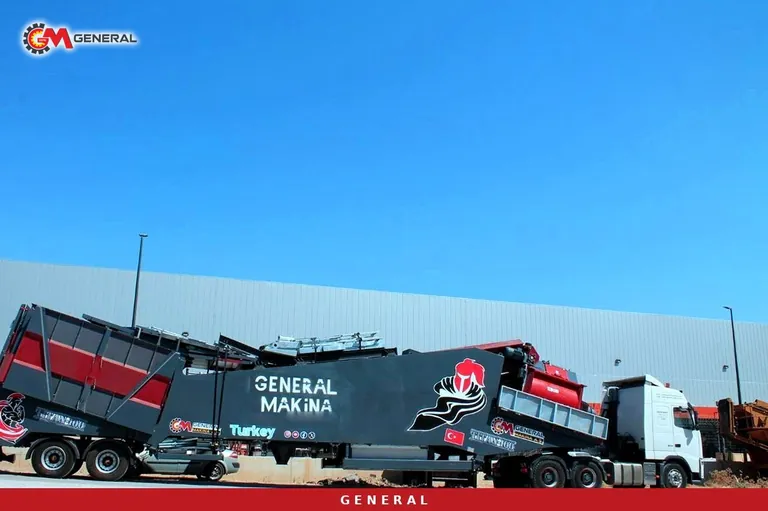
A contractor taking on repair work in Yemen starts from a different point than one cutting a new road: the raw material actually on hand. At a damaged bridge pier, a collapsed culvert or a destroyed school building, two materials usually sit side by side: old concrete that has to be broken down and fresh stone from a nearby quarry. Add a site where grid power cannot be relied on and the requirement becomes clear: a mobile crushing and screening plant that produces 80-150 TPH, runs on its own generator and can handle both feed types. This article works that requirement down from the material flow of a repair site to a specific model. Every technical value comes from our product pages; for tender scope, material specifications and programme, the binding source is always the technical specification of the contracting authority.
On a repair site, feed comes from two sources
On a new highway, aggregate comes from one quarry and one rock type, and the plant is tuned to that rock. Repair work is different: rubble concrete in the morning, quarry stone in the afternoon. The two behave differently in a crusher:
- Old concrete and demolition rubble: brittle and easily broken by impact, but mixed with rebar, timber formwork, plaster and soil. Steel that is not removed before the crusher damages wear parts and belts.
- Quarry stone: basalt and other volcanic rocks are common in Yemen's highlands, while limestone and river gravel dominate coastal and wadi areas. A hard, siliceous rock and a brittle limestone do not wear a crusher at the same rate.
- Wadi and riverbed material: the surface can be clayey and dusty, and unwashed it may fail a concrete aggregate specification.
Before choosing a model, decide which source will deliver most of the tonnage. If rubble and limestone dominate, a primary impactor makes sense; if hard basalt dominates, you need a jaw primary with a matching secondary.
Four wheeled options around the 80-150 TPH band
The table brings together the wheeled mobile crushing plants closest to the target output that can run on their own power unit. Figures are taken from the technical tables on the product pages.
| Model | Generator | Weight | Capacity | Max. feed | Crusher layout | Screen |
|---|---|---|---|---|---|---|
| General 640 | 300 kVA (optional) | 38,000 kg | 60-100 t/h | 500 mm | GPJ 60 jaw + GNR 50 impactor | 1200×4000 mm, 3-deck |
| General 800 | 450 kVA | 35,000 kg | 80-150 t/h | 600 mm | PDK 1280 primary impactor | 1300×4000 mm, 3-deck |
| General 950 | 600 kVA | 70,000 kg | 120-180 t/h | 800 mm | GPJ 90 jaw + DMK01 impactor | 1600×5000 mm, 3-deck |
| Mobil 90 | 350 kVA | 45,000 kg | 90-150 t/h | 800 mm | GPJ 90 jaw + washing | 1600×5000 mm, 3/4-deck washing screen |
The exact match for the band is the General 800. The General 640 sits at the lower edge and the General 950 goes above it; both make sense when rock type and tonnage fit. The Mobil 90 is a separate class for material that must be washed.
General 800 for rubble concrete and limestone
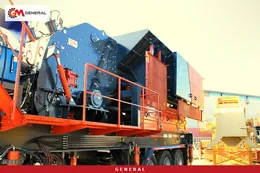
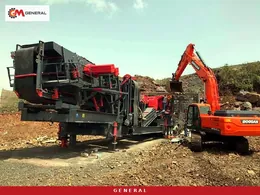
The General 800 carries a PDK 1280 primary impactor, a 1300×4000 mm three-deck screen and a closed-circuit return conveyor on one chassis. It accepts feed up to 600 mm and splits product into 0-5 / 5-12 / 12-19 / 19-40 mm fractions. Impact crushing gives a high reduction ratio and cubical grains in brittle material, and its product page lists recycling yards among its applications. With a 450 kVA power unit and 35,000 kg weight it is the lightest package of the four; its 3600×15500×4500 mm transport size makes planning easier on damaged roads. If you will be processing demolition concrete, our concrete recycling machine set explains steel removal and pre-screening in detail.
General 950 and General 640 for hard basalt
If your quarry stone is hard, abrasive basalt, an impact primary consumes parts faster, and a layout that starts with a jaw is the better choice. The General 950 places a GPJ 90 jaw ahead of a DMK01 secondary impactor, takes 800 mm feed and produces 120-180 t/h; its 600 kVA generator and 70,000 kg weight must be budgeted for. If the target sits in the lower half of the band, the General 640 (GPJ 60 + GNR 50, 60-100 t/h, 500 mm feed) follows the same logic with a smaller power unit.
Read the generator by start-up sequence, not by its kVA label
On an off-grid repair site the generator is not a spare part of the plant; it is its heart. The kVA values in the table are set for each model's own motor load. If extra conveyors, lighting towers, site containers or a welding set will later hang on the same generator, that load must be calculated separately.
- Start-up sequence: starting crusher, screen and conveyors together hits the generator with a current peak. Program a staged start: conveyors first, then the screen, the crusher last.
- Soft starters and frequency control: they limit inrush current and keep the generator from being oversized. They are defined per project within our automation and control system.
- Fuel plan: build it with a formula rather than a guessed figure: hourly fuel = average load (kW) × the generator maker's specific consumption × operating hours. Hypothetical example: if the plant runs at about half load over the shift, use the maker's consumption curve at that load point, not the full-load curve.
- Standby power: on a plant tied to a single generator, a fault stops all output. For long repair programmes, write a second power source or at least a critical spare-parts kit into the quotation.
Ports, roads and damaged bridges: the route decides the shipment
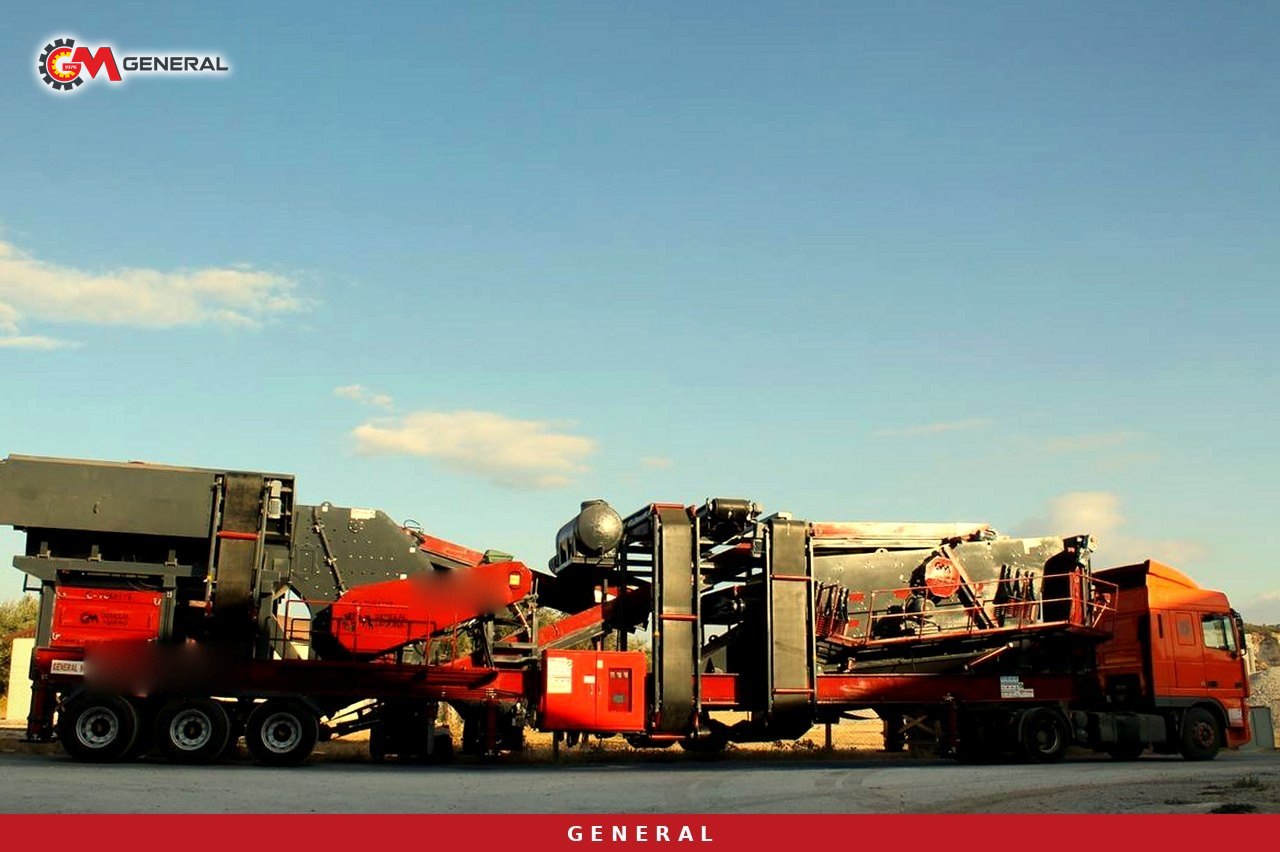
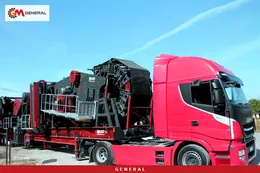
Machines reach Yemen by sea and then by road. The condition of the road from port to site matters as much as the choice of port: in an area awaiting repair, bridge load limits, the width of temporary bypass roads and checkpoints shape the route. At quotation stage, compare each model's transport size and weight against a route survey. The difference between a single-chassis General 800 and a heavier or twin-chassis layout shows up on the road before it shows up in crusher performance. Confirm current routes and load limits with the relevant authority and your haulage company.
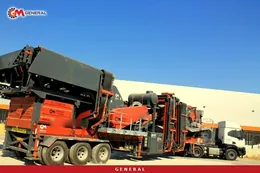
Wheeled plants arrive behind a tractor, are lowered onto hydraulic legs and need no concrete foundation. When one bridge is finished and the crew moves on to the next culvert, the plant folds up and travels the same way. For regional repair programmes where one plant serves several sites, that is decisive.
Heat, dust and sand: measures on site
Hot and humid air on Yemen's coastal plains, hot and dusty air inland, and day-night swings in the highlands all shape the maintenance plan. Rather than quoting a fixed temperature, assess these measures per project:
- Dust-filtered air intakes for the generator and electrical panel, with a regular filter-change schedule.
- Water-spray dust suppression at the crusher discharge and conveyor transfer points; where water is scarce, size the system from samples and the product specification.
- Hot-climate oil grades for bearings and gearboxes, with shorter inspection intervals.
- Spare screen mesh and belt splicing material on site, since sun and dust shorten their life.
Aggregate and concrete on the same logistics: the batching plant
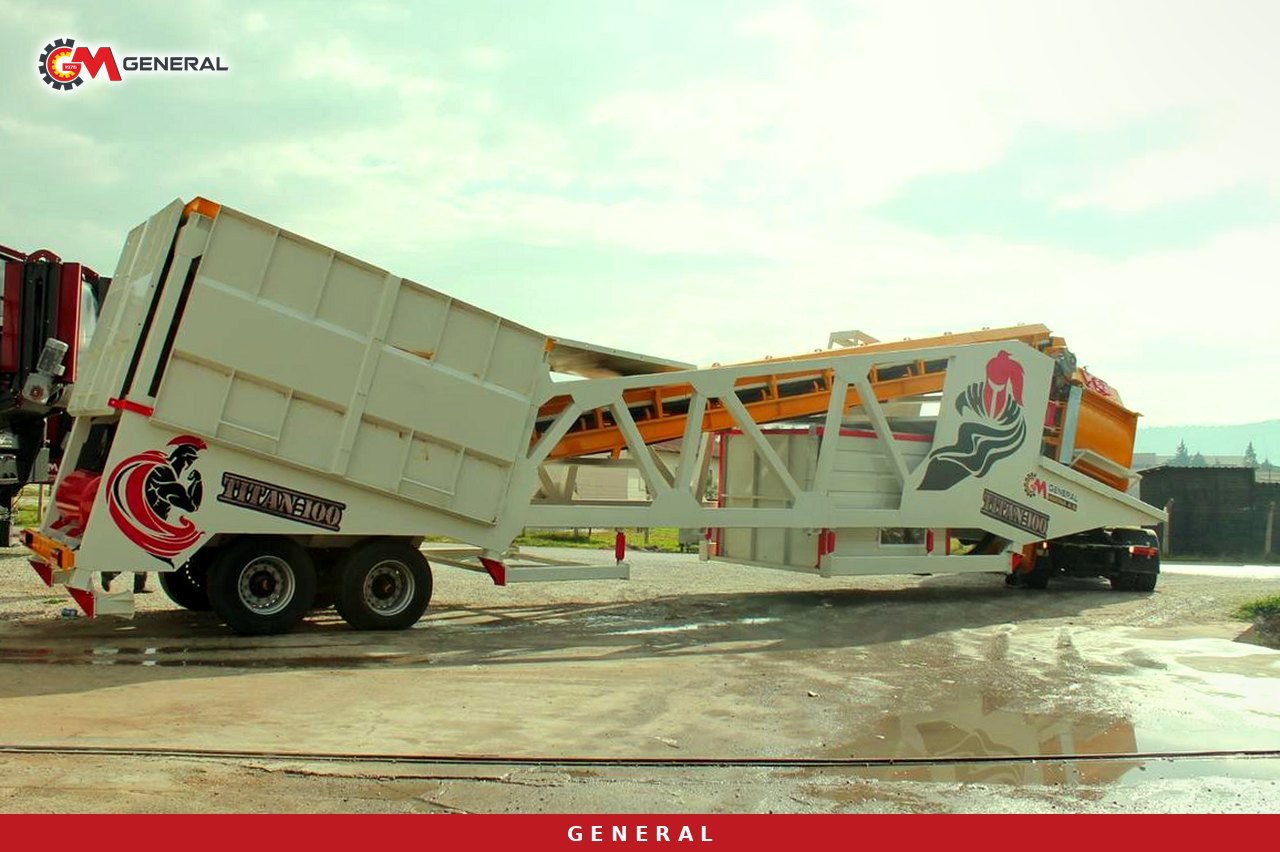
Most repair work is concrete: bridge caps, culvert barrels, retaining walls, foundations for schools and clinics. The crushing plant makes the aggregate, but producing concrete on site as well removes the need to haul fresh concrete over long, damaged roads. From our mobile concrete batching plants the M-Titan 100 with 100 m³/h capacity, a twin-shaft mixer (2×45 kW) and a 4×15 m³ aggregate bin can take the crusher's fractions directly. Sourcing crusher and batching plant from one supplier puts the planning of fractions such as 0-5 and 5-12 mm against the bin compartments on a single engineering desk.
What the enquiry file should contain
For the right model and power unit, send these together:
- The share of each feed: demolition concrete, quarry stone, wadi material.
- A sample or laboratory report from the quarry stone (hardness and abrasiveness); rely on testing, not assumptions.
- Required products and specification: fill, sub-base, concrete aggregate, drainage stone.
- Daily operating hours, shift pattern and other consumers on the generator.
- Port-to-site route and any known load or width restrictions.
The factors that set the price come from the same list: model, generator rating, extra conveyors, dust suppression and automation options, packing and shipping method. The quotation is prepared from this data.
Frequently asked questions
Can one plant crush both demolition concrete and quarry stone?
Yes, but set a priority. The General 800's primary impactor is efficient on brittle concrete and limestone; where hard basalt dominates, the jaw-primary General 950 or General 640 fits better. With concrete feed, rebar has to be removed before it reaches the crusher.
Does the generator come with the plant?
The product pages list a 450 kVA power unit for the General 800, 600 kVA for the General 950 and 350 kVA for the Mobil 90; on the General 640 the 300 kVA generator is optional. If other consumers are added, the rating is recalculated for the project.
What if the material turns out clayey?
Dry crushing may not deliver clean concrete aggregate from clayey wadi material. In that case consider the Mobil 90 which combines a jaw crusher, a washing screen and a twin sand screw washer on one chassis; it produces 90-150 t/h in 0-5 / 5-20 / 20-60 mm fractions.
What warranty and certificates apply?
Our plants carry CE and ISO 9001; the warranty is 1 year, excluding wear parts. Price and delivery plan are fixed in the quotation according to the chosen configuration and shipping route.
Conclusion
For a repair programme in Yemen, the selection order is: first establish the ratio of demolition concrete to quarry stone and the hardness of the rock, then calculate the generator load together with the start-up sequence, and finally choose the chassis that suits the route. In the 80-150 TPH band the General 800 is the direct answer; the General 950 takes over in hard basalt and the Mobil 90 in clayey material. Contact us with your material data and route, and we will prepare the matching configuration and quotation.
Definitions of technical terms: Glossary