EN — English
 TR — Türkçe
 DE — Deutsch
 RU — Русский
 FR — Français
 ES — Español
 AR — العربية
 SR — Српски

Yemen Basalt Quarry Wear-Resistant Aggregate Crusher Plant 120-180 TPH
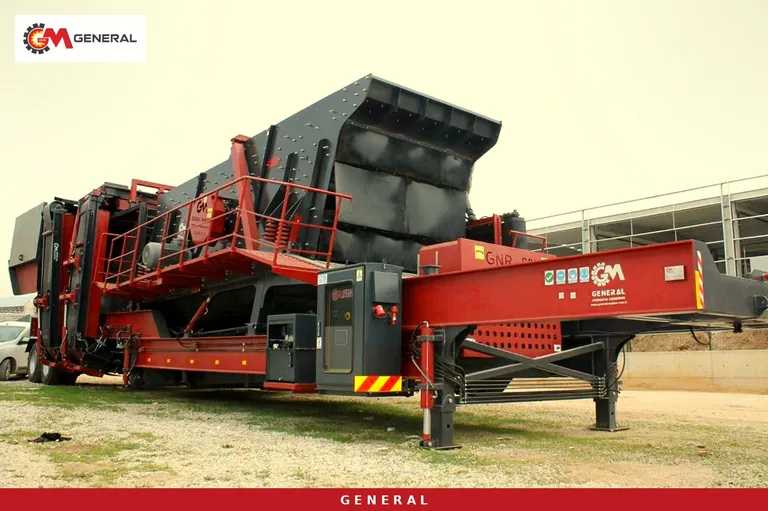
When a company opens a basalt quarry in Yemen or renews an existing line, the first-year surprise is rarely capacity; it is the wear bill. Dark volcanic basalt is hard and dense, and if the wrong crushing principle sits at the wrong stage, jaw plates, blow bars and screen media are replaced long before anyone planned. This article explains which real machine layouts cover a 120-180 TPH target in a Yemeni quarry, which engineering decisions actually create wear resistance, and what data should be collected on site before you ask for a quotation.
From the highlands to the coast: operating conditions for a Yemeni basalt quarry
Volcanic rocks cover large areas of Yemen's inland plateaus and the valleys that run down to the coast; basalt, andesite and tuff can occur side by side in the same district. In practice this means a quarry face may expose sound, massive basalt while a weathered or vesicular layer appears a few benches further back. Machine selection should therefore rest on laboratory results from samples taken at several points of the deposit, not on a single hand specimen: compressive strength, abrasion index and free silica content.
On the climate side, hot, dry and dusty periods must be planned for. Engine and generator air filters, hydraulic oil cooling and dust sealing of electrical panels are items to settle at the design stage. Many quarries are far from the grid, so running the plant on a diesel generator is normal, and generator size is chosen together with the machines. Equipment arrives by sea through ports such as Aden, Hodeidah or Mukalla and then travels by road over mountain routes to the quarry. Port choice, customs procedures and route permits can change with current conditions, so confirm the shipping plan with your forwarder and the relevant authorities.
Wear resistance is built along the whole material flow
The phrase "wear-resistant" in the title means the sum of decisions taken at every point of the material flow. In basalt the decisive factor is not hardness but the share of abrasive minerals in the rock, so the four links below are considered together.
Removing fines with a grizzly at the feed end
If soil and fine stone from blasting enter the primary crusher, they waste capacity and wear the jaws for nothing. A vibrating grizzly feeder sends this fraction past the crusher straight to the belt or screen. Manganese cast grizzly bars with adjustable spacing let you change the by-pass size on benches where the fines content is high.
Choosing the right manganese grade for the primary jaw
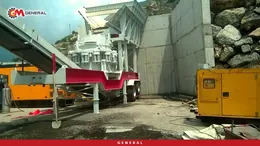
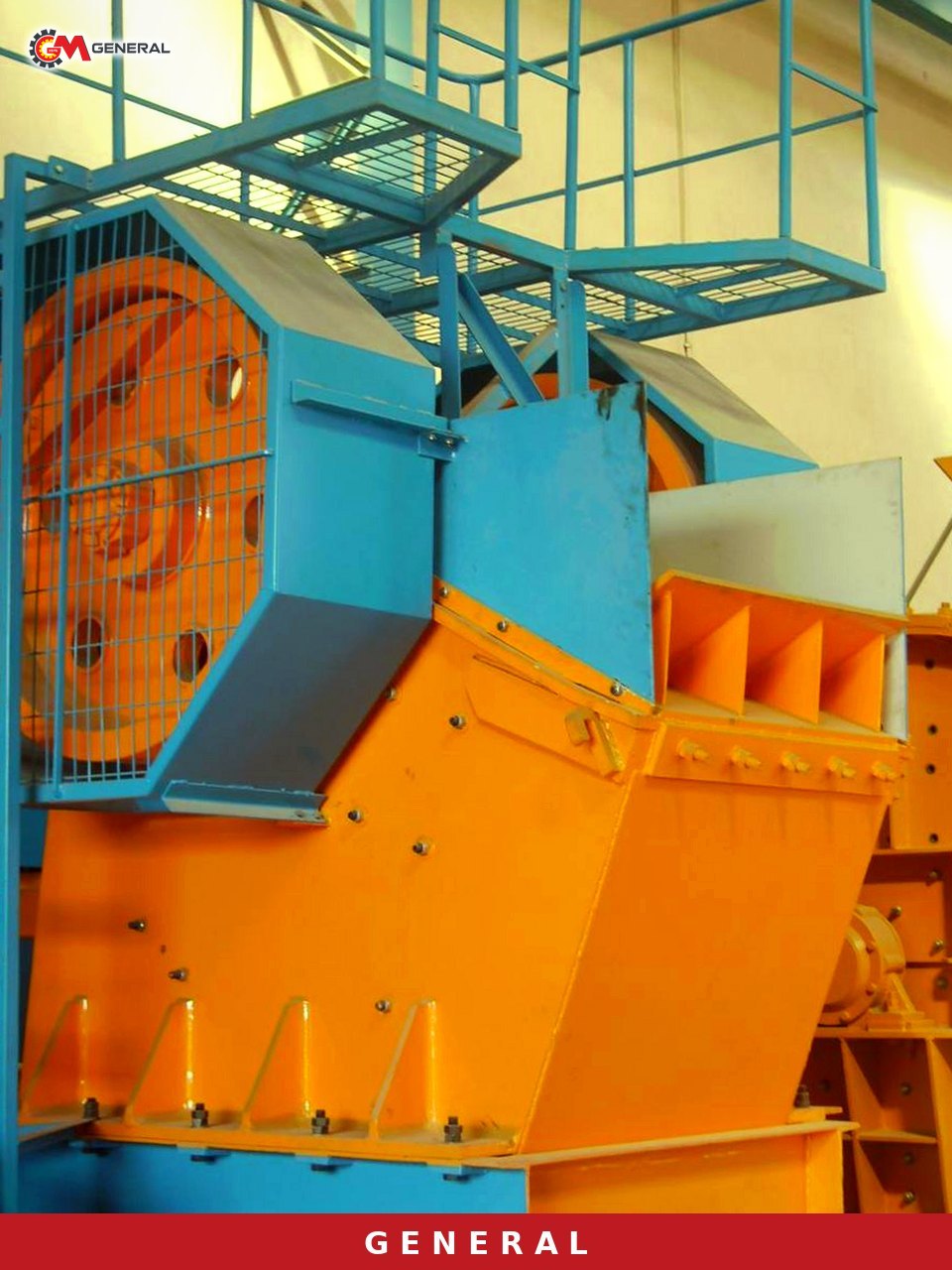
Because a jaw crusher breaks rock by compression, it is the natural primary choice for hard, abrasive basalt. Jaw plates are austenitic manganese steel whose surface work-hardens under impact. Standard grades are Mn13 and Mn18; where the laboratory shows high silica, Mn18 or Mn22 is considered. Turning the plates to use their second face is also part of the life plan.
Compression or impact at the second stage
In basalt, the character of the secondary stage is the decision that affects wear cost most. A cone crusher also works by compression; its mantle and concave liners are usually manganese steel, and high-chrome liners can be chosen for very high silica. The product data give basalt a Bond abrasion index Ai of roughly 0.20, which falls in the economic range of the cone crusher. An impact secondary gives higher reduction and a clearly cubical grain, but metal consumption at the same tonnage is higher.
Liner-protected shaping at the final stage
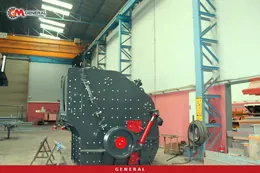
If a concrete or asphalt specification limits flaky particles, a separate cubicizer can be added for shape correction. The GNR MK series mobile cubitzer crushers are lined with Hardox 500 wear-resistant steel and were designed specifically for basalt lines. In rock with very high free quartz, liner life should be monitored and compared with a cone alternative if needed.
Four layouts that cover the 120-180 TPH band
All figures in the table below are taken from the product page of each model. Where a single unit does not cover the whole band, the narrowest stage sets line capacity; this is explained under the table.
| Layout | Stages | Capacity (t/h) | Feed / opening | Power | Weight |
|---|---|---|---|---|---|
| Stationary line | GNR 90 grizzly feeder + GNRK 90 jaw + cone crusher + GNR 1650 screen | Feeder 140-210; GNRK 90 60-225 | GNRK 90 opening 900×650 mm | GNRK 90 motor 75/90 kW | GNRK 90: 11,400 kg |
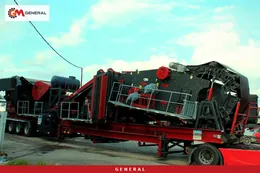
| Portable units | GNR 90 mobile primary jaw + GNR MK110 mobile cubitzer + screen | GNR 90: 70-180; MK110: 160-250 | GNR 90: 1000×3800 mm feeder; MK110: 350 mm | MK110 motor 200 kW | GNR 90: 25,000 kg |
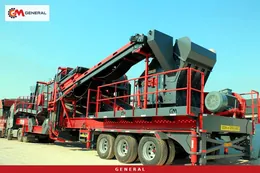
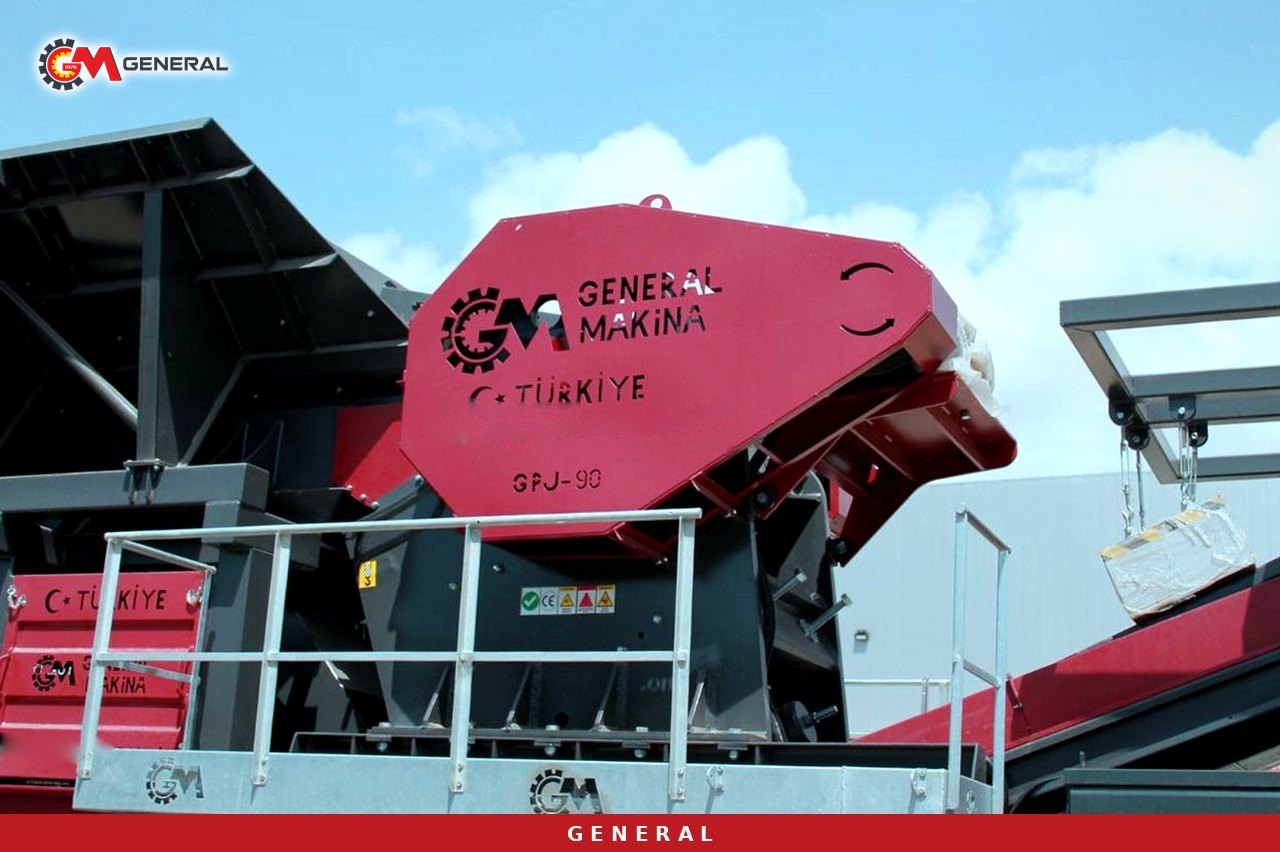
| General 944 | GPJ 90 jaw + GM430 cone + 1600×5000 mm 3-deck screen | 120-180 | 800 mm | 550 kVA generator | 70,000 kg |
| General 950 | GPJ 90 jaw + DMK01 impact + 1600×5000 mm 3-deck screen | 120-180 | 800 mm | 600 kVA generator | 70,000 kg |
In the stationary line, the 60-225 t/h range of the GNRK 90 comfortably covers the target band; model-specific cone crusher values are supplied per project by the manufacturer, so they are not listed. In the portable layout the line is limited by the 70-180 t/h range of the GNR 90 mobile primary, and the upper capacity of the MK110 remains as reserve. If a lower-tonnage shaping stage is enough, the GNR MK100 (90-130 t/h, 132 kW) can also be considered. The General 944 is a ready single-chassis solution for hard basalt and produces 0-5, 5-12 and 12-19 mm fractions.
Choosing the layout: product specification and quarry life
If the reserve supports many years of output and the plant stays in one place, a stationary line comes first: with no chassis transport limit, feed opening and number of screen decks are chosen more freely and service platforms are easier to reach. If production must move between several quarries or road sites, a line built step by step from portable units gives flexibility; the mobile primary jaw crusher is set up without foundations on hydraulic legs, and the secondary stage can be added later.
On the product side, the decision takes this shape: for road sub-base and fill, where grain shape is secondary, the cone secondary of the 944 is sufficient with low metal consumption. When concrete and asphalt aggregate require a strict cubical shape, there are two routes: add a GNR MK series mobile cubitzer after the cone stage, or choose the impact-secondary 950 and accept higher liner consumption. Only an abrasion test on your own rock shows which is cheaper per tonne. For a general comparison of crusher types, see the rock and stone crushing machines and portable rock crushers pages.
What to collect at the quarry before requesting a quotation
- Compressive strength, Bond abrasion index and free silica results for basalt samples from at least three different points of the quarry.
- Largest block size after blasting; the mobile primary jaw series accepts 0-1100 mm feed, the General 944 and 950 accept 800 mm.
- Required products and their shares (e.g. 0-5 / 5-12 / 12-19 mm for concrete), and the specification clause if there is a flakiness limit.
- Soil and fines content of the run-of-mine; grizzly spacing and the by-pass decision depend on it.
- Power source: grid or generator, and the rating of any existing generator.
- Port of arrival and load and gauge limits on the route to the quarry.
- Daily operating hours and the spare wear part stocking policy.
For wear part supply, the spare parts page summarises which crusher uses manganese and high-chrome alloys. As an example of experience on a hot, dusty site, see our GNR PDK 02 stationary plant working in desert conditions in Saudi Arabia a neighbouring country; that project concerns a different rock and crusher type and is not a direct reference for Yemen.
Frequently asked questions
How does the plant run at a Yemeni quarry with no grid power?
Wheeled plants are planned to run on a generator: a 550 kVA generator is specified for the General 944 and 600 kVA for the General 950. In a hot climate, generator placement, air intake and filter service intervals are reviewed together at project stage.
Can the impact-secondary General 950 be used on basalt?
Yes; the 950 is set up for hard, abrasive rock and delivers cubical product with high reduction. On the same basalt, however, blow bar and liner consumption will be higher than with the cone-secondary 944. If the shape requirement is not strict, starting with the cone layout gives a lower wear cost per tonne.
What warranty and certificates apply?
Our machines carry a 1-year warranty; wear parts such as jaw plates, liners and screen media are excluded. Production follows an ISO 9001 quality management system and the machines are CE marked. We have been manufacturing in Izmir since 1976.
What determines price and delivery?
The chosen layout, number of stages, screen decks, generator need, wear part alloy and the scope of transport to the port of arrival determine the quotation. Once you share this information, we prepare a project-specific offer and shipping plan.
Conclusion
For 120-180 TPH on Yemeni basalt, wear resistance comes from combining grizzly pre-screening, jaw plates in the right manganese grade, a compression-type second stage and, where needed, Hardox-lined shaping. A stationary line suits a long-life single quarry, while the General 944 or portable units are sensible starting points for production that has to move. Send your sample results and product list through our contact page and our engineers will finalise the right layout for your quarry with you.
Definitions of technical terms: Glossary