EN — English
 TR — Türkçe
 DE — Deutsch
 RU — Русский
 FR — Français
 ES — Español
 AR — العربية
 SR — Српски

How to Verify Guaranteed Capacity Figures When Buying a Crushing Plant
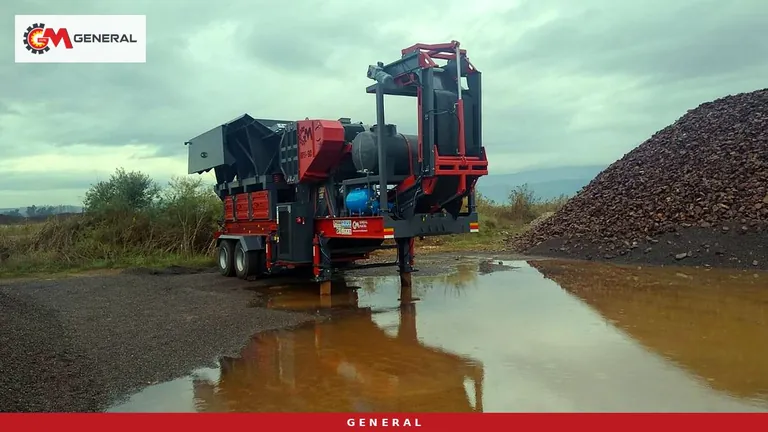
The "80-150 tph" printed in a quotation is not a promise; it is a range. The manufacturer cannot know on its own which end of that range applies to your quarry. Giving it the right data and asking for the answer together with the calculation is the buyer's job. The note on General Makina product pages says it plainly: production capacity may vary depending on the type and hardness of the material, the feed size, the target product size and the operating conditions. This article explains how to test, before the order is signed, whether a capacity statement is realistic for your site: which data to prepare, in which order to check the line and what to look at on a reference site.
The capacity range of a crushing and screening plant is the output band the same machine can reach with different materials and settings. The lower end is usually reached with hard, coarse feed containing few fines and a tight closed-side setting. The upper end represents easy-to-break rock, a substantial share of fines passing the by-pass, and a coarser product. A buyer who looks at the capacity figure alone has never asked which of these two situations he is actually in.
The second point is what a "tonne" means. Tonnage entering the feeder and saleable product tonnage reaching the stockpiles are not the same thing. If the soil-laden material removed by the grizzly feeder by-pass goes to a separate heap and you cannot sell it, it is not capacity for you. In a closed circuit, oversize returning from the screen to the crusher also circulates in the line, but it is not product. The first rule of verification: get written confirmation of whether the manufacturer's figure is feed tonnage or product tonnage.
Site data you must give the manufacturer
A capacity statement is only as solid as the input behind it. A one-line description such as "quarry, limestone" forces the manufacturer to quote the middle of the catalogue range. A buyer who completes the list below and attaches it to the enquiry receives a figure that is specific to his site and can be questioned:
- Material type and origin: limestone, basalt, granite, river material or demolition waste; a laboratory report and abrasiveness data if available.
- Largest block size: the biggest piece seen in the muck pile after blasting; whether it enters the crusher mouth depends on this.
- Fines and clay content: determines how much material leaves through the by-pass and whether screening efficiency will drop.
- Moisture: shows the risk of sticking and screen blinding, especially in winter and with river material.
- Target product list: which fractions, in what proportion, and which one is the main sales item; a sand-heavy 0-5 mm demand and a coarse fill demand give different capacities on the same line.
- Operating pattern: daily operating hours, number of shifts, feeding equipment (loader, excavator, trucks) and power source (grid or generator).
Prepare this information once and use it unchanged in every enquiry. If you describe the site differently to different manufacturers, comparing their capacity figures becomes meaningless.
The weakest link: checking capacity stage by stage
The real capacity of a plant is the capacity of its slowest unit. So look at the value of each stage, not at the total in the quotation. Take a typical front end for stationary crushing plants as an example: the GNR 110 vibrating grizzly feeder is listed at 200~300 tph with 2x7.5 kW motors, and the GNRK 110 from the GNRK series jaw crusher range that may follow it is listed with an 1100×850 mm opening and 200–350 tph. The ranges of the two units overlap, but that alone does not mean the line will produce 300 tph. The screen area, the conveyor widths and the secondary stage must handle the same tonnage.
The method is simple. For each unit, ask: "With my material and my product list, how many tonnes does this unit pass?" Then put the values side by side and find the smallest. As a formula: line capacity = minimum (feeder, primary, secondary, screen, conveyor). Fines removed through the by-pass reduce the load on the primary crusher but not on the screen, which is why the screen is often the bottleneck.
Conveyors count too. The belt conveyor page gives a capacity of 50-1000 tph and widths of 500-1200 mm; such a wide range shows that belt width, incline and speed directly change capacity. If the quotation does not state belt widths, ask for them.
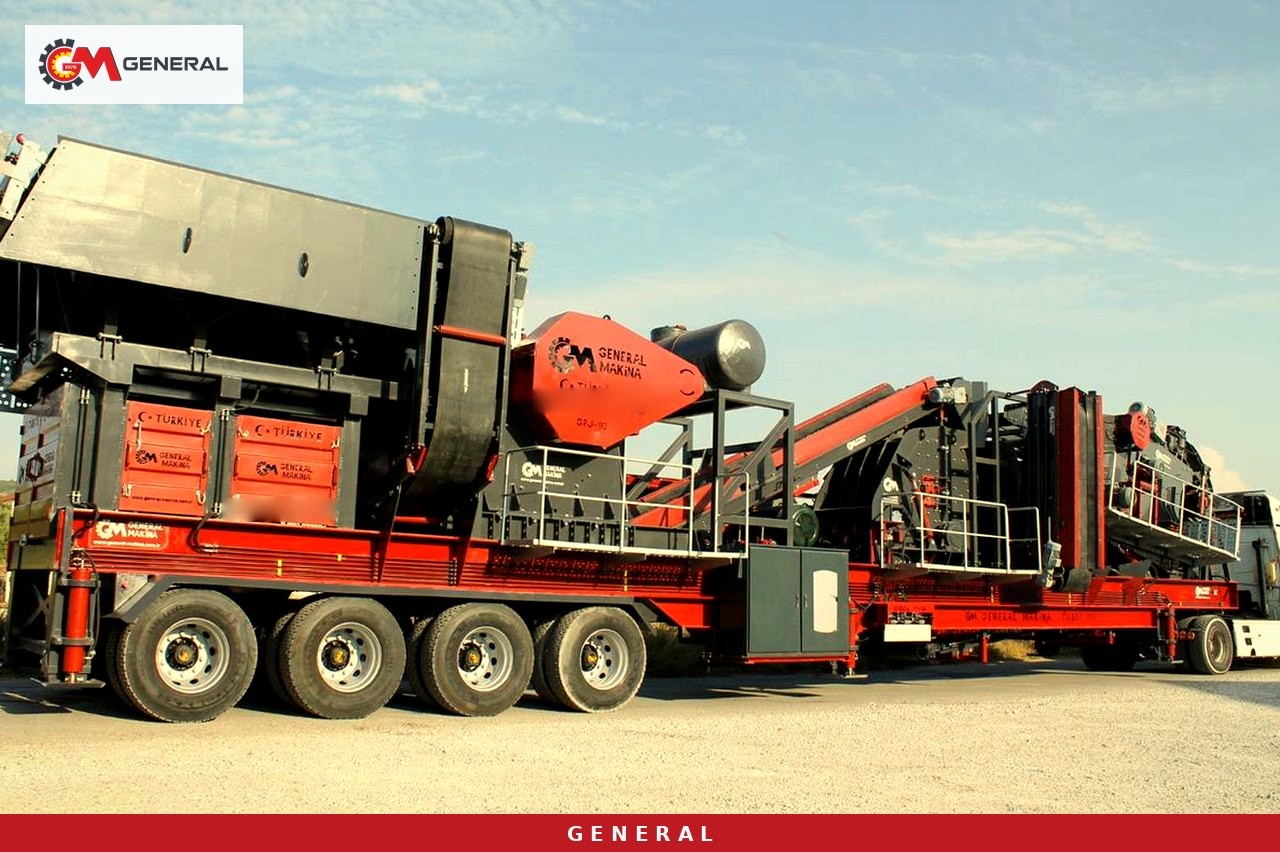
Testing the quoted figure against the data sheet on mobile plants
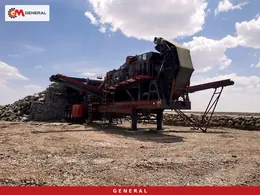
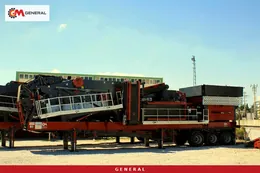
On mobile plants the feeder, crusher, screen and power unit sit on one chassis, so the stage check is shorter, but it must still be done. Below are the product page values for four models from the mobile crushing plants family. There are no unknown cells in the table; still, compare every value in your own quotation line by line against these pages.
| Value to check | General 640 | General 800 | General 950 | GNR-MC110 |
|---|---|---|---|---|
| Capacity range | 60-100 t/h | 80-150 t/h | 120-180 t/h | 200-300 t/h |
| Max. feed size | 500 mm | 600 mm | 800 mm | 900 mm |
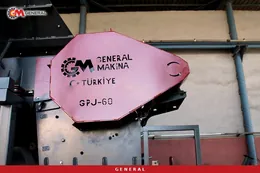
| Crushers | GPJ 60 jaw + GNR 50 impact | PDK 1280 primary impact | GPJ 90 jaw + DMK01 impact | GPJ 110 jaw + GS1215 / DMK03 impact |
| Screen | 1200×4000 mm, 3 decks | 1300×4000 mm, 3 decks | 1600×5000 mm, 3 decks horizontal | 2000×6000 mm, 4 decks |
| Generator | 300 kVA (optional) | 450 kVA | 600 kVA | 750 kVA |
| What to ask | Share of blocks above 500 mm | Is the rock low-abrasive? | How many product fractions? | Will the primary run on its own? |
The first check the table offers is reading feed size and capacity together. If your quarry has a high share of large blocks and the model accepts 500 mm or 600 mm feed, the oversize either bridges in the crusher mouth or has to be broken separately, which pushes output to the lower end of the range. The second is crusher architecture: the General 800 page states that the primary impact design gives its best results on limestone and low-abrasive stone, and recommends the 944 or 950 for hard, abrasive rock. A buyer expecting the upper end from an 800 on basalt is arguing about capacity on the wrong model.
The third is the number of screen decks. The conventional vibrating screen page states that each successive deck reduces capacity by about 10%. Asking for four fractions while treating the top value of a model with a three-deck screen as guaranteed ignores this effect.
Power and automation: the hidden basis of capacity
Crusher and screen cannot reach the stated tonnage without enough power. The generator values in the table differ for each model, and on the General 640 the generator is optional. If you leave the generator out of scope and use your own power source, ask at what power the capacity statement was calculated and show that your source meets it. On grid-fed stationary plants, transformer rating and cable cross-section remain on the buyer's side; low voltage makes the crusher motor struggle under load.
The automation system helps verification in two ways. First, a control that balances feeder speed against crusher current keeps the crusher choke-fed without overloading it; on a manually fed line the same tonnage is reached far less steadily. Second, because each unit's current and alarms can be monitored on the operator panel, it becomes easier to see real operating data on a reference site. Whether automation is in scope should be read on the same page as the capacity statement.
How to observe capacity on a reference site
The strongest way to verify a paper calculation is to see the same model working on similar material. Plan the visit as a measurement, not a tour. Take a watch, a notebook and prepared questions:
- Is the material on site similar to yours? Do not carry tonnage seen on a limestone site over to your basalt project.
- How many buckets does the loader tip into the feed hopper in one hour, and what is the bucket volume? A rough feed estimate comes from this.
- Does the feeder run continuously, or does the hopper empty and wait? A waiting line shows the limit of the loading equipment, not of the plant.
- Can weighbridge records or delivery notes be shown? Dividing daily dispatched tonnage by operating hours is the most reliable site data.
- What range does crusher current show on the panel? A crusher constantly near its limit indicates top capacity has been reached on that material; very low current points to under-feeding.
- Is the amount of oversize returning from the screen noticeable? When this circulating load rises in a closed circuit, net product falls.
- Ask the operator about the product split: is there more sand or more coarse product?
These observations will not give you an exact tph figure, but they show whether the calculation made for you is consistent with a real site. If there is an inconsistency, ask about the reason at quotation stage; do not leave it for later.
Put the written basis of the statement on a single page
At the end of the verification work you should hold a capacity basis sheet signed by the manufacturer. It does not replace the contract; it is its technical input. It should contain: the agreed material description, the largest block size, the fines and moisture assumptions, the product list and fraction shares, whether the figure is feed or product tonnage, and the power used in the calculation. If one of these assumptions turns out differently on site, both sides understand why capacity changed by looking at the same document.
If you are unsure about the model, you can pre-screen your site data with the Design Your Plant and move to the enquiry afterwards. The wizard does not give an exact capacity; it narrows down candidate models.
Frequently asked questions
Is the top value in the catalogue guaranteed to me?
No. The upper end of the range is the value reachable with suitable material and settings. The figure valid for your site is calculated from the material and product information you provide and written into the quotation together with its conditions.
Is it necessary to send a sample?
If your material is a borderline case (high abrasiveness, clay, moisture), a sample and laboratory report allow the crusher type and capacity to be determined more accurately. For well-known materials such as limestone, a site description is often enough.
What happens if capacity turns out lower than expected?
First, the assumptions on the basis sheet are compared with the site: block size, fines content, moisture, product list, power. The difference usually lies in one of these. The warranty on General Makina plants is 1 year and does not cover wear parts; resolving a capacity dispute depends on the assumptions being written down from the start.
Are price and delivery time given together with the capacity calculation?
Price and delivery time are set per project according to model, scope, power unit and accessories. So instead of a number, send your site data and ask for a written quotation.
Conclusion
Verifying guaranteed capacity is not a matter of trusting or distrusting the manufacturer's figure; it is about making visible the assumptions behind it. Provide complete site data, check the line stage by stage, account for power and automation, and if possible measure on a site running similar material. Contact us with your material data and product list, and we will prepare a quotation together with a capacity basis calculated for your site.
Definitions of technical terms: Glossary