EN — English
 TR — Türkçe
 DE — Deutsch
 RU — Русский
 FR — Français
 ES — Español
 AR — العربية
 SR — Српски

Used crusher plant investment risk
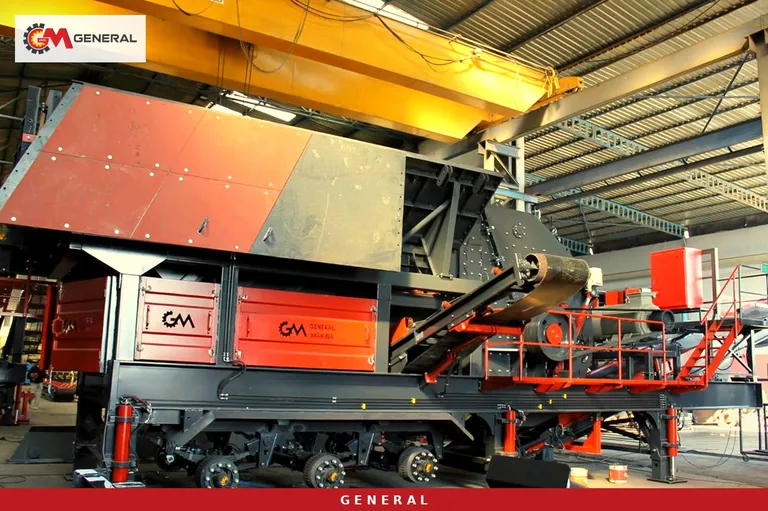
Where used crusher plant investment risk actually sits
The decision is not settled by comparing purchase prices but by comparing the cost of producing the same output for five years. That is exactly where the exposure hides: the price today is visible, while remaining life, parts lead time and the difference in hourly yield are not. When the invisible items go unmeasured, the cheap plant produces an expensive first season.
The disciplined approach is to compare both options under one production scenario: same tonnage, same feed material, same shift pattern. Without equalising the basis, the discussion collapses into two parties quoting different numbers at each other.
Five years, line by line
The table below carries no absolute figures. It shows which way each item moves on the used side and how to measure that movement; the amounts are filled in for the specific site and machine.
| Cost item | Direction when used | Reason | How to measure it |
|---|---|---|---|
| Purchase price | Lower | Part of the depreciation stayed with the previous owner | Offer plus independent inspection report |
| Transport and commissioning | Similar or higher | Dismantling, haulage, replacing missing items | Quotation for strip-down and erection |
| Wear part consumption | Possibly higher | Distorted cavity geometry consumes parts faster | Recorded parts consumed per tonne |
| Unplanned downtime | Higher | Aged frame, bearings and drive train | Maintenance history and hour meter |
| Spare parts lead time | Exposed | The model may be out of production | Parts list with supply confirmation |
| Energy consumption | Possibly higher | Older drives and worn transmission | Measured kWh per tonne |
| Product yield | Variable | Fatigued screens and cavities push product out of spec | Trial run with grading analysis |
| Residual value | Lower | In five years the machine is five years older still | Market listings for the same model |
Estimating remaining life
An hour meter alone misleads, because what matters is the rock those hours were spent in. A thousand hours in abrasive hard rock and a thousand hours in soft limestone do not produce the same wear. So ask first what was crushed and at what average feed size, then look for the evidence on the machine: distorted cavity geometry, crack indications in frame welds, ovalised bearing housings, fatigue cracks in the screen frame.
The electrical and hydraulic side is routinely skipped. Cable order inside the panel, the age of contactors, dates stamped on hydraulic hoses and the latest oil analysis carry as much information as the mechanical structure. A seller who cannot produce an oil analysis has already answered the question.
Parts availability decides the case
The real risk in a plant is rarely a dramatic fracture. It is waiting weeks for an ordinary component. Before purchase, list the ten most consumed items and, for each, write down the supply source, lead time and whether an equivalent exists. If that list stays empty, the price advantage evaporates during the first long stoppage. Cross-checking against the standard items offered under crusher spare parts makes the exercise faster.
The inspection sequence
Inspect the machine running. Almost anything looks healthy turning empty; behaviour under load is a different matter. Work through the sequence: current draw on a cold start, vibration and noise unloaded, tonnage and current under load, product grading, temperature of the points that heat up, and coast-down time after shutdown. Write each step down; an inspection carried in memory is useless at the negotiating table.
The decision threshold
Buying used makes sense when three conditions hold together: parts supply is confirmed, remaining life comfortably covers the planned production period, and the five-year gap is wide enough to pay for the downtime risk being accepted. If any one is missing, the price difference is not a saving but a deferred expense. The financing and payback side of the same decision is treated under investment and cost.
Common questions
Is an inspection report enough
Not on its own. It documents visible defects; it does not document behaviour under load or parts supply. Both need separate verification.
Does a rebuilt machine count as new
No. A rebuild renews wearing components but does not undo frame fatigue or past overloading. Ask in writing which components the rebuild actually covered.
Is partial renewal an option
Often it is the most balanced one: keep the used structure, renew the drive train and the screen. The comparison is then run through the same five-year table.
Definitions of technical terms: Glossary