EN — English
 TR — Türkçe
 DE — Deutsch
 RU — Русский
 FR — Français
 ES — Español
 AR — العربية
 SR — Српски

What Is a Tertiary Crusher and What Does It Do? The Sand Machine's Place in the Line
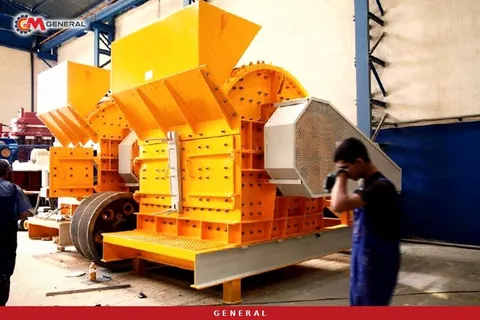
When a tertiary crusher is mentioned on site, the name most people think of is the "sand machine". It owes this name to its ability to bring stone down to very fine sizes and to produce small particles close to a flour-like consistency. Looking at its fields of use, its target is clearly the fine material group referred to as 0.5. Operations that need this kind of material usually place a tertiary crusher in the line after the primary and secondary crushers.
There are many machine manufacturers that build tertiary crushers, and the reason lies in the machine's position in the line. The word "tertiary" means "third". In a classic crushing arrangement, the first two stages are called primary and secondary. Primary crushers are the units that first meet the material coming from the quarry and start the crushing process; after them, secondary, that is second-stage, crushing takes place. The tertiary crusher is the continuation of this chain and comes into play as the third stage. That is also why it is called a sand machine: working in third position, it does a job aimed at smaller grains. It is preferred in particular for material returning from the secondary crusher in existing plants, or for material that does not give the desired result after passing through the vibrating screen.
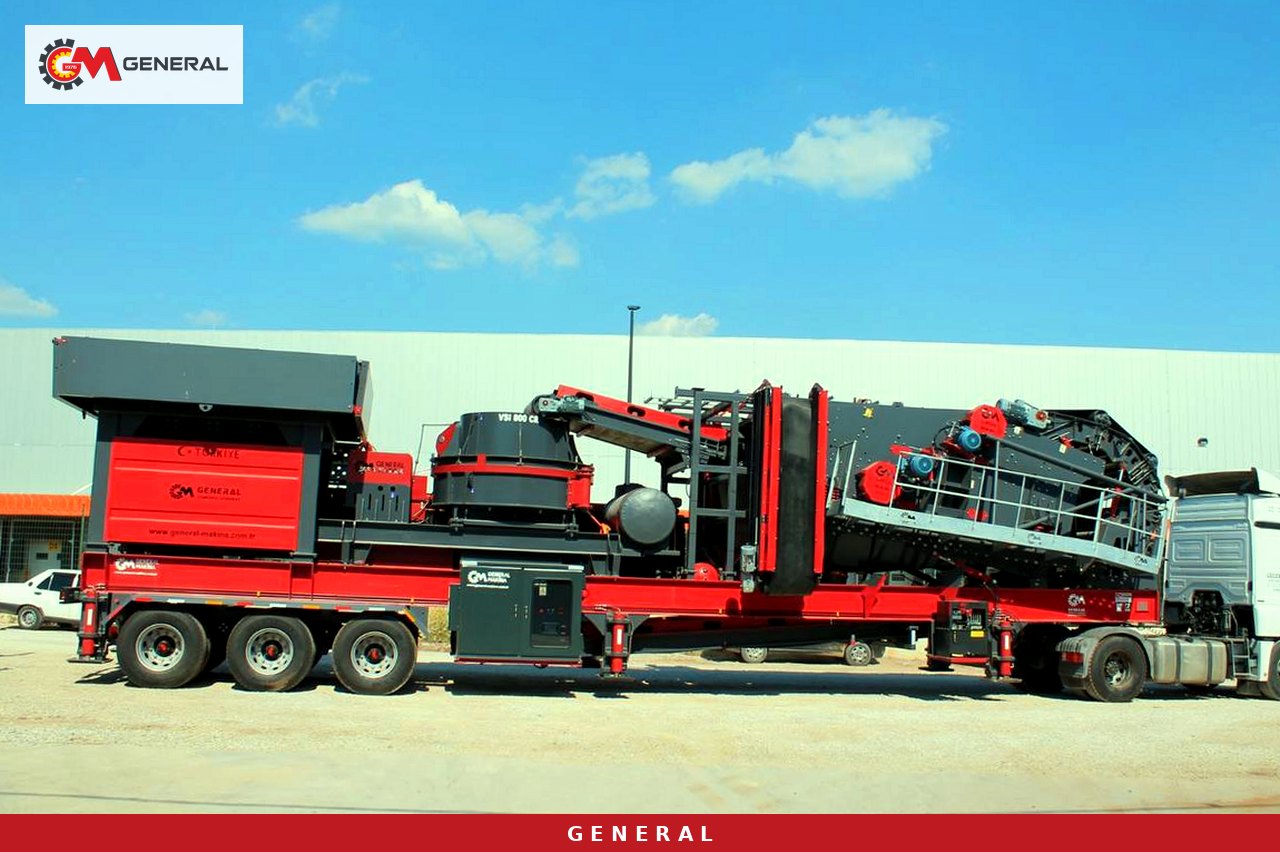
The performance a tertiary crusher delivers varies with the type of stone or ore being processed. On the market you can come across crushers running at 700 or 1000 rpm, with motor powers of 160 kw and 250 kw. Even though many companies produce this machine, it is important to work with a reliable manufacturer who knows the trade, because high efficiency, product quality and the balance between performance and the amount paid depend directly on it. An average tertiary crusher can obtain between 40% and 60% sand from the stone or ore being processed.
Which end of that range is reached depends largely on the feed. On hard, abrasive stone the crusher's parts wear faster and the sand yield may move towards the lower limit, while on softer stone the same machine reaches the upper limit more easily. That is why the soundest approach is to assess the type of stone in the quarry, the expected sand quantity and the required grain shape together before choosing a model.
Tertiary crushers are not limited to a single type; many different models emerge according to needs. Depending on the size of the work site, the capacity required and the type of ore to be processed, units of different power and size can be produced. Users who want to obtain a high share of sand also frequently use the tertiary crusher in place of a secondary crusher, which is a common practice on site.
From a design point of view, tertiary crushers allow versatile use. For instance, designing the rotor to be bi-directional makes it possible to change the direction of rotation. As a result, both faces of the hammers can be used and the highest efficiency is achieved. This arrangement, which also offers a solution for resistance to wear, clearly shows the advantages of the tertiary crusher. In addition, the cover is designed to open towards both sides, which makes spare part replacement, maintenance work and lubrication during maintenance considerably easier.
Tertiary crushers are used very often in asphalt plants, and these machines are also frequently found in concrete batching plants and sand operations. In these different sectors, models that can be adjusted to the required product size can be chosen. For example, there are tertiary crushers that accept feed of up to 80 millimetres for river stone and up to 150 millimetres for quarry stone. The rotor turning at high speed increases the share of sand obtained while keeping the share of powder to a minimum. For the operation, this means a higher profit margin.
What a tertiary crusher costs is determined by the machine's reliability, its durability, the availability of spare parts for wearing components, its performance, its transport and its maintenance needs. Many operations also use this machine in the secondary crusher position. Although its name says third-stage crusher, the tertiary crusher has become an indispensable piece of equipment in many result-oriented sectors. Drawing on the experience we have built up since 1976, we continue to manufacture tertiary crushers and are ready to work out with you the model that suits your needs.
Definitions of technical terms: Glossary