EN — English
 TR — Türkçe
 DE — Deutsch
 RU — Русский
 FR — Français
 ES — Español
 AR — العربية
 SR — Српски

Sierra Leone Iron & Diamond Sites Mobile Crushing and Screening Plant 100-200 TPH
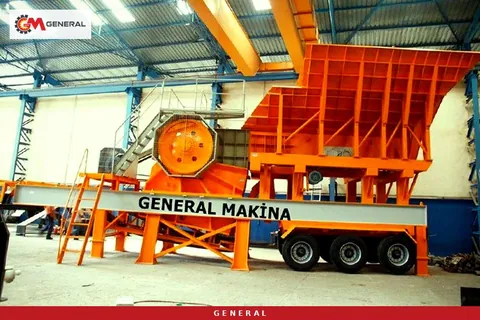
A team preparing a mine site in Sierra Leone can meet two materials in the same country that have almost nothing in common: dense, hard and abrasive rock in the iron ore belts around Tonkolili and Marampa, and wet, clay-bound alluvial gravel, often taken straight from riverbeds, in the diamond areas of Kono and Kenema. In one case the crusher is the heart of the plant; in the other, a badly set crusher is the machine most likely to damage the most valuable product. This article separates the real mobile models with published catalogue figures by material for a site targeting 100-200 TPH, lists the points that make operation harder in West Africa's wet climate and sets out the site data to gather before asking for a quote.
One country, two different crushing problems
Before any model is discussed, the behaviour of the material has to be separated. Offering a single "standard plant" for iron and diamond sites in Sierra Leone means equipping one of the two operations wrongly.
Iron ore: density and wear
Iron ore arrives banded, hard and mixed with siliceous host rock. Because it is dense, the same volume carries more tonnage, which loads the hopper, the belts and the crusher frame accordingly. The crusher's task is to bring blasted blocks down to a size fit for shipment or beneficiation. Particle shape is secondary; what matters is a steady, predictable output size and the wear cost per tonne. That makes a compression-type jaw primary followed by a cone secondary a more sensible starting point than an impact secondary.
Diamond gravel: clay, water and a stone that must survive
On an alluvial diamond site most of the material is already gravel and sand sized; the real problem is the clay and organic matter coating the particles. Crushing is needed only for oversize boulders and pieces of cemented conglomerate. The crusher opening and the closed-side setting (CSS) must stay safely above the size of the stones being recovered, and that limit is set by the site's own laboratory and bulk sampling, not by the machine builder. In a diamond operation the weight of the investment shifts from crushing towards washing and screening.
When does a crusher belong in a diamond circuit, and when not?
Many buyers searching for "a crusher for a diamond site" actually need a wash-and-screen line. Three simple questions settle it:
- Does the feed contain more oversize boulders or hardened conglomerate than can be picked out by hand? If not, a crusher may not be needed at all.
- Do clay balls blind the screen apertures? If so, a washing screen and a clay-breaking washer come first.
- Is the screened oversize fraction meant to be re-crushed? If so, the crusher should be set for a controlled single pass, not for a closed circuit.
The answers decide directly between the Mobil 90 and the primary jaw unit in the table below.
Real models for the 100-200 TPH range
The range in the title is a target; no single machine covers all of it on every material. The figures below are catalogue data from the product pages. Actual tonnage varies with rock hardness, moisture and the product size required.
A simple calculation helps read tonnage correctly: required hourly capacity = daily target tonnage ÷ (daily operating hours × availability). In a hypothetical example, a site wanting 1,600 tonnes a day over 10 hours at 0.8 availability needs 200 tonnes per hour. Wet feed and stoppages lower availability in the rainy months, so it is safer to size for the worst season.
| Model | Crushing layout | Capacity (t/h) | Max. feed (mm) | Generator (kVA) | Weight (kg) | Best suited to |
|---|---|---|---|---|---|---|
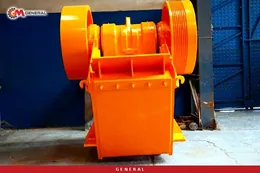
| GNR 90 primary unit | Feeder hopper + GNRK 90 jaw | 70-180 | 0-1100 (series) | — | 25,000 | Iron ore pre-crushing, boulder breaking on diamond sites |
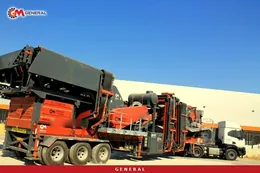
| General 944 | GPJ 90 jaw + GM430 cone | 120-180 | 800 | 550 | 70,000 | Abrasive iron ore, two stages on one chassis |
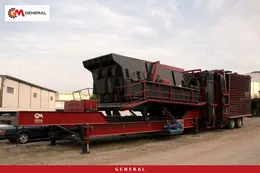
| GNR-MC110 | GPJ 110 jaw + DMK03 impact, twin chassis | 200-300 | 900 | 750 | 55,000 + 55,000 | Iron operations heading above 200 TPH |
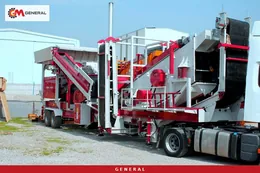
| Mobil 90 | GPJ 90 jaw + washing screen + twin screw | 90-150 | 800 | 350 | 45,000 | Crushing, washing and screening clayey alluvial gravel |
Two routes for an iron site
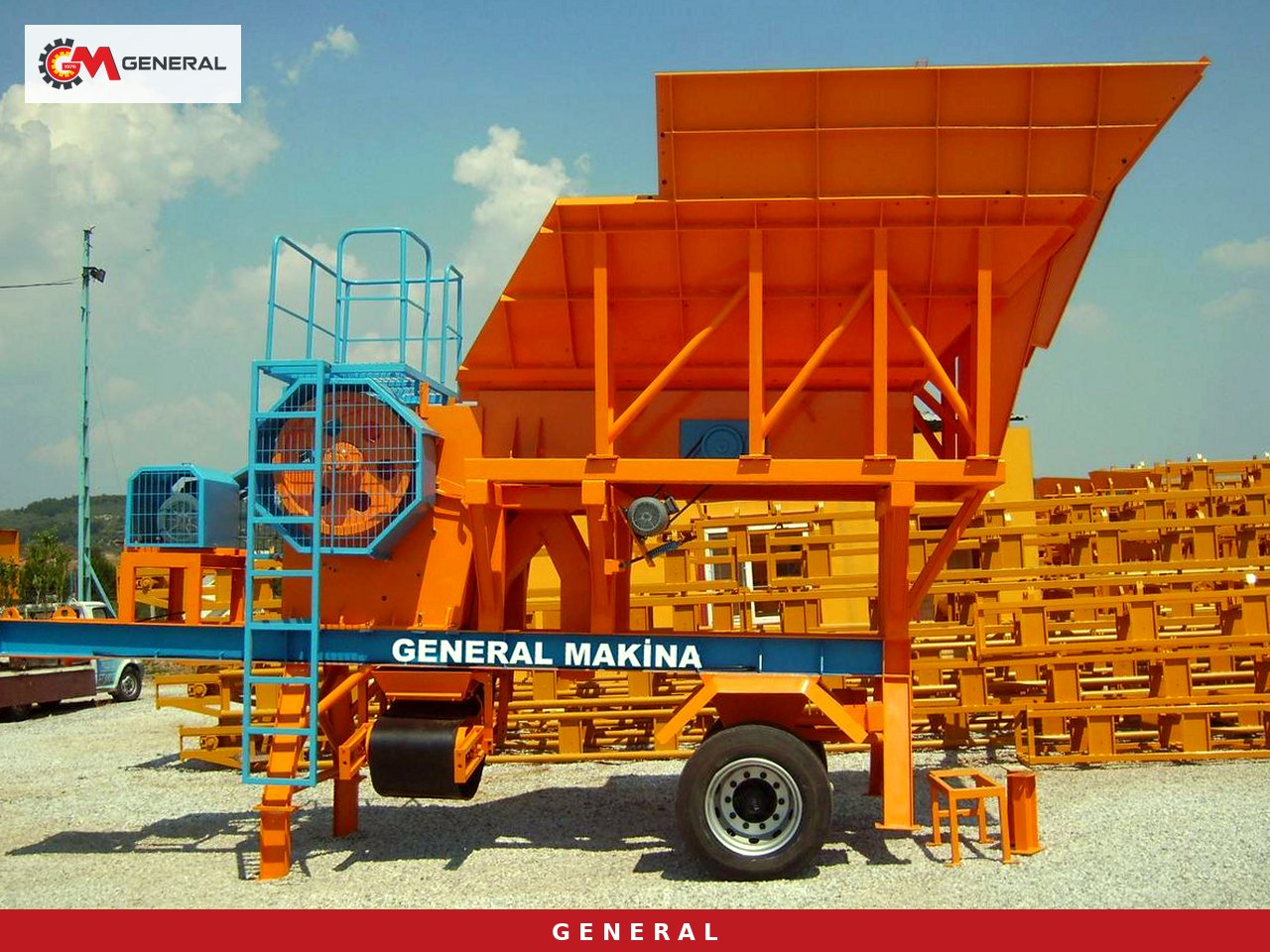
For an operation that wants both primary and secondary on one chassis, the General 944 is the natural candidate: the GPJ 90 jaw accepts blocks up to 800 mm and the GM430 cone crushes by compression in the second stage, so metal life is longer in siliceous ore. Product is split on a 1600×5000 mm three-deck screen into 0-5 / 5-12 / 12-19 mm fractions. If the target rises above 200 TPH, the two-platform GNR-MC110 comes in; because its primary group can run on its own, the operator can buy the jaw chassis first and add the second as volumes grow. One caution: the MC110's secondary is an impactor, so do not decide on it for high-silica iron ore without measuring rotor part consumption in a sample test.
Two routes for a diamond site
On alluvial gravel with a heavy clay load, the Mobil 90 puts the jaw crusher, a 1600×5000 mm washing screen and a 600×6000 mm twin screw washer on one chassis, recovering the 0-5 mm sand without losing it to the water. On sites where crushing is hardly needed and only the occasional boulder appears, the mobile primary jaw crusher with feeder hopper is kept separate and the wash-and-screen line is set up independently. This split keeps the crusher away from the diamond-bearing fraction. Further washing options are listed under washing and screening plants.
If one company holds both an iron and a diamond licence, running both sites with one plant looks attractive. In practice it forces constant crusher re-setting and leaves washing equipment idle on a site that does not use it. Sharing the primary jaw unit and building a cone-secondary line on the iron side and a wash-and-screen line on the diamond side usually involves fewer compromises.
Rainy season, clay and wear: operating in West Africa
Sierra Leone's climate swings between a long, intense wet season and a dry season. That can affect plant selection more than the capacity on paper.
- Wet feed: In the rainy months clayey material sticks to hopper walls and grizzly bars. A feeder with grizzly pre-scalping removes fines and soil before they reach the crusher and reduces packing of the jaw cavity.
- Ground and access: Wheeled chassis need a compacted, drained pad. Check before the season whether the site road carries heavy loads in the rain.
- Power: Remote mine sites rarely have grid power. The kVA values in the table are a starting point for generator sizing; set aside budget for panel ventilation and cable protection in humid air.
- Wear: On iron ore the jaw plates are austenitic manganese steel (Mn13/Mn18) that work-harden under impact. Planning spare jaw and cone liner sets with the first shipment avoids waiting on a remote site.
From Freetown port to the mine site
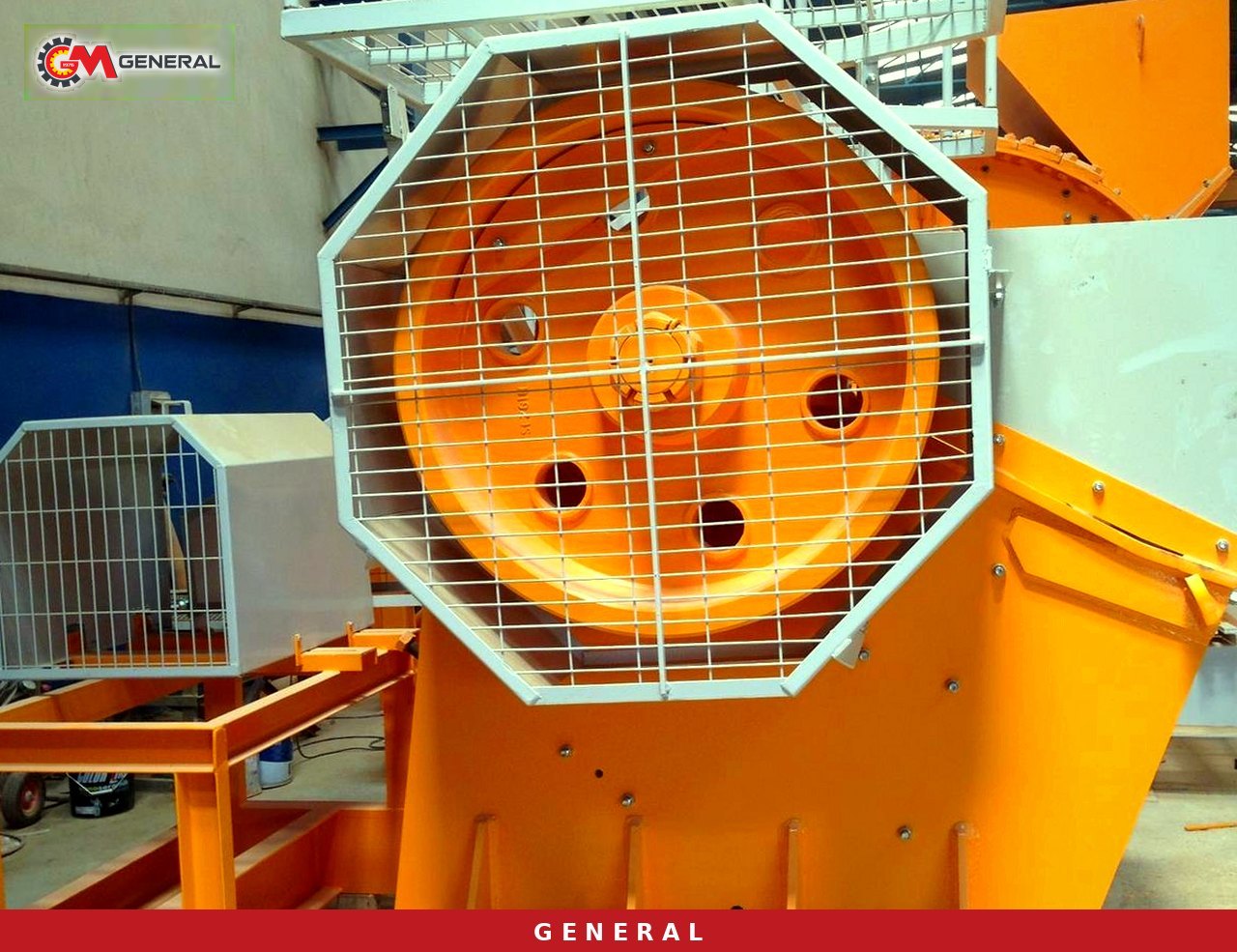
Equipment leaving Türkiye normally arrives through the port of Freetown and is trucked inland from there. This is where a mobile plant shows its real advantage: the primary jaw unit is towed by a single truck and commissioned on hydraulic legs without foundation concrete. The General 944's transport size is 4130 × 20350 × 4500 mm; have bridge, bend and height limits along the route surveyed in advance. The GNR-MC110's two chassis travel separately, so there is no single heavy piece, but two transport plans are needed. Confirm current permit, customs and mining licence conditions with the relevant Sierra Leone authorities and the project specification; this article gives no binding information in that area.
For a wider choice of models, compare the mobile crushing plants and portable crushers pages.
Site data to collect before requesting a quote
- Material type: hard iron ore, clayey alluvial gravel, or both?
- Largest block size and daily operating hours; real hourly tonnage follows from these.
- On a diamond site, the smallest crushing gap the laboratory allows to protect the stones.
- Clay content and water source: whether washing is needed and how water will be recovered.
- Power infrastructure: grid or generator?
- Required product sizes and the shipping method.
- Load and height restrictions on the port-to-site route.
Frequently asked questions
Cone or impact secondary for iron ore?
On siliceous, hard iron ore a cone secondary consumes wear parts more slowly because it works by compression, which is why the General 944 is the first model to look at. An impact secondary gives higher reduction, but its part consumption should be confirmed by a sample test.
Can a crusher damage diamonds?
The risk is low when the crushing gap is kept safely above the target stone size and the crusher is applied only to oversize blocks. The gap value should come from the site's bulk sampling work.
Which certificates and warranty apply?
The products carry ISO 9001 and CE certification; the warranty is 1 year, excluding wear parts. The company has been manufacturing in Izmir since 1976.
What sets the price?
Model, number of stages, washing equipment, generator and the spare parts package set the price. A figure is given in a project-specific quote once site data has been received.
Conclusion
In Sierra Leone an iron site needs a wear-resistant, two-stage crushing line working by compression; a diamond site needs washing and screening first and crushing only as much as necessary. For 100-200 TPH, the General 944, the Mobil 90, the primary jaw unit and the GNR-MC110 with room to grow divide along those two needs. Send your material sample data and site details through our contact page and we will prepare a suitable configuration and quote.
Definitions of technical terms: Glossary