EN — English
 TR — Türkçe
 DE — Deutsch
 RU — Русский
 FR — Français
 ES — Español
 AR — العربية
 SR — Српски

Rwanda Kigali Aggregate & Sand Crushing and Screening Plant 80-150 TPH
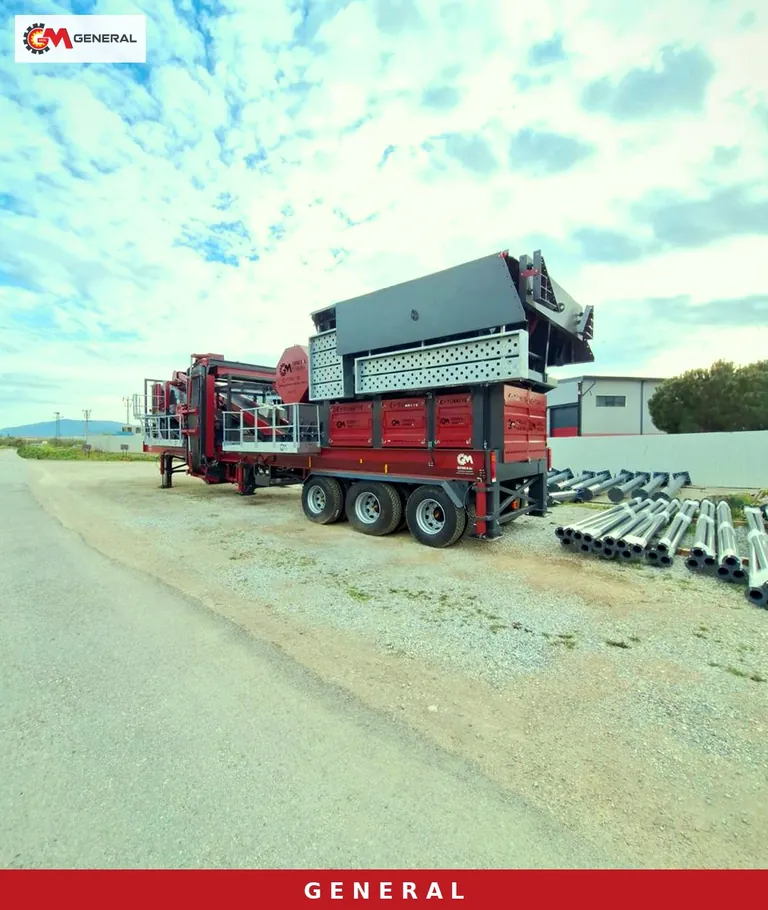
A quarry operator selling to a batching plant or road contractor in Kigali is chasing two separate products: crushed stone (chippings) for concrete and asphalt, and sand that goes into everything from plaster to structural concrete. Many investors size the plant for chippings only and plan to buy sand in; they soon discover that sand is the more fragile link in the supply. This article explains how to configure an 80-150 TPH crushing and screening plant for Rwanda so that sand also comes from the quarry's own rock. Every figure is model data from our product pages. We give no information about any housing, infrastructure or tender in Kigali; please confirm specification requirements with the relevant authority and the employer.
Why sand is a separate problem on Kigali sites
Natural sand is usually dredged from streams and won from wetland valley floors. In many countries those sources are subject to environmental permits and restrictions; do not build a sand strategy before checking the current rules and permit conditions in Rwanda with the competent authority. The second issue is quality: valley-floor sand often carries clay and organic matter, and its grading changes from one load to the next. The batching plant compensates by adjusting the water-cement ratio, which creates a risk of strength deviation.
Manufactured sand solves both problems at once. Sand made from the hard rock of your own quarry has a controllable grading, and the source is your site. On top of that, oversize and intermediate fractions, the hardest products to sell from a crushing line, become feed for the sand maker. In a fast-growing city such as Kigali, offering customers both chippings and sand clearly changes your position at the negotiating table.
Turning Rwanda's geology into plant design
The country earns its nickname, "land of a thousand hills", with a rugged surface, and quarries around Kigali commonly meet granite, quartzite, schist and patches of weathered laterite cover. That variety makes a single definition of "Rwandan rock" impossible. Quartzite and granite are high in silica; they wear crusher liners but yield sound, well-shaped aggregate. Schistose layers tend to produce flaky particles. Laterite cover means clay that sticks to the feeder in the rainy seasons.
The first task is therefore sampling. Take separate samples from the massive rock, the schistose bands and the overburden, and have compressive strength, abrasiveness, clay content and moisture measured. Those results decide whether the primary crusher should be impact or jaw, whether the sand line needs washing and which screen apertures to fit.
Four real model combinations for 80-150 TPH
The layouts below are built from catalogue models. We have not added capacity to any model to fit the target range; where one machine does not cover it, two units are proposed together.
Soft, low-abrasive rock: General 800 plus mobile sand maker
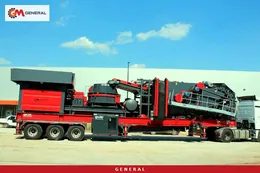
The General 800 takes 600 mm feed into its PDK 1280 primary impactor and runs at 80-150 TPH, so it is the model that matches the title range on a single chassis. However, an impact primary is economical on limestone and low-abrasive material. If your quarry is weathered, soft or low in silica, this layout makes sense; on quartzite, blow bar consumption climbs fast. The mobile tertiary crusher (sand making machine) connected behind the line accepts 0-200 mm oversize and produces 0-10 mm manufactured sand in the 60-250 t/h range.
Granite and quartzite: General 944 plus mobile sand maker
On hard, abrasive rock the General 944 is the right starting point: GPJ 90 primary jaw, GM430 secondary cone, 800 mm feed and 120-180 TPH. Because the cone crushes by compression, metal lasts longer in siliceous stone. This model covers the upper half of the target range. If your demand sits at the lower end, consider the smaller General 640 (60-100 TPH, GPJ 60 jaw plus GNR 50 impactor). On the sand side the mobile sand maker again does the work; the rock-on-rock mode of the VSI reduces metal wear on abrasive feed.
Clayey overburden and river material: Mobil 90
If the upper bench is clayey or you plan to process river gravel, the Mobil 90 brings crushing, washing and screening together on one chassis: GPJ 90 jaw, a 1600×5000 mm washing screen and a 600×6000 mm twin screw washer, 90-150 TPH. The 0-5 mm sand is recovered without being lost to water. That is a serious alternative to dry lines that stop because of clay during the wet periods around Kigali.
| Model | Capacity | Max. feed | Crusher | Screen | Generator | Weight |
|---|---|---|---|---|---|---|
| General 800 | 80-150 TPH | 600 mm | PDK 1280 impact | 1300×4000 mm, 3-deck | 450 kVA | 35,000 kg |
| General 944 | 120-180 TPH | 800 mm | GPJ 90 jaw + GM430 cone | 1600×5000 mm, 3-deck | 550 kVA | 70,000 kg |
| General 640 | 60-100 TPH | 500 mm | GPJ 60 jaw + GNR 50 impact | 1200×4000 mm, 3-deck | 300 kVA (optional) | 38,000 kg |
| Mobil 90 | 90-150 TPH | 800 mm | GPJ 90 jaw | 1600×5000 mm washing | 350 kVA | 45,000 kg |
| Mobile tertiary crusher (sand maker) | 60-250 t/h | 0-200 mm | VSI, rock-on-rock | — | — | — |
| GNR-MVSI 900 | 90-180 TPH | 50 mm | VSI 900 | 1600×5000 mm, 3-deck | 850 kVA | 42,000 kg |
If you want a shaping unit with its own screen instead of the sand maker, the GNR-MVSI 900 is a fourth option: on 50 mm feed it delivers 0-3, 3-5 and 5-12 mm fractions. It does, however, have the highest power demand in the group at 850 kVA; if your grid connection is weak, budget the generator accordingly. Other wheeled options can be compared on the wheeled mobile crushing plants page.
Making manufactured sand fit for concrete
The sand maker is not a reduction machine; its purpose is to make particles cubical and produce sand. The flow that feeds it therefore has to be steady. Oversize from the main line goes to an intermediate stockpile and is fed to the sand maker by a belt feeder, so pauses at the primary crusher do not interrupt sand production.
For the batching plant to accept manufactured sand, check three points:
- Fines content: if the dust created in dry crushing stays in the sand, water demand rises. If clay is present, washing is mandatory; have the clay value measured by methylene blue or sand equivalent testing.
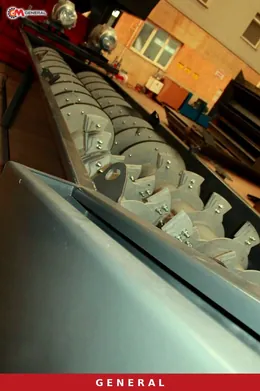
- Moisture: discharge moisture from a screw washer is typically 15-30%; adding a hydrocyclone and a dewatering screen brings it down to 8-20%. That chain matters for sand you want to sell without long stockpile drying.
- Particle shape and grading: rock-on-rock VSI lowers the flakiness index. Share the grading curve from your customer's specification at the quotation stage; screen apertures are selected to suit it.
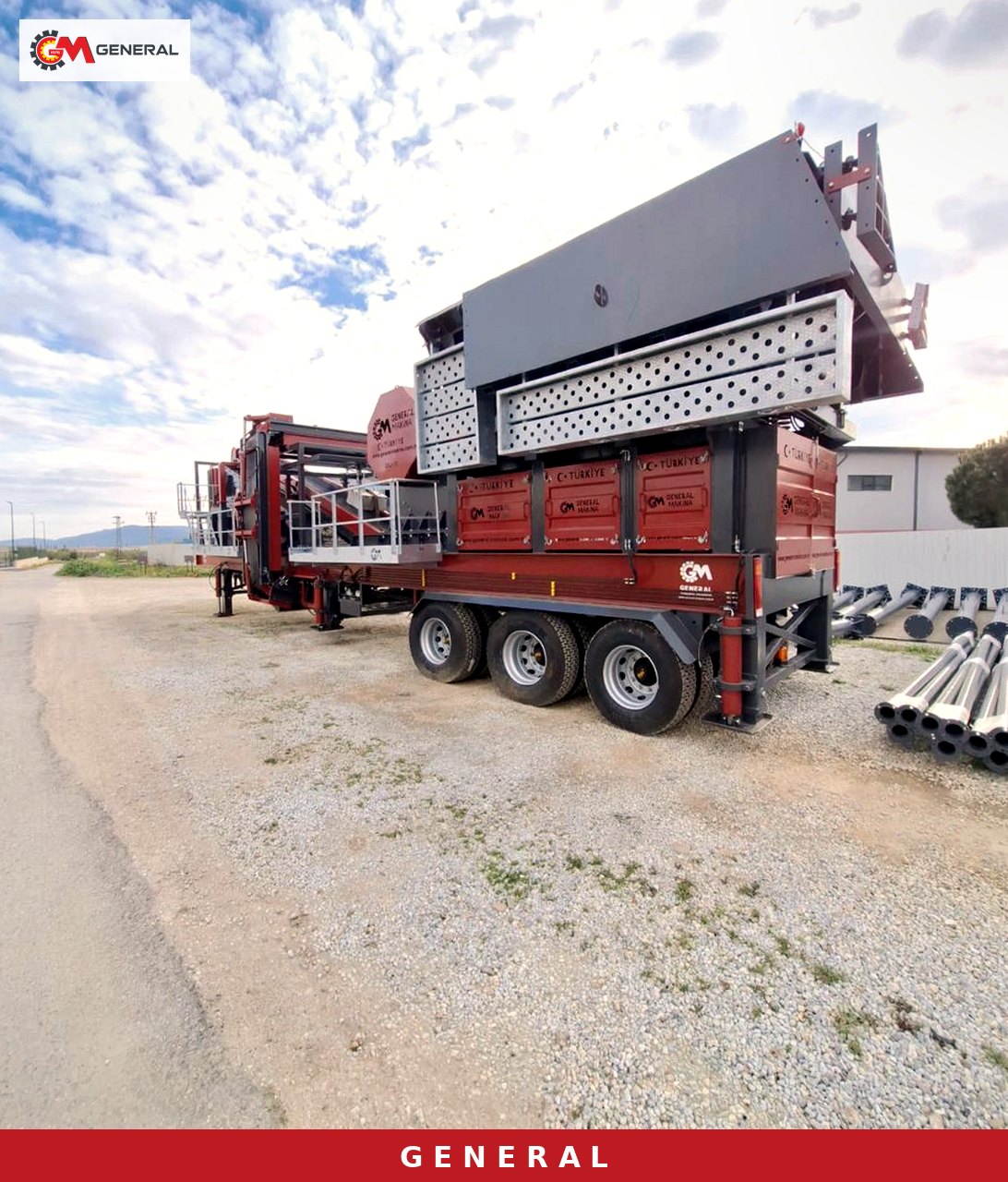
If you plan a separate line for washed sand, screw washer and screen options are listed under sand washing and dry screening plants. A source of wash water and room for a settling pond are among the first things to check when choosing land around Kigali.
Shipping to a landlocked country and setting up on hilly ground
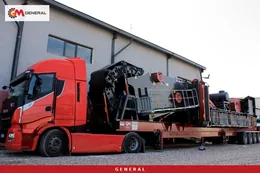
Rwanda has no seaport. Machines arrive by road from ports in neighbouring countries, and the route brings bridge, tunnel and bend restrictions. Transport dimensions are therefore part of model selection: the General 800 travels at 3600×15500×4500 mm, the Mobil 90 at 3600×15700×4500 mm and the General 944 at 4130×20350×4500 mm. Ask the haulier for the height and length limits along the route in writing. Because the mobile sand maker is towed by one truck, it can be planned as a separate shipment.
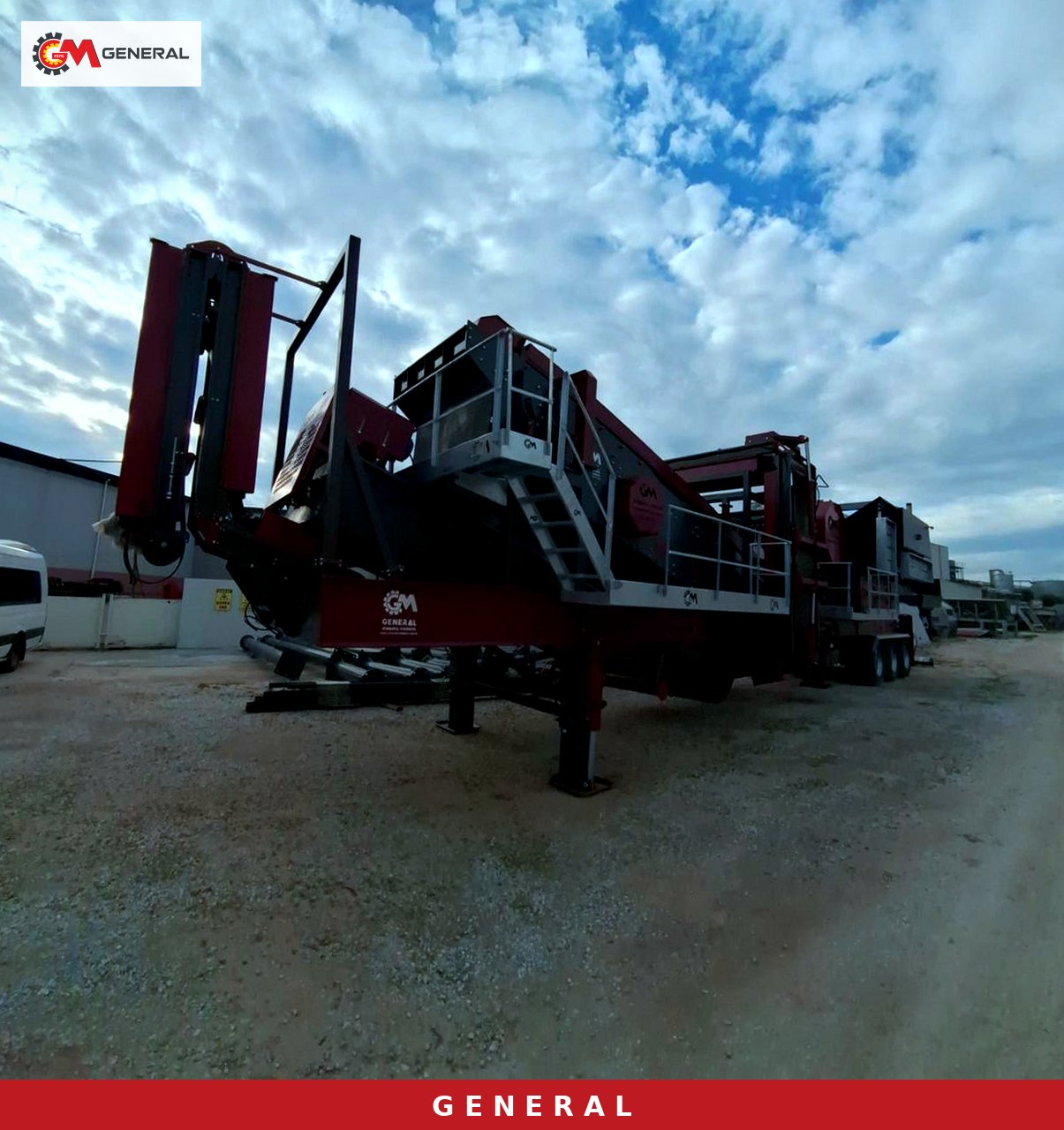
On hilly terrain the real job is preparing a level pad. Wheeled chassis are stabilised on hydraulic legs, but the bearing capacity and drainage of the ground are your responsibility. In a climate with two rainy seasons, the pad must shed water quickly and stockpile areas must not turn to mud. Place sand stockpiles on slightly sloped, firm ground.
On power, ask two questions: is a grid connection possible, and what is the site altitude? Diesel generators lose output at high altitude, so always give the supplier the altitude when sizing the generator. For dust control, measures such as water sprays at crusher discharges and transfer points, enclosed conveyors and filters can be selected per project; at quarries close to the city this directly affects relations with neighbours.
The Kigali file to prepare before requesting a quote
A sound quote follows sound data. If you gather the following information, the model and configuration proposal becomes clear in the first meeting:
- Laboratory results of the rock samples: compressive strength, abrasiveness, clay and moisture.
- Hourly target and daily operating hours; the expected sales split between chippings and sand.
- Required fractions and the specification curves of your concrete and asphalt customers.
- Quarry face height and largest block size after blasting.
- Grid power status and site altitude.
- Wash water source and the area available for a settling pond.
- Choice of port, road route and the condition of the site access road.
If you want to try the model matching yourself, use the product selection wizard and then send us the results together with this list.
Frequently asked questions
Can one mobile machine produce both chippings and sand?
The main crushing chassis deliver chippings fractions; the finest fraction of the General 800 is 0-5 mm, but that is not shaped concrete sand. For quality manufactured sand you need to add a VSI-based sand maker or a washing unit such as the Mobil 90 behind it.
Can an impact primary crusher be used on quartzite?
It works, but blow bar and liner consumption will be high. On siliceous rock a compression layout such as the General 944, with a jaw primary and a cone secondary, lowers wear cost per tonne. An abrasiveness test makes the decision.
What warranty and certificates apply?
Our machines carry ISO 9001 and CE certification; we have been manufacturing in Izmir since 1976. The warranty period is 1 year, and wear parts are excluded from warranty cover.
What do price and delivery time depend on?
Price is set by the model and crusher combination, generator requirement, washing and dewatering equipment, number of screens and the transport route. Delivery time likewise depends on the chosen configuration and the production schedule at the time of order, and is stated in writing in the quote.
Conclusion
In the Kigali market, an 80-150 TPH quarry grows stronger not by selling chippings alone but by making sand from its own rock too. The General 800 forms the main line on soft rock, the General 944 on granite and quartzite and the Mobil 90 on clayey material, while the mobile sand maker turns oversize into manufactured sand. Send your sample results, target fractions and shipping route via our contact page and we will prepare a configuration and quote specific to your quarry.
Definitions of technical terms: Glossary