EN — English
 TR — Türkçe
 DE — Deutsch
 RU — Русский
 FR — Français
 ES — Español
 AR — العربية
 SR — Српски

Running a Mobile Crusher in Winter and on Difficult Terrain
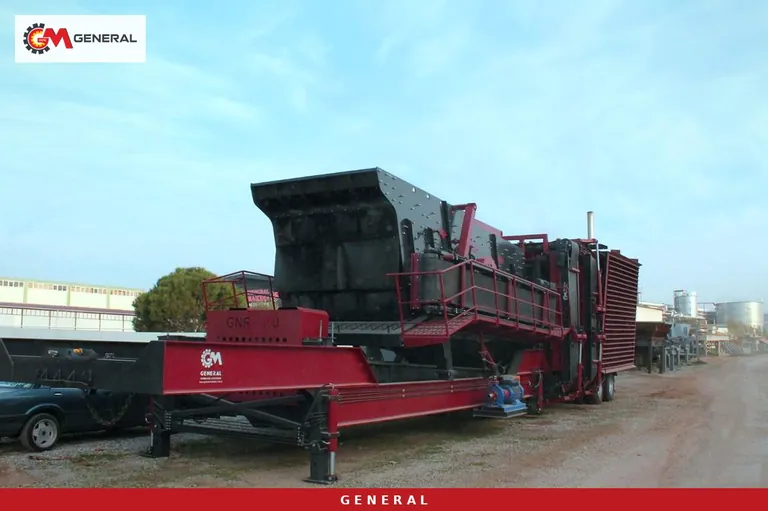
A mobile crusher working through winter or on poor ground faces problems from two directions: cold changes how the material and the machine's fluids behave, while the terrain decides where, how and how firmly the machine can stand. When both hit the same site, an ordinary fault can turn into a stoppage lasting days. This article sets out, from a field engineer's point of view, which decisions must be made before the season starts, which model features make a difference in these conditions, and which shift habits protect the machine.
How run-of-mine material changes in the cold
Quarry material that flows freely in summer can bridge in the hopper in winter. Once moisture between the particles freezes, the fines act like cement, bond the larger stones together and form an arch at the hopper outlet. With high clay content the effect grows; muddy material wedged between the grizzly bars blinds the grizzly and pre-screening stops working.
The second effect concerns size. Lumps that have frozen together in the stockpile or at the face arrive at the crusher mouth as one large block. In winter operation, the maximum feed size should therefore be judged against these frozen lumps as well as the blast fragmentation. On a crusher with a narrow mouth they bridge, the operator has to step in with the excavator and hourly output drops.
Feeder choice: grizzly or wobbler?
With dry, earthy feed, a grizzly feeder removes the fines up front and spares the crusher unnecessary load. With wet, clayey or half-frozen feed, however, the grizzly tends to clog. The mobile jaw unit with a wobbler pre-screener was designed for exactly this case: it tumbles the material over rotating shafts to separate clay and fines, runs at 250-450 t/h according to its product table, and handles sticky feed where a standard grizzly blinds. If you will run a wet quarry in winter, the feeder type is the first topic to settle, before the model itself.
Power unit, hydraulics and cold-start discipline
Most wheeled and tracked mobile plants draw their energy from the generator supplied with the machine. The product tables show how much this unit varies by model: 250 kVA on the GM 90JP tracked jaw crusher, 450 kVA on the GM 100 tracked impact crusher, 550 kVA on the General 944 and 660 kVA on the General 02. The larger the power unit, the more carefully the start-up sequence on cold mornings must be planned, because if the screen, conveyors and crusher are all forced to start under load at once, both generator and motors face a sudden current peak.
General principles for cold starts:
- Buy fuel in the grade suited to your local winter conditions; renew the fuel filter and water separator at the start of the season.
- Check battery, preheating and starter system against the engine maker's manual. Choose hydraulic and gear oil viscosity from the same manual; never guess the values.
- Start in reverse order of material flow: stockpile conveyors first, then the screen, then the main conveyor and crusher, and the feeder last. On shutdown the order is reversed, and the crusher is never stopped before the line is empty.
- Let the machine warm up unloaded before feeding; listen to bearings and belts during this time.
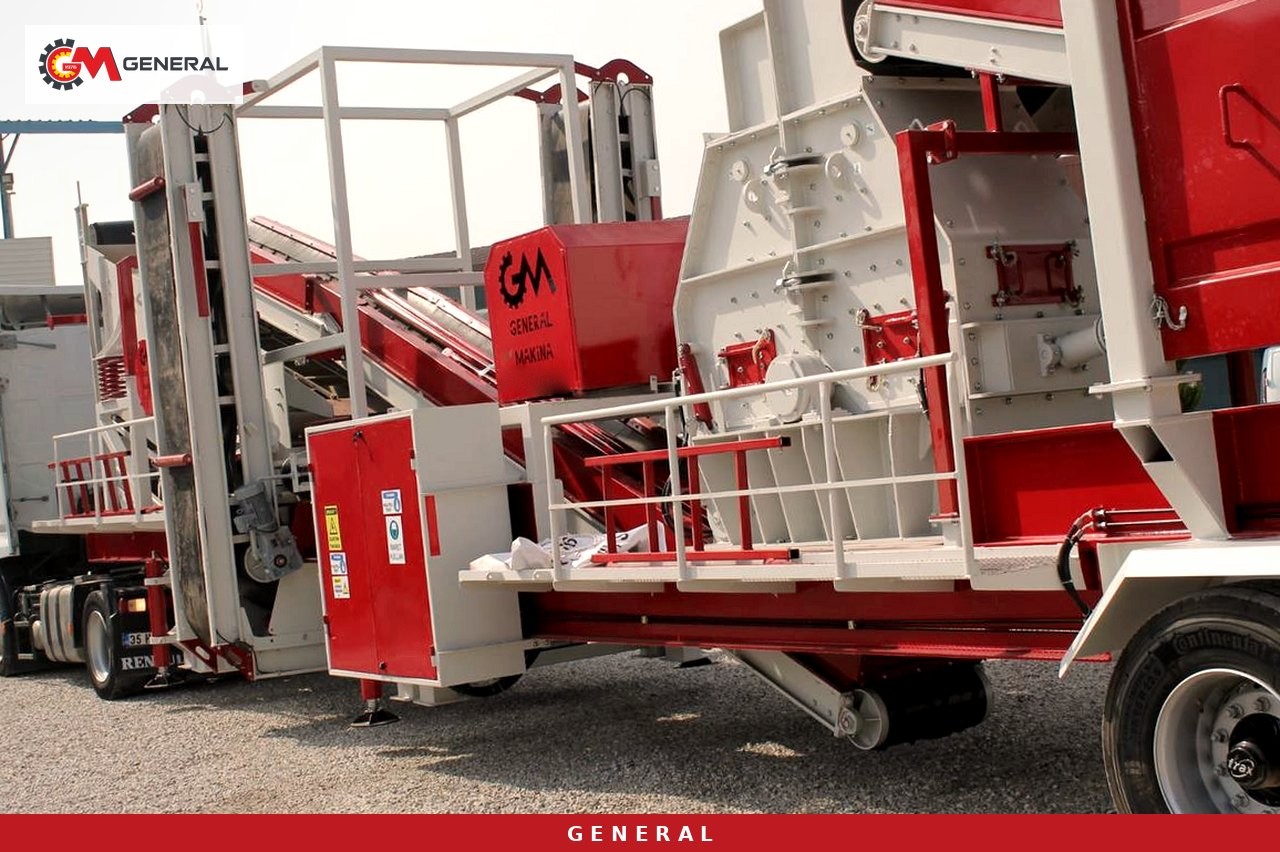
On wheeled plants with hydraulic legs, protecting leg cylinders and hose connections against icing deserves separate attention. Ice building up on a cylinder rod can damage seals and cause oil leaks; wiping the rods at the end of each shift keeps ice away from the seals.
Freezing risk on conveyors, screens and washing lines
A large share of winter stoppages comes not from the crusher but from belts and screens. A conveyor stopped with wet material on it meets a frozen load and a belt stuck to the pulley the next morning. The belt then slips, scrapers are overloaded and carryback builds up on the return idlers. The fix is to empty the line completely at the end of each shift and run the belts unloaded for a while.
Screen decks blind with damp fines. Reviewing wire openings and deck type before the winter season, and considering alternatives such as polyurethane decks where needed, prevents output loss. For stocking these parts and planning change intervals, our guide to maintenance and spare parts management is a practical starting point.
Water circuit on washing plants
A plant such as the Mobil 90, which combines crushing and washing on one chassis (90-150 t/h, 350 kVA generator and a 600×6000 mm twin screw washer according to its product table), needs more precautions in winter than a dry plant. Water in pump housings, pipework, spray nozzles and the screw trough can freeze during idle hours. The circuit must be drained at the end of the shift, drain valves kept within easy reach, and the water line checked unpressurised first thing in the morning. Confirm rules on wash-water discharge and settling ponds with your local authority.
Difficult terrain: wheeled or tracked?
Ground conditions directly decide the undercarriage. The wheeled General series is towed by a truck and fixed on hydraulic legs, which calls for a level setup area with adequate bearing capacity. The tracked GM series moves under its own power, needs no concrete foundation or hydraulic legs, and stands out on jobs with frequent relocation, slopes or rough ground. To compare the two groups, see our mobile crushing and screening plants and track-mounted mobile crushers categories.
The table below collects, from the product tables, the key values to look at when deciding for winter and terrain conditions:
| Model | Undercarriage | Capacity | Max. feed | Power | Weight | Winter / terrain note |
|---|---|---|---|---|---|---|
| GM 90JP | Tracked | 70-180 t/h | 700 mm | 250 kVA | 35,000 kg | 10 m³ hopper, 820×3000 mm grizzly feeder; follows the face on rough ground |
| GM 100 | Tracked | 100-180 t/h | 600 mm | 450 kVA | 42,000 kg | Integrated triple-deck screen, closed circuit; low-abrasive material |
| General 944 | Wheeled | 120-180 t/h | 800 mm | 550 kVA | 70,000 kg | Hard, abrasive rock; needs a level, compacted setup area |
| General 02 | Wheeled | 250-300 t/h | 1000 mm | 660 kVA | 76,000 kg | Wide mouth tolerates frozen lumps; long jobs at a fixed location |
| Mobil 90 | Wheeled | 90-150 t/h | 800 mm | 350 kVA | 45,000 kg | Washing line; water circuit must be protected from freezing |
| Wobbler-fed jaw unit | Portable chassis | 250-450 t/h | — | — | — | Against clogging with wet, clayey, sticky feed |
The weights show why ground preparation cannot be skipped. A 70,000 kg General 944 or a 76,000 kg General 02 transfers its load through the hydraulic legs onto small areas. Frozen ground may look solid, but the top layer softens as it thaws around midday and the legs start to settle. The setup area should therefore be prepared for the softest ground condition of the season, load-spreading plates placed under the legs where necessary, and bearing capacity confirmed by a geotechnical specialist.
On the tracked side the issue is different. The 35,000 kg GM 90JP tracked jaw crusher can be driven off the trailer into position, but travel on icy ramps, gradients and side slopes must stay within the machine manual. Mud and snow packed between the tracks can lock the undercarriage when it freezes overnight, so track cleaning at the end of each shift should be routine.
Site layout: access, drainage and stockpile management
In winter it is often the road, not the machine, that locks the site. If the ramp where trucks and loaders approach the hopper turns to mud, feeding becomes irregular and the crusher runs alternately full and empty. Surfacing the ramp with compacted coarse material, giving the setup area a slight drainage fall and reserving space for snow piles in advance all reduce the days lost after the first snowfall.
In stockpile management the most sensitive fraction is the fines. Damp 0-5 mm material crusts over in an open stockpile within a few nights; when the loader breaks the crust, lumpy material goes to the batching plant or the customer. Shipping fines as quickly as possible, siting stockpiles with the wind direction in mind and re-screening the frozen crust protect product quality.
Rock hardness also shapes the winter plan. On abrasive rock such as basalt and granite, the General 944 with its jaw primary and cone secondary extends metal life; on low-abrasive material such as limestone, an impact plant like the GM 100 produces cubical aggregate. Some rock types become more brittle in the cold and may generate more fines, so confirming screen fractions with a trial run at the start of the season is the sound approach.
Pre-season winter preparation checklist
- Review the feeder type against feed moisture and clay content; consider the wobbler option for clayey quarries.
- Check fuel grade, filters, batteries and preheating system against the manual.
- Select winter viscosity for hydraulic and gear oils from the maker's manual and change them at the start of the season.
- Inspect conveyor scrapers, pulley lagging and idler bearings; keep spare belt fastening material on site.
- Review screen decks and tensioning; stock alternative decks against blinding.
- On washing lines, mark drain valves and write an end-of-shift draining instruction.
- Prepare the setup area for the softest ground condition; place load-spreading plates under hydraulic legs.
- Define access ramp, drainage line and snow storage area before installation.
- Stock wear parts (jaw plates, blow bars, screen wire) on site; parts delivery can be delayed in winter.
Frequently asked questions
Should a mobile crusher be shut down completely in winter?
No. A properly prepared plant can keep running in winter. What matters is how the material freezes and sticks, whether the water circuit is protected and whether the site stays accessible. If these three conditions cannot be met, planned seasonal maintenance may be more economical than inefficient operation.
Does frozen feed damage the crusher?
Frozen lumps behave like oversize blocks at the crusher mouth and cause bridging. A model with a wide feed opening (for example the General 02, which accepts 1000 mm feed) is more tolerant; on a narrow-mouth model the lumps must be broken up in the stockpile or passed through pre-screening.
Is a tracked model always the better choice on rough ground?
Tracked models have the edge on jobs that relocate often, follow the face and leave no time for ground preparation. For long jobs at one spot that demand high tonnage, a wheeled plant on a well-prepared setup area can make more sense. Decide on relocation frequency, tonnage and material.
What drives the price of a plant suited to winter conditions?
Price depends on the model, crusher type, feeder choice, generator rating, washing equipment and site-specific options. No price list is published on the site; share your material and site conditions to receive a current quotation.
Conclusion
A mobile crusher can keep working through winter and on difficult terrain if the preparation is done before the season. Matching the feeder to the material, enforcing start-up and shutdown sequences, protecting the water and belt circuits from freezing and preparing the setup area for the worst ground condition remove most winter stoppages. General Makina, manufacturing in İzmir since 1976 with ISO 9001 and CE certification, also ships its plants to regions with harsh winters such as Russia, the Turkic republics and the Balkans. Share your material, altitude and ground conditions and we will define the right model together: contact us for a quotation and technical discussion.
Definitions of technical terms: Glossary