EN — English
 TR — Türkçe
 DE — Deutsch
 RU — Русский
 FR — Français
 ES — Español
 AR — العربية
 SR — Српски

Republic of Congo Brazzaville Aggregate Crushing Plant 120-180 TPH
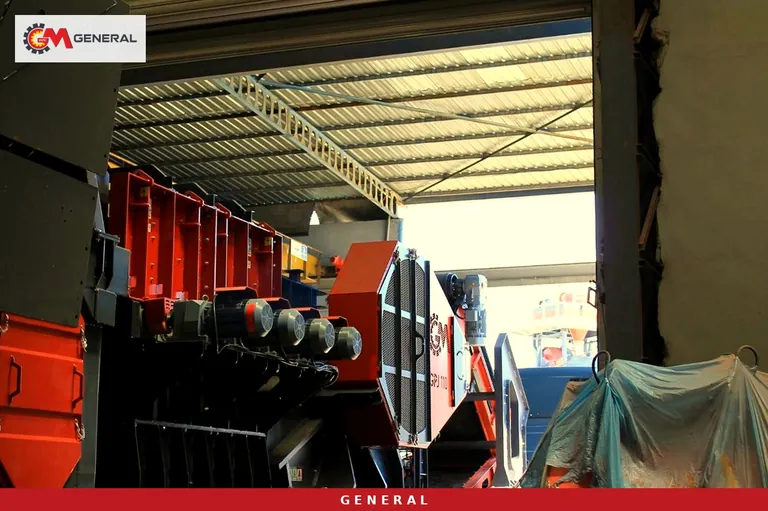
Brazzaville is a capital growing along the bank of the Congo River. New roads, bridge approaches, drainage channels and housing blocks still draw much of their aggregate from river sand and small-scale quarries. Sand is plentiful; the cubical, clean and steady supply of crushed stone that concrete and road pavements require is not. This article is written for a contractor or quarry investor planning to produce 120-180 tonnes of crushed stone per hour around Brazzaville: which real models fit that band, how the region's siliceous rocks shape the crusher choice, and what the rainy season and port-to-road logistics add to the plant layout. All technical values are catalogue data from our product pages; the scope, volume and specification of any particular infrastructure job must be confirmed with the relevant authority.
Plenty of sand, short of chippings: where aggregate planning starts in Brazzaville
River sand covers part of the fine aggregate demand, but structural concrete, asphalt binder and wearing courses and stabilised road bases all need coarse, cubical crushed stone. Near the city the surface is dominated by sand cover and sandstone, so sound rock is usually sought in quarries further out. That leads to two decisions: will the plant sit at the quarry or move between job sites, and how hard and abrasive is the rock coming out of the face?
Start by splitting the production target into fractions. A total of 120-180 TPH is not enough on its own; how much of it must be 0-5 mm manufactured sand and how much 5-12, 12-19 or 19-40 mm chippings directly determines which crusher combination to choose. A road contractor wants a coarser, more tolerant base material, while a ready-mix supplier expects cubicity and a steady flow of fines.
Siliceous sandstone and quartzite: how abrasiveness picks the crusher
High-silica rocks such as sandstone and quartzite are common in this part of the Congo Basin. What they share is not so much crushing resistance as abrasiveness: quartz grains act like sandpaper on jaw plates, blow bars and screen wire. Because one quarry can vary from bed to bed, compressive-strength and abrasion tests on samples from your own face should be the first step of the quotation stage. The two routes below follow from the test result.
Hard quartzite: jaw primary with a cone second stage
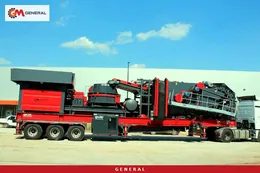
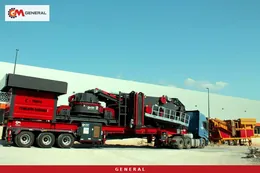
In a high-silica quarry with large blocks, the safest route is a jaw primary working with a cone secondary. The General 944 offers exactly that on one wheeled chassis: the GPJ 90 jaw primary accepts blocks up to 800 mm and the GM430 cone secondary works by compression. Compression crushing reduces the sliding of rock across the liner surface, so in abrasive rock metal consumption stays lower than with an impact rotor. The output is split on a 1600×5000 mm 3-deck horizontal screen into 0-5, 5-12 and 12-19 mm.
Soft, weathered sandstone: impact crushing
Weathered, friable sandstone near the quarry surface changes the picture. Instead of a jaw-and-cone pair, an impact crusher that combines primary and secondary duty in one housing is a simpler answer in both investment and energy terms. The General 01 takes a 700 mm feed with its GPS 1210 triple-pendulum impact crusher and delivers four fractions (0-5 / 5-12 / 12-19 / 19-40 mm) through a 1600×5000 mm 4-deck screen. If the rock turns quartzitic deeper down, impact parts wear faster, so it pays to sample the future benches of the quarry as well.
For the in-between case there is the General 950: the same GPJ 90 jaw primary is followed by a DMK01 impact secondary. It gives strong reduction and a more cubical product in hard rock, at the cost of higher wear-part consumption than its cone-equipped sibling. The choice is a conscious trade-off between cubicity and steel consumption.
Models that fit the 120-180 TPH band, side by side
All three models work in the same capacity range; the differences come from the crushing mechanism, feed opening, power unit and transport weight. The table shows catalogue values; the output grading and screen apertures are fixed at order stage according to your rock.
| Feature | General 01 | General 944 | General 950 |
|---|---|---|---|
| Capacity | 120-180 t/h | 120-180 t/h | 120-180 t/h |
| Crusher layout | GPS 1210 impact (primary + secondary in one housing) | GPJ 90 jaw + GM430 cone | GPJ 90 jaw + DMK01 impact |
| Maximum feed | 700 mm | 800 mm | 800 mm |
| Screen | 1600×5000 mm, 4-deck | 1600×5000 mm, 3-deck horizontal | 1600×5000 mm, 3-deck horizontal |
| Product fractions | 0-5 / 5-12 / 12-19 / 19-40 mm | 0-5 / 5-12 / 12-19 mm | 0-5 / 5-12 / 12-19 mm |
| Generator | 550 kVA | 550 kVA | 600 kVA |
| Weight | 55,000 kg | 70,000 kg | 70,000 kg |
| Suited rock | Weathered sandstone, low-abrasion rock | Quartzite, hard siliceous rock | Hard rock where cubicity comes first |
If the target will rise above 180 TPH
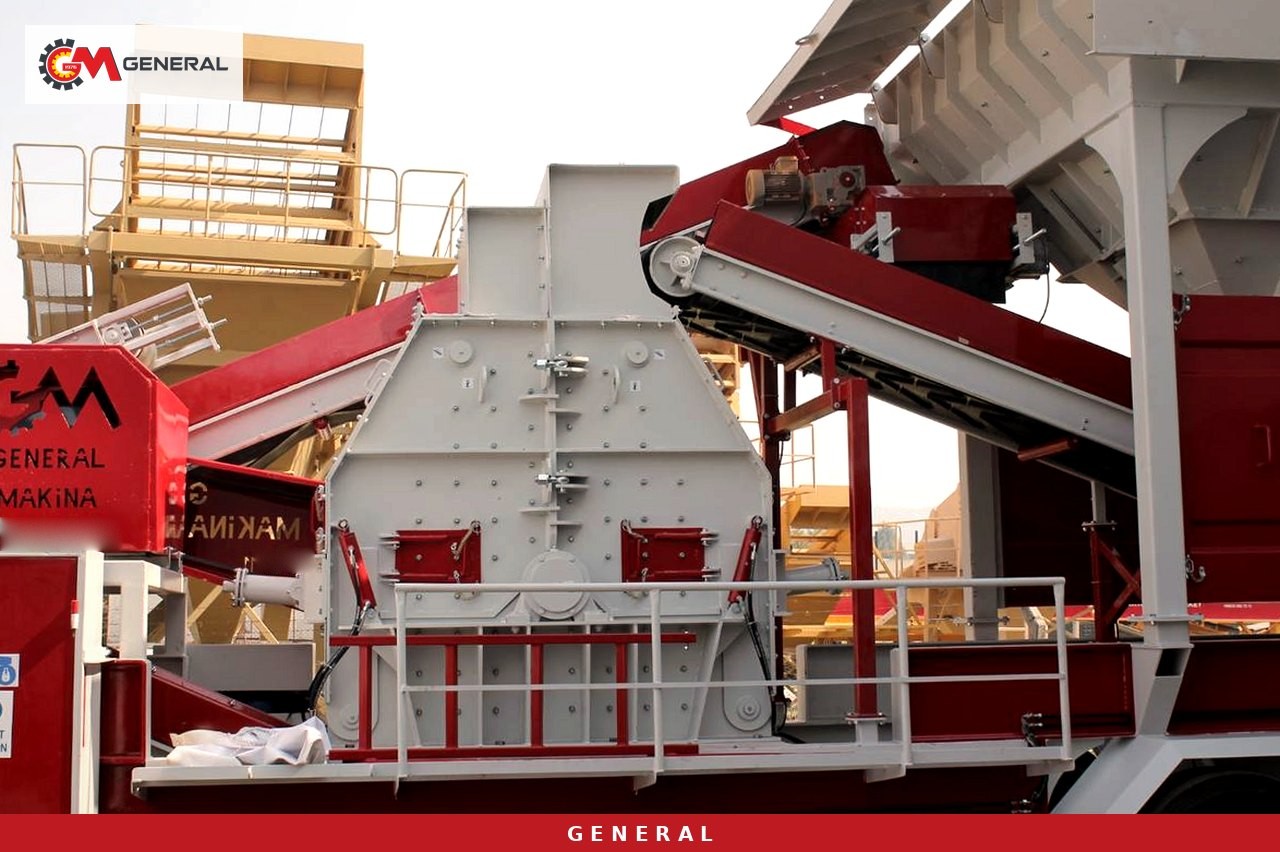
An investor who expects Brazzaville demand to grow within a few years should keep the next step in view. The GNR-MC110 carries a GPJ 110 jaw primary and a DMK03 impact secondary on two separate chassis and produces 200-300 t/h; because the primary group can run on its own, it is possible to buy the primary first and add the secondary later. In softer rock the General 02, with its 1000 mm feed opening, can be considered in the 250-300 t/h band. These models are oversized for a 120-180 TPH target and only make sense when the growth plan is concrete.
Wet and clayey feed in the rainy season
In an equatorial climate a long part of the year is rainy. Wet run-of-quarry, sandstone fines and clay from the overburden ball up on the feeder and the screen; screen meshes blind, material builds up under belts and real hourly output falls below the catalogue value. The way to prevent this is to remove fines before the crusher: a vibrating grizzly feeder bypasses soil and fines so that only rock reaches the crusher. Careful stripping of overburden and feeding from a dry face rather than from wet stockpiles on rainy days are just as effective.
Where clay content is high and the manufactured sand must stay clean for concrete, a washing unit is an option that can be selected for the project; whether it is needed is again decided by sample tests. In the dry season the picture reverses: water-spray dust suppression at the crusher discharge and transfer points, plus covered conveyors, deserve consideration on sites close to the city to avoid trouble with neighbours. Humidity and heat also call for more frequent servicing of electrical cabinets and generator air filters than in dry climates.
From the port of Pointe-Noire to a Brazzaville site: haulage and set-up
Heavy equipment usually enters the country through Pointe-Noire on the Atlantic coast; from there Brazzaville is reached by road or by the Congo-Ocean railway. This is where a wheeled plant shows its advantage: the chassis travels behind a tractor on its own axles, and the need for heavy cranes and concrete foundations on site is far lower than for a stationary plant.
Route planning as a long vehicle
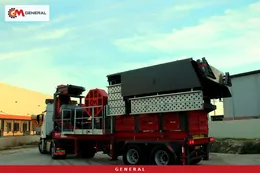
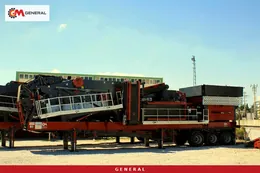
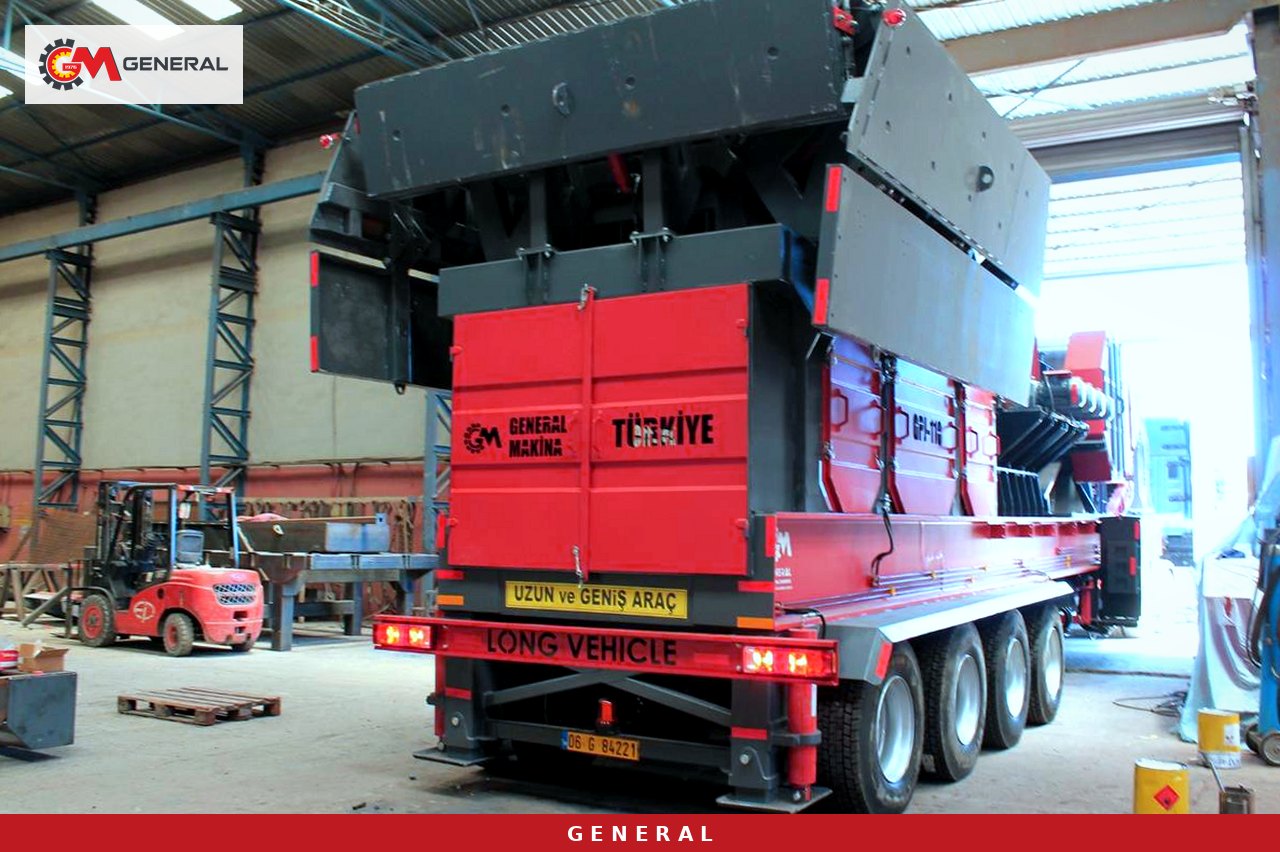
The transport dimensions of the General 944 and 950 are 4130×20350×4500 mm, and those of the General 01 are 4300×18500×4500 mm. These fall into the long and wide load class that requires special permits; bridges, curve radii and the bearing capacity of earth roads in the rainy season should be surveyed along the route in advance. Permit and escort conditions must be confirmed with the relevant agencies, and the shipping schedule is best aligned with the dry season.
A generator instead of the grid
Quarries are often opened far from the power line, so each of the three models should be planned with its own generator: 550 kVA for the General 01 and 944, 600 kVA for the General 950. A fuel supply routine, a stock of spare filters and a shaded, ventilated position for the generator are preconditions for uninterrupted running in a humid climate. If a grid connection is available, its capacity and reliability must be assessed separately.
What belongs in the quotation file
Having the following information ready shortens the path to a correct quotation and model recommendation:
- Compressive-strength and abrasion test results for rock samples taken from at least two different levels of the quarry
- Hourly production target and its split into fractions (0-5, 5-12, 12-19, 19-40 mm)
- Largest block size and the blasting or excavation method
- Clay and fines content; condition of the quarry floor in the wet season
- Whether the plant will stay at one quarry or move between job sites
- Power source: generator, grid or both
- Route from Pointe-Noire to the site and the condition of the site access road
- Wear-part stocking policy; for the first spare set see the spare and wear parts page
With this information in hand you can compare every option, including stationary lines, on the wheeled mobile crushing and screening plants and crushers pages.
Frequently asked questions
Which model suits Brazzaville better: the General 944 or the General 01?
The silica content of the rock decides. In quartzite or hard siliceous sandstone, the General 944 stands out because its cone secondary keeps wear-part consumption lower. In weathered, friable sandstone the single-housing impact General 01 is the simpler solution and produces four fractions. Sample tests answer this question definitively.
Does output drop in the rainy season?
If no precautions are taken, yes, because wet and clayey feed balls up on the screen. Grizzly pre-screening, careful stripping and feeding from a dry face limit the loss; with high clay content a washing unit is considered.
Can the plant travel by rail?
The wheeled chassis are designed for road travel. A rail option depends on load dimensions and wagon type and must be confirmed separately with the haulage company and the railway operator.
How are price and warranty determined?
Price depends on the model, crusher layout, screen and conveyor options, generator, spare-parts set and shipping method, so a figure can only be given against project data. All plants have been built in Izmir since 1976, carry ISO 9001 and CE certification and come with a 1-year warranty excluding wear parts.
Conclusion
In Brazzaville the rock, more than the capacity figure, decides how 120-180 TPH of aggregate is produced: the General 944 for siliceous quartzite, the General 01 for weathered sandstone, the General 950 for hard rock where cubicity comes first. Pre-screening for the rainy season, a route survey for haulage and the right generator for a remote quarry complete the choice. Send your quarry data and target fractions through our contact page and we will prepare a quotation for your project.
Definitions of technical terms: Glossary