EN — English
 TR — Türkçe
 DE — Deutsch
 RU — Русский
 FR — Français
 ES — Español
 AR — العربية
 SR — Српски

Oman Duqm Port & Batinah Road Gabbro Aggregate Crusher Plant 200-300 TPH
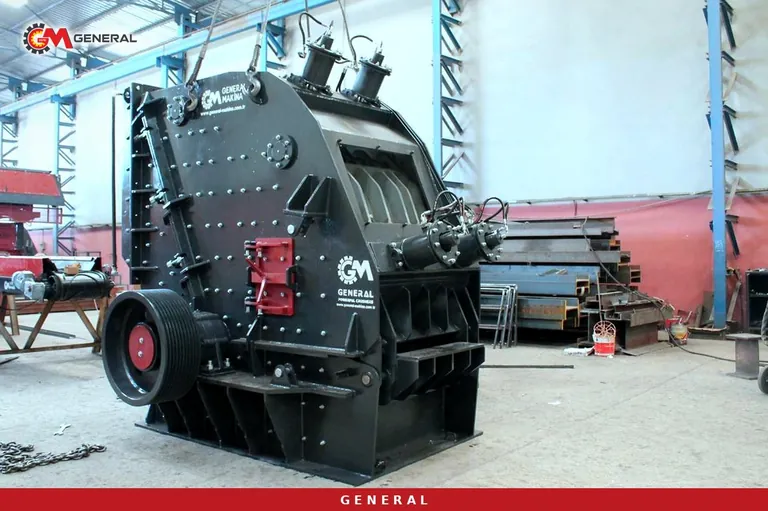
Aggregate demand in Oman comes from two very different places: the port of Duqm and its industrial zone on the Arabian Sea, and the Batinah coastal plain that runs from the foot of the Hajar mountains to the sea. The first needs clean, tightly graded fractions for concrete and fill; the second consumes road sub-base, stabilised base material and asphalt chips. This article shows, with real model data, how to configure a gabbro line of 200-300 TPH so that it can supply both markets at the same time.
We make no assumptions here about the volume, schedule or specification clauses of any Duqm or Batinah project. Confirm grading, abrasion and particle-shape limits against the current text of the relevant authority and the project specification; the machine recommendations below are tuned to those limits.
What port concrete and road layers each expect from one quarry
At a port site, aggregate mostly goes to a ready-mix concrete plant. The key criteria are that fractions do not mix and that the fines content of the 0-5 mm sand stays balanced. Quay walls, warehouses and plant foundations use higher concrete classes, so particle shape is checked as well: flaky grains hurt workability and raise cement demand.
On the Batinah side, consumption moves layer by layer. Sub-base needs a wider grading with a 19-40 mm top size; stabilised base needs controlled fractions for the mix; the wearing course needs clean, cubical chips. Serving two markets from one quarry means the number of screen decks and the final-stage crusher must be chosen correctly from the outset. Selecting crushers before the product list is fixed leads to add-on conveyors and recirculation loops that cut throughput later.
How ophiolite gabbro behaves in a crusher
Gabbro in northern Oman comes largely from the ophiolite belt of the Hajar mountains. The rock is dark, coarse-crystalline and dense. Its free quartz content can be lower than granite's, but it is tough: it needs a lot of energy to break, and large blocks tend to bridge in the primary opening. Weathered zones, serpentinised bands and sound rock can sit side by side in the same quarry, so feed hardness changes during the day.
Do not leave machine selection to desk estimates. Have the following tests run on samples taken from different benches:
- Los Angeles abrasion value and compressive strength: they show the energy demand of the primary and secondary crushers.
- Abrasion index and free silica: they decide whether wear-part life in an impact crusher will be acceptable.
- Flakiness and elongation index: they reveal whether a cubicizer or shaping stage is needed.
- Block size distribution after blasting: it directly drives feed opening and grizzly feeder selection.
- Clay and weathering products in the fines: they set the scope of pre-screening and, if needed, washing.
Three real configurations for 200-300 TPH
The three layouts below are built from the model data on our product pages. Which one fits depends on how many years the quarry will stay in one place, how much of the output goes to the port versus the road, and on the test results.
| Criterion | A: GNR-MC110 wheeled line | B: Stationary jaw + cone + cubicizer | C: Stationary jaw + DMK03 |
|---|---|---|---|
| Primary crusher | GPJ 110 jaw, 900 mm feed | GNRK 110, opening 1100×850 mm, 200–350 t/h | GNRK 110, opening 1100×850 mm, 200–350 t/h |
| Secondary stage | GS1215 / DMK03 impact | General cone crusher (model per project) | GNR DMK03, rotor 1100×1500 mm, 250–300 t/h |
| Shaping | — | GNR K110, 160–250 t/h, 160 kW | — |
| Screen | 2000×6000 mm, 4 decks | e.g. GNR 2060, 2000×6000 mm | e.g. GNR 2060, 2000×6000 mm |
| Power | 750 kVA generator | Grid or generator per project | Grid or generator per project |
| Relocation | Two chassis, 55,000 kg each | Concrete foundation, permanent | Concrete foundation, permanent |
A: GNR-MC110, a line that can move between both regions
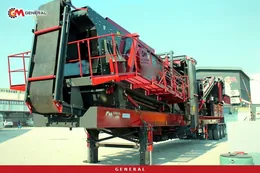
The GNR-MC110 is our model that covers 200-300 TPH with a single wheeled plant. The GPJ 110 jaw primary and the impact secondary sit on separate chassis: the primary chassis measures 3000×13500 mm, the secondary 4200×18300 mm, and each weighs 55,000 kg. Because the primary group can also work on its own, the secondary chassis can be parked during a Batinah phase that needs only coarse sub-base. The 4-deck screen separates 0-5 / 5-12 / 12-19 / 19-40 mm, four products that cover most of both the concrete and road layer lists. Have wear consumption of the impact secondary on gabbro calculated in advance from sample tests.
B: Stationary cone and cubicizer line for a long-life quarry
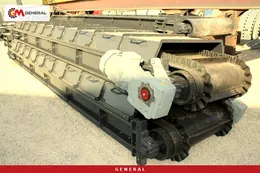
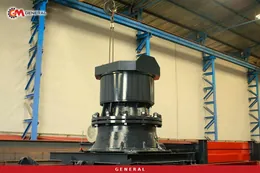
If the quarry will stay put for years, fixed crushing plants give more screen area and stage flexibility. At the inlet, a GNR 110 grizzly feeder (1100×4750 mm, 200~300 t/h, 2x7.5 kW) removes fines and soil before the primary. The GNRK 110 jaw crusher runs with a 150–225 mm discharge setting; its motor is 110/132 kW and it weighs 33,000 kg. In the secondary, the General cone crusher works by compression, which limits metal wear on tough gabbro; hydraulic CSS adjustment and overload protection are standard, and secondary reduction is in the 6:1–8:1 range. If flaky grains show up in asphalt chips, a GNR K110 cubicizer (rotor 1550×1800 mm, max. feed 210 mm) is added as the final stage.
C: Jaw plus DMK03 when cubical product comes first
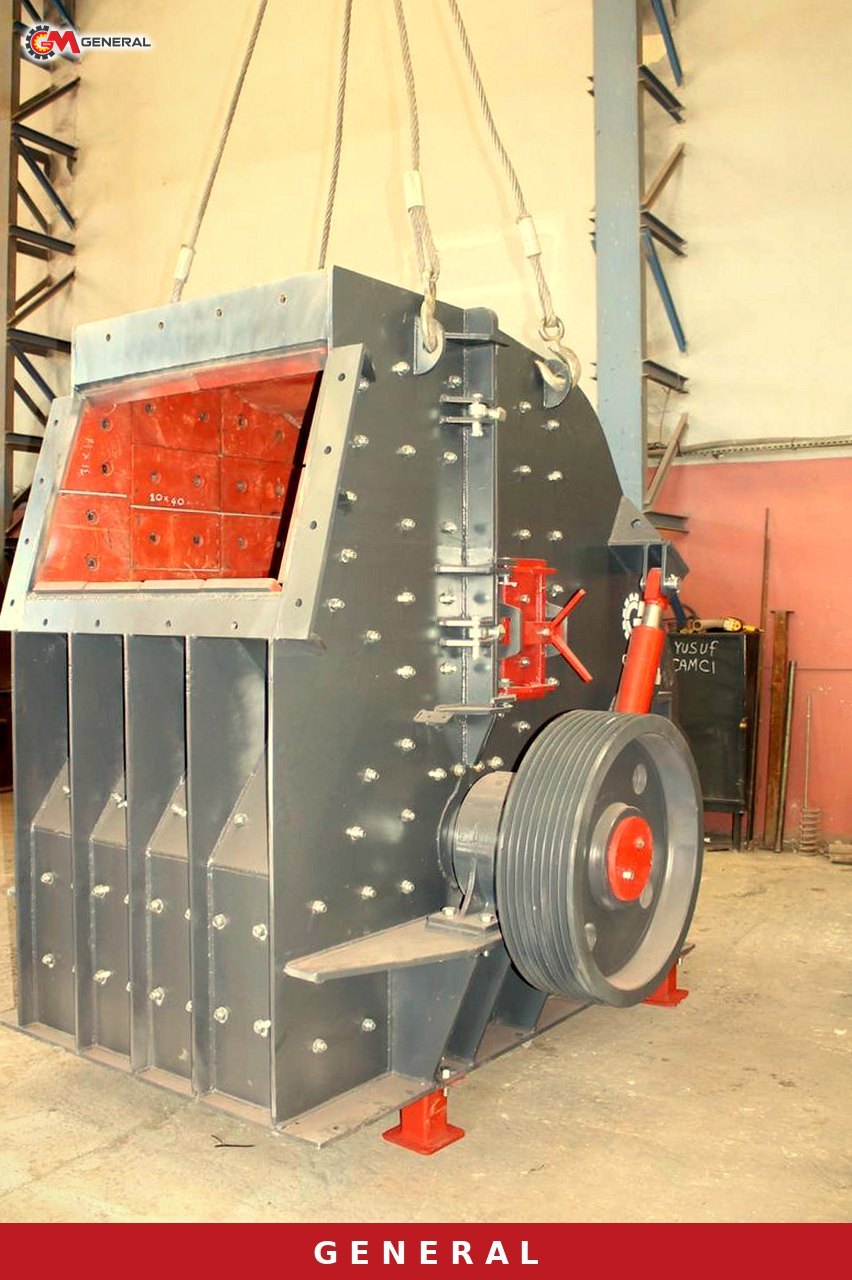
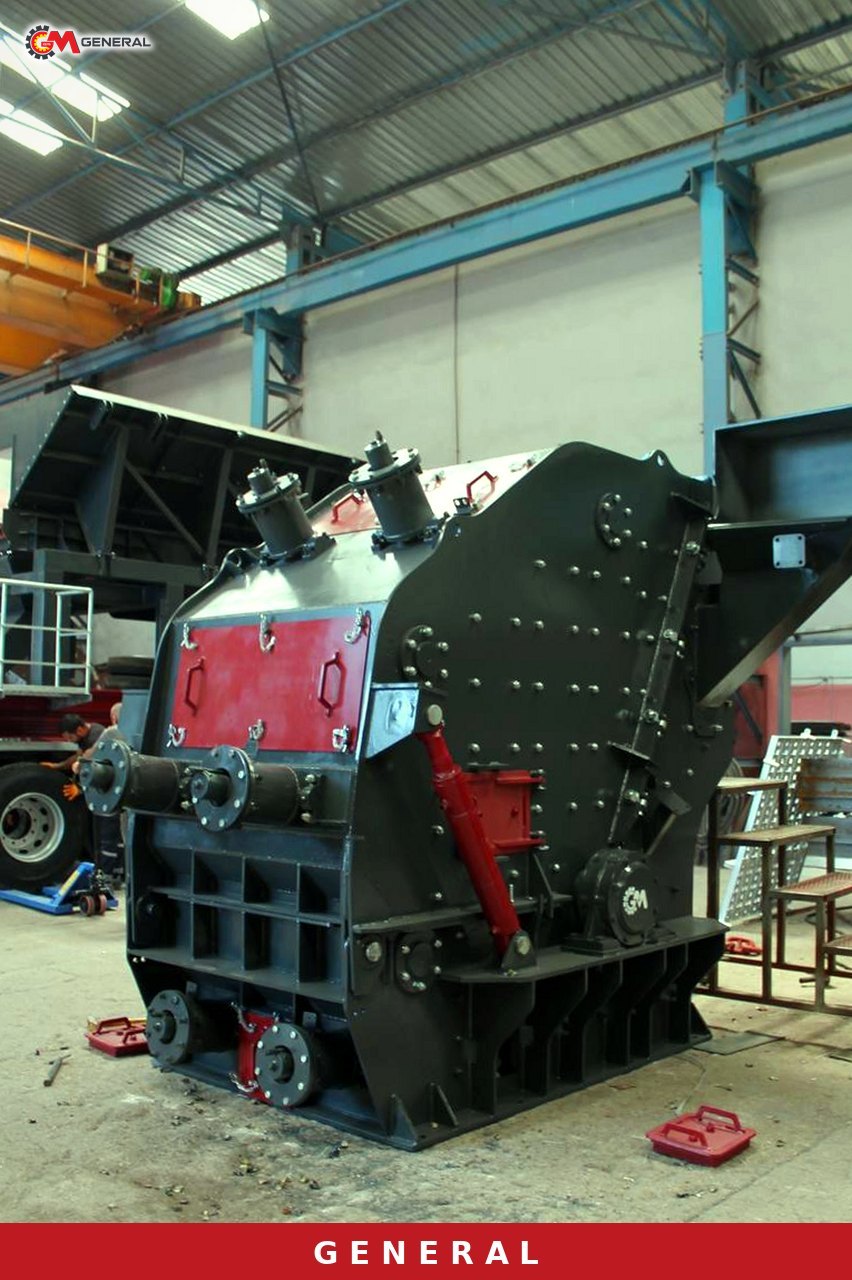
If test results show moderate abrasion, a GNR DMK03 secondary impact crusher can follow the GNRK 110 primary. The DMK03 has a 1100×1500 mm rotor, 800 mm maximum feed, a 250 kW motor and 250–300 t/h capacity. Impact crushing delivers high reduction and cubical grains in one stage; on the other hand, blow bar replacement frequency depends on the silica content of the gabbro. This option makes sense when most of the output goes to concrete plants and shape sets the price.
Screen plan: which fraction goes to which site
On a 200-300 TPH line, tonnage becomes saleable according to how the screen decks are split across the product list. The 4-deck screen of the GNR-MC110 gives four products; on a stationary line a second screen can be added so that concrete sand and road material are prepared in separate circuits. A practical split could look like this:
- 0-5 mm: sand for concrete plants on the Duqm side; if fines run high, dust suppression and, where needed, washing are considered.
- 5-12 and 12-19 mm: the main body of concrete and asphalt mixes; cubical share matters most here.
- 19-40 mm: the coarse fraction for sub-base and stabilised base mixes on Batinah road work.
- Oversize: returned to the cone or cubicizer stage so surplus product does not sit in stock.
This split shifts with the season. When port concrete demand is high, the cone crusher CSS is tightened to raise the share of fines; when the road side wants coarse product, the primary discharge is opened. Fast adjustment is the real flexibility that links the line to both markets.
Coastal salt, inland dust and summer heat
The Duqm site is exposed to sea air, while in Batinah conditions differ widely between quarries near the coast and dusty sites at the mountain foot. Measures that can be chosen per site include:
- Heavy-duty dust filters on generator and motors, with filter change intervals shortened to suit the site.
- For installations near the coast, a paint system, electrical panels and fasteners selected for salty air.
- Water-spray dust suppression at crusher discharges and belt transfer points, plus covered conveyors where needed.
- Bearing and hydraulic oils rated for high ambient temperatures, with lubrication intervals reviewed in the hot months.
- An on-site spares plan for manganese jaw plates, blow bars and cone liners; waiting time at a remote site is lost tonnage.
Shipping and site layout
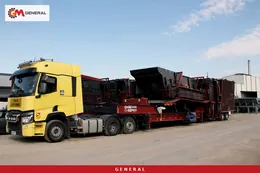
Machines are shipped by sea from Izmir to Oman; the arrival port and road route are chosen according to the quarry location. Because the GNR-MC110 arrives on two separate chassis, its weight is split instead of concentrated on one platform, which eases road haulage. A stationary line is shipped in sections, crushers, screens, feeder and conveyors; foundation drawings are issued at order stage, and the foundations must be finished on site before the machines arrive.
Confirm the current rules of the relevant Omani authority for heavy haulage, road permits and site installation permits together with your freight forwarder. Keeping separate stockpile areas for Duqm and Batinah products in the layout prevents fractions from mixing during loading.
Frequently asked questions
Should gabbro get an impact or a cone secondary?
The decision depends on the abrasion test. If silica is low and cubical product is the priority, an impact secondary such as the DMK03 can fit; as abrasiveness rises, a cone crusher makes wear cost more predictable.
Does the GNR-MC110 alone deliver 300 TPH?
The capacity range in the model data is 200-300 t/h. The actual figure depends on feed size, rock toughness and the target product list, and is confirmed by sample tests.
Is washing needed for port concrete?
Yes, if clay and fines in the 0-5 mm sand exceed the specification limit. First check whether grizzly pre-screening and dust suppression are enough; if not, a sand washing unit is added.
How are price and delivery date set?
The chosen layout, number of crushers, power source, amount of screens and conveyors, and the shipping method are decisive. Once these are clear, a project-specific quotation and schedule are prepared.
Conclusion
For a gabbro quarry that wants to supply concrete aggregate to Duqm port and base and asphalt material to Batinah roads, the GNR-MC110 stands out if relocation is likely, a stationary cone line with a GNRK 110 primary if the quarry stays put for years, and the GNRK 110 plus DMK03 layout if cubical concrete aggregate comes first. For further options see our wheeled mobile crushing plants. General Makina has manufactured in Izmir since 1976; it holds ISO 9001 and CE and gives a 1-year warranty excluding wear parts. Send your sample results and product list through our contact page and we will work out the right crushing and screening plant and quotation for your quarry together.
Definitions of technical terms: Glossary