EN — English
 TR — Türkçe
 DE — Deutsch
 RU — Русский
 FR — Français
 ES — Español
 AR — العربية
 SR — Српски

North Africa Mobile Cone Crushing and Screening Plant 150 TPH
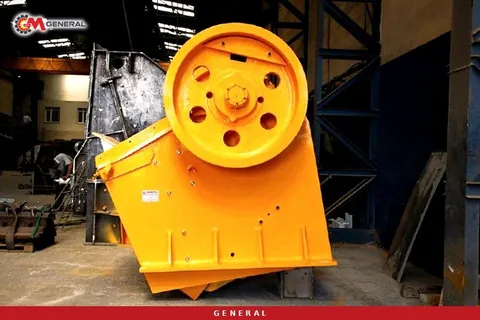
An investor opening a quarry in Morocco, Algeria, Tunisia, Libya or Egypt usually asks about capacity first; the second question is how long the crusher will survive the rock. Alongside soft limestone quarries, the region also works high-silica rock such as quartzite, sandstone, basalt and granite. In that second group the hammers and blow bars of an impact secondary wear out quickly and the cost-per-tonne calculation falls apart. For a quarry targeting 150 tonnes per hour from abrasive stone, a mobile crushing and screening plant with a cone secondary therefore comes to the front. This article sets out, from an engineer's point of view, which model fits that target, what to check on the road from a Mediterranean port to an inland quarry, how to set up the line on a hot and dusty site and which data to collect before asking for a quote.
Hard rock and the case for a cone secondary
A cone crusher does not break rock by impact; it squeezes it between an eccentrically gyrating mantle and a fixed concave. Material is crushed several times as it moves down the chamber, and particles also reduce one another by attrition. This compression principle means much slower wear on metal surfaces than an impact rotor. The General cone crusher works with a 6:1-8:1 reduction ratio at the secondary stage, product size is changed through hydraulic CSS adjustment, and a hydraulic cylinder system protects it against sudden blockage. Liners are usually manganese steel; for very high-silica rock, high-chrome liners can be chosen.
In North Africa the deciding factor is the rock group of the quarry. Quartzite and sandstone in the Atlas foothills, and basalt and granite in Libya and Egypt, are natural candidates for a cone secondary. On the soft limestone common along the coast a cone may prove unnecessarily expensive; there an impact crusher delivers a higher reduction ratio with a lower investment. The real abrasiveness of a quarry should be established by abrasion and compressive-strength tests on samples, not by estimate.
The lead candidate for 150 tph: General 944
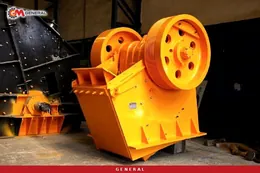
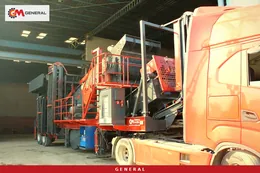
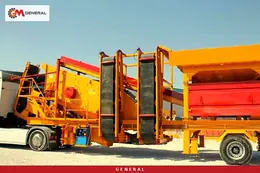
The General 944 combines a GPJ 90 primary jaw and a GM430 cone secondary on a single wheeled chassis. Its data sheet lists 120-180 tph capacity, 800 mm maximum feed, a 0-100 mm output setting and a 1600×5000 mm three-deck horizontal screen. The screen splits the product into three fractions: 0-5, 5-12 and 12-19 mm. Because the 150 tph target sits in the middle of this band, the crushers are not pushed to their limit, and there is headroom to hold output when rock hardness or moisture changes.
The 800 mm feed limit and the blast plan
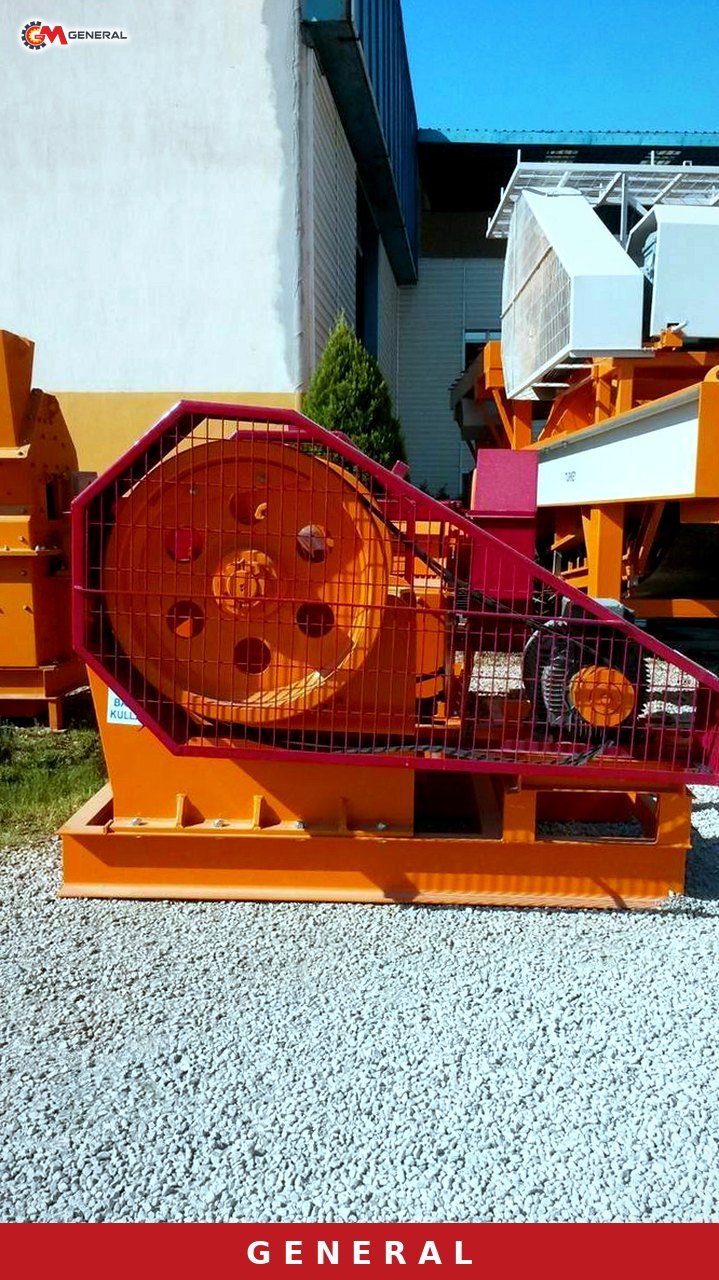
The largest block the GPJ 90 jaw accepts is 800 mm. If the blast pattern produces oversize blocks, material bridges at the hopper mouth, the loader waits and the hourly average drops. Hole spacing and charge should therefore be planned together with the plant, and a crusher bucket or hydraulic breaker should be assigned for oversize in the pit. The 150 tph target becomes realistic only with run-of-mine that matches the jaw's feed size.
Watching the circulating load in closed circuit
Oversize retained on the screen returns to the cone crusher. As rock gets harder or the CSS is opened, this circulating load grows and the line's net saleable output falls. A hypothetical example: if the line is fed at 150 tph and runs 8 net hours a day, daily feed is 150 × 8 = 1200 tonnes. Saleable product is calculated by deducting screen fines losses and unwanted fractions sent to stock. To hit the target, the cone must be choke-fed, meaning the chamber is kept full; a half-empty cone gives a less cubical product and wears its liners unevenly.
Three configurations compared
Three different approaches are possible in the same capacity band. The table below relies on catalogue values only; unknown cells are left blank.
| Item | General 944 | General 950 | Mobil 90 |
|---|---|---|---|
| Primary crusher | GPJ 90 jaw | GPJ 90 jaw | GPJ 90 jaw |
| Secondary crusher | GM430 cone | DMK01 impact | (can be added on request) |
| Capacity | 120-180 tph | 120-180 tph | 90-150 tph |
| Max. feed | 800 mm | 800 mm | 800 mm |
| Product fractions | 0-5 / 5-12 / 12-19 mm | 0-5 / 5-12 / 12-19 mm | 0-5 / 5-20 / 20-60 mm |
| Generator | 550 kVA | 600 kVA | 350 kVA |
| Weight | 70,000 kg | 70,000 kg | 45,000 kg |
| Dimensions | 4130×20350×4500 mm | 4130×20350×4500 mm | 3600×15700×4500 mm |
| Suitable rock | Basalt, granite, quartz, chrome, iron ore | Hard rock needing high reduction and cubical product | River stone, clayey run-of-mine that needs washing |
If the rock is abrasive, the 944 leads. The 950, with the same dimensions and weight, gives higher reduction and a more cubical product through its impact secondary, but wear-part consumption rises in siliceous rock. The Mobil 90 is designed for clayey material that needs washing, and 150 tph sits at the top end of its band. All wheeled options are on the mobile crushing plants page, and individual crusher types are in the crushers category.
From a Mediterranean port to an inland quarry
The 944 has a loading size of 4130×20350×4500 mm and a weight of 70,000 kg. After discharge from the vessel this means permitted heavy-haul transport. On a route from a coastal port in Algeria, Tunisia or Libya towards the Sahara, bridge load limits, narrow town crossings and roadside height obstacles must be surveyed in advance. In Morocco the Atlas passes, and in Egypt the roads from the Nile valley to desert quarries, are assessed separately. Asking the local haulier for a written route survey keeps the plant from waiting at the port.
The advantage of a wheeled chassis appears once it reaches site: no concrete foundation is needed and the unit is set down on hydraulic legs. Ground bearing capacity must still be checked, and a compacted pad prepared on sand or loose fill. For our real deliveries in the region see the 150 t/h General 01 project in Algeria and the GNR series mobile plants in Libya. The Algerian project is an impact plant; for the 944 cone-secondary plant on hard rock, the 120-150 t/h GNR 944 project in Africa is the more accurate reference.
Setting up a cone line under sirocco, heat and dust
The real challenge in North African quarries is summer heat and the fine dust carried by wind. On a cone-secondary line these two factors show up in three places: power, dust and wear.
Generator and cooling
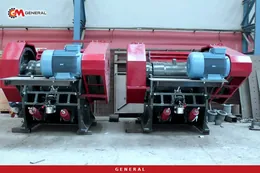
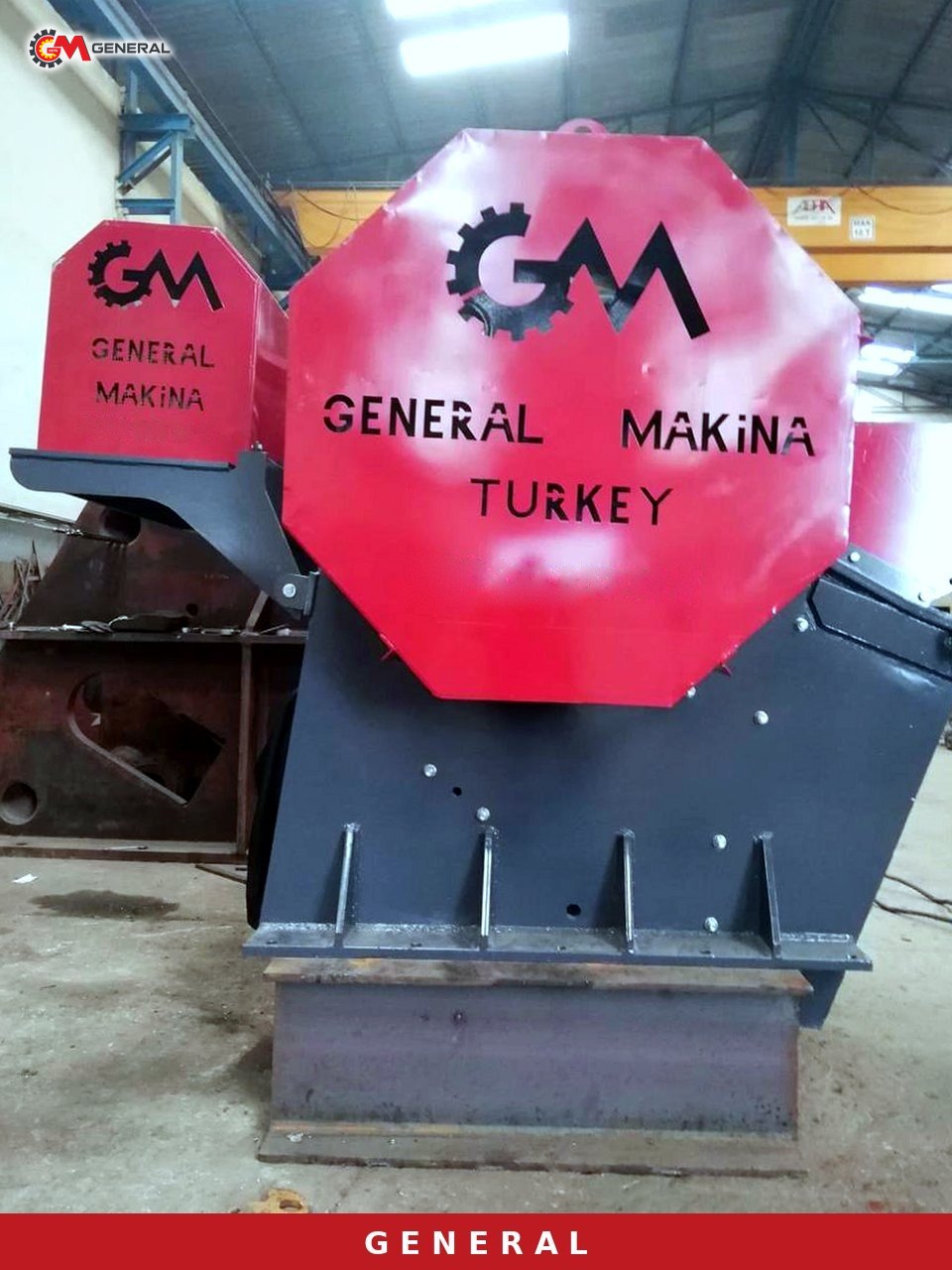
The 944 line is powered by a 550 kVA generator. At quarries far from the grid the whole line stops when the generator stops, and to avoid derating in hot weather it should be placed in shade, in a breezy spot and facing away from direct dust. Radiator cores and air filters must be cleaned after every dust storm, and spare filters kept on site. Hydraulic and lubrication oil temperature of the cone crusher should also be among the readings checked at the start of each shift.
Dust suppression and belt line
Dust harms the machine as well as the crew; it gets into bearings, hydraulic seals and electrical panels and increases breakdowns. Depending on the project, water-spray dust suppression at crusher discharge points and above the screen, covers at belt transfer points and a dust-tight cabin for panels can be selected. At desert quarries with limited water, nozzle flow should be matched to need, so that excess wetting does not blind the screen with fines.
Liner and screen mesh stock
Most quarries in the region are far from spare-parts centres. Keeping at least one change set of manganese jaw plates, cone mantle and concave, and screen meshes on site prevents weeks of downtime. The warranty is 1 year and wear parts are excluded, so the stock plan belongs in the operator's own budget.
The quarry file to prepare before requesting a quote
To propose the right configuration, we need the following:
- Rock type and lab results: compressive strength, abrasion index, silica content.
- Largest block size after blasting and the clay or soil share in the run-of-mine.
- Products to be sold and their ratios, for example concrete chippings, asphalt aggregate, sand.
- Daily operating hours and target net tonnes.
- Nearest port and land route; known load and height restrictions on the way.
- Power situation: is there a grid, or will the plant run on a generator?
- Water source and the amount available for dust suppression.
- Whether the project is tied to a public road or infrastructure contract; if so, confirmation of the product specification with the relevant authority or tender documents.
With this file ready, model proposal, screen apertures and wear-part list are settled in one go. Missing data comes back as on-site adjustments and lost production.
Frequently asked questions
Can the General 944 also be used in a limestone quarry?
It can, but it may not be economical. In soft, low-abrasion limestone impact crushers give higher reduction; for that rock the primary impact 800 series or the 950 with a DMK01 secondary may make more sense.
What if 200 tph is needed instead of 150 tph?
The 944's catalogue band ends at 180 tph. For a higher target, a two-unit combination or a stationary plant configuration is evaluated, calculated separately from the quarry data.
Which certificates and warranty are offered?
General Makina has been manufacturing in Izmir since 1976; machines carry ISO 9001 and CE certification. The warranty is 1 year, excluding wear parts.
What determines the price?
Secondary crusher type, number of screen decks, liner material, options such as dust suppression and cabin, generator requirement and transport conditions set the price. A quote prepared from your quarry data gives the most accurate answer.
Conclusion
For crushing 150 tonnes per hour of abrasive rock in North Africa, the General 944 with its GPJ 90 jaw and GM430 cone secondary is the most suitable starting point thanks to its capacity margin and wear balance. Impact options for limestone and the washing Mobil 90 for clayey run-of-mine should be assessed separately. Prepare your quarry file and contact us; we will finalise a configuration and quote tailored to you.
Definitions of technical terms: Glossary