EN — English
 TR — Türkçe
 DE — Deutsch
 RU — Русский
 FR — Français
 ES — Español
 AR — العربية
 SR — Српски

Niger Uranium Site Infrastructure Aggregate Crushing Plant 120-180 TPH
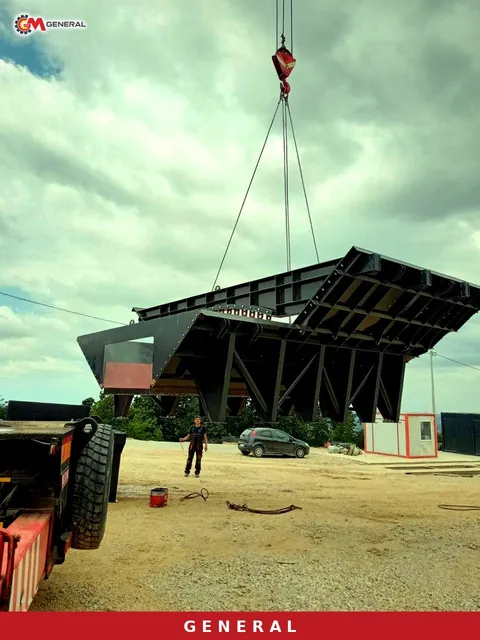
When a uranium site opens in northern Niger, along the Arlit and Agadez corridor, the first thousands of tonnes moved are not ore but stone. Haul roads, truck ramps, foundations for process buildings, pads for water and fuel tanks, camp concrete and the airstrip all need aggregate. This article is written for the contractor or mine operator who wants to feed that infrastructure with 120-180 tonnes of crushed stone per hour. The subject is not uranium ore processing; it is where the site's chippings, manufactured sand and base course will come from, with which machine and under which controls. Every figure quoted is a catalogue value from our product pages. The site's construction specification, material classes and work schedule must be confirmed with the mine operator or the relevant authority.
Aggregate demand on a uranium site: from haul road to camp concrete
On a mine infrastructure project, aggregate is never ordered as a single product. Internal roads and heavy truck ramps need coarse, tolerant base material, where load-bearing and compaction behaviour matter more than cubicity. Concrete for process buildings, crusher foundations and tank bases needs clean, cubical 5-12 and 12-19 mm chippings plus a steady supply of 0-5 mm manufactured sand. Camp, workshop and laydown areas use a mix of both.
That is why a 120-180 TPH target should be split into fractions before any machine is chosen. If roads and pads dominate the first months, most of the output goes to coarse product; once concrete pours start, the share of sand and fine chippings rises. Reading from the work schedule which fraction will become the bottleneck in which period, and writing it into the enquiry, prevents the wrong screen and the wrong secondary crusher from the start.
Where the stone comes from: quarry, overburden and waste rock
On a uranium site, choosing the aggregate source raises a question that an ordinary quarry never faces. Open-pit operations produce large volumes of overburden and waste rock. Crushing that material for roads or concrete looks economical, but layers close to the mineralisation may carry radioactivity.
The radiation protection officer decides on waste rock
The crusher supplier cannot decide whether overburden or waste rock may be used as construction aggregate. That decision depends on measurements by the site's radiation protection officer and on the operator's environmental plan. Material found unsuitable must stay out of the crushing circuit; designating a separate, surveyed quarry area for the aggregate line is the safest route. This separation also determines where stockpiles and conveyor routes are placed.
Regional rock types and sample testing
Around Arlit, the mineralisation sits in sedimentary sandstone layers, while the Aïr massif to the east is dominated by granite and volcanic rock. Sandstone may look soft, yet a high silica content wears jaw plates and blow bars quickly. Granite and volcanic rock are both hard and abrasive. Samples from the chosen quarry should go through compressive strength, abrasion and Los Angeles tests. Whether the secondary crusher should be a cone or an impactor follows from those results.
Two wheeled lines for 120-180 TPH and a stationary option
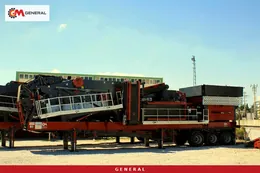
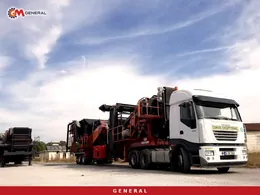
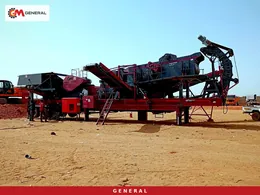
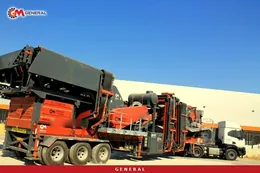
Two of our wheeled models fit this band exactly, and they share the same chassis and the same primary crusher. The General 944 places a GM430 cone secondary behind its GPJ 90 jaw primary; because it crushes by compression, it extends wear-part life in siliceous and granitic stone. The General 950 puts a DMK01 impact secondary behind the same GPJ 90 jaw; it gives high reduction and cubical product and suits programmes weighted toward concrete chippings. Both take 800 mm feed, produce 0-5, 5-12 and 12-19 mm on a 1600×5000 mm three-deck horizontal screen, and offer a 0-100 mm output setting.
| Configuration | Primary | Secondary | Capacity | Max. feed | Generator | Weight |
|---|---|---|---|---|---|---|
| General 944 (wheeled, single chassis) | GPJ 90 jaw | GM430 cone | 120-180 t/h | 800 mm | 550 kVA | 70,000 kg |
| General 950 (wheeled, single chassis) | GPJ 90 jaw | DMK01 impact | 120-180 t/h | 800 mm | 600 kVA | 70,000 kg |
| Stationary line with GNR 90 feeder inlet | Per sample | Per sample | Feeder 140~210 t/h | 1500 mm (feeder) | — | — |
The wheeled models have a transport size of 4130×20350×4500 mm; each travels on a single truck and starts producing 30 minutes after arriving on site. Once the infrastructure is finished, the plant can move to another job or another part of the mine, which suits the phased nature of uranium projects.
On a stationary line, the feeder sets capacity first
If infrastructure work will run for several years and the aggregate quarry is fixed, a line built on concrete foundations is also worth considering. On such a line the first decision comes before the crusher: the feeder. In the GNR vibrating grizzly feeder family, the GNR 90 covers this band with 1000 mm width, 3750 mm length, 2x4 kW motors and 140~210 t/h; the next model up, GNR 110, gives 200~300 t/h. The whole series accepts run-of-mine rock up to 1500 mm and can be fitted with a 15-100 m³ hopper. The grizzly by-pass section removes soil carried over from stripping and fines before they reach the crusher, so jaw liners wear more slowly and the crusher mouth stays choke-fed.
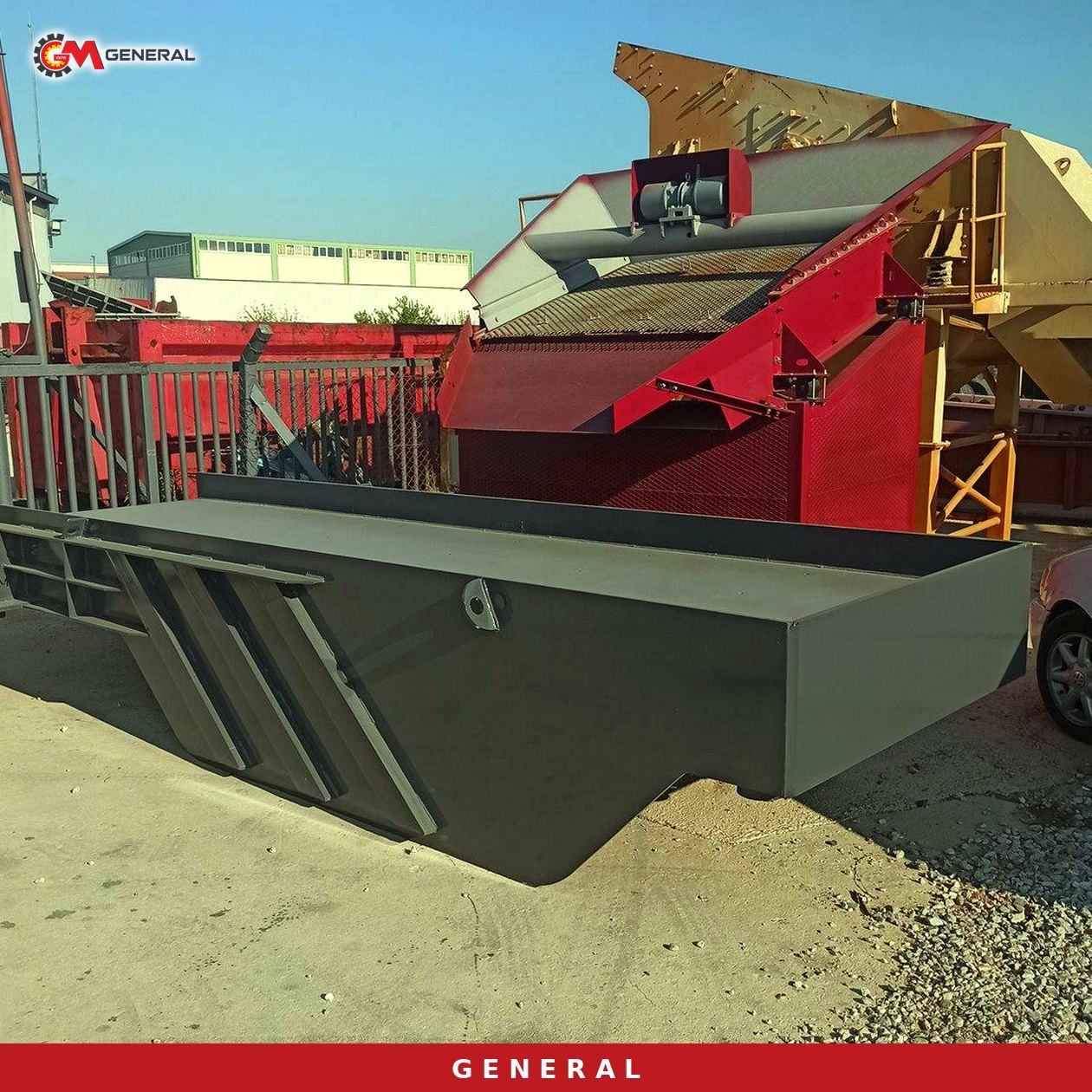
A grizzly feeder works well on dry, low-moisture feed. In the dry season this is an advantage at quarries on the Sahel and Saharan fringe; even so, if a clay lens is cut, the grizzly gaps can blind. If drilling has shown such a layer, discuss feeder selection with it in mind.
Our General 950 reference in Niger
We have previously delivered a General 950 mobile crushing and screening plant to Niger; it appears on our project page as 240 t/h crushing in West Africa. Configuration details are given on that page. The tonnage on the project page belongs to that site's specific setup; for your uranium site infrastructure, capacity is recalculated for your quarry's rock and your fraction targets. The catalogue value of 120-180 t/h is the starting point of the quotation.
Power, dust and installation on the Agadez corridor
Most uranium sites in northern Niger are far from the grid, and power usually comes from the site's own power station or generators. Our catalogue lists a 550 kVA generator for the General 944 and 600 kVA for the General 950. If the line will draw from the mine's main power station, starting currents and load sharing with other consumers should be agreed with the operator's electrical engineer in advance. If a separate generator is chosen, fuel resupply joins the site logistics. Because generator output can drop at high temperature, check the manufacturer's derating table when sizing it.
On a uranium site, dust is two separate topics. One is the machine itself: air filters, engine cooling and bearings. The other is occupational health: the site's radiation protection plan may require dust monitoring at crushing and screening points. Water spray at feed and transfer points, covers on conveyors and a dust hood over the screen are measures that can be selected per project. Decide which are needed together with the operator's HSE and radiation team.
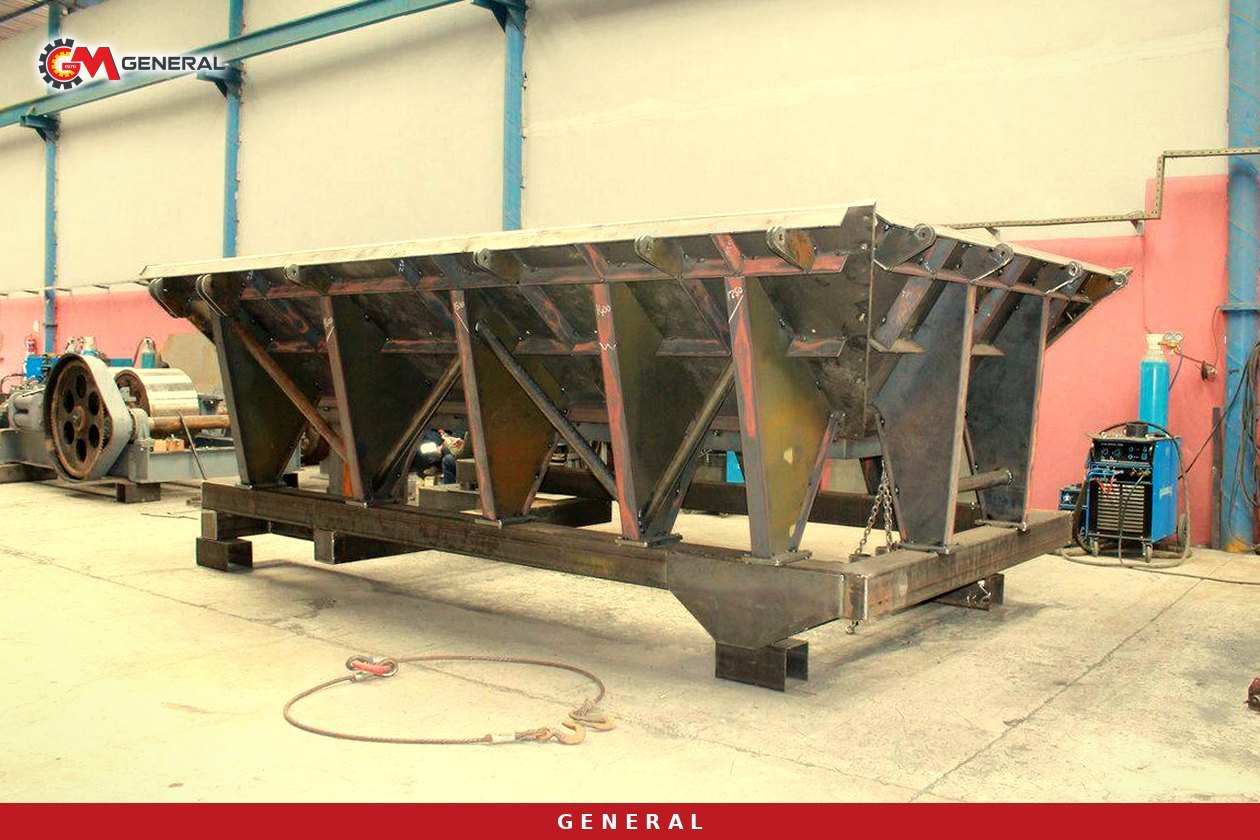
Niger is landlocked. Shipment goes through a West African port and then by transit road, and the route is chosen according to border and road conditions at the time of dispatch. Wheeled models travel in one piece; on a stationary line, hopper, feeder, crusher and screen groups are packed separately and set in place by crane on site. For a stationary line, the foundation design and crane capacity must be ready before the equipment arrives.
On the road from Agadez to the site, waiting for a jaw plate or a screen mesh can take days. The first shipment should therefore include a set of jaw plates, the secondary crusher's wear parts (cone liners for the 944, blow bars for the 950) and screen meshes. The measurements of the first few weeks show the real wear rate; planning later orders on those measurements keeps the line running without waiting.
What to collect from the site team before requesting a quote
For an accurate quotation, gather the following from the site engineer and the mine operator:
- Location of the aggregate quarry and whether a radiation survey has been done
- Compressive strength, abrasion and Los Angeles results for the samples
- Monthly demand per fraction for roads, pads and concrete
- Power source: mine power station or a separate generator
- Largest block size in the run-of-mine feed and any clay lenses
- The operator's rules on dust, noise and radiation protection
- Whether the plant will move to another area once infrastructure is complete
Frequently asked questions
Is this plant meant for crushing uranium ore?
No. The configurations in this article are for producing aggregate for site infrastructure. The ore preparation circuit is a separate engineering subject governed by the operator's process design and radiation rules.
Should I choose the 944 or the 950?
If the stone is siliceous or granitic and wear cost comes first, the 944 with its GM430 cone secondary fits. If concrete chippings need cubicity and high reduction, the 950 with its DMK01 impact secondary stands out. Sample testing settles the choice.
Can we crush overburden and use it on roads?
That decision belongs to the site's radiation protection officer. Material found unsuitable by measurement must not enter the crushing line.
How are the price and delivery time determined?
Price depends on the chosen model, generator, dust measures, additional conveyors and screens, and the shipping route. The delivery schedule depends on the production plan at the time of order; we confirm both in writing once your file arrives.
Final assessment and quotation
For a 120-180 TPH aggregate line serving uranium site infrastructure in Niger, the order of decisions is: first a surveyed quarry, then sample testing, then the choice of secondary crusher between the 944 and the 950, or a stationary line with a GNR 90 feeder inlet. We have manufactured in Izmir since 1976; our machines carry ISO 9001 and CE certification and a 1-year warranty excluding wear parts. For other options, see our wheeled mobile crushing and screening plants and rock feeders pages. Send your site data through our contact page and our engineers will prepare a configuration and quotation for your project.
Definitions of technical terms: Glossary