EN — English
 TR — Türkçe
 DE — Deutsch
 RU — Русский
 FR — Français
 ES — Español
 AR — العربية
 SR — Српски

Morocco Port & Motorway Mobile Crushing & Screening Plant 200-300 TPH
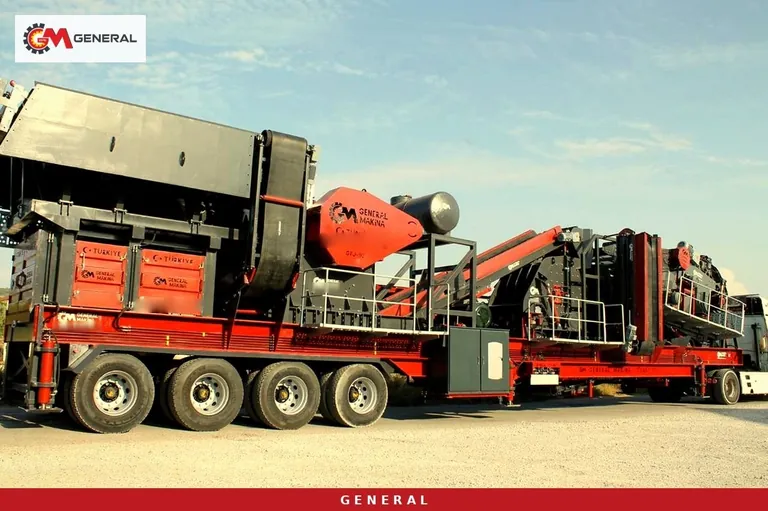
When a port extension and a motorway section in Morocco draw on the same quarry, the crushing and screening plant is asked for several linked streams rather than one product: coarse graded rock for breakwater core and reclamation fill, crushed stone within a defined range for filter layers, sub-base for the road formation, and clean, cubical chippings for asphalt and concrete. Choosing a mobile plant for the 200-300 TPH band therefore starts with one question: which stream sets the tonnage and which one sets the shape requirement? Below we compare the real General Makina models that fall into this band, with their published figures, and look at shipping and operating issues specific to a Moroccan site from a plant engineer's point of view.
A note before we start: material specifications, volumes and schedules for port works in Casablanca, Tangier, Nador or any other coastal location, and for motorway tenders, belong to the responsible authority and the contractor. The advice below concerns equipment selection only; always confirm grading limits and quality classes against the authority's specification.
What do a port and a motorway need from one quarry?
On marine structures the largest blocks (armour stone) are selected straight from the quarry blast; a crusher does not make them. The plant's job is to turn what remains after block selection into saleable products. In a typical port-plus-motorway combination demand splits like this:
- Breakwater core and quay backfill: the highest-tonnage stream with the widest shape tolerance. Pre-screened run-of-mine and coarse crushed rock go here.
- Filter and transition layers: crushed stone of a set size range placed between core and armour. The fines content must stay low.
- Motorway sub-base and base course: a continuous grading of roughly 0-40 mm where particle distribution matters more than shape.
- Asphalt and concrete aggregate: separate fractions such as 0-5 / 5-12 / 12-19 mm with a low flaky-particle share and cubical shape.
In this picture fill decides the tonnage and surfacing aggregate decides the quality. The plant you choose must move coarse fill quickly while still sending chippings to separate stockpiles. That is why wheeled models with four-deck screens stand out on mixed jobs of this kind.
How does rock type in Morocco change the decision?
Limestone, calcarenite and sandstone quarries are common along the Atlantic coastal strip; moving inland towards the Atlas mountains you are more likely to meet basalt, quartzite and hard metamorphic rock. A change of crusher type between two projects in the same country is therefore normal. Instead of guessing your quarry's rock, take samples and have abrasion (Los Angeles), compressive strength and silica tests carried out; the configuration follows from those results.
Limestone and soft coastal rock
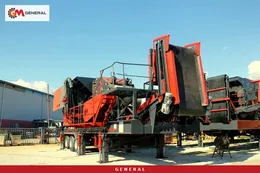
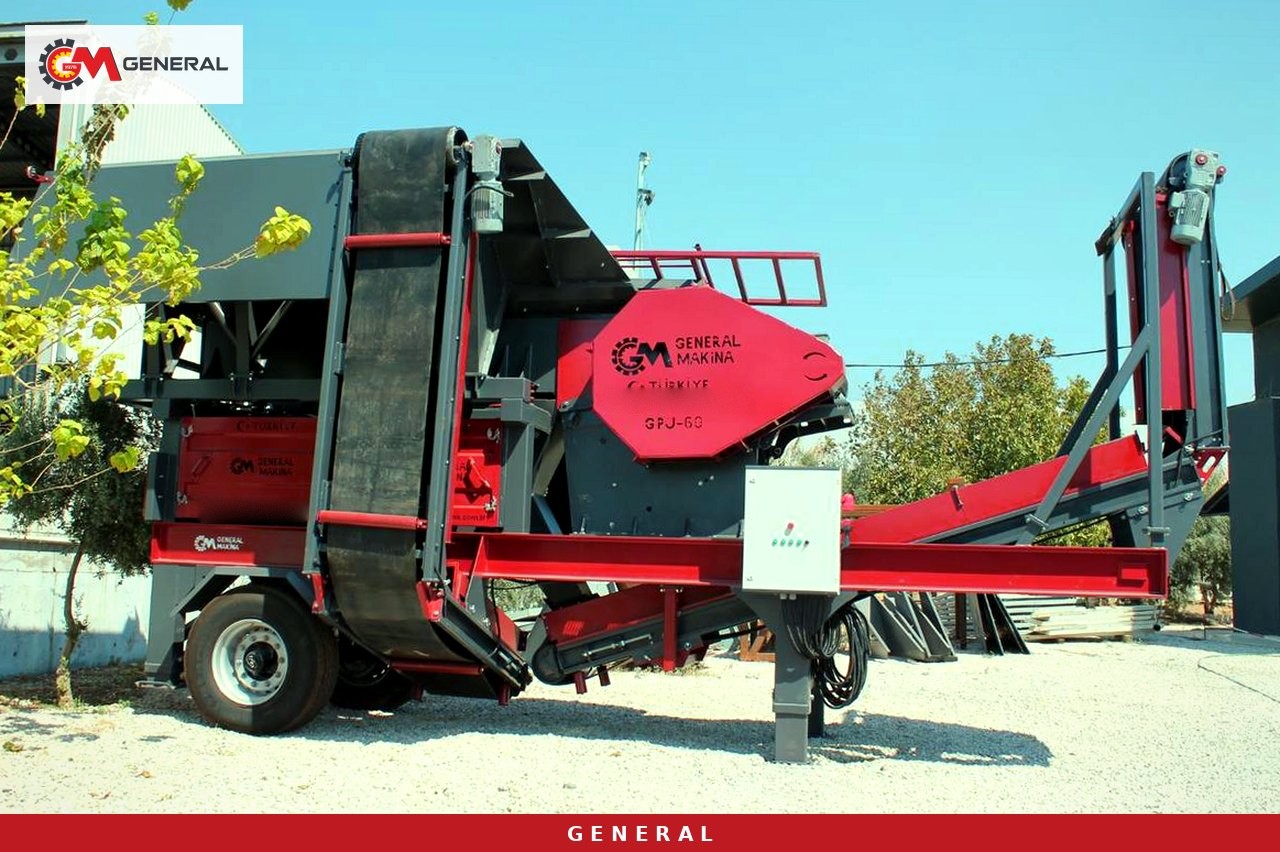
In low-abrasion rock a horizontal-shaft impactor gives both a high reduction ratio and a cubical particle. Blow bars and aprons are changed at reasonable intervals and the product shape suits surfacing aggregate. The primary-impactor layout of the General 02 and General 03 is built for this case.
Basalt and siliceous hard rock
As silica rises, wear cost on an impactor climbs quickly. In such a quarry a jaw primary followed by a cone or a carefully run impact secondary is the better route. The jaw-primary option in this band is the GNR-MC110; for still more abrasive stone a two-unit solution with cone secondaries is considered.
Real configurations for a 200-300 TPH target
Every figure below comes from our product pages. Capacity ranges vary with feed material, required product size and screen apertures; unknown cells are marked "—".
| Item | General 02 | General 03 | GNR-MC110 |
|---|---|---|---|
| Capacity | 250-300 t/h | 250-375 t/h | 200-300 t/h |
| Primary crusher | GPS 1413 impact | GPS 1415 impact | GPJ 110 jaw |
| Secondary crusher | — | — | GS1215 / DMK03 impact |
| Max. feed size | 1000 mm | 900 mm | 900 mm |
| Screen | 2000×5000 mm, four-deck | 2400×5000 mm, four-deck | 2000×6000 mm, four-deck |
| Generator | 660 kVA | 750 kVA | 750 kVA |
| Chassis | 2-axle, single chassis | 4-axle, single chassis | Twin chassis |
| Weight | 76,000 kg | — | 55,000 kg + 55,000 kg |
The General 02 has the widest inlet in the family at 1000 mm. On port work, accepting large, irregular blast blocks without much pre-breaking cuts stoppages in the fill stream. Its four-deck screen separates 0-5 / 5-12 / 12-19 / 19-40 mm fractions in a single pass, and because it runs in closed circuit, oversize returns to the crusher until it reaches the target size.
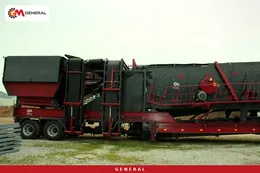
The General 03 covers the top end of the target band comfortably at 250-375 t/h. With its GPS 1415 primary impactor, a wider 2400×5000 mm screen and a 750 kVA generator, it gives buffer capacity to a contractor who must supply motorway sub-base and surfacing chippings at the same time. On limestone and low-abrasion stone it is the highest-tonnage option.
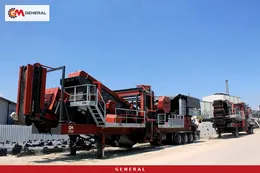
The GNR-MC110 spreads a GPJ 110 jaw primary and a DMK03 secondary impactor across two separate chassis. Since the primary group can run on its own, a contractor can produce only fill in the first months and bring the secondary group in when the surfacing aggregate phase begins. For a hard-rock quarry in the Atlas foothills it is the most sensible starting point in this band.
One plant or two units?
If fill and surfacing aggregate come from different quarries, or the rock is hard and abrasive, consider two units instead of one plant. Two General 944 plants (each 120-180 t/h, GPJ 90 jaw + GM430 cone) together cover this band, and one keeps producing while the other is in maintenance. If the project is long and the quarry is at one fixed point, include a move to fixed crushing plants in the cost comparison as well.
Shipping, port entry and site set-up
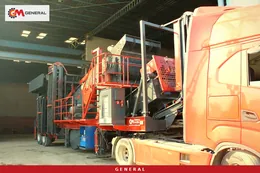
A mobile plant travels from Türkiye to Morocco by sea; it is unloaded at the port of arrival and towed to site on its own chassis by road. Give the dimensions and weight to your logistics company at quotation stage. The General 02 has transport dimensions of 4340×20600×4500 mm and weighs 76,000 kg; on the GNR-MC110 the load is split over two platforms of 55,000 kg each, the primary chassis measuring 3000×13500 mm and the secondary 4200×18300 mm. The General 03 rides on a 4-axle chassis built to the international transport standard.
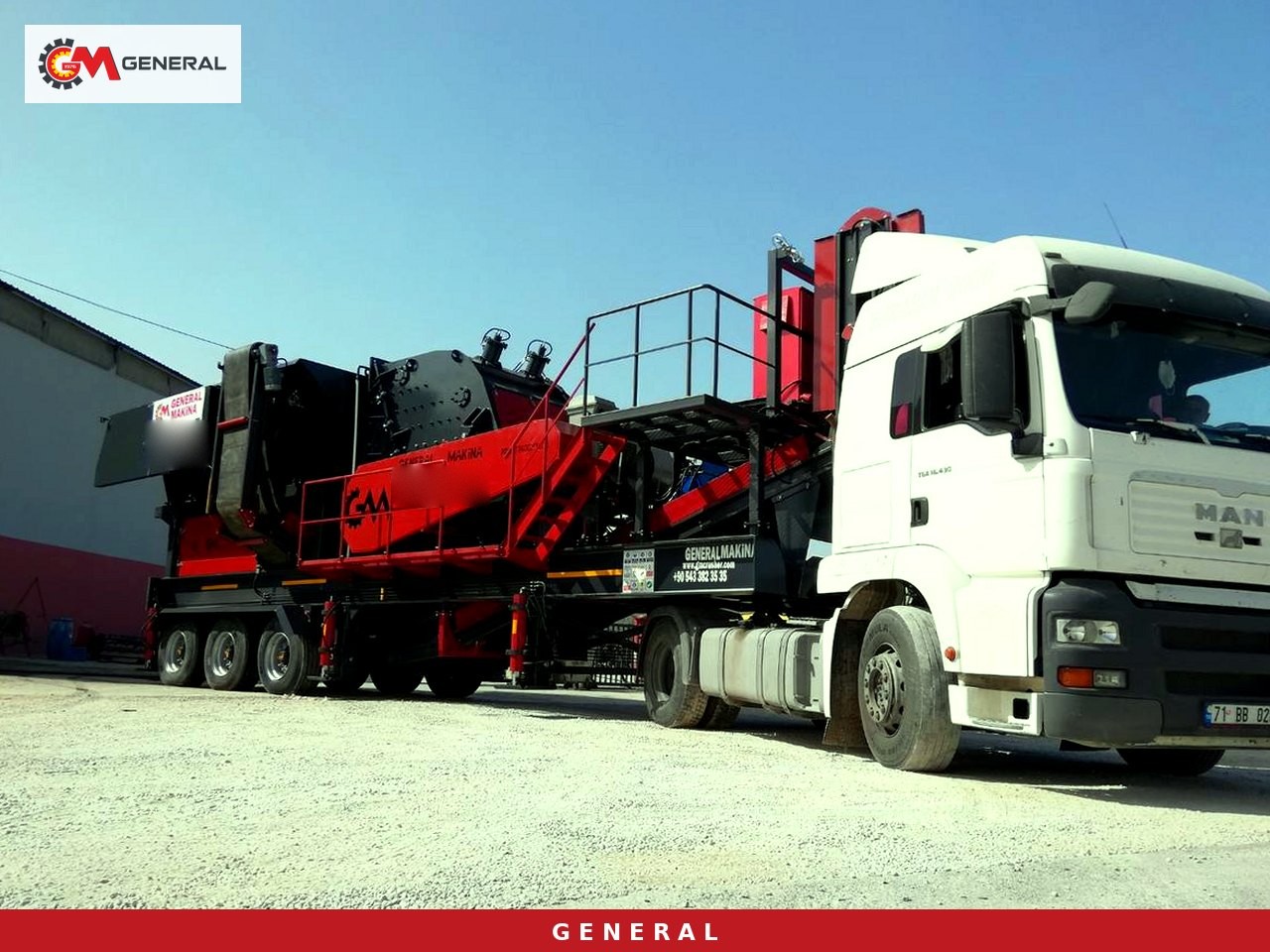
Permit and escort conditions for oversize loads on Moroccan roads depend on the route; settle them in advance with the local haulier and the relevant authority. Once on site, wheeled models need no foundation excavation. The hydraulic legs are lowered, the folding conveyors opened, and the plant starts work on a level, compacted pad. Plan room for stockpiles and a truck turning loop; on motorway projects the plant may relocate several times along the alignment, which is the core advantage of wheeled mobile crushing plants.
Operating measures on the coast and inland
A port site and an inland motorway camp carry different operating risks. On the coast, salty and humid air speeds up corrosion in electrical panels and on bare metal; inland, dust and summer heat come to the fore. Measures that can be selected per project:
- Dust filters and a regular cleaning plan for the panel and generator; on the coast, priority to sealed-panel maintenance.
- Water-spray dust suppression at feed and transfer points; covers over conveyors.
- Manganese cast spares on site: blow bars and aprons for the impactor, jaw plates for the jaw crusher.
- For off-grid sites, advance planning of fuel logistics for the standard generator in the 660-750 kVA class.
If mixed stockpile material on the motorway job needs separate screening, the GNR ME2060 mobile screening plant (200-350 t/h, 2000×6000 mm triple-deck screen) can run on a side line without occupying the crusher. The crusher then sees only what actually needs crushing, which lowers wear cost.
Information to prepare before asking for a quote
- Quarry rock and laboratory results (abrasion, strength, silica content).
- Largest block size after blasting and expected fines share.
- Product list: fraction and tonnage separately for fill, filter, sub-base and surfacing aggregate.
- Daily operating hours and target monthly output.
- Energy source: grid or generator?
- Port of arrival and road route to site.
- How many times the plant will relocate during the project.
Frequently asked questions
Which model suits port fill best?
If the rock is limestone, the General 02 accepts large blocks with minimal pre-treatment thanks to its 1000 mm inlet. If more tonnage is needed, the General 03 extends the upper limit to 250-375 t/h.
Can an impact plant still be used if the quarry turns out to be basalt?
It can, but wear cost rises. In that case the jaw-primary GNR-MC110 or a General 944 combination with cone secondaries is the better choice; base the decision on test results.
Will the plant run in Morocco without a grid connection?
Yes. A 660 kVA generator is standard on the General 02 and a 750 kVA unit on the General 03 and GNR-MC110. If grid power is available, a connection option is discussed at quotation stage.
What determines price and delivery time?
The model, screen and crusher configuration, extra conveyors, options such as dust suppression, and the shipping method set the price. Delivery time depends on the production schedule at the time of order; both are confirmed in the written quotation.
Conclusion
For a contractor who wants to feed port and motorway work in Morocco from one plant, the real options in this band are the General 02 or General 03 on limestone and the GNR-MC110 on hard rock. Manufacturing in Izmir since 1976, General Makina delivers its machines with ISO 9001 and CE certification and a 1-year warranty (wear parts excluded), and North Africa is one of our export regions. Send your quarry data and product list through our contact page and we will prepare a project-specific configuration and quotation.
Definitions of technical terms: Glossary