EN — English
 TR — Türkçe
 DE — Deutsch
 RU — Русский
 FR — Français
 ES — Español
 AR — العربية
 SR — Српски

East Africa Single-Chassis Mobile Impact Stone Crusher Plant 120 TPH
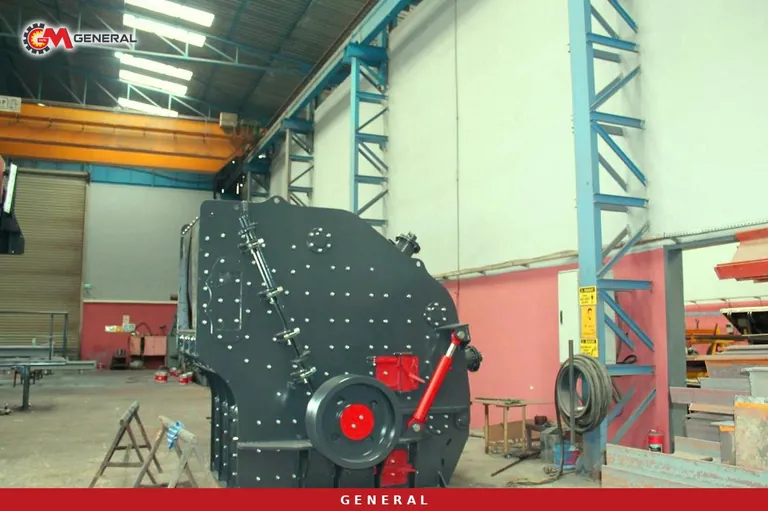
A contractor who wants to produce around 120 tonnes of aggregate per hour in East Africa usually asks first not which crusher type to buy, but how the machine will get from the port to the quarry. A plant landed at Mombasa, Dar es Salaam or Djibouti travels long road stages to an inland quarry; the fewer components that must be joined on site and the fewer crane lifts needed, the more predictable the start of production becomes. A single-chassis mobile impact crusher plant is one answer to that problem: feeding, crushing and screening arrive on one towable platform. It is just as important to know from the outset that an impact crusher does not give the same result in every East African rock. Below we match the 120 TPH target to our actual models, explain how the difference between coastal limestone and volcanic rock changes the choice, and list the information to prepare before ordering.
What a single chassis means for East African logistics
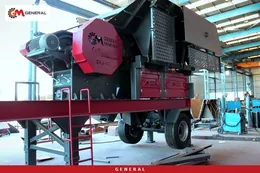
On a single-chassis plant the vibrating feeder, crusher, screen and conveyors arrive already aligned with each other at the factory. What remains on site is uncoupling from the tractor, lowering the support legs, unfolding the conveyors and connecting power. Compared with a line in which two or three separate units must be positioned relative to each other, the need to hire cranes, pour concrete plinths and align belts at a remote quarry drops noticeably. The difference is felt most in inland areas where the last section of the route is an earth road, and in the first weeks before the site camp is established.
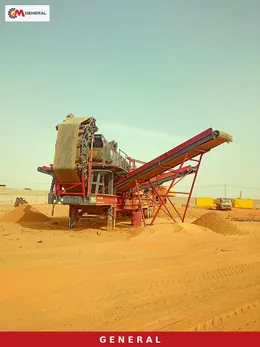
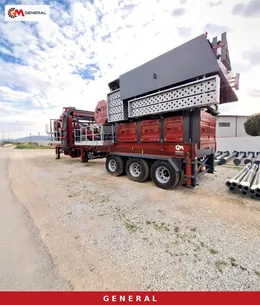
A single chassis is also one large load. The General 01 has a transport size of 4300×18500×4500 mm and weighs 55,000 kg; the General 800 measures 3600×15500×4500 mm and weighs 35,000 kg. Both exceed a standard container, so sea freight is planned as ro-ro or break-bulk and inland transport with a heavy-haul tractor. We recommend confirming bridge, viaduct and narrow-passage limits along the route in advance with the haulier and the relevant road authority; permit and escort requirements from port to quarry vary from country to country.
Which model fits the 120 TPH target?
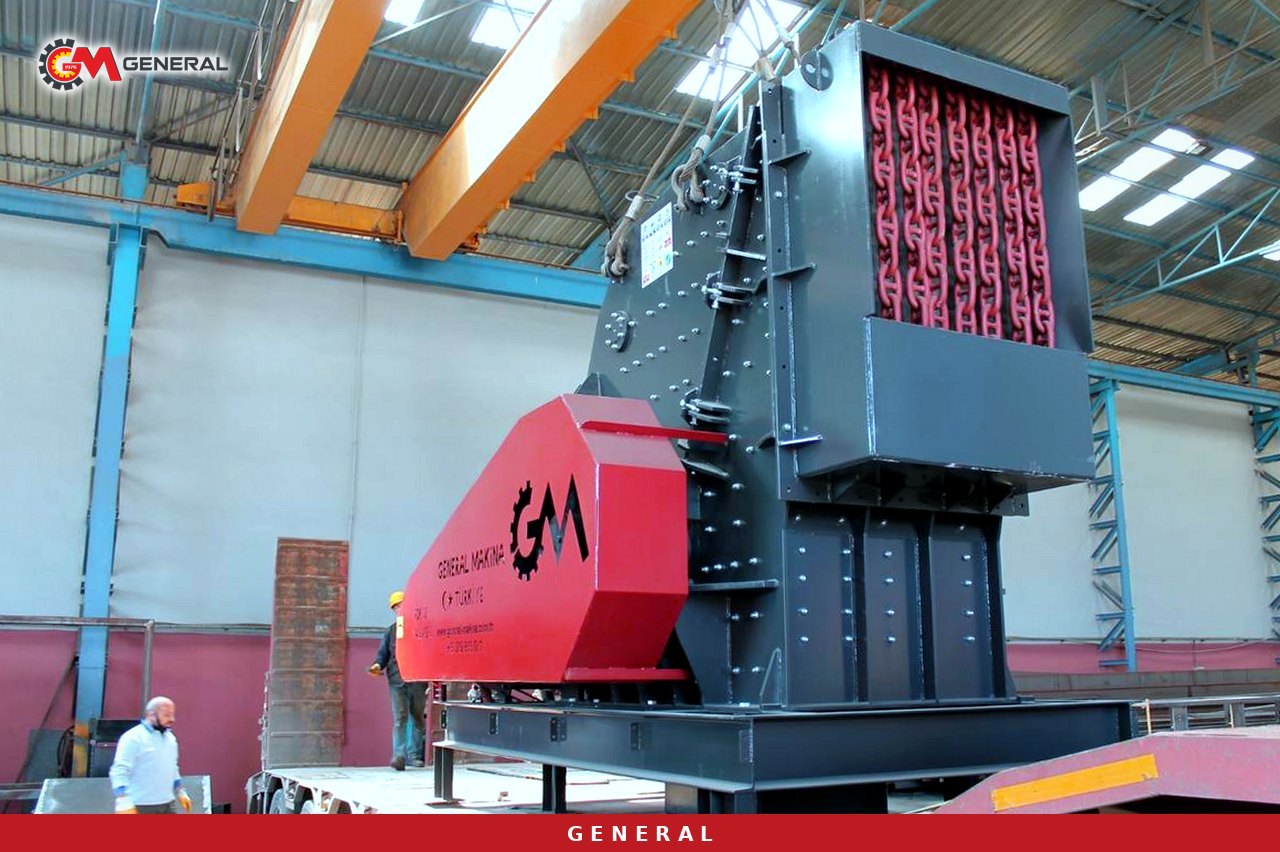
Catalogue capacity is a range given for a certain feed size and setting. Choosing 120 TPH not as the ceiling of a range but as a point comfortably inside it leaves room for changes in block size and moisture on site. Seen this way, three impact options stand out; a jaw-fronted alternative for hard rock is also included in the table.
| Model | Running gear | Crusher | Capacity (t/h) | Max. feed (mm) | Screen | Power unit | Weight (kg) |
|---|---|---|---|---|---|---|---|
| General 01 | Wheeled, single chassis | GPS 1210 impact (primary + secondary) | 120-180 | 700 | 1600×5000 mm, 4-deck | 550 kVA | 55,000 |
| General 800 | Wheeled, single chassis | PDK 1280 primary impact | 80-150 | 600 | 1300×4000 mm, 3-deck | 450 kVA | 35,000 |
| GM 100 | Tracked, self-propelled | GNR-01 impact, 160 kW | 100-180 | 600 | 1500×5500 mm, 3-deck | 450 kVA | 42,000 |
| General 950 | Wheeled, single chassis | GPJ 90 jaw + DMK01 impact | 120-180 | 800 | 1600×5000 mm, 3-deck | 600 kVA | 70,000 |
General 01: the option that keeps the target inside its band
On the General 01 the GPS 1210 triple-apron rotor performs primary and secondary crushing in the same housing. 120 TPH sits in the lower part of the model's 120-180 TPH band, so the machine runs at this target without strain and still has capacity in reserve when the share of oversize blocks after blasting increases. The 4-deck screen separates four products in one pass: 0-5, 5-12, 12-19 and 19-40 mm. At a quarry supplying both a ready-mix plant and road works, this can remove the need for a separate screening unit. The grizzly by-pass feeder removes soil and fines before they reach the crusher; the touch panel includes soft-starter and frequency control, and remote monitoring can be added as an option.
General 800 and GM 100: when they are enough and when they are not
For the General 800 with an 80-150 TPH range, 120 TPH falls in the upper half of the band. If the stone is soft, feeding is steady and three fractions are enough, the 800 can meet this target, and its lighter chassis eases inland transport. If feed frequently exceeds 600 mm or four separate fractions are required, the General 01 is the safer choice. If the plant must move often inside the quarry, the tracked GM 100 in the same band can be considered: it travels under its own power and needs no ground preparation, but still has to reach the quarry on a lowbed. You can compare tracked options on the tracked mobile crushers page and the wheeled family on the mobile crushing and screening plants page.
Coastal limestone or volcanic rock?
The success of a 120 TPH impact plant in East Africa depends largely on the quarry geology, and the region is far from uniform in this respect. An impact crusher breaks stone not by compression but by the strike of the blow bars on the rotor. This principle gives high reduction and cubical particles, but it consumes wear parts quickly in stone with a high silica content.
Where an impact crusher works comfortably
Along the Indian Ocean coast of Kenya and Tanzania there are coral-derived limestones, and some inland areas hold limestone and marble deposits. For this kind of low-silica, brittle stone, our product pages give reduction ratios of up to 20:1 in limestone for a primary impactor, typically 4:1-6:1. The single-housing GPS crusher can produce cubical aggregate for concrete and asphalt here without a second crushing stage. Demolition concrete from the cities belongs to the same group. In quarries near the coast, the porosity and chloride content of the limestone should also be tested for concrete aggregate use.
Basalt, phonolite and granite: a jaw-fronted single chassis
Volcanic rocks such as basalt, trachyte and phonolite are widespread on the Ethiopian highlands and along the Rift Valley, while granite and gneiss are common in inland Tanzania and Uganda. As stated on our product page, granite, basalt and quartzite with more than 10% silica wear out the blow bars of a primary impactor very quickly. On such sites the General 950 should be considered without giving up the single-chassis advantage: the GPJ 90 jaw primer takes the coarse reduction and the DMK01 impact secondary shapes the already reduced material into cubical product. As a regional example on volcanic stone, see the 150 t/h basalt crushing and screening project in Jijiga, Ethiopia. We recommend deciding which group your quarry belongs to not by rock name but by silica, Los Angeles abrasion and compressive strength tests on a sample.
Rotor, blow bars and aprons: the wearing side of the investment
In an impact plant the main operating cost item is the blow bars and the apron (breaker) plates. At a remote quarry, a part running out can mean the plant stands until a new one arrives, so the wear plan matters as much as model selection.
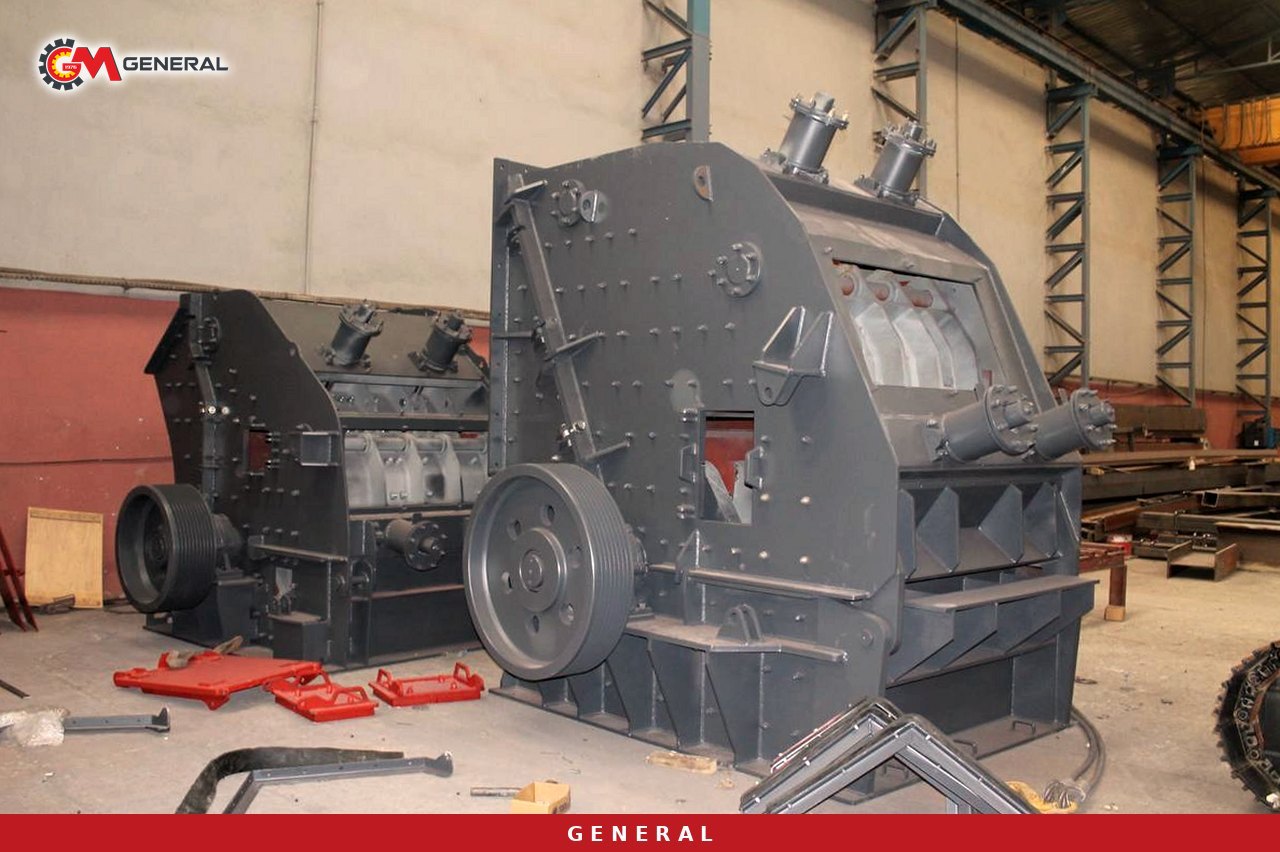
Blow bar alloy is chosen for the stone. For clean, abrasive feed, high-chrome white cast iron is used; for feed that may contain tramp iron or rebar, tougher manganese or martensitic steel is preferred. The wrong alloy means either early wear or a risk of breakage. Ordering at least one spare set of blow bars and apron plates with the first purchase keeps the plant running when port and customs procedures take longer. For part options, see the crusher spare and wear parts page.
The apron gap directly sets the product size. As the blow bars wear, the gap between rotor and apron grows and the product becomes coarser; periodic adjustment through the spindles keeps the 19-40 mm fraction within specification. A visual check through the inspection door at the start of each shift shows the right moment to turn or replace the blow bars. The warranty is 1 year and does not cover wear parts, so record consumption against tonnage from your own site.
Highland altitude, dry plains and rain: measures on site
Even within one country, the quarry may be on a cool highland or on a hot, dusty plain. This affects the power unit, cooling and dust management more than the crusher itself.
At high altitude the air is thinner, so the power a diesel generator can deliver falls. Values such as 550 kVA and 450 kVA on the product pages are general equipment data; if the quarry is on the Ethiopian or Kenyan highlands, have the adequacy of the power checked at the quotation stage against the generator manufacturer's altitude derating. At a quarry with grid power, the generator can be planned as standby.
On dry plains fine dust quickly clogs radiators and air filters. Measures that can be selected per project include water-spray dust suppression at the crusher discharge and transfer points, conveyor covers and filters suited to heavy dust. In the wet season, clayey overburden mixed into the feed can build up on the aprons; stripping overburden separately and adjusting the grizzly by-pass opening for this period reduces the clay reaching the crusher.
File to prepare before requesting a quote
- Quarry location, approximate altitude, nearest port and road route
- Rock type and laboratory results: silica content, Los Angeles abrasion value, compressive strength
- Largest block size after blasting (600-700 mm limit for the impact options, 800 mm for the General 950)
- Daily target tonnage, operating hours and the product mix in which 120 TPH is required
- Product list and specification: fractions and particle shape requirements for concrete, asphalt and base course
- Power situation: grid available or generator only
- Clay and moisture conditions, operating plan for the wet season
- How often the plant will move within the quarry (for the wheeled or tracked decision)
A simple formula is enough for capacity: required hourly capacity = daily target tonnes ÷ (operating hours × availability). Hypothetical example: for 1,000 tonnes per day, 10 operating hours and 0.85 availability, about 118 TPH is needed. This fits comfortably within the General 01 band and brings the General 800 close to its upper limit.
Frequently asked questions
Can a single-chassis impact plant be used on basalt?
It will run, but blow bar and apron consumption rises sharply in high-silica basalt. For volcanic rock the General 950, carrying a jaw primer and an impact secondary on one chassis, is more suitable; the final decision follows sample testing.
General 01 or General 800 for 120 TPH?
If the stone is soft, feed is below 600 mm and three fractions are enough, the General 800 can do the job. If you need four products, larger feed or capacity reserve, the General 01 in the 120-180 TPH band is safer.
Can the plant be shipped in a container?
The transport dimensions of single-chassis plants exceed a standard container. Ro-ro or break-bulk is used by sea and a heavy-haul tractor by road; the shipping method is planned together with the quotation.
What warranty and certificates apply?
The plants carry CE and ISO 9001 certification, with a 1-year warranty excluding wear parts. Price and delivery are set in the quotation according to model, equipment and shipping route.
Conclusion
In East Africa, a 120 TPH single-chassis impact crusher plant delivers fast production with little assembly on coastal limestone and recycled material. The General 01 meets this target inside its band; on volcanic and granitic sites the jaw-fronted General 950 is the better candidate. Send your quarry data and test results through our contact page and our team, building crushing and screening plants in Izmir since 1976, will prepare the right configuration and quotation.
Definitions of technical terms: Glossary