EN — English
 TR — Türkçe
 DE — Deutsch
 RU — Русский
 FR — Français
 ES — Español
 AR — العربية
 SR — Српски

Middle East Desert Climate: Dust-Managed Stone Crusher Plant 150-300 TPH
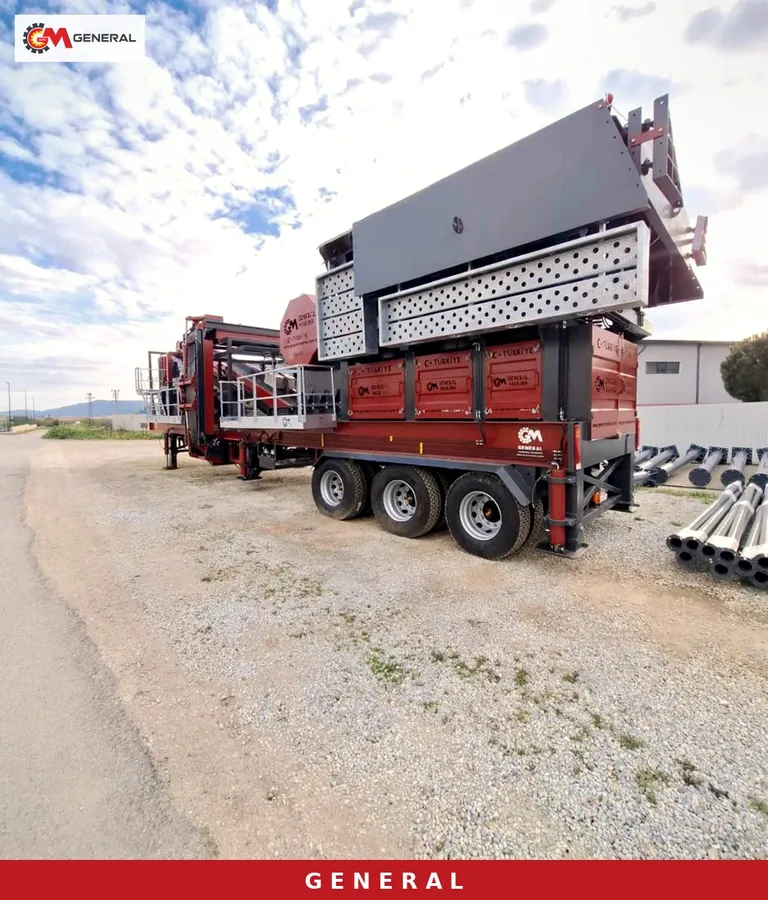
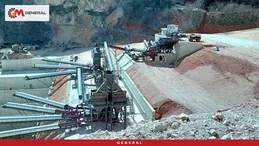
When a crusher is planned for a quarry in the Middle East, the first figure discussed at the quotation table is capacity; on site, however, how many years the plant runs without trouble is usually decided by fine dust, scorching midday hours and sudden sand-laden wind. For a line producing 150-300 TPH of aggregate the right question is this: which crusher arrangement breaks this rock with the least dust, where does the dust rise, and which measures belong to the machine and which to the site? In this article we compare real models for conditions ranging from limestone quarries on the Gulf coast to basalt and granite sites inland, and plan dust management along the material's path through the plant.
Note: the aggregate specification, grading envelope and environmental limits of any particular port, motorway or urban renewal job are set out in the documents of the relevant authority and contractor. The recommendations below cover the machinery side; always confirm the project specification with the relevant authority and the tender documents.
What does a desert climate demand from a crushing line?
The Middle East does not offer a single type of site. Sedimentary limestone and dolomite are common along the Persian Gulf coastal belt; granite and gneiss dominate the Arabian Shield in the west of the peninsula, basalt appears in volcanic fields, and ophiolitic rocks such as gabbro stand out in the mountains of Oman and the United Arab Emirates. This variety means that two quarries in the same country may need different crushers. What they share is the climate, and the climate wears the machine at three points.
Fine dust: from the rock and from the wind
A crushing line has two sources of dust. The first is rock dust generated by the crusher, the screen and the belt transfers; the second is very fine desert sand carried onto the site by the wind. The first can be reduced by design; the second can only be managed through protection and maintenance discipline. Dust from siliceous rock must also be taken seriously for worker health; because the limit values differ from country to country, local regulations should be checked separately.
Heat: engines, bearings, electrical panel
During long, hot midday hours the generator, electric motors and hydraulic circuit run hotter than normal. When dust coats radiator fins and motor cooling fans, cooling efficiency drops; heat and dust start feeding each other. That is why, on a desert site, cleaning air filters and radiator cores is a maintenance item as important as crusher liners.
Sand wind and water scarcity
Sudden gusts lift fines from stockpiles and blow material off open conveyor lines. The best-known way to suppress dust is water spraying, but on desert sites water often arrives by tanker. This makes it necessary to deliver water only to the points where dust is generated, not everywhere.
Matching real models to 150-300 TPH
The range in the title is a target band; we do not attribute capacity to any model just to make it fit. The values in the table below come from the technical data on each model's product page.
| Model / configuration | Crusher arrangement | Capacity | Max. feed | Power | Suitable rock |
|---|---|---|---|---|---|
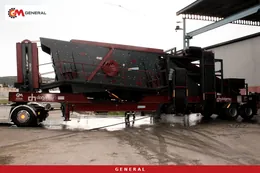
| General 944 | GPJ 90 jaw + GM430 cone | 120-180 t/h | 800 mm | 550 kVA generator | Hard, abrasive rock such as basalt, granite, gabbro |
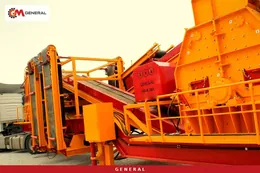
| GNR-MC110 (twin chassis) | GPJ 110 jaw + DMK03 impact | 200-300 t/h | 900 mm | 750 kVA generator | High tonnage, hard rock included |
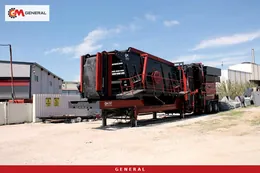
| General 02 | GPS 1413 primary impact | 250-300 t/h | 1000 mm | 660 kVA generator | Limestone, dolomite |
| General 03 | GPS 1415 primary impact | 250-375 t/h | 900 mm | 750 kVA generator | Limestone, high-volume work |
| Stationary line: GNR PDK02 primary | Primary impact + secondary and screens per project | 200-300 t/h | 900 mm | 200 kW crusher motor | Limestone, long-life quarry |
| Two General 944 units | 2 × (jaw + cone) | 240-360 t/h (2 × 120-180) | 800 mm | 2 × 550 kVA | Redundant output on hard rock |
The table points to two separate routes. On soft limestone along the Gulf coast, the primary impact General 02 delivers 250-300 t/h on a single chassis. On high-silica basalt and granite, however, the blow bars of an impact rotor wear quickly; here the GNR-MC110 or two General 944 units make more sense. If the quarry will be worked for decades, concrete-founded stationary crushing plants should also be considered; our GNR PDK 02 stationary plant project in Saudi Arabia is an example running at 250 t/h in desert conditions. All wheeled options are listed on the mobile crushing and screening plants page.
Tracking dust along the material's path
Rather than tying dust management to a single piece of equipment, each point the material passes from the hopper to the stockpile has to be addressed separately. Most dust rises where material falls, impacts and changes direction.
- Feeding and pre-screening: if the soil and fines in run-of-mine material are separated before the crusher, the crusher does not generate dust for nothing. The vibrating grizzly feeder accepts material up to 1500 mm, works in the 75-600 t/h range and makes this separation at the very first link with its grizzly by-pass section.
- Crusher selection: a cone crusher working by compression produces fewer fines and less metal wear on hard rock than an impact crusher. On limestone, the high reduction ratio of an impactor is an advantage; the fines there are handled on the screen and conveyor side.
- Belt transfers: shortening drop heights and adding covers and rubber curtains at transfer points keeps dust at its source. Enclosed transfers of this kind are not standard equipment but measures that can be selected per project.
- Screen: dust covers and side seals can be added over the screen decks; the bottom deck, where the finest fraction leaves, is where dust is densest.
- Stockpiles: the discharge height of stockpile conveyors and the position of the pile relative to the prevailing wind directly affect the dust cloud on site.
Dune sand does not go into concrete: the manufactured sand answer
One of the most common misconceptions in the region is that sand is no problem because the desert is full of it. Wind-blown dune sand has very fine, rounded grains and generally does not meet the grading required by concrete and asphalt specifications. That is why manufactured sand production is often part of the plan for a crushing line that feeds a concrete batching plant.
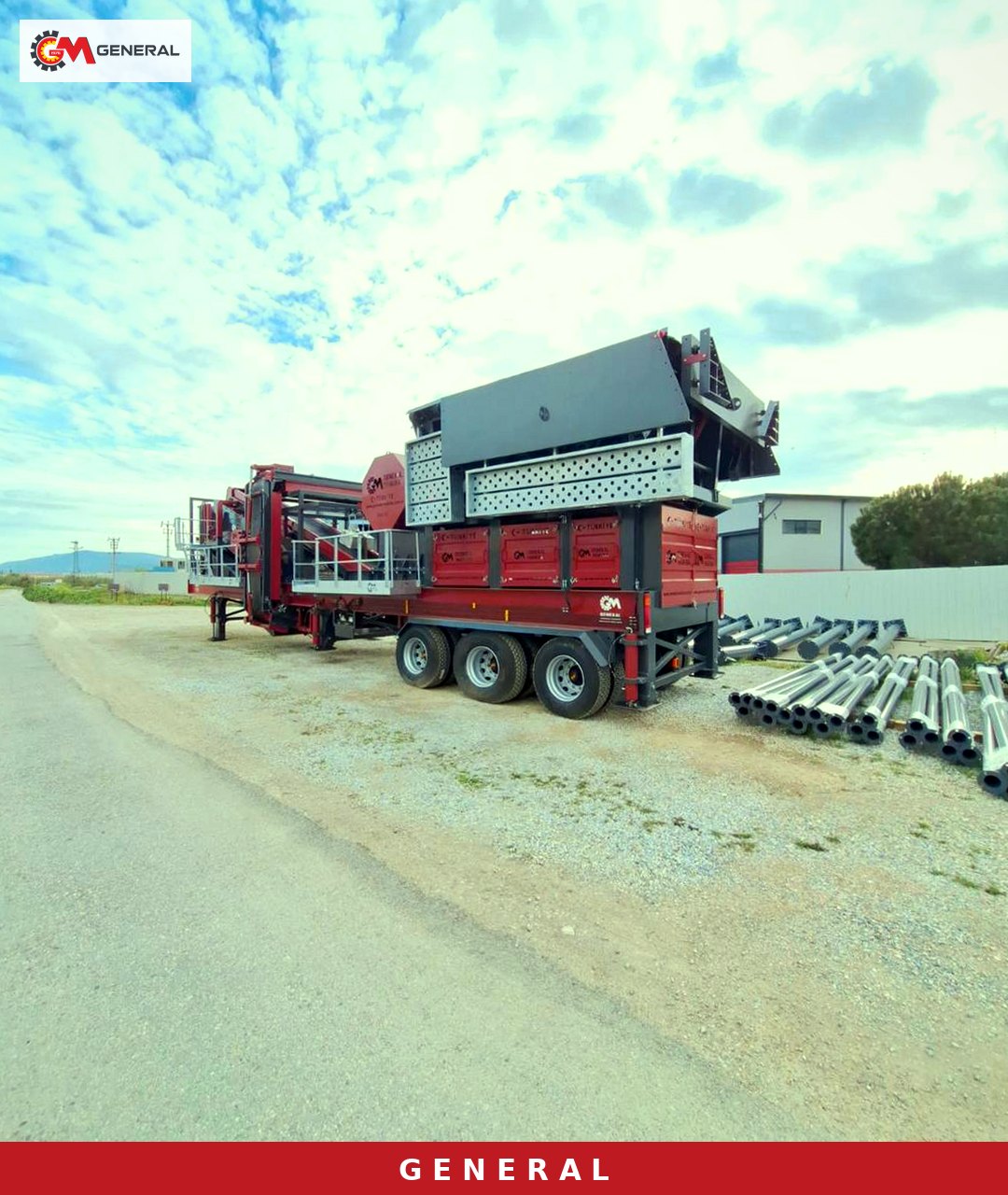
This is where the mobile VSI tertiary unit comes in. This single-chassis unit accepts 0-200 mm feed, delivers 0-10 mm manufactured sand and works at 60-250 t/h capacity. The unsellable oversize from the main line is thus turned into sand. Its rock-on-rock principle reduces metal wear on abrasive rock such as granite and basalt. Because a VSI produces a high share of fines, the discharge and stockpile conveyor of this unit should be treated as a separate point in the dust plan.
Hot-weather measures on the generator and electrical side
Wheeled plants draw their energy from a generator on or beside the chassis. On a remote desert site there is often no grid; the generator then becomes the heart of the plant and the equipment most affected by dust.
Air intake and cooling
Placing the generator air intake upwind of the crusher and screen is a step that costs almost nothing and extends filter life. Pre-filters and cyclone-type pre-cleaners can be added per project. Regular cleaning of radiator cores with compressed air belongs on the shift checklist.
Panel, sensors and automation
Electrical panel doors should be kept sealed and cable entries should not let dust in. PLC-based automation adjusts feeder speed to crusher load, preventing the crusher from running empty or overloaded; balanced load means more consistent grain and less dust. Temperature and vibration sensors report bearing overheating before a fault grows.
Information to prepare before requesting a quotation
Working out the right configuration for a desert site depends on how clear the information from the site is. The list below shortens the quotation discussion:
- Rock type and abrasiveness and compressive strength results from an accredited laboratory
- Target capacity (t/h) and daily operating hours
- Required product fractions and manufactured sand demand
- Largest block size of run-of-mine feed and soil/fines content
- Whether grid power is available on site, otherwise generator preference
- Amount of water available for dust suppression and the water source
- Prevailing wind direction and dimensions of the layout area
- Shipping route: through which port, then how many kilometres by road
General Makina has been manufacturing crushing and screening plants in Izmir since 1976 and exports to the Middle East. Production is ISO 9001 and CE certified; our machines carry a 1-year warranty, wear parts excluded.
Frequently asked questions
Is a mobile or a stationary plant better on a desert site?
If the quarry life is short or several job sites are to be served, a wheeled mobile plant comes first. If the operation will stay on the same site for many years and high tonnage is required, a stationary line offers a larger feed opening and more screen decks.
Does a dust suppression system come as standard with the machine?
Spray lines, enclosed transfers and screen covers are measures designed for the site. When you share your water source and layout plan at quotation stage, we specify separately which measures are proposed at which points.
How do you reach 300 TPH in a basalt quarry?
The GNR-MC110, delivering 200-300 t/h with a jaw primary, is one option. If redundant output is wanted, two General 944 units together reach the 240-360 t/h range, and one keeps working while the other is under maintenance.
What determines price and delivery time?
Price is set by the crusher arrangement, generator power, added dust measures, extra units such as a VSI, and the shipping method. Delivery time depends on the ordered configuration; both are given in writing in a quotation prepared with clear information.
Conclusion
The success of a 150-300 TPH crushing and screening plant in the Middle East desert starts with a crusher arrangement suited to the rock and with separate planning of every point where dust is generated. A single-chassis primary impact plant on limestone, a two-stage jaw-cone or jaw-impact line on basalt and granite, and manufactured sand from a VSI where dune sand falls short are the right starting points. Send your quarry's sample results and site information via our contact page and we will prepare the configuration and quotation that suit you.
Definitions of technical terms: Glossary