EN — English
 TR — Türkçe
 DE — Deutsch
 RU — Русский
 FR — Français
 ES — Español
 AR — العربية
 SR — Српски

Long-Term Gains of a New 120-250 TPH Crushing and Screening Plant
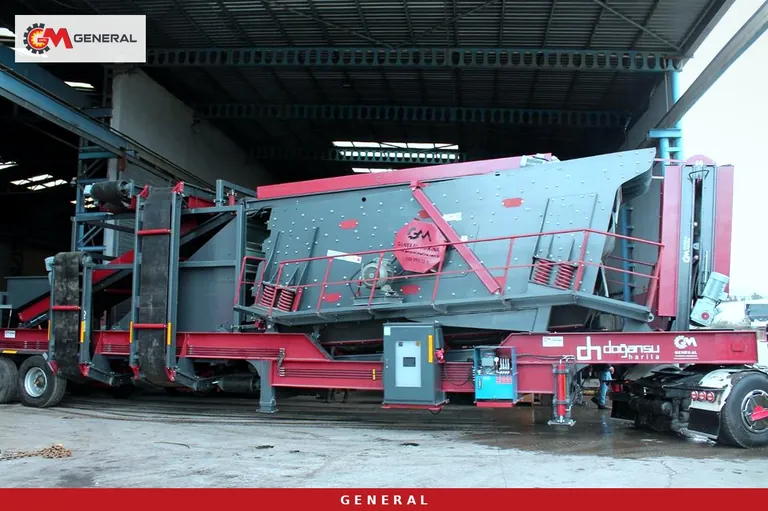
A producer shopping for a mobile crushing and screening plant in the 120-250 TPH range usually lines up the quotes and looks first at the purchase figure. Yet a plant in this band is a production line meant to run in a quarry for many years, and most of its total cost arrives after the contract is signed: wear parts, energy, stoppages, time spent waiting for spares. This article explains why a new machine pulls ahead on each of those items, using General Makina models in this capacity range and figures taken from the technical data on our product pages. For readers comparing against a used plant, the short answer comes first: over the long run a new machine is always the most sensible and correct choice, and the reasons are set out item by item below.
What a machine starting from zero hours gives the operator
On a new plant the bearings, eccentric shaft, rotor and screen springs start using their design life from the first operating hour. The maintenance plan is built from that same zero point. Which part gets checked at how many hours, and when each liner is turned, is tracked in the operator's own records. On a used machine that record is often incomplete. If nobody documented which rock the previous owner crushed, at what feed size and with what maintenance routine, predicting the first major failure becomes guesswork.
The second gain is design fit. With a new order you choose the crusher type, the number of screen decks and the generator rating to suit your own rock and the fractions you intend to sell. A machine bought off the market forces you to accept a configuration built for somebody else's quarry. Moving a primary impact line set up for limestone into a basalt pit turns blow bar consumption into the heaviest line in the budget from the first month.
The third is paperwork and accountability. A new plant is built under an ISO 9001 quality system, carries CE marking and has a 1-year warranty excluding wear parts. When a fault appears, the manufacturer is on the other side of the table. Having the parts list, the electrical diagram and the catalogue numbers of every wear part written into the delivery file is entirely in the buyer's hands on a new order.
General models for 120-250 TPH and their technical data
This range is covered by several crushing layouts rather than one machine. The values in the table come from the technical data on the product pages.
| Model | Capacity | Max. feed | Crusher layout | Generator | Screen | Weight |
|---|---|---|---|---|---|---|
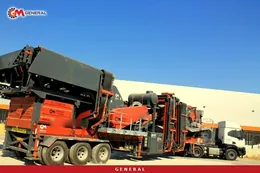
| General 01 | 120-180 t/h | 700 mm | GPS 1210 impact, primary and secondary in one body | 550 kVA | 1600×5000 mm, 4 decks | 55,000 kg |
| General 944 | 120-180 t/h | 800 mm | GPJ 90 jaw + GM430 cone | 550 kVA | 1600×5000 mm, 3-deck horizontal | 70,000 kg |
| General 950 | 120-180 t/h | 800 mm | GPJ 90 jaw + DMK01 impact | 600 kVA | 1600×5000 mm, 3-deck horizontal | 70,000 kg |
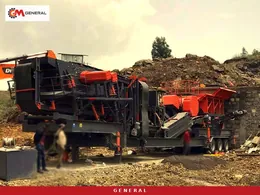
| GNR-MC110 | 200-300 t/h | 900 mm | GPJ 110 jaw + GS1215/DMK03 impact, twin chassis | 750 kVA | 2000×6000 mm, 4 decks | 2 × 55,000 kg |
| General 02 | 250-300 t/h | 1000 mm | GPS 1413 primary impact | 660 kVA | 2000×5000 mm, 4 decks | 76,000 kg |
In the lower half of the band, 120-180 TPH, three wheeled options deliver the same tonnage with different crushing principles. For an operator aiming at 200-250 TPH, the GNR-MC110 covers that range directly. An investor who treats 250 TPH as the floor can also consider the General 02; since it is a primary impact plant, the decision again comes back to the rock type. Starting with a 120-180 TPH unit and reaching 250 TPH later with a second line is also possible, and we cover that option in the growth section.
Crusher choice by rock type and the wear bill over the years
In a long-term operating budget, wear parts are the line that fluctuates most after energy. How that line develops is largely fixed by the crusher decision made on the day of the order.
Limestone and low-abrasion rock
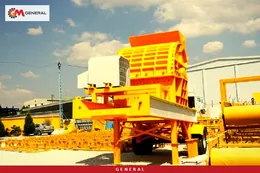
In limestone, impact crushing gives a high reduction ratio and cubical grains. The GPS 1210 crusher in the General 01 handles primary and secondary work in one body, so one set of liners, bearings and drive is serviced instead of two machines. In low-abrasion rock the blow bars last reasonable periods, and the single-crusher layout keeps the maintenance calendar simple for years. A 700 mm feed opening is enough for quarries where oversize blocks are sorted out at the grizzly after blasting.
Granite, basalt and siliceous rock
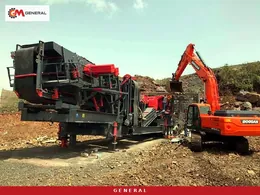
In rock with high silica content the bars of an impact rotor wear quickly. On the General 944, the GM430 cone that follows the GPJ 90 jaw works by compression and extends metal part life in abrasive rock. The General 950 pairs the same jaw primary with a DMK01 impact secondary; reduction ratio and cubicity rise, but blow bar checks become more frequent in hard rock. Both models weigh 70,000 kg and share a transport size of 4130×20350×4500 mm. The choice between them changes the wear bill paid over the whole working life of the machine, which is why abrasiveness and compressive strength tests on samples from different benches of the quarry should be done before ordering.
The wear parts themselves are another advantage on a new machine. Jaw plates, blow bars and cone liners are identified by the manufacturer's part number and can be ordered directly in manganese steel or high-chrome casting. On a used machine fitted earlier with pattern parts, dimensions and material may be unknown. For operating habits that affect part life, see our article on wear part replacement intervals.
Documented history, warranty and the spare parts chain
The manufacturer's warranty is 1 year, excluding wear parts. It covers assembly or material problems that may show up in the first season and takes the commissioning risk off the buyer. A used machine carries no such cover; a shaft that breaks in the first month is a direct cost to the operator.
After the warranty, what matters is how fast parts can be obtained. General Makina has manufactured in Izmir since 1976 and builds its crushing, screening and washing groups in its own facilities. That means a part for the same model can be requested from the same source years later. Reviewing the fast-moving items on our spare parts page and drawing up the first-year stock list together at the quotation stage lowers the risk of waiting mid-season.
For export buyers, documentation is a separate topic. CE marking and the ISO 9001 quality certificate are documents that many countries ask for in import and acceptance files. For shipments to the Middle East, North Africa, Russia, the Turkic republics and the Balkans, this file is prepared together with the new machine. With a used machine whose paper trail is broken, the acceptance process in the destination country can drag on.
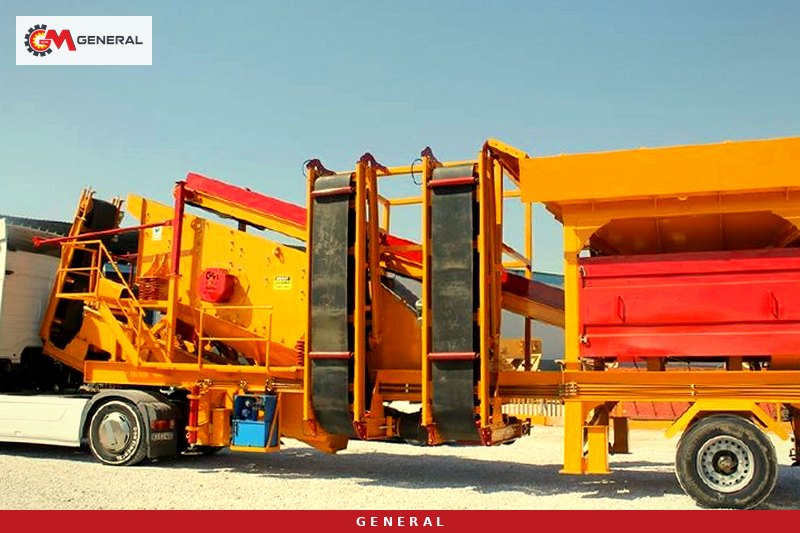
Room to grow: expanding the plant over the years
Part of long-term planning is whether the machine bought today will still fit the tonnage and product range five years from now.
Primary group first, secondary group later
The GNR-MC110 consists of two separate chassis. The first carries the feeder hopper and the GPJ 110 jaw crusher; the second carries the GS1215/DMK03 impact crusher, a 2000×6000 mm 4-deck screen and the conveyors. Because the primary group can run on its own, an operator can buy the primary first, start producing coarse material such as fill and sub-base, and add the secondary group when demand appears. Each chassis weighs 55,000 kg, which also splits transport into two separate loads.
Adding screening and washing units
Once a crushing line is in place, the most common request is to pass the product over a separate screen or to wash the sand. The GNR ME1650 dry screening plant (120-180 t/h, 0-100 mm feed, 18,000 kg) and the GNR YM1650 washing and screening plant (120-180 t/h, 0-100 mm feed, 21,000 kg) run at the same tonnage as the crushers in this band and can be connected to the existing line by conveyor. With clayey or wet material a dry screen blinds; in that case the YM1650, with its washing screen and sand screw, is the right pick. Units from the same manufacturer have controls and conveyor connections designed for each other, so later additions need less adaptation on site.
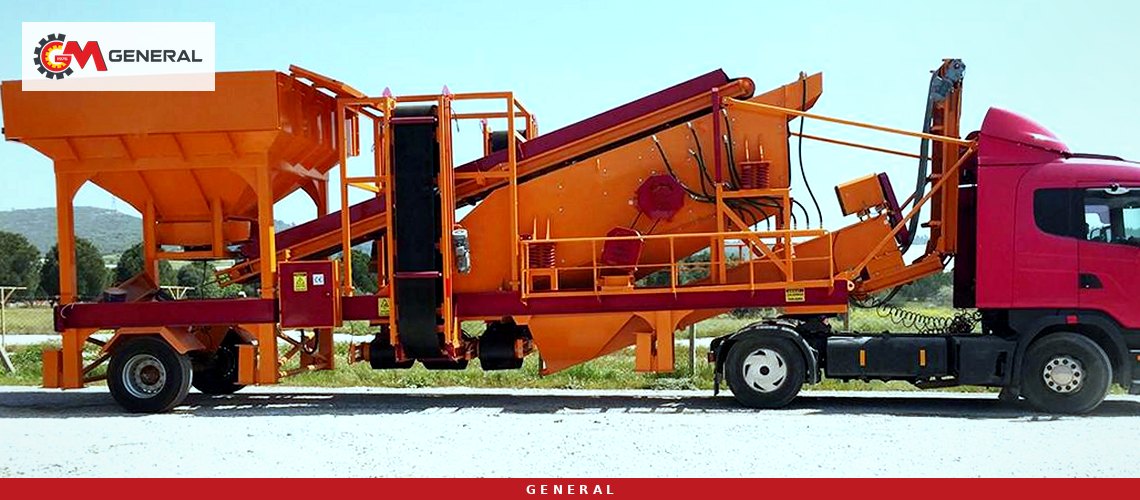
With a new plant the growth plan can be drawn at the order stage. Hopper position, stockpile conveyor direction, generator capacity and cable routing are prepared from day one to take a second unit.
Cost per tonne and a pre-order checklist
Instead of comparing purchase figures on their own, look at the cost of every tonne the machine produces over its life. A simple formula is enough:
Cost per tonne = (annual depreciation + wear parts + energy + labour + maintenance and downtime loss) ÷ annual saleable output (tonnes)
Hypothetical example: two plants have identical annual costs in the same units, but breakdowns keep one plant's saleable output 10 percent lower. The numerator is unchanged while the denominator shrinks, so that plant's cost per tonne rises by roughly 11 percent. Operating hours lost on a machine with an unknown history can wipe out the saving made at purchase within a few seasons. To try it with your own values, use our operating cost calculator.
Preparing the following before you request a quote is the shortest path to buying the right machine for the long term:
- Abrasiveness and compressive strength test results for samples taken from different benches of the quarry.
- The fractions you will sell (e.g. 0-5, 5-12, 12-19, 19-40 mm) and how they match the number of screen decks.
- The largest block size in the run-of-mine compared with the model's feed opening (700, 800, 900 or 1000 mm).
- Grid connection or generator; with a generator, a power requirement in the 550-750 kVA range.
- The five-year tonnage target and space reserved for a second line or a washing unit.
- A parts list, electrical diagram and wear part catalogue numbers included in the quotation file.
- Written confirmation of the warranty scope (1 year, excluding wear parts).
Frequently asked questions
Does the gap between a new and a used plant close after the first year?
In most cases it does not; it tends to widen. In the first year the warranty difference stands out. In the following years what decides is a known maintenance history, parts found under the correct number and a configuration that suits the rock. On all three points the new machine keeps its advantage.
Can I start with a 120-180 TPH model and move up to 250 TPH?
Yes, in two ways. A second crushing unit can be added, or the twin-chassis GNR-MC110 in the 200-300 t/h band can be chosen from the start with the primary group commissioned first. Which one fits depends on your rock, site area and energy source.
Are wear parts covered by the warranty?
No. Jaw plates, blow bars, cone liners and screen mesh count as operating consumables and are outside the warranty. Planning the first season's spare set at the time of ordering is the sensible approach.
What determines price and delivery time?
The crusher combination, number of screen decks, generator rating, automation options (touch panel, soft starter, remote monitoring) and shipping method all change the quote. A firm price and delivery schedule are given in a written offer once the rock data and target fractions are clear.
Before moving to the quotation stage
A mobile crusher in the 120-250 TPH band is an investment that will carry a quarry's revenue for many years. Money saved up front on a used machine is paid back during the operating years through an unknown maintenance history and a configuration that does not suit the rock. That is why a new machine is always the most sensible and correct choice. Send us the test results of your rock samples, your target fractions and site details, and our engineers will work out the right model and configuration. For a quote, reach us through our contact page.
Definitions of technical terms: Glossary