EN — English
 TR — Türkçe
 DE — Deutsch
 RU — Русский
 FR — Français
 ES — Español
 AR — العربية
 SR — Српски

Spare Parts and Service Advantages of Buying a Locally Built Mobile Crusher
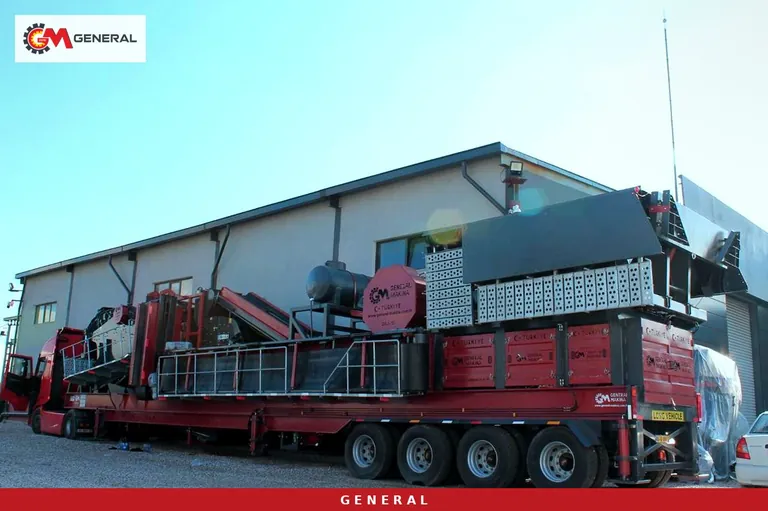
When mobile crusher quotations are compared, the table usually holds capacity, feed opening and price. Over a ten-year machine life, however, the question that decides the real cost is a different one: when a bearing, a jaw plate or a screen mesh is needed, who supplies it, to which drawing, and in which language do they talk to you? This article turns the spare-parts and service advantages of a domestically manufactured mobile crushing and screening plant into points you can verify at the purchasing table: who owns the design, which parts are shared across models, where the warranty ends, how remote diagnosis works and which commitments belong in the contract. We also bring the second-hand option into the comparison, but here is the conclusion up front: buying a new machine is always the right choice, because every parts and service advantage described below only works in full on a new machine bought from the manufacturer.
What local manufacturing really means for parts: who holds the drawing?
A "made locally" label is not an advantage on its own. The advantage comes from the company that designed and built the machine owning the part drawings, casting patterns and assembly tolerances. When you reorder a jaw plate or a bearing housing, receiving it to the same dimensions as the original is far more reliable than having someone measure the worn part with a caliper on site and copy it. A copied part that is a few millimetres off can leave bolt holes misaligned, stop a liner from seating properly against the body and lead to early cracking.
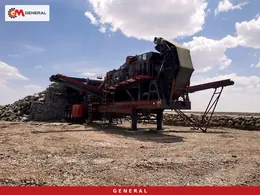
General Makina has built crushing, screening and washing equipment in İzmir since 1976. In the models within its mobile stone crushers category, crusher, screen, feeder and conveyors are manufactured under one roof, and the product pages describe this as one point of contact, one responsibility and a matching spare-parts chain. Testing that claim during purchasing is simple: ask the bidder for the machine's parts list, broken down by crusher, screen, feeder, conveyor and drive groups. If the list carries part numbers, material grades and weights, the manufacturer genuinely controls its own design. If it says little more than "equivalent available", the parts chain depends on a third party, and nobody can guarantee that party will still make the same part tomorrow.
A shared parts family: one crusher across several models
An advantage most buyers miss when reviewing a local manufacturer's range is that the same crusher body is reused in different plants. In General Makina's wheeled range, the GPJ 90 jaw crusher is the primary stage of three separate models: General 944, General 950 and Mobil 90. For an operator running more than one plant, or planning to grow a fleet, this means jaw plates, side liners and tension parts can be covered by the same stock items. When each item on the shelf serves two or three machines, the capital tied up in parts falls, and an urgent need on one machine can be met from the spares of another.
| Model | Primary crusher | Second stage / extra unit | Capacity | Max. feed | Generator | Support stated on page |
|---|---|---|---|---|---|---|
| General 944 | GPJ 90 jaw | GM430 cone | 120-180 t/h | 800 mm | 550 kVA | — |
| General 950 | GPJ 90 jaw | DMK01 impact | 120-180 t/h | 800 mm | 600 kVA | — |
| Mobil 90 | GPJ 90 jaw | Washing screen + 600×6000 mm twin sand screw | 90-150 t/h | 800 mm | 350 kVA | — |
| General 800 | PDK 1280 primary impactor | — | 80-150 t/h | 600 mm | 450 kVA | 1-year warranty (wear parts excluded), 10 years of paid service |
A "—" means the relevant product page does not state that information; confirm warranty and service terms for each model in the contract. A shared crusher also does not mean every part number is identical: chassis mounts, feeder transitions and conveyor drives can differ by model. At quotation stage, ask in writing which parts are common between models and get the answer as part numbers.
Warranty, wear parts and service period: read the limits correctly
General Makina's warranty runs for 1 year and excludes wear parts. This distinction is the one most often misunderstood after purchase. Jaw plates, blow bars, cone liners and screen mesh are consumables because they are in direct contact with the rock; the warranty concerns the chassis, housings, drives and structural parts. The local advantage on the wear side therefore does not come from the warranty, but from choosing the right alloy with a source that knows the design.
The clearest statement on service period is on the General 800 mobile crushing plant page: the machine is CE and ISO 9001 certified, carries a 1-year warranty on non-wear parts and is backed by 10 years of paid service. The word "paid" matters: this is not ten years of free service but a commitment that service will remain available for ten years. If you are buying another model, have the same period written into the contract against the model name.
Alloy selection and cross-brand parts
The spare parts category sets out wear metallurgy clearly: wear is driven by the free quartz and silica content of the feed (Bond abrasion index Ai), not by Mohs hardness. Austenitic manganese steel work-hardens under impact and is used for jaw plates and cone mantles. High-chrome white iron is the blow bar standard for clean, abrasive feed, but can crack on coarse or metal-contaminated feed. The correct metric is cost per tonne crushed, not the part price. The same source states that cross-brand parts are supplied for any make of crusher, so if your fleet includes an imported machine, its wear parts can be discussed at the same table. We cover on-site wear management separately in our article on maintenance and spare parts management.
Service support: on-site installation, remote support and pre-diagnosis
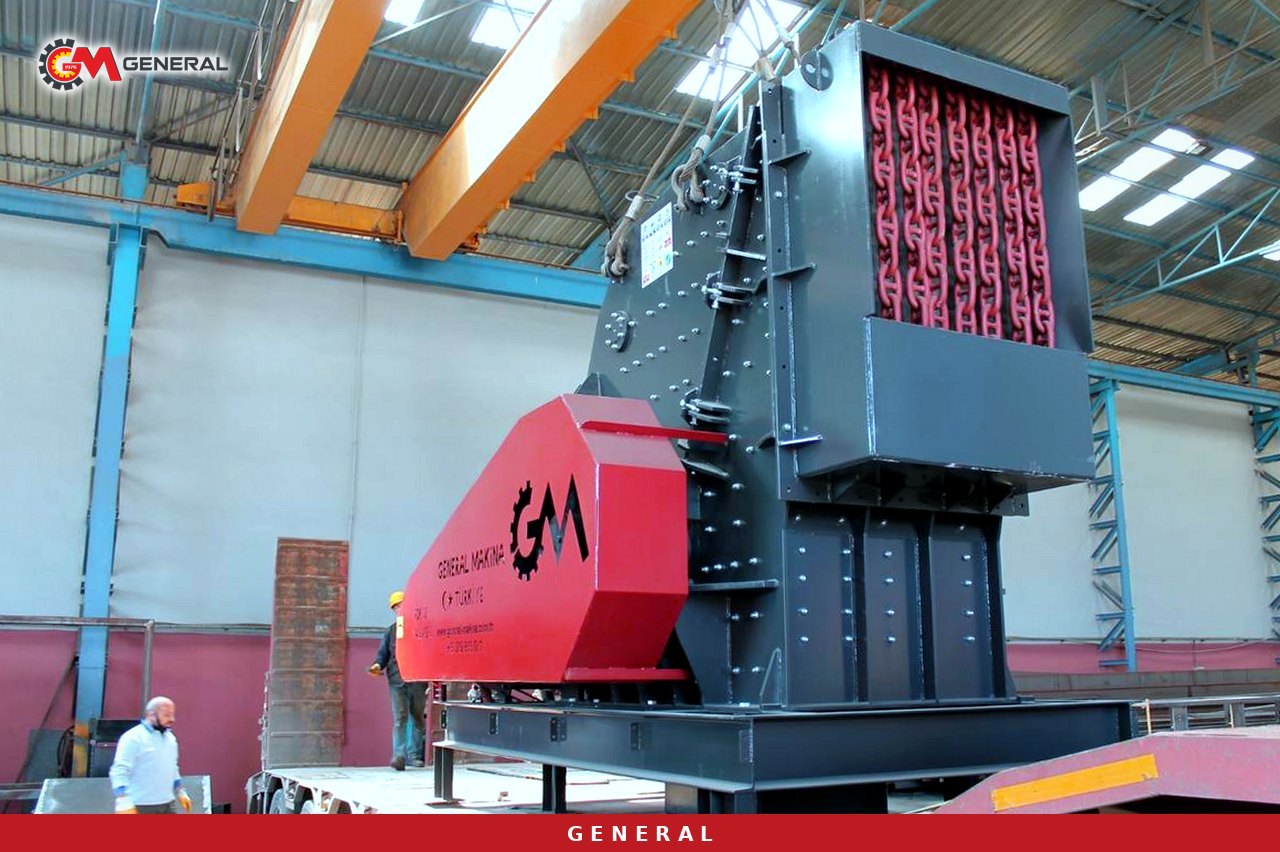
The parts page defines support as on-site installation or remote support. In practice, remote support runs through the automation panel. According to the automation and control system page, once the panel is connected to the network, shift reports, tonnage produced, downtime and alarm history are recorded; in the event of a fault, the service team can review this log over the connection and make a preliminary diagnosis without travelling to site, which shortens repair time. On the General 01, a touchscreen panel, soft-starter and internet-based remote monitoring are offered as options.
This makes the service advantage of local manufacturing concrete: the team interpreting the fault and the team that designed the machine work for the same company. A current spike or a sequential shutdown in the alarm log is read by someone who knows the drawing of the part. We recommend keeping remote monitoring on the option list; when the site is far away, a first diagnosis on screen lets technicians travel with the right part and avoids a second trip.
Safety during heavy part changes is part of the cost too; the parts page explicitly adds it to total cost of ownership. Lifting a rotor, jaw or large liner requires a crane, suitable chains and lifting points provided for in the design. The manufacturer that defined those lifting points can also issue the change procedure; ask for it in writing at commissioning.
Local new, imported new and second-hand: a parts and service comparison
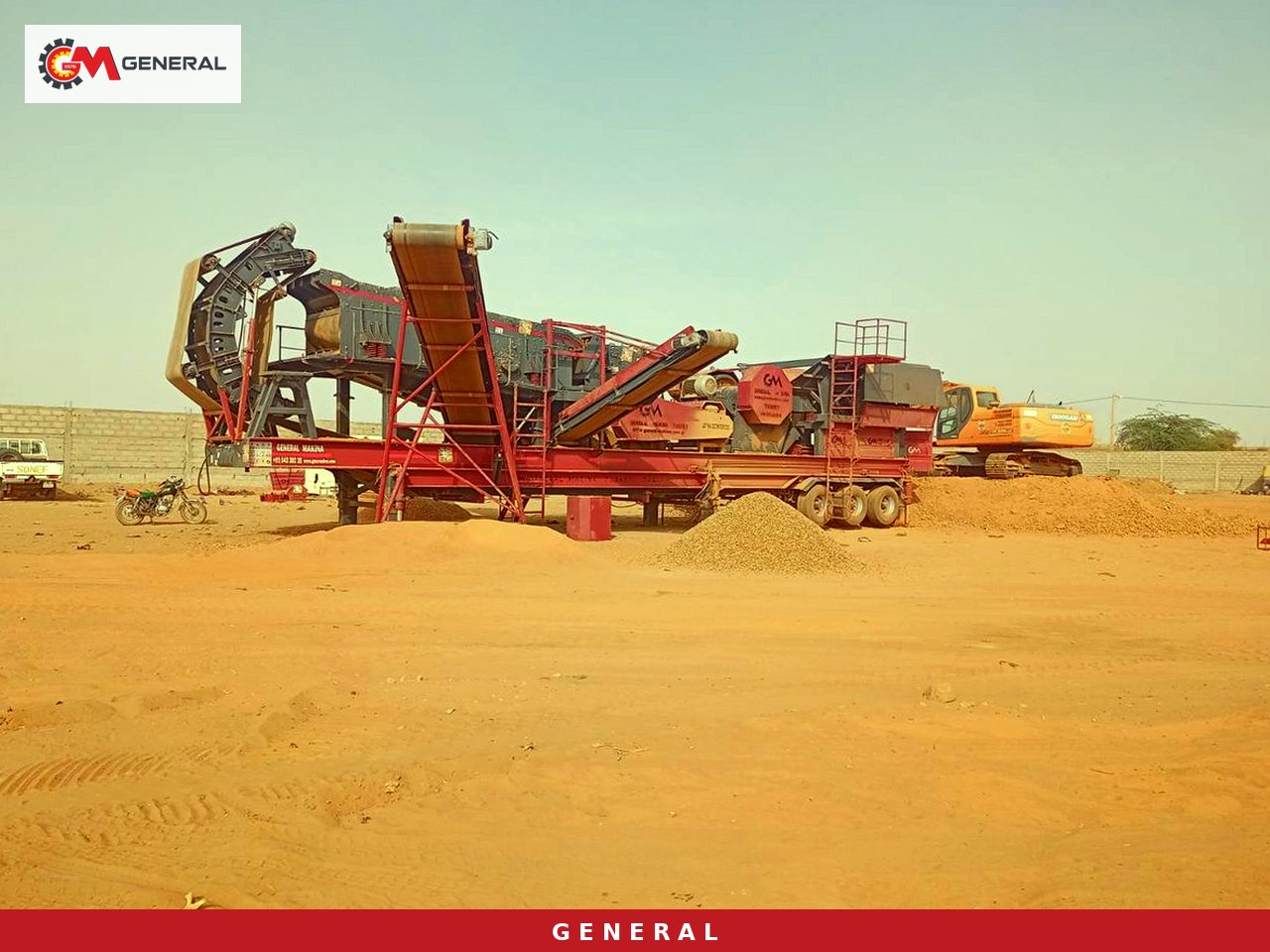
The matrix below compares not figures but the type of answer you get to the questions asked in a purchasing meeting. Statements about imported machines are general principles; confirm with the bidder whether they apply to a specific brand.
| Criterion | Locally built, new | Imported, new | Second-hand |
|---|---|---|---|
| Access to part drawings | With the manufacturer, direct | With the manufacturer, via a distributor | Unclear; revision history unknown |
| Warranty | 1 year, wear parts excluded | Per contract | Usually none |
| Technical communication | Same language and time zone as the design team | Through an intermediary | Depends on the previous owner’s records |
| Shared-parts plan | Can be built around the model family | Possible within the brand | Hard if the fleet is mixed |
| Remote diagnosis | If the automation panel is networked | Depends on model | Often absent on older panels |
The right-hand column shows why second-hand is weak on parts and service: non-original parts fitted by the previous owner, unrecorded weld repairs and unknown operating hours remove the advantage that rests on the manufacturer’s drawing. The purchase price may look lower, but on a machine with no warranty the full burden of the first major failure falls on the buyer. The conclusion of the comparison is therefore clear: buying a new machine is always the right choice, and a locally built new machine ties the parts and service chain to the manufacturer from day one.
Contract clauses and cost comparison
What to write into the contract
- A parts list per model: part numbers and material grades for crusher, screen, feeder, conveyor and drive groups.
- Warranty scope and an item-by-item list of excluded wear parts.
- The service period commitment and whether it is paid or free.
- If buying several machines, the part items that can be shared between models.
- An alloy recommendation for wear parts based on the silica content of your rock: manganese steel, high-chrome or ceramic-reinforced.
- The remote monitoring option and how the alarm log will be shared with the service team.
- Written change procedures for jaws, blow bars and screen mesh.
- Copies of the CE and ISO 9001 certificates.
Parts and service cost per tonne
To put quotations on a common footing, divide parts, service and downtime by tonnes crushed:
Parts-and-service cost per tonne = (Σ part cost + Σ service cost + downtime hours × hourly production loss) ÷ tonnes crushed in the period
Hypothetical example, not a real value: in one period, part cost is 400 units, service cost 100 units, total downtime 10 hours and hourly production loss 50 units, with 20,000 tonnes crushed. The total is 400 + 100 + 10 × 50 = 1,000 units, or 1,000 ÷ 20,000 = 0.05 units per tonne. If part cost stays the same but downtime falls to 5 hours, the total drops to 750 units and the cost per tonne to 0.0375 units. The example shows that the effect of local manufacturing should be looked for in downtime rather than in part price. To run the numbers with your own values, use the energy and wear cost calculator.
Frequently asked questions
What does the warranty cover on a locally built mobile crusher?
General Makina’s warranty is 1 year and excludes wear parts. Jaw plates, blow bars, liners and screen mesh are consumables; their life depends on the abrasiveness of the rock and the feed arrangement.
How many years of service support are committed?
The General 800 product page states 10 years of paid service. For other models, ask for the period at quotation stage and have it added to the contract with the model name.
Can I buy parts for a crusher of another brand?
Yes. According to the spare parts page, cross-brand parts are supplied for any make of crusher; jaw plates, blow bars, cone liners, screen mesh, conveyor idlers, drum pulleys, belt rubber and motors fall within that scope.
What are the delivery time and price for parts?
Both vary with the type of part, the alloy and the quantity, so a single figure would be misleading. Request a written quotation together with your parts list.
Conclusion: turn the advantage into contract terms
The parts and service advantage of local manufacturing comes from dealing directly with the manufacturer that owns the drawings, from a crusher shared across models, from alloy choice matched to the rock and from remote pre-diagnosis. Each of these can be written into a contract. Second-hand breaks that chain; buying a new machine is always the right choice. Tell us your rock type, target capacity and the machines already in your fleet and request a quotation through our contact page; get the parts list and service terms in writing together with the offer.
Definitions of technical terms: Glossary