EN — English
 TR — Türkçe
 DE — Deutsch
 RU — Русский
 FR — Français
 ES — Español
 AR — العربية
 SR — Српски

Libya Asphalt Plant Feed Aggregate Crushing Plant 120-180 TPH
A contractor in Libya who installs a new asphalt plant, or restarts an idle one, usually meets the same picture in the first season: the plant can produce the tonnage it was bought for, yet the moment one cold bin runs empty the burner and the mix both wait. The crushing plant in front of the asphalt plant has one job: to deliver every fraction in the mix design in the right proportion and with the same cleanliness all day. This article explains how to choose a 120-180 TPH crushing and screening plant to feed an asphalt plant, taking into account Libyan quarry rock, a hot and dusty site and the route from the port to the job. Every machine figure comes from the technical data on our product pages. Confirm the limit values of the mix specification with the road authority you work for and with the technical annexes of your contract.
The calculation starts at the asphalt plant's cold bins
When sizing the crushing line, the starting point is the daily production schedule of the asphalt plant, not the catalogue tonnage of the crusher. An asphalt concrete mix design is typically split across four or five cold bins: fine crushed sand, two or three chipping sizes and, where needed, imported filler. The plant draws from each bin exactly the share written in the mix design. The crusher, on the other hand, produces according to its own natural grading. When the two distributions do not match, one stockpile grows while another shrinks, and the plant waits for that fraction.
Take a hypothetical example. The plant produces P tonnes of mix per hour and the 12-19 mm share in the recipe is R percent. The chippings needed for this size are P × R / 100 tonnes per hour. If the crusher produces this size at a rate of K percent, the crushing line has to process P × R / K tonnes per hour to keep up with that fraction. Repeat the calculation for each fraction; the size giving the highest result sets the real capacity requirement of the line. If the crusher and the asphalt plant do not run the same hours, correct the figure by the ratio of operating hours. On most sites the crusher works longer shifts than the plant and the difference is covered by stockpiles.
Two practical points follow. First, a 120-180 TPH line can look oversized for some recipes, because part of what it crushes stays in stock as fines. Second, the value of K is changed by the crusher type and the choice of screen mesh. Choosing a crusher for an asphalt plant is therefore a grading decision more than a tonnage decision.
Rock for asphalt chippings in Libya
Along Libya's northern belt facing the Mediterranean, limestone and dolomite quarries are common. Further inland and to the south, basaltic volcanic areas and sandstone units come to the fore. This split affects both the crusher type and the asphalt layer in which the chippings can be used. The wearing course needs stone that resists polishing and abrasion; the binder and bituminous base layers may allow a wider range. The laboratory decides which stone goes into which layer. Before choosing a quarry, take samples and have Los Angeles abrasion, flakiness and stripping tests carried out.
Limestone and dolomite quarries
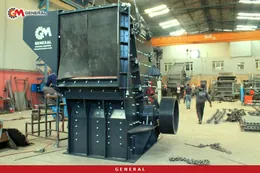
For a plant fed from limestone on the coastal stretch between Tripoli and Misrata, or around Benghazi, an impact crusher is a sensible starting point. Limestone broken by impact gives cubical grains that hold bitumen well. Its weak side for asphalt is excess fines: an impact crusher produces plenty of 0-5 mm and the dust content rises. If your recipe calls for less sand, plan where that surplus will be used before the line is built.
Basalt and hard, abrasive rock
Basalt is the stone wanted for wearing courses, but it wears out the blow bars of an impact crusher quickly. With a cone crusher working on the compression principle behind a jaw primary, wear part life gets longer. The flaky particle content of cone-crushed chippings depends on the setting. If the specification's flakiness limit is tight, adding a cubitzer stage at the end of the line becomes an option.
Line options in the 120-180 TPH range
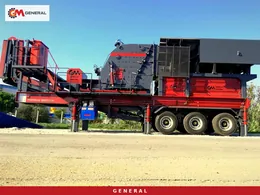
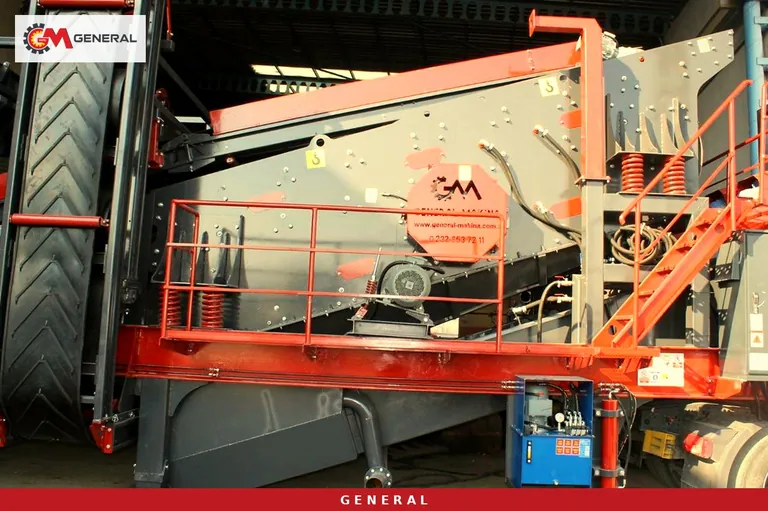
In this capacity range our product line has three wheeled mobile crushing and screening plants and a mobile cubitzer series that complements them. The three plants share the same tonnage band; what separates them is the crushing principle and the screen layout.
| Plant | Capacity | Primary | Secondary | Max. feed | Screen | Product fractions | Generator | Weight |
|---|---|---|---|---|---|---|---|---|
| General 01 | 120-180 t/h | GPS 1210 impact (primary and secondary in one machine) | — | 700 mm | 1600×5000 mm, 4 decks | 0-5 / 5-12 / 12-19 / 19-40 mm | 550 kVA | 55,000 kg |
| General 944 | 120-180 t/h | GPJ 90 jaw | GM430 cone | 800 mm | 1600×5000 mm, 3-deck horizontal | 0-5 / 5-12 / 12-19 mm | 550 kVA | 70,000 kg |
| General 950 | 120-180 t/h | GPJ 90 jaw | DMK01 impact | 800 mm | 1600×5000 mm, 3-deck horizontal | 0-5 / 5-12 / 12-19 mm | 600 kVA | 70,000 kg |
In a limestone quarry, General 01 does both the primary and the secondary work with a single impact crusher; its 4-deck screen also separates the 19-40 mm size, which can be stockpiled for bituminous base or plant-mix. If you will process basalt or granite, General 944 comes first: the GM430 cone behind the GPJ 90 jaw primary extends metal life in abrasive rock. General 950with the same dimensions and weight, uses a DMK01 impact crusher in the second stage; it gives high reduction and cubical product in hard-to-break rock, while its sand share is higher than on the cone line. You can compare these plants and the models outside this band on the wheeled mobile crushing and screening plants page.
When to add a cubitzer stage
The GNR MK series mobile cubitzer processes material after the primary and delivers a 0-25 mm end product while turning flat and elongated grains into cubical ones. Its inner lining is Hardox 500 steel. On a line that feeds basalt chippings to an asphalt plant and struggles to meet the flakiness limit, the cubitzer reshapes the oversize returning from the top deck of the screen.
| Model | Rotor | Max. feed | Capacity | Motor |
|---|---|---|---|---|
| GNR MK50 | 1000×750 mm | 150 mm | 45-80 t/h | 75 kW |
| GNR MK100 | 1550×1200 mm | 250 mm | 90-130 t/h | 132 kW |
| GNR MK110 | 1550×1800 mm | 350 mm | 160-250 t/h | 200 kW |
On a 120-180 TPH line the cubitzer usually handles the part of the flow going to the chipping sizes rather than the whole stream. In that case MK100 is enough for many recipes; if the entire flow is to be shaped, MK110 is considered. Other single-chassis units are listed in the portable crushers category.
Fraction balance: surplus sand and short chippings
Most quarries feeding an asphalt plant show the same picture: the 0-5 mm stockpile grows and the 12-19 mm pile shrinks. There are several ways to correct this balance by adjustment, and which one works depends on the line type.
- On an impact secondary, setting rotor speed and impact apron gap in favour of chippings reduces sand output; confirm the adjustment ranges with the manufacturer during commissioning.
- On a cone line, opening the closed side setting (CSS) increases the coarse chipping share; open it too far and the recirculating load grows and the screen blinds.
- Choosing screen meshes to match the limit sizes of the recipe brings the stockpiles closer to the plant's bins; the standard 12 and 19 mm cut does not suit every recipe.
- Re-crushing screen oversize in closed circuit stops the growth of a 19-40 mm pile nobody wants.
- During the first weeks, sampling the stockpiles every shift for sieve analysis shows whether the adjustment really works.
Write the sieve analysis into the same sheet as the asphalt recipe and give that sheet to both operators. If the crusher operator can see which bin will run empty in the next shift, he changes the setting in time, and the plant side does not have to change the recipe.
Dust, filler and moisture: what reaches the burner
In an asphalt plant the aggregate is heated in the dryer drum and the dust released is caught in the baghouse filter. If chippings arrive from the crusher with too much surface dust, the filter load increases and the filler content of the mix drifts from the recipe. In Libya's dry and windy quarries, crushing dust sticking to chippings is a common sight. Measures that can be chosen for the project include water spray dust suppression at the crusher discharge and conveyor transfer points, covers at transfer points and separate stockpiling of the fine size.
On moisture the logic runs the other way. If water sprayed to suppress dust stays in the chippings, the dryer drum burns more fuel to evaporate it. Water should therefore be delivered as a fine mist at the point where dust is generated, and the stockyard needs proper drainage. If sand is to be washed, set aside a stockpile area where washed sand can drain before it goes to the plant.
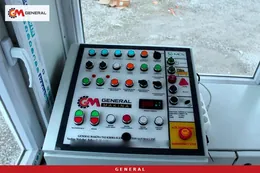
Dust affects the machine too. On a hot, dusty site, cleaning the ventilation filters of the electrical panel and checking the generator air filter belong on the start-of-shift list. Bearing greasing intervals also shorten in these conditions; set the interval by observing it on site during the first months.
From port to quarry: shipping, power and installation
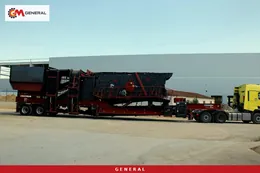
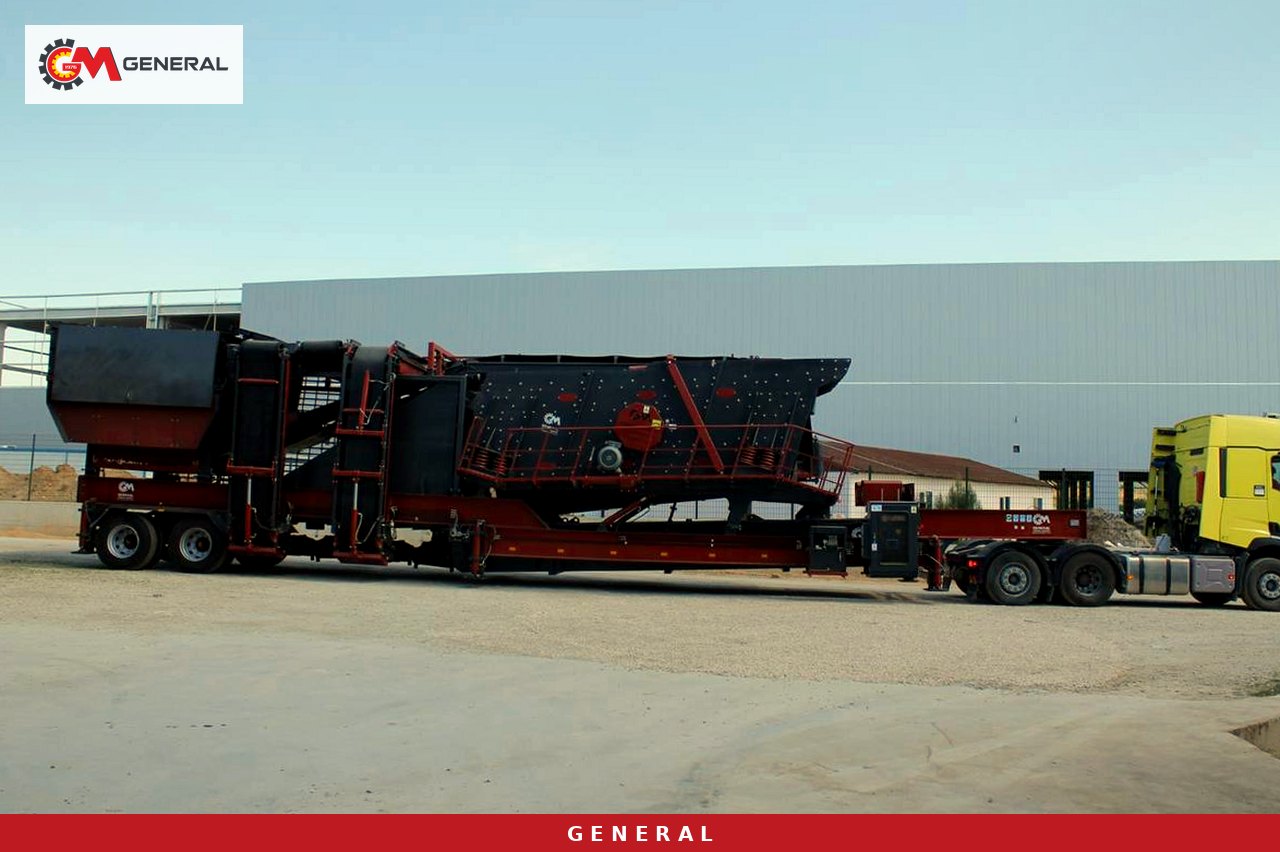
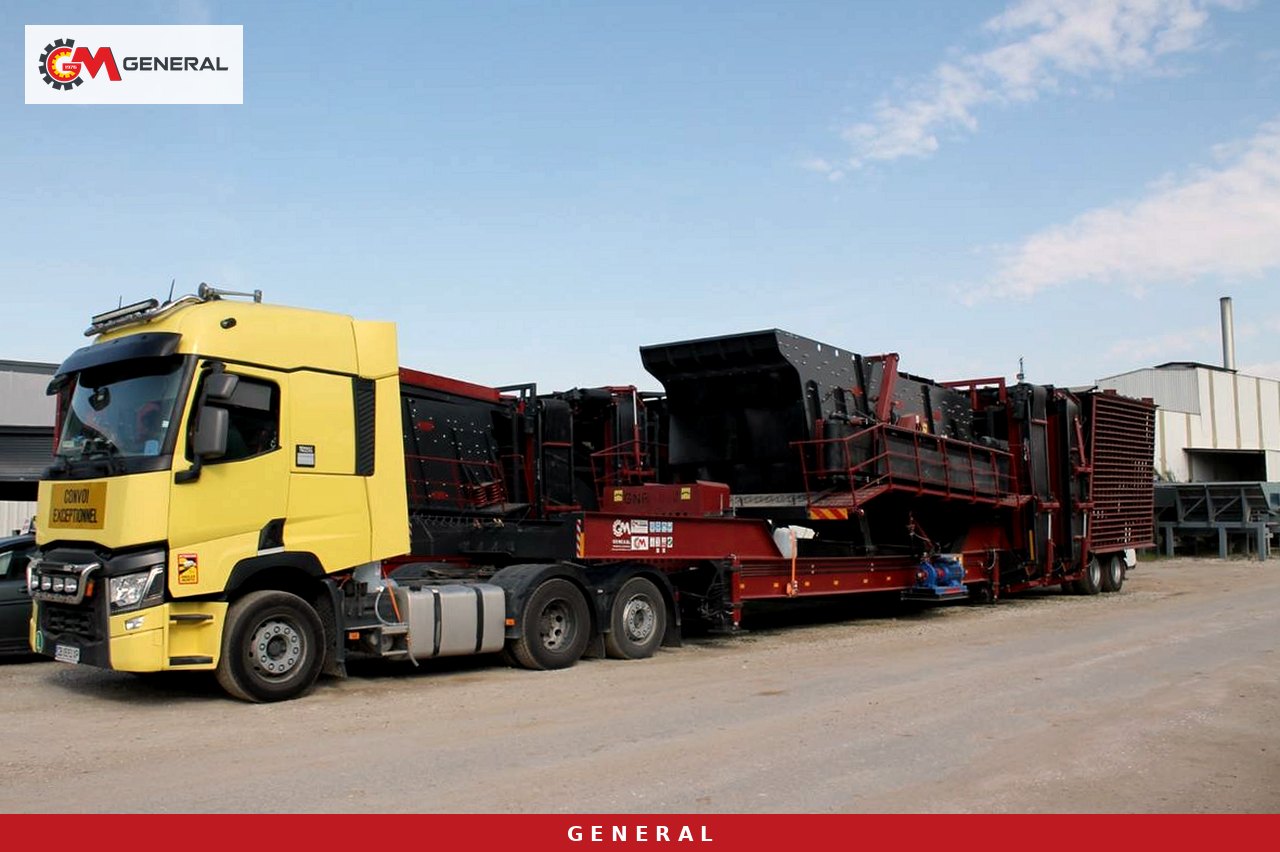
Wheeled plants travel by sea from our factory in Izmir to Libyan ports and from there by road to the site. Because the plant arrives on its own chassis, the quarry does not need large concrete foundations; once the ground is levelled and compacted, the legs are lowered and the conveyors are folded into working position. The transport dimensions of General 944 and General 950 are 4130×20350×4500 mm with a weight of 70,000 kg. General 01 measures 4300×18500×4500 mm and weighs 55,000 kg. Share these figures with your haulier and have bridges, bends and height limits on the route from port to quarry checked before shipment.
Where a remote quarry has no grid connection, the plant runs on a generator. According to manufacturer data, a 550 kVA generator is specified for General 01 and General 944, and 600 kVA for General 950. If you plan to share the generator fleet with the asphalt plant, allow for both plants starting at the same time or put the start-ups in sequence.
Delivery information for Libya is on our GNR Series Mobile Crushing Plants - Libya project page. Our plants carry ISO 9001 and CE certification, have a 1-year warranty excluding wear parts, and are backed by spare parts support after sale.
Frequently asked questions
Should I buy an impact line or a cone line for an asphalt plant?
In limestone and dolomite, the impact-based General 01 or General 950 gives cubical chippings and keeps the line simple. In basalt and granite, the cone-secondary General 944 lowers wear part consumption. Make the final decision with the laboratory results of a quarry sample.
What size of asphalt plant can a 120-180 TPH line feed?
It depends on the plant's real consumption, the recipe and the operating hours of both plants. Running the P × R / K calculation above for each fraction of your recipe gives a clear answer; we can also do this calculation with your recipe.
Can the same line also supply plant-mix base material?
The 4-deck screen of General 01 separates the 19-40 mm size; together with the surplus 0-5 mm, this size can be considered for base course material. Confirm suitability in the laboratory against the grading envelope of the road specification.
How are price and delivery time determined?
Price depends on the plant chosen, additional stages such as the cubitzer, the generator, dust suppression and automation options, and the shipping method. Delivery time depends on the production schedule at the time of order. Both are given in writing in the quotation.
Information to bring to the quotation
- Hourly capacity and daily operating time of the asphalt plant
- Mix designs to be used and the percentage of each fraction
- Quarry rock type and any available laboratory test results
- Largest block size in the run-of-mine feed and its clay and soil content
- Power situation: grid or generator
- Arrival port and the road route to the site
With this information we prepare a quotation showing which plant, which screen meshes and which additional stage will keep your asphalt plant's bins full. For your asphalt project in Libya, write to us through our contact page.
Definitions of technical terms: Glossary