EN — English
 TR — Türkçe
 DE — Deutsch
 RU — Русский
 FR — Français
 ES — Español
 AR — العربية
 SR — Српски

Kuwait Extreme Heat Cooling for a Stone Crusher Plant 100-200 TPH
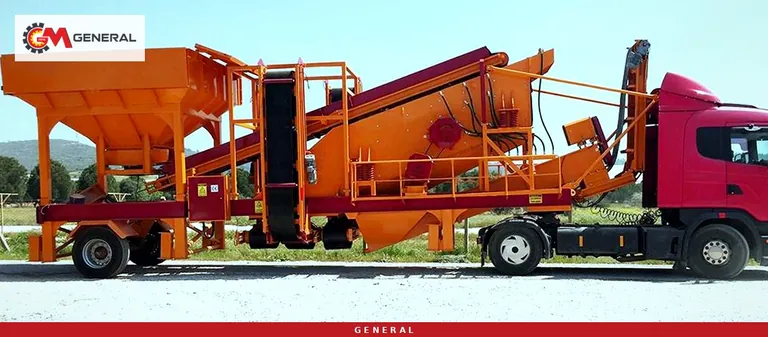
In a Kuwaiti summer, the thing that stops a crushing line is rarely the rock in the crushing chamber. More often it is a generator with a clogged radiator, an electrical cabinet whose drives trip on over-temperature, or a bearing housing where the oil has thinned out. An investor targeting 100-200 tonnes per hour looks at the capacity table when choosing a model, but holding that tonnage through the afternoon depends on knowing where heat builds up and planning the cooling at the design stage. This article looks at the cooling load under Kuwaiti conditions from a field engineer's point of view, the real models that can carry it, and the details to settle before placing an order.
Where does heat accumulate on the machine?
Heat on a stone crushing plant does not come from one source. Solar radiation heats the steel surfaces, the diesel engine and alternator produce their own waste heat, crusher bearings warm up through friction, and conveyor drive motors run under continuous load. On Kuwait's open desert sites, fine airborne dust is added to these loads: the air drawn in for cooling carries dust into radiator cores and filters, and cooling efficiency drops step by step over the day. The cooling plan should therefore be considered under three separate headings.
Generator and engine radiators
On mobile plants most of the energy comes from the diesel generator supplied with the plant. Generator manufacturers publish a derating curve showing how the continuous power available falls as ambient temperature and altitude rise. When selecting a generator for Kuwait, look at the value on that curve that matches the site's summer condition, not the nameplate figure. If the radiator air intake is not positioned against the prevailing wind and dust direction, the cores close up quickly.
Hydraulic oil, gearboxes and bearings
The hydraulics for the folding conveyors and support legs, the crusher bearings and the screen drives are all cooled by oil. At high ambient temperature the oil's viscosity falls, the lubricating film thins and bearing temperature climbs. Choosing grease and oil grades suited to a hot climate, shortening lubrication intervals, and measuring and logging bearing temperatures at the start and middle of each shift are the most practical ways to manage this risk.
Electrical cabinet and drives
Contactors, starters and variable frequency drives (VFD) generate their own heat inside a closed cabinet. A dark cabinet standing in the sun means an internal environment far hotter than the outside air for the electronics. Shading the cabinet, fitting dust filters to the ventilation inlets and adding a cabinet air conditioner where needed are measures that can be selected per project. On the GNR ME2060 screening plant from General Makina, a fan-cooled electrical panel is standard equipment; on crushing plants, cabinet cooling should be defined at the order stage according to the site.
Choosing a model for the 100-200 TPH band by heat load
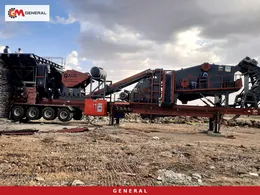
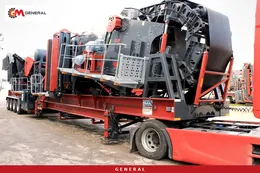
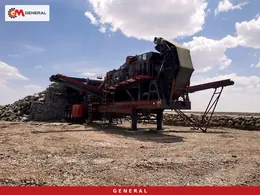
Several wheeled plants fall into this range, and the difference between them is not just the crusher type. Generator power, machine weight and crushing principle all directly affect how heat must be handled on a hot site. The table below compares the models from our wheeled mobile crushing plants range that fit this band, using catalogue values.
| Model | Crusher layout | Capacity | Max. feed | Generator | Weight |
|---|---|---|---|---|---|
| General 800 | PDK 1280 primary impact | 80-150 t/h | 600 mm | 450 kVA | 35,000 kg |
| General 01 | GPS 1210 impact (primary + secondary in one body) | 120-180 t/h | 700 mm | 550 kVA | 55,000 kg |
| General 950 | GPJ 90 jaw + DMK01 impact | 120-180 t/h | 800 mm | 600 kVA | 70,000 kg |
| General 944 | GPJ 90 jaw + GM430 cone | 120-180 t/h | 800 mm | 550 kVA | 70,000 kg |
The kVA values in the table are the generator's catalogue rating. How much of that rating can be drawn continuously in a Kuwaiti summer must be confirmed from the generator manufacturer's derating curve. If the target is close to 200 TPH, a single 120-180 t/h unit will not be enough; a separate screening unit has to be placed with the crushing plant, or two units run in parallel. Two units also give flexibility at summer midday, when one can be throttled back while the other keeps producing.
Material crushed in Kuwait is mostly desert gravel and limestone-type rock, and harder rock brought in from neighbouring countries can also be processed. With low-abrasion feed, the General 01 crushes in two stages inside one body, which shortens the line and so reduces the number of drives that need cooling. With high-silica, abrasive material, the General 944 puts metal life first with its cone secondary. For road and concrete work that needs cubical product and high reduction, the General 950 can be considered with its larger 600 kVA generator. Whatever the rock, do not decide without abrasion and crushability tests on a sample from the quarry itself.
Why generator rating alone is not enough in the heat
On a crushing line the highest electrical demand occurs when motors start. A generator already running at reduced output in hot weather that tries to start several motors at once will see the voltage dip, protection will trip and the line will stop. In a hot climate you therefore have to look at how start-up is managed as well as at kVA.
On the General 01, the touchscreen panel is offered with soft-starter, frequency control and a remote monitoring option. The soft-starter smooths inrush current and reduces the momentary load on the generator. Across the whole plant, PLC and SCADA plant automation brings equipment online in sequence against the material flow, from the stockpile back to the feeder; when one machine stops, every stage before it stops automatically. As crusher current approaches its threshold, the feeder slows down, and when current returns to normal, feed rises again. This is the real mechanism that keeps a crusher from overloading and overheating on a hot afternoon. Temperature and vibration sensors that can be included in the system bring bearing heating onto the screen before the operator notices it.
On sites that can connect to the grid, the generator load disappears; cabinet and motor cooling still have to be planned. Whether a grid connection is possible, and on what terms, should be confirmed with the relevant authority.
Cooling air arrives with dust: site layout in Kuwait
In the desert, cooling means finding clean air. After a dust storm, radiator cores, engine air filters and cabinet ventilation grilles all clog together. These principles help when planning the site layout:
- Place the generator and electrical cabinet away from the crusher discharge and conveyor transfer points, on the side where the prevailing wind does not carry dust.
- Direct the hot radiator exhaust so it does not blow into the cabinet or operator cabin air intake.
- Put a sunshade over the cabinet and generator; it should block direct sun without cutting off airflow.
- Plan dust suppression at conveyor transfers with water sprays or covers, depending on water availability; holding dust at its source also reduces the burden on cooling equipment.
- Discuss two-stage air filters with pre-cleaners for engines and compressors with the generator and engine supplier.
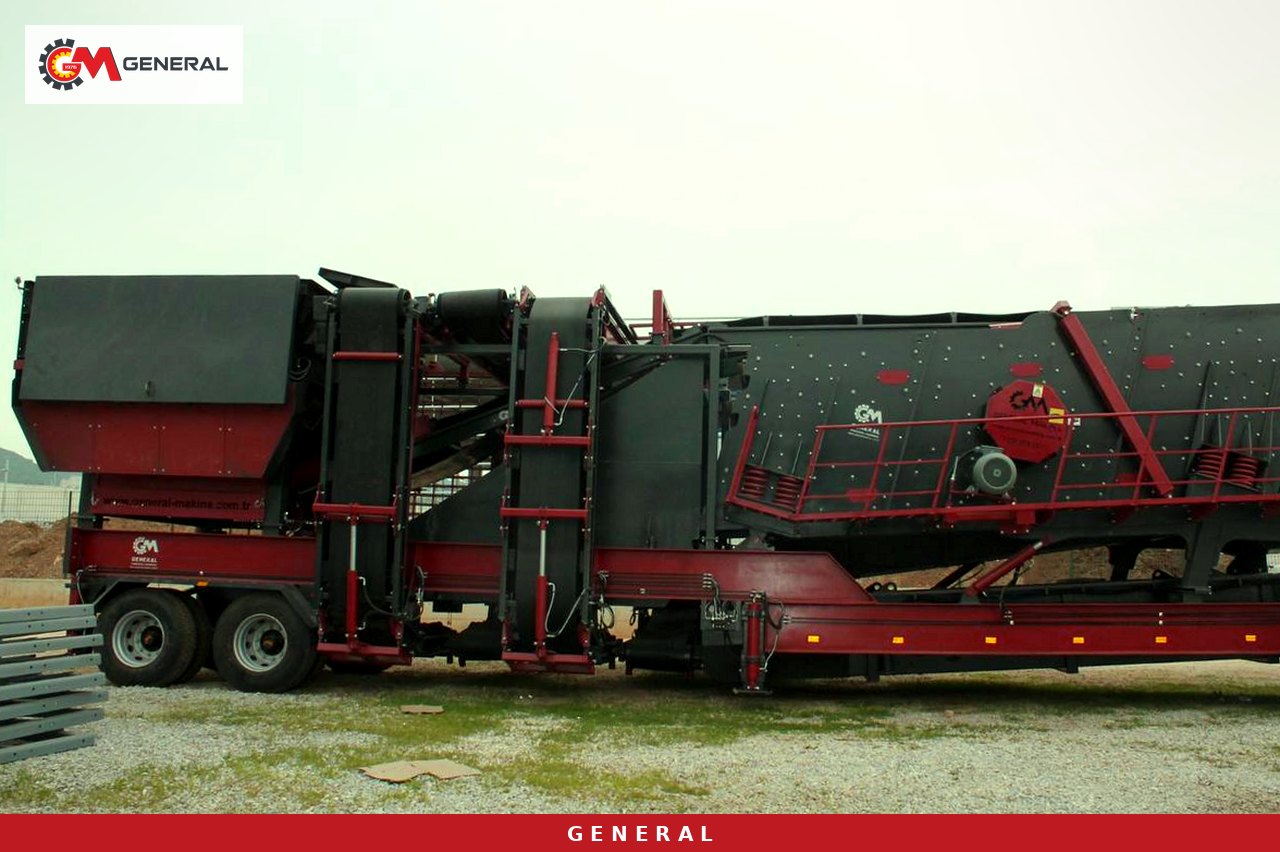
Using a screening unit separate from the crusher is an effective way to spread the load on a hot site. Among our sand washing and dry screening plants the 120-180 t/h GNR ME1650 accepts 0-100 mm material, comes on a single 18,000 kg chassis and runs on a generator or the grid. Because water is limited in Kuwait, dry screening is the first route considered on most sites; if the material is clayey or damp, a washing model is needed.
Shift planning, shade and the maintenance calendar
Protecting the operator is as much a part of production as cooling the equipment. Kuwait may have regulations restricting outdoor work at midday during the summer months; confirm the current rules and the period they apply with the competent authority and build shifts around them. Many operators move high-tonnage production to early morning and night hours; in that case site lighting and a night maintenance routine must also be part of the plan.
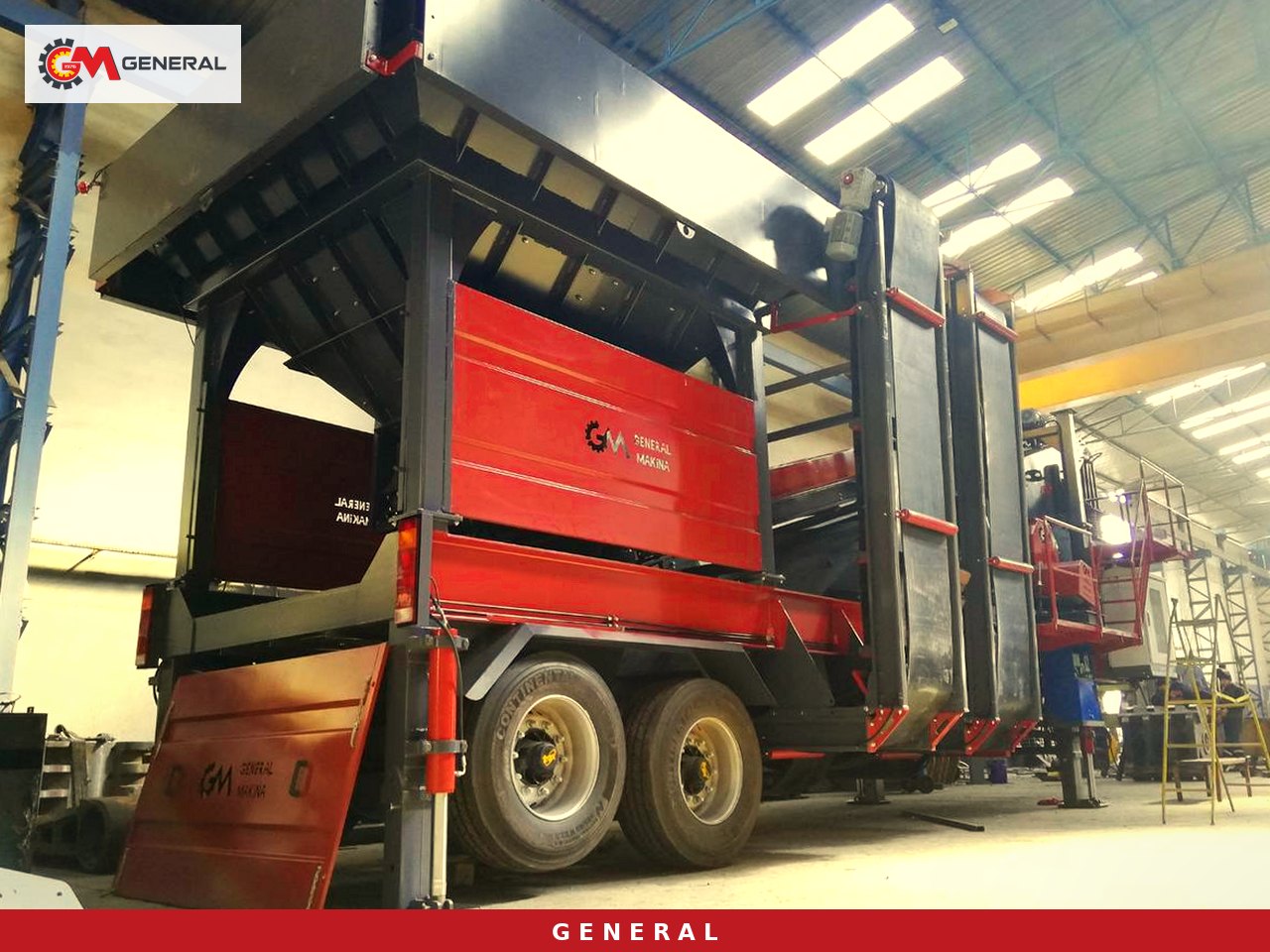
On a hot, dusty site the maintenance routine repeats more often than at a temperate quarry. The list below is a starting point for daily and weekly checks:
- At the start of each shift, visually inspect radiator cores and cabinet filters; if needed, blow them out with compressed air from the inside outwards.
- Measure and log crusher and screen bearing temperatures; if there is a clear rise from the previous day, check lubrication and seals.
- Check hydraulic oil level and colour, belt tension and belt slip switches.
- Measure tyre pressures in the cool of the morning; a reading taken in the sun is misleading.
- Measure jaw plate, blow bar and cone liner wear weekly; in the heat, schedule wear part changes for hours when the sun is low.
- Plan shade, drinking water and a rest area for operators as if they were plant equipment.
If wear parts are planned with the shipment, changes can be made on site without waiting. The warranty is one year and excludes wear parts, so agreeing the quantity of spare liners and screen mesh for the first season at the order stage makes operation easier.
Port, road and ground: the path to installation
Wheeled plants can be shipped from Türkiye to Kuwait by sea through ports such as Shuwaikh or Shuaiba; the permits required for road transport from port to site, based on chassis length and weight, should be confirmed with a local haulier. The General 950 and General 944 weigh 70,000 kg and the General 01 55,000 kg; these differences in the table affect the road plan and the ground preparation needed on site.
Setting up a plant on loose desert sand may require compacted fill or a concrete base where the legs bear. When choosing the location, create a layout in which the generator and cabinet stay in shade and truck and loader traffic does not pass in front of the radiator. For a real example of desert operation in the region, see the GNR PDK 02 stationary crushing and screening plant (250 t/h) in Saudi Arabia.
Tender or specification conditions (dust limits, working hours, product grading) vary from project to project; confirming them with the employer or the specification before requesting a quote reduces both lead time and later revisions.
Frequently asked questions
Does a crushing plant come with a cooling system as standard?
Engine and generator radiators are part of the plant. Hot-climate measures such as a cabinet air conditioner, a sunshade, pre-cleaner air filters or an additional oil cooler are selected per project according to site conditions and listed separately in the quotation.
Is one machine enough for 200 TPH in Kuwait?
The single-chassis wheeled models in this band have a catalogue capacity of 120-180 t/h. If a continuous 200 TPH is the target, a crushing plant with a separate screening unit, or two crushing units, should be planned together.
How does using the grid instead of a generator affect cooling?
A grid connection removes the generator's heat and power derating issue; the electrical cabinet, drives and motors still need cooling. Connection availability and terms should be confirmed with the local authority.
What determines the price and the delivery plan?
The model, crusher layout, generator choice, hot-climate measures, automation scope, spare parts package and shipping method all shape the quotation. Once you share this information, an offer is prepared for your site.
Conclusion
Keeping a 100-200 TPH stone crushing plant productive all day in Kuwait depends on the generator's real output in the heat, protecting the cabinet and radiators from dust, softening start-ups through automation and tightening maintenance for the hot climate. General Makina, building ISO 9001 and CE certified plants in Izmir since 1976, offers buyers in the Middle East to plan this configuration together. Share your material sample, target product sizes and site conditions through our contact page and our engineers will prepare a quotation with the right model and cooling measures.
Definitions of technical terms: Glossary