EN — English
 TR — Türkçe
 DE — Deutsch
 RU — Русский
 FR — Français
 ES — Español
 AR — العربية
 SR — Српски

Kenya Volcanic Rock & Basalt Mobile Stone Crusher Plant 120-180 TPH
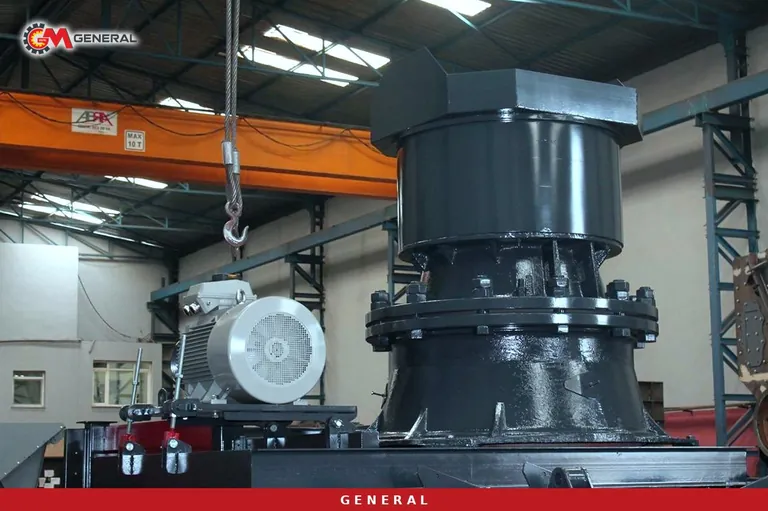
An investor preparing to open a quarry in Kenya can find two very different stones inside the same licence area around the Rift Valley: dark, dense basalt that throws sparks when struck with a hammer, and porous, reddish volcanic rock that feels surprisingly light in the hand. To a crusher these are separate worlds. The first grinds metal away; the second breaks easily but can produce excess fines and flaky particles. When choosing a mobile stone crusher plant for 120-180 TPH, the real question is not "which machine is strongest" but "which crushing chain suits the quarry's actual rock". This article matches real General models to rock scenarios for volcanic stone and basalt and walks through the decisions in order, from sample to shipping.
Rift Valley rock: one region, several crushing behaviours
The Rift system that cuts through central and western Kenya is rich in rock of volcanic origin. Basalt, phonolite, trachyte and tuff-type materials are widespread in the region. Whatever their geological names, a crushing engineer separates these stones by three properties: density, porosity and silica-driven abrasiveness. Dense, fine-grained basalt and phonolite have high compressive strength and are merciless on wear parts. Vesicular lava and tuff break more brittlely; the porous structure can raise the share of fines when it shatters, yet the particles cube more easily in an impact crusher.
This variety also explains why a mobile plant makes sense in Kenya. A temporary pit opened for a road project and a permanent quarry near a town may yield different rock. A wheeled plant can move when the rock changes, but the crusher type on its chassis cannot. That is why selecting the plant for the hardest, most abrasive seam of the first quarry, and solving any shape problem later with an add-on cubicizer, is usually the safer route. No generalisation can be made about a specific quarry's rock; the decision is made with a sample.
Sample analysis: what goes to the lab before choosing a machine
The most common mistake we see at quotation stage is stating capacity and feed size without describing the stone itself. In a volcanic quarry the following information directly determines the crusher type and the wear-part alloy:
- Representative samples from different benches of the quarry; dense basalt and porous sections should be bagged separately.
- Abrasion index (Bond Ai) or free quartz/silica content: the main input to the cone-versus-impact question.
- Los Angeles abrasion value and compressive strength: these show whether the target product meets road and concrete specifications.
- Largest block size after blasting: the share of blocks above 800 mm decides whether the primary crusher mouth fits.
- Soil and clay contamination: this tells how much material pre-scalping must remove ahead of the crusher.
- Target fractions and the buyer the product will be sold to (asphalt, ready-mix, sub-base).
Aggregate specifications for road and bridge work vary from one authority to another. If your project is tied to a public tender, confirm the limits for particle shape, abrasion and grading in the relevant authority's technical specification; machine selection should follow those limits. Contacting us with sample results in hand means the quotation rests on measurement rather than guesswork.
Real configurations for 120-180 TPH by rock scenario
In the General family three wheeled plants cover the 120-180 TPH band on a single chassis, and each carries a different crushing logic. The values in the table below come from the product pages; details not shown are set per order to suit the stone.
| Rock scenario | Suggested plant | Crushing chain | Max. feed | Screen and fractions | Generator | Weight |
|---|---|---|---|---|---|---|
| Dense, abrasive basalt or phonolite | General 944 | GPJ 90 jaw + GM430 cone | 800 mm | 1600×5000 mm, 3-deck; 0-5 / 5-12 / 12-19 mm | 550 kVA | 70,000 kg |
| Medium-hard basalt, cubical product first | General 950 | GPJ 90 jaw + DMK01 impact | 800 mm | 1600×5000 mm, 3-deck; 0-5 / 5-12 / 12-19 mm | 600 kVA | 70,000 kg |
| Vesicular lava, tuff, mixed and low-abrasion stone | General 01 | GPS 1210 impact (primary and secondary in one body) | 700 mm | 1600×5000 mm, 4-deck; 0-5 / 5-12 / 12-19 / 19-40 mm | 550 kVA | 55,000 kg |
Why a cone second stage on hard basalt
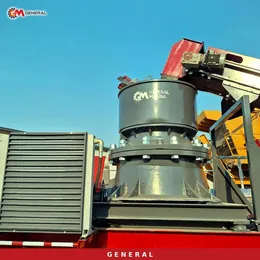
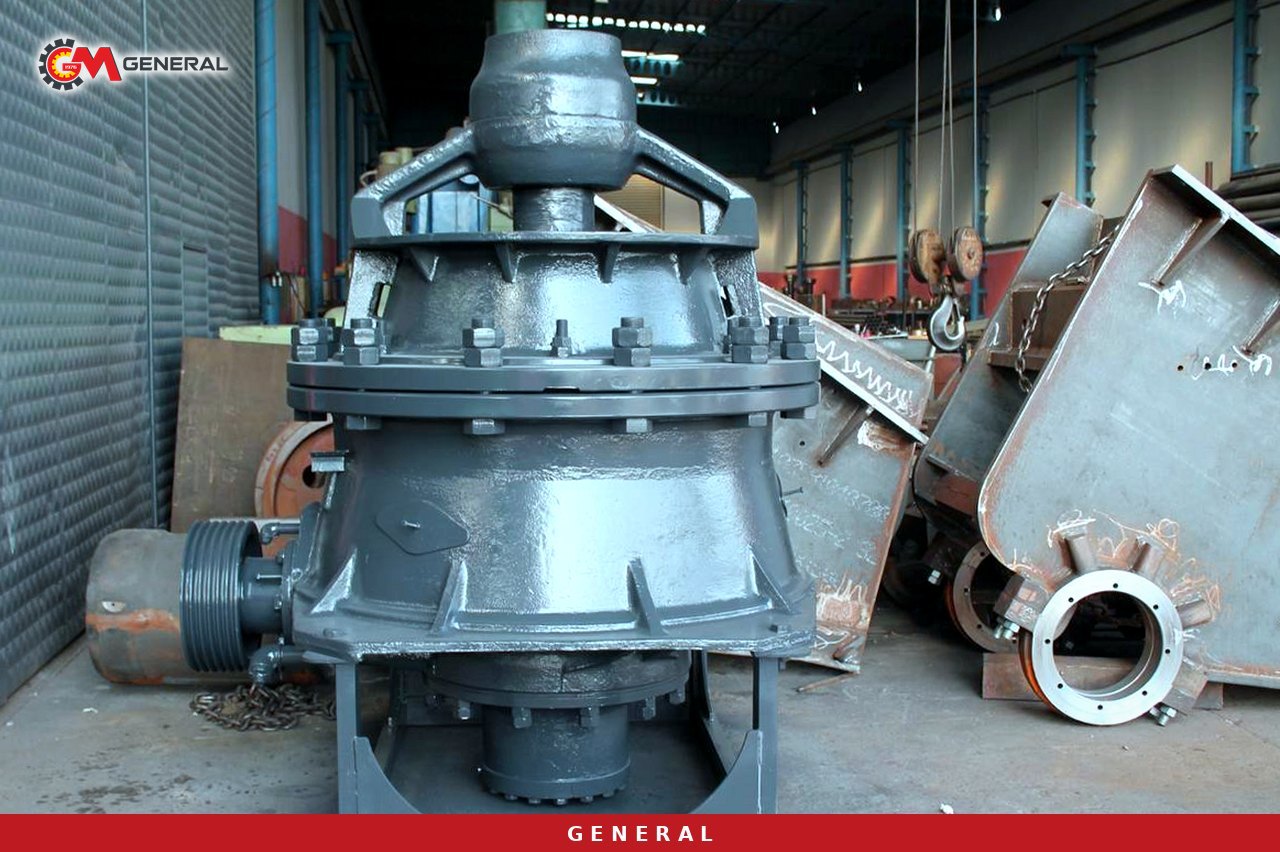
Dense basalt quickly consumes the blow bars of a rotor working on the impact principle. That is why the General 944 places a GM430 cone behind its GPJ 90 primary jaw: material is squeezed between mantle and concave instead of striking metal at high speed. The result is longer part life in abrasive stone and a more predictable cost per tonne. Product size is set hydraulically; for the working principle and liner options see the cone crusher page.
When the impact options pull ahead
If the stone is less abrasive, or the buyer clearly wants cubical chippings, the General 950 pairs the same GPJ 90 primary jaw with a DMK01 impact secondary. It gives high reduction and cubical particles, but on hard basalt blow-bar changes have to be planned more often. On easily broken material such as vesicular lava and tuff, the General 01 does primary and secondary work with a single GPS 1210 impactor, and its 4-deck screen delivers four fractions including 19-40 mm. In a quarry where a dense basalt seam dominates, the 01 should not be the first choice.
The cubical chippings requirement: when an extra cubicizer is needed
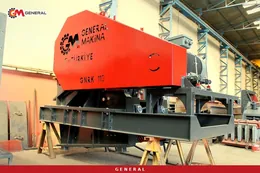
Asphalt and high-strength concrete buyers watch the share of flaky and elongated particles. Although the cone crusher is economical on abrasive basalt, some quarries need a final shaping stage to reach the particle-shape limit in the specification. In that case a mobile GNR MK cubicizer can be added behind the plant. The largest model in the family, the GNR MK110, has a 1550×1800 mm rotor, 350 mm maximum feed, 160-250 t/h capacity and a 200 kW motor. Its liners are made of Hardox 500 wear-resistant steel and the unit delivers 0-25 mm product.
A cubicizer works to correct shape more than to reduce size, so it is not required in every quarry. First have a flakiness test done on a sample taken from the 944 or 950 output; if the result exceeds the limit, put this extra unit into the budget. In seams with very high free quartz the liner life must be watched closely; in such stone the compression cone should remain the main stage.
From Mombasa port to the quarry: transport, power and the regional reference
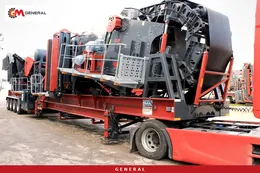
Heavy equipment arriving in Kenya by sea is usually trucked inland from the port of Mombasa. The advantage of a wheeled plant on this journey is that crusher, screen and conveyors arrive factory-mounted on one chassis. Use the dimensions on the product pages for planning: the General 944 and 950 have a transport size of 4130×20350×4500 mm and weigh 70,000 kg, while the General 01 measures 4300×18500×4500 mm and weighs 55,000 kg. For a load of this size, confirm route, bridges and abnormal-load permits in advance with your haulier and the relevant roads authority; permit timing and conditions are outside the scope of this article.
Many quarries in the Rift Valley sit far from the grid. Generator power is therefore part of both the investment and the fuel logistics: the product page value is 550 kVA for the 944 and the 01, and 600 kVA for the 950. In hot, dusty periods the filtering and cooling measures for the generator and hydraulic unit need to be defined per project; discuss them together with site conditions at quotation stage. To compare crusher, screen and conveyor layouts across models, browse the wheeled mobile crushing plants category.
The closest real reference in the region
Our site lists no delivery to Kenya, so we do not claim to have a machine working there. The closest real example is in neighbouring Ethiopia: the 150 t/h basalt crushing and screening project in Jijiga. It is a good starting point for seeing how a capacity in the middle of the 120-180 TPH band is arranged on basalt. Even so, the rock of a Kenyan quarry should be judged on its own sample.
Dust, wear parts and the first-year operating plan
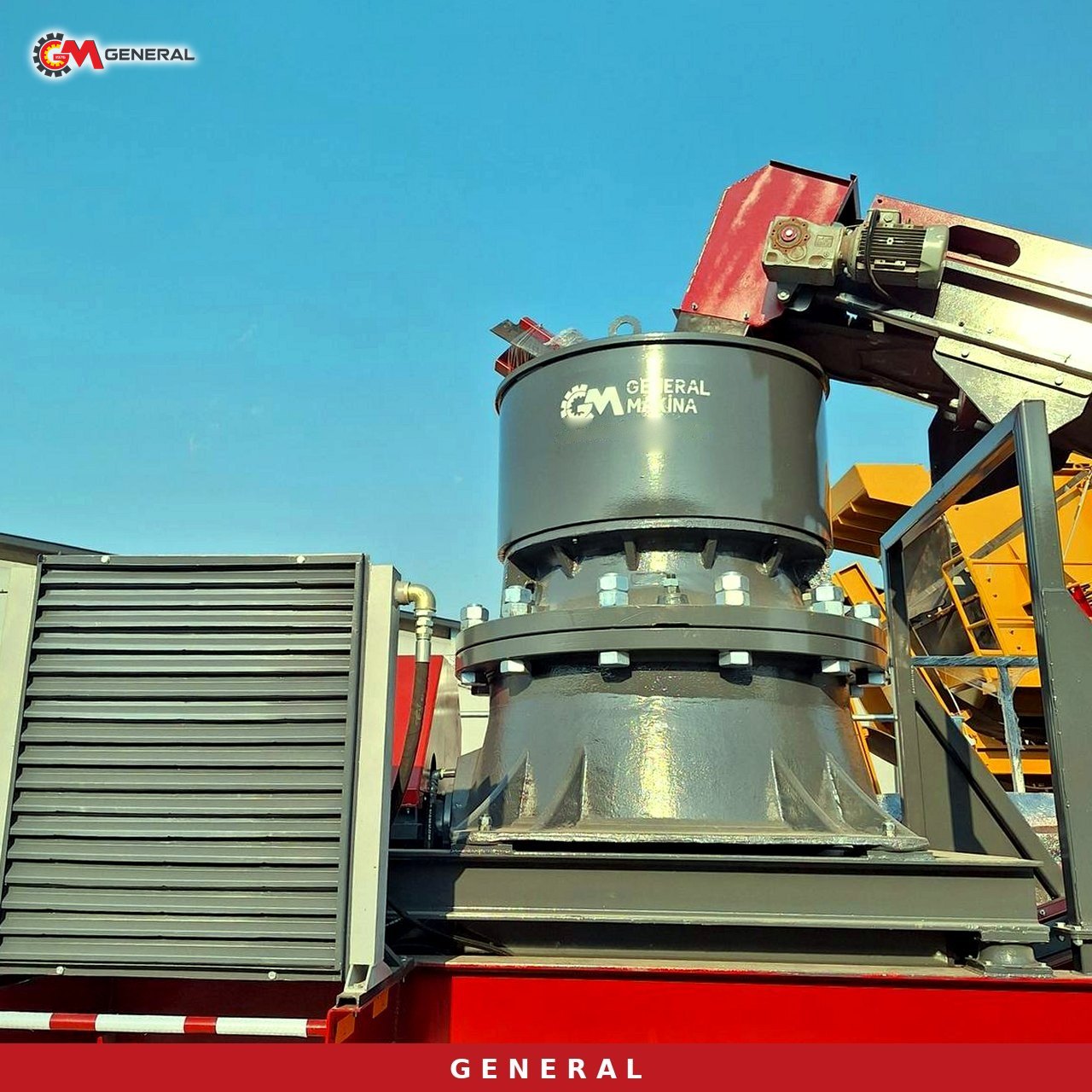
When crushing basalt the largest operating cost is wear parts, and it should be measured by consumption per tonne, not by part price. A simple formula does the job: wear cost per tonne = part cost ÷ tonnes crushed over that part's life. As a hypothetical example, if a liner set costing 10 units crushed 50,000 tonnes, the cost is 0.0002 units per tonne; if the same set is finished at 25,000 tonnes, the cost doubles. Manganese steel castings are the common choice for jaw plates and cone liners facing coarse, high-impact feed in thick-blocked hard rock. High-chrome parts pay off on clean, low-impact feed, but can be brittle where big blocks and tramp metal are a risk.
Dust deserves extra attention during Kenya's dry seasons. Water-spray dust suppression at crusher discharges and conveyor transfer points, belt covers and screen hoods are measures that can be selected per project; the quarry's distance from settlements and local environmental conditions decide the choice. The follow-up routine we suggest for the first year:
- Measure and record the jaw and cone settings during the first weeks after commissioning.
- Note the tonnage crushed at every wear-part change and calculate consumption per tonne from that record.
- Check screen meshes for tears and blinding at the start of each shift; blinding is more frequent with porous, damp material.
- Track the amount of fines that pass the pre-screen without entering the crusher and assess whether they can be stockpiled and sold separately.
- Clean generator air filters at short intervals matched to the dust load.
To see the liner and part layout of jaw, cone and impact crushers in one place, the rock and stone crushing machines category is a good starting point.
Frequently asked questions
944 or 950 for a basalt quarry in Kenya?
On dense basalt with a high abrasion test result, the cone-secondary 944 is usually better balanced on wear cost. If the stone is medium-hard and the buyer pays a premium for cubical product, the 950 can be considered. Both share the same capacity (120-180 TPH), feed opening (800 mm) and weight (70,000 kg); the difference lies in the second stage.
Does porous volcanic rock need a separate machine?
If the quarry consists entirely of vesicular lava or tuff, the General 01 with its single impactor may be enough. If the same quarry also contains dense basalt seams, the plant should be chosen for the hard seam; porous material crushes without trouble on a jaw-and-cone line too.
Can the plant run without grid power?
Yes. The product pages list a 550 kVA generator for the 944 and 01 and 600 kVA for the 950. Fuel supply and generator maintenance should be built into the site plan from the start.
What determines price and delivery time?
The chosen model, screen and conveyor layout, add-on units such as a cubicizer, the generator and the transport scope set the price. Delivery time is stated separately in the quotation according to the order scope; we give no figures in this article.
Conclusion
The right 120-180 TPH mobile stone crusher plant for volcanic rock and basalt in Kenya starts with the hardest seam in the quarry: the 944 for dense basalt, the 950 where cubical product comes first, the 01 for porous and mixed material, with an MK110 added behind if the particle-shape requirement is strict. General Makina has been manufacturing in Izmir since 1976; our plants carry ISO 9001 and CE certification and a 1-year warranty excluding wear parts. Send your sample results, target fractions and quarry location through our contact page and we will prepare a configuration and quotation built around your stone.
Definitions of technical terms: Glossary