EN — English
 TR — Türkçe
 DE — Deutsch
 RU — Русский
 FR — Français
 ES — Español
 AR — العربية
 SR — Српски

Iraq Reconstruction Mobile Stone Crushing Plant 250 Ton Per Hour
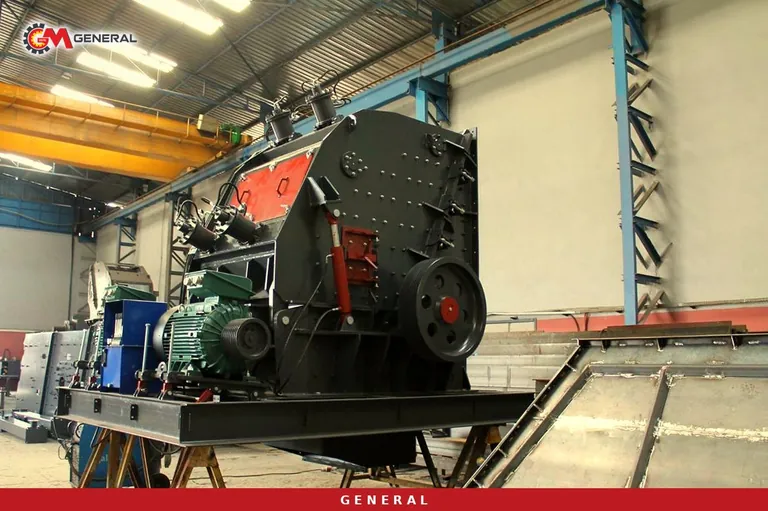
A reconstruction site in Iraq does not behave like a conventional quarry. In a single week the same feed hopper may receive reinforced concrete from a demolished school, limestone blocks from a quarry outside town and gravel dredged from the Tigris bank. A target of 250 tons per hour is therefore not one catalogue figure but the average of a changing material mix. This article sets out the real configurations that meet that target, which one suits each feed type, and the questions to settle before shipment, from the viewpoint of an engineer who has commissioned crushing lines in the field. No tender volumes, schedules or specifications are given here; confirm those with the contracting authority and the project specification.
The 250 TPH target on a reconstruction site
The rated output of a mobile crushing and screening plant is defined for steady feeding, low moisture and a suitable size distribution. Three factors pull that figure down on a reconstruction site: rebar, timber and plastic inside the rubble; fines mixed with soil; and frequent relocation. A contractor who needs 250 TPH of net product should choose a plant that carries this figure in the middle of its capacity range, not at the bottom, so that shifts slowed by sorting still stay on target.
On the product side the demand is clear. Housing, schools and hospitals need concrete aggregate (0-5, 5-12 and 12-19 mm), roads and utilities need 19-40 mm and road base, and backfill takes the screen undersize. The four-deck screens on the wheeled plants proposed below separate these four fractions in one pass, so a single line can supply both the batching plant and the road crew.
Feed material in Iraq comes from three sources
Concrete from demolished buildings and mixed rubble
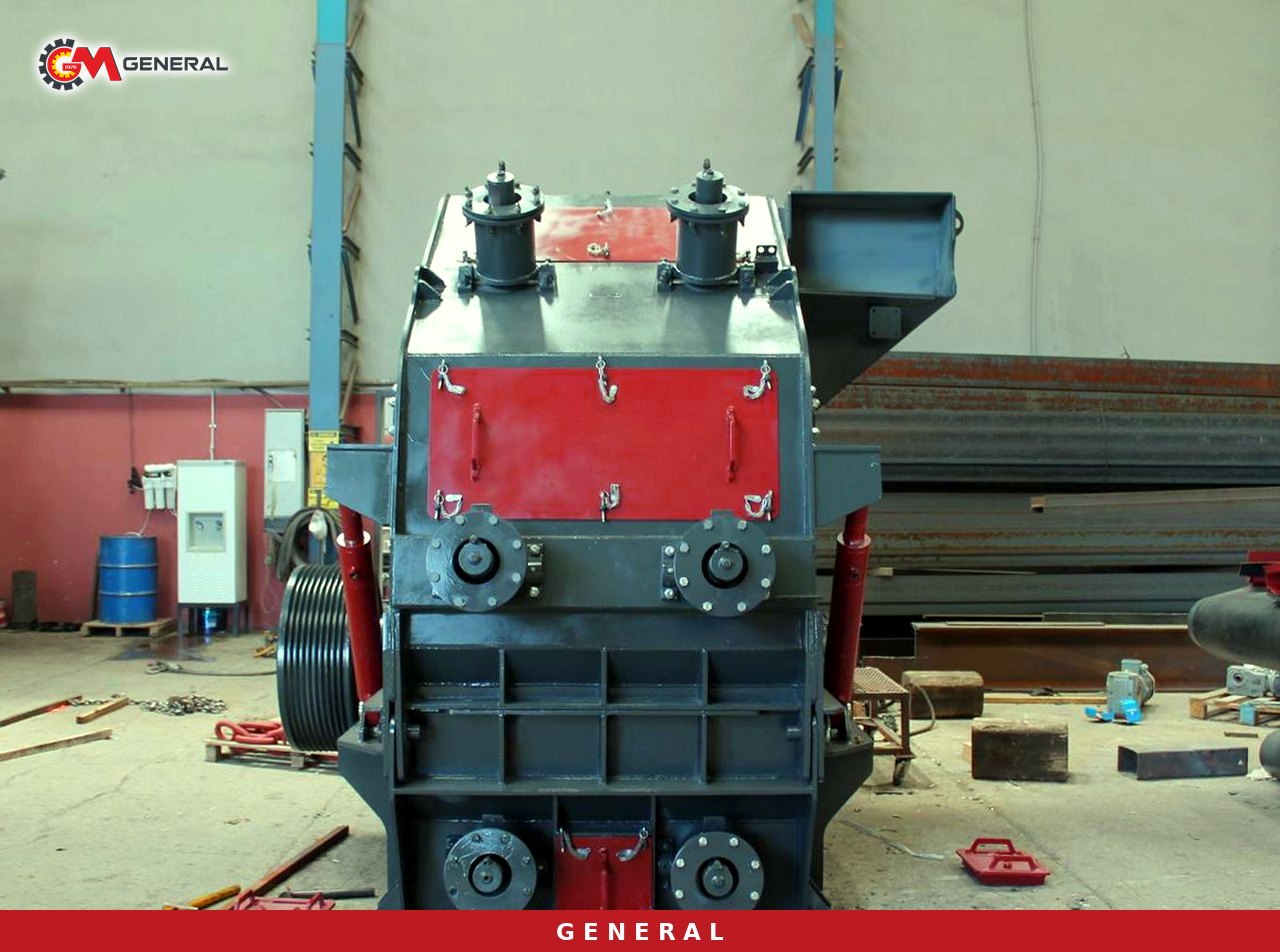
Debris cleared from war-damaged city centres such as Mosul is a valuable aggregate source when it is sorted properly. Reinforced concrete breaks easily in an impact rotor; the trouble lies in what does not break. Rebar, window and door frames and cables must be picked out by excavator before they reach the crusher, and oversize slabs should be reduced by hydraulic breaker below the plant's feed opening. The machine layout for rubble recovery is described separately on our concrete recycling plant page.
Limestone and dolomite quarries
Carbonate rock is widespread on the western desert plateau and along the Zagros foothills in the north. Because limestone is only mildly abrasive, a primary impact crusher gives a high reduction ratio and cubical grains here, which makes the shape requirement for concrete aggregate easier to meet. Chert or siliceous bands found in some layers can raise wear markedly. Determine the quarry's rock properties with crushability and abrasion tests, not by assumption.
Gravel and sand from the Tigris and Euphrates valleys
Part of the alluvial gravel is already at product size. Sending all of it through the crusher only adds rotor wear and fuel burn. The right sequence is to screen first and crush only the oversize. Gypsum (sulphate) also occurs in soils and aggregates in parts of Iraq; aggregate with a high sulphate content causes durability problems in concrete. Have samples tested in an accredited laboratory before shipment.
Four set-ups that reach the 250 TPH target
The table below contains only values published on our product pages. Cells without published data are marked "—".
| Configuration | Capacity | Crusher | Max. feed | Screen | Power | Chassis / weight |
|---|---|---|---|---|---|---|
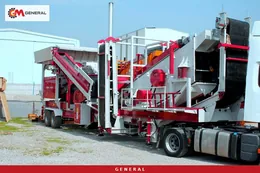
| General 03 | 250-375 t/h | GPS 1415 primary impact | 900 mm | 2400×5000 mm, 4-deck | 750 kVA | Single chassis, 4 axles / |
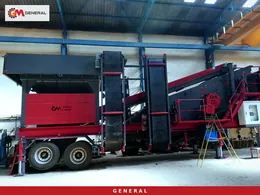
| GNR-MC110 | 200-300 t/h | GPJ 110 jaw + DMK03 impact | 900 mm | 2000×6000 mm, 4-deck | 750 kVA | Two chassis / 55,000 + 55,000 kg |
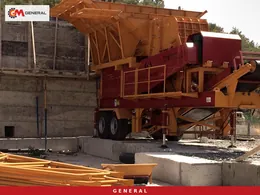
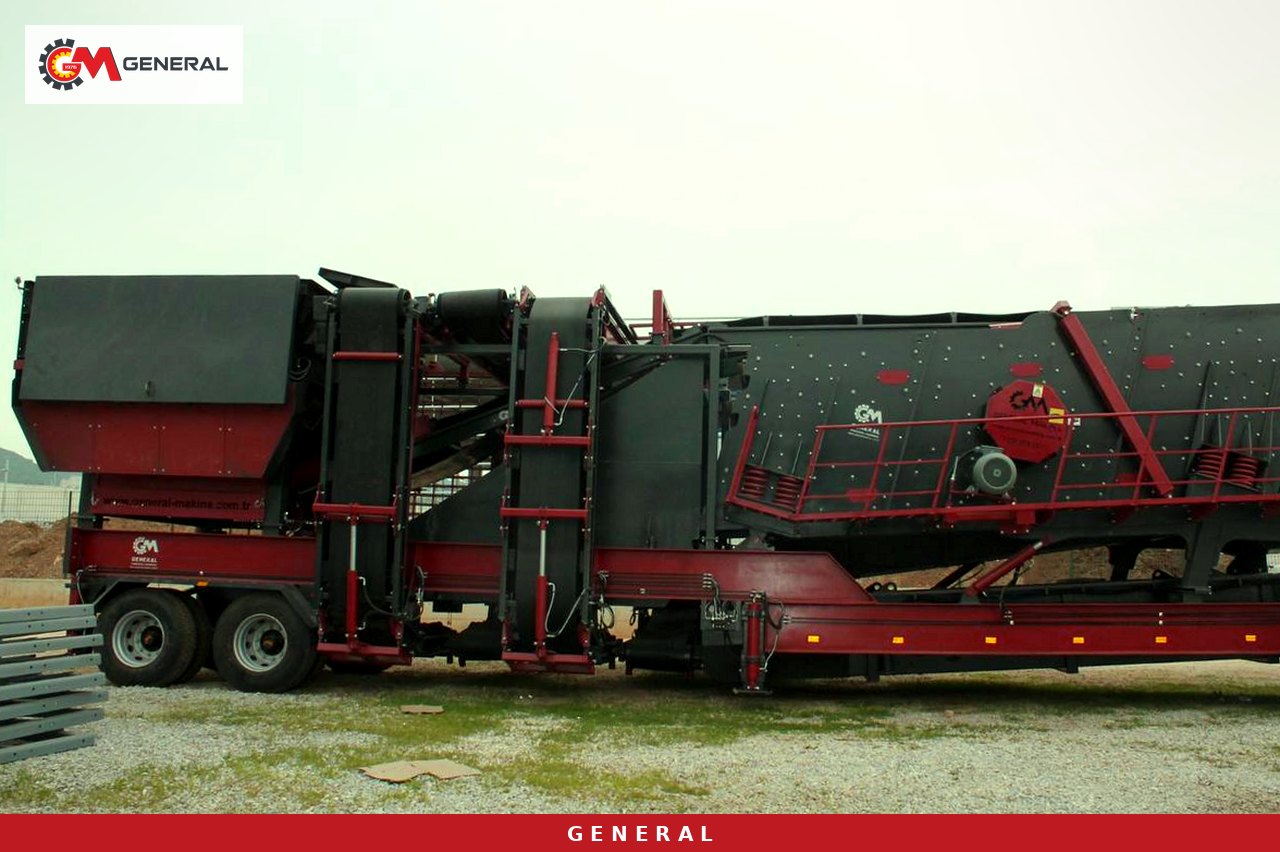
| General 02 | 250-300 t/h | GPS 1413 primary impact | 1000 mm | 2000×5000 mm, 4-deck | 660 kVA | Single chassis, 2 axles / 76,000 kg |
| Towed pair: GNR 110 + M-DMK 03 | 180-300 t/h and 175-300 t/h | GNRK 110 jaw + secondary impact | 1100 mm | (separate screen needed) | M-DMK 03: 250 kW | Two chassis / 55,000 + 45,000 kg |
Mixed rubble and limestone: General 02 or General 03
General 02 has the widest inlet in the series at 1000 mm, which cuts the time spent pre-breaking rubble blocks. It runs in closed circuit, returning screen oversize to the rotor until it reaches the target size. General 03 tops out at 375 t/h, leaving spare capacity at a 250 TPH target; on days when sorting slows the feed, that margin keeps output on target. Its inlet is 900 mm and it travels on a 4-axle chassis built to international transport standards.
Hard, abrasive quarry rock: GNR-MC110
If the quarry rock turns out to be high in silica, a jaw primary working by compression consumes wear metal more slowly than an impact primary. GNR-MC110 carries a GPJ 110 jaw and a DMK03 impact group on two separate chassis. Because the primary group can run alone, a site can pre-crush rubble only during its first months and bring the secondary group online later.
Contractors who want to split budget and transport into two parts can set up a GNR 110 primary jaw unit beside an M-DMK 03 secondary impact unit from our portable rock crushers. Screening is then done on a separate unit; for pre-separation of alluvial gravel the GNR ME2060 dry screening plant, with a 20 m³ hopper, 100 mm grizzly and 2000×6000 mm three-deck screen, accompanies this line at 200-350 t/h. All wheeled options can be compared in the mobile crushing and screening plants category.
Site practice when crushing rubble with an impact rotor
On reconstruction projects what wears the crusher is often not rock hardness but foreign matter entering the hopper. The following measures directly affect rotor and screen-mesh life:
- Set up a sorting area before feeding, so rebar, timber and plastic are removed on the stockpile, not at the hopper edge.
- Keep the grizzly feeder's by-pass open so soil and fines go to their own pile without entering the crusher.
- Match blow bar material to the feed: high-chrome for clean limestone, manganese or martensitic steel for mixed rubble with a risk of tramp metal.
- Consider adding an overband magnet on the crusher discharge conveyor; this is not standard on General Makina models but an option to select per project.
- The concrete class in which recycled aggregate may be used depends on the project specification; sample and test the first production.
From Umm Qasr port or by road to site
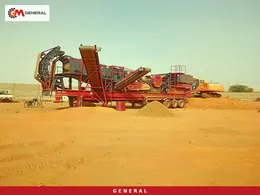
Shipments from Izmir to Iraq follow one of two routes: by sea to Umm Qasr port on the Persian Gulf, or overland through Türkiye to the northern border crossings. A wheeled chassis helps in both cases; the plant is towed on its own axles, so no additional carrier is needed from port or border to site.
Dimensions matter for route planning. General 02 travels in one piece with a transport size of 4340×20600×4500 mm. On GNR-MC110 the primary chassis measures 3000×13500 mm and the secondary chassis 4200×18300 mm, each pulled by its own tractor. General 03 is designed with its 4-axle chassis to international transport standards. On arrival the plant is set up with folding hydraulic conveyors and support legs, without excavation or a concrete foundation. Clarify axle-load limits and abnormal-load permits along the route in advance with the haulier and the relevant authority.
Operating in heat, dust and without grid power
On most reconstruction sites the plant runs on a generator until a reliable grid connection is available. A 660 kVA power unit is specified for General 02, and 750 kVA for General 03 and GNR-MC110. High summer temperatures reduce the output a generator can deliver; check the generator maker's temperature derating table and leave a margin.
The northwesterly shamal wind carries fine dust. Shorten air filter cleaning intervals, check the electrical cabinet against dust ingress and position stockpiles with the prevailing wind in mind. Water-spray dust suppression at the crusher discharge and conveyor transfer points, plus belt covers, are project-selectable measures that limit the impact on surrounding homes at urban sites.
Points to settle before requesting a quotation
- What share of the feed will be rubble, and what share quarry rock or gravel?
- What is the largest lump size; does it exceed the 900 mm and 1000 mm inlet limits?
- Which fractions are needed, and in what proportion (concrete aggregate, road base, fill)?
- Has the rock sample been tested for abrasiveness and sulphate?
- Will power come from a generator or the grid, and when is grid power expected?
- How many times will the plant relocate; are there axle-load limits on the route?
- Will shipment go via Umm Qasr or overland?
Frequently asked questions
Can demolition concrete and quarry rock be processed in the same plant?
Yes, but not at the same time. Work in campaigns: a few days of rubble, then quarry rock. When the material changes, check rotor settings and screen meshes against the new feed; a mixed feed spoils the product grading.
For 250 TPH, is one plant or two separate units the better choice?
On a site that relocates often and is fed mainly with rubble and limestone, a single-chassis plant such as General 02 or General 03 shortens set-up time. For hard quarry rock or staged investment, GNR-MC110 or the towed pair is more flexible.
How does the plant run on a site with no grid connection?
It runs on a generator at the kVA ratings shown in the table. When grid power arrives the same plant can be connected to it; state the cabinet and connection requirements at the order stage.
What information should I send for a quotation?
Send the list above, rock sample results and the site location. Our plants carry ISO 9001 and CE certification and a 1-year warranty excluding wear parts. Price and delivery schedule are prepared per project according to the configuration.
Conclusion
For a 250 tons-per-hour reconstruction line in Iraq, the right choice depends on the feed ratio. General 02 or General 03 suits sites dominated by rubble and limestone, GNR-MC110 suits hard quarry rock, and the towed pair suits staged investment. Send your material data and target fractions through our contact page and we will define the right configuration together.
Definitions of technical terms: Glossary