EN — English
 TR — Türkçe
 DE — Deutsch
 RU — Русский
 FR — Français
 ES — Español
 AR — العربية
 SR — Српски

Iraq Asphalt Chippings Spec: Aggregate Crusher Plant Settings 150-250 TPH
For a quarry supplying an asphalt plant in Iraq, the trouble is rarely the machine's power. It is the lab sheet: the flakiness value creeps over the limit, fines run high, or the 12-19 mm fraction is full one day and short the next. This article explains which machines to choose for a 150-250 TPH line that must deliver specification-grade chippings and, more importantly, in what order and with what logic those machines should be set. Every figure comes from the technical data on our product pages; the specification limits themselves must be confirmed with the authority that owns the project and with the technical annexes of your contract.
Reading the specification: every test maps to a setting
On Iraqi road works, the technical specification for bituminous mix aggregate (the authority's general specification plus project-specific annexes) filters chippings through several tests. Mapping each test to one adjustment parameter before buying saves the weeks otherwise lost to trial and error on site. The two groups below are properties the crushing line can influence directly; properties tied to the rock itself, such as abrasion resistance, are decided when you choose the quarry and cannot be fixed by settings.
Particle shape: flakiness and elongation
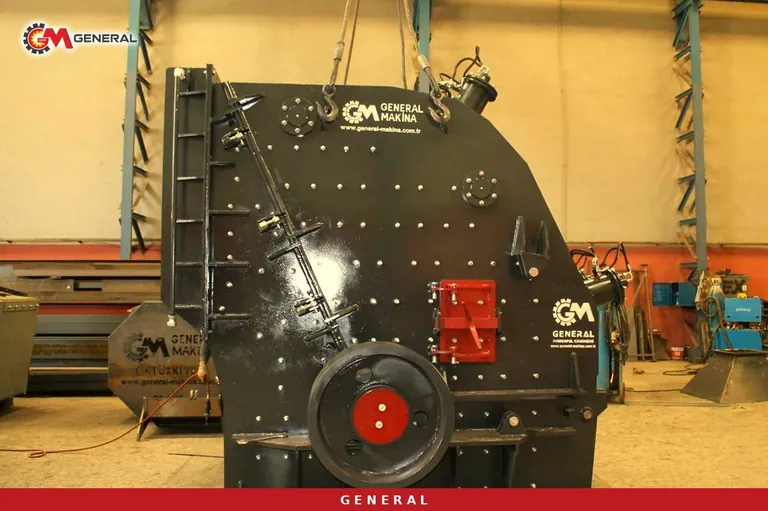
Flaky particles are born when a crusher reduces the stone too much in a single blow or a single squeeze. The shape problem therefore starts at the head of the line, not at the last machine. A primary setting that is tighter than needed, a starved second stage and oversize feed to the shaper all push the Flakiness Index up. The note on our cubicizer product page is explicit: flakiness rises as feed size grows and rotor speed drops.
Cleanliness: clay, dust and fines
Bitumen bonds to stone only when the particle surface is clean. Overburden soil and clay that are not removed at the grizzly pre-scalping stage go straight into the product. On the screen side, stockpiling the 0-5 mm fraction separately and keeping it out of the coarse chippings decides the outcome of the sand equivalent and fines content tests.
In Iraq, the quarry type changes the starting point
Limestone and dolomite quarries are common in the west and north of the country, while river gravel is a major raw material on the Tigris and Euphrates plains. Harder igneous rock also occurs in the mountainous north. All three groups may serve the same specification, yet each needs different settings. In limestone a secondary impactor delivers both high reduction and cubical particles. In high-silica gravel and hard rock, a cone crusher working by compression makes the wear parts last far longer. Do not guess which group your quarry belongs to: send samples for Los Angeles abrasion, Bond abrasion index and flakiness tests.
River gravel also demands attention to the crushed-face ratio of rounded particles. If the specification requires a given share of crushed faces in asphalt aggregate, the gravel sent to the crusher must be coarse enough; passing an already small rounded pebble through a crusher does not give it a fractured face. This means the grizzly opening and the by-pass flow must be set differently in a gravel pit than in a limestone quarry.
Model matching for 150-250 TPH
No single machine covers the whole range on every rock. The table below brings together the product-page values of our models that are candidates for chippings production in this tonnage band. Capacities vary with material, moisture and the required fractions, so treat the table as a starting framework.
| Model | Crushers | Capacity | Max. feed | Screen | Fractions | Generator |
|---|---|---|---|---|---|---|
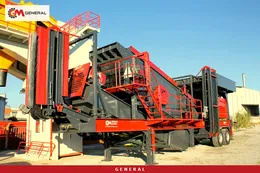
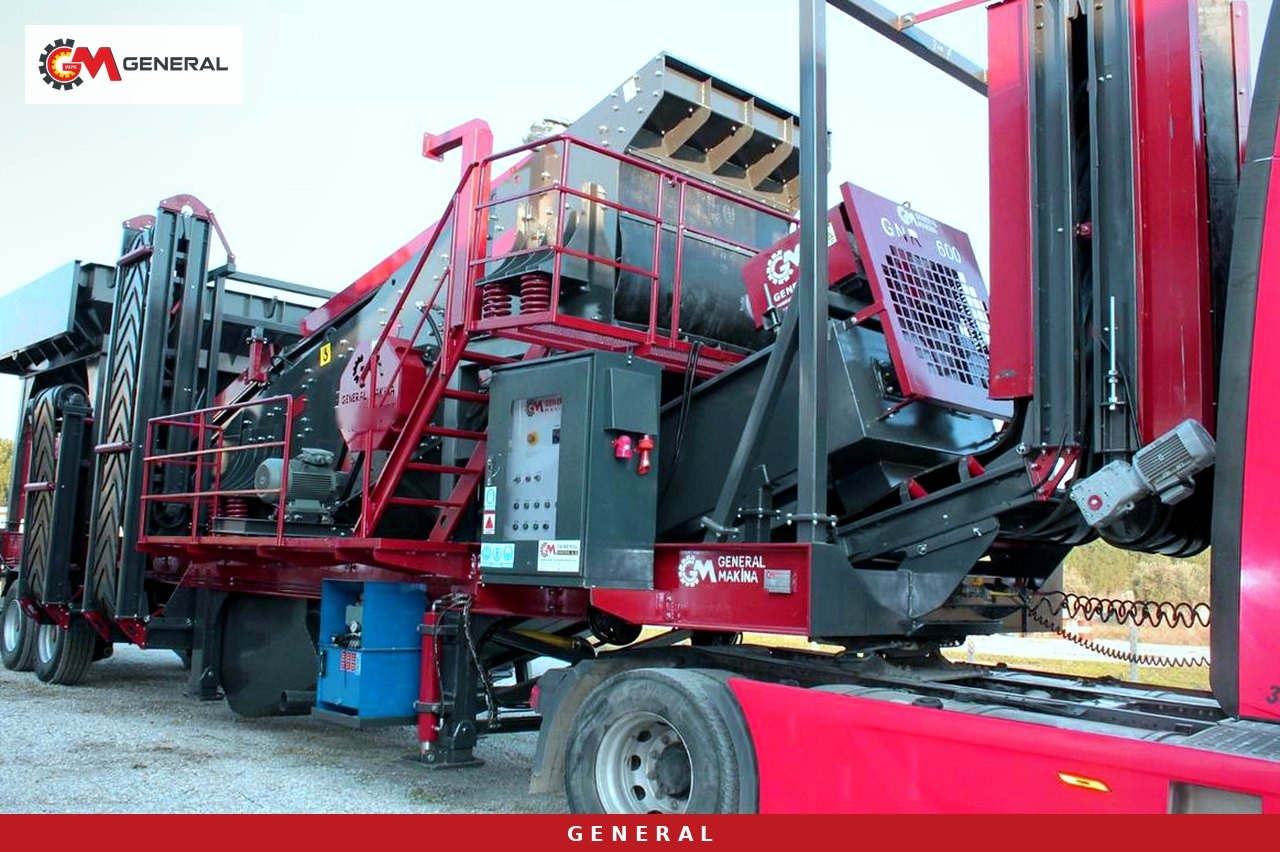
| GNR-MC110 | GPJ 110 jaw + DMK03 impactor | 200-300 t/h | 900 mm | 2000×6000 mm, 4-deck | 0-5 / 5-12 / 12-19 / 19-40 mm | 750 kVA |
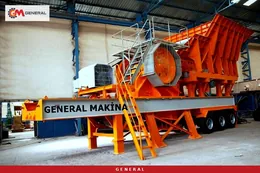
| General 944 | GPJ 90 jaw + GM430 cone | 120-180 t/h | 800 mm | 1600×5000 mm, 3-deck | 0-5 / 5-12 / 12-19 mm | 550 kVA |
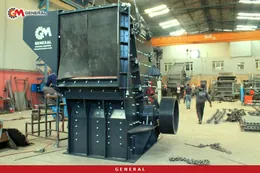
| GNR MK110 mobile cubicizer | Rotor shaper, 1550×1800 mm rotor, 200 kW motor | 160-250 t/h | 350 mm | — | 0-25 mm product | — |
| GNR MK100 mobile cubicizer | Rotor shaper, 1550×1200 mm rotor, 132 kW motor | 90-130 t/h | 250 mm | — | 0-25 mm product | — |
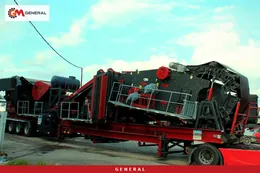
In a limestone or dolomite quarry the GNR-MC110 covers the full range on one line; being a twin-chassis plant, it also lets you install the primary group first and commission the secondary group later. For gravel and hard rock the General 944with a cone in the second stage, is the logical candidate; but since one unit gives 120-180 t/h, a 250 TPH target calls for two parallel 944 lines or a 944 planned together with a separate shaping stage. On wearing-course jobs with tight shape limits, the GNR MK series mobile cubicizer with Hardox 500 liners is added to the final product stream. Other wheeled options are listed under mobile crushing plantsand single-chassis crusher units under portable rock crushers.
Setting sequence: four intervention points from jaw to screen
The most common commissioning mistake is to adjust the last machine when the product goes wrong. The correct sequence follows the flow: primary first, then the second stage, then the shaper, and the screen last. At each step take a sample, run flakiness and sieve analysis, and only then move to the next adjustment.
1. Primary jaw: share the reduction
A jaw crusher typically reduces 4:1 to 9:1, and its maximum feed size is about 0.8-0.9 of the opening width. Narrowing the discharge setting to make chippings looks tempting, but a large reduction in one stage produces flaky particles and starves the second stage. Set the jaw to a size the second crusher accepts comfortably and leave most of the reduction to the next stage.
2. Second stage: choke feed and the right gap
A cone crusher reduces 6:1-8:1 in secondary duty, and its closed-side setting is adjusted hydraulically. Keeping the chamber choke-fed makes stone break against stone and raises the share of cubical particles; a half-empty cone gives both flaky particles and an erratic product. In the DMK impactor, reduction is about 10:1, and bringing the aprons closer to the rotor makes the product finer. When setting a DMK on limestone, move the aprons in step by step and watch the ratio of the 5-12 and 12-19 mm fractions at each step.
3. Cubicizer: no oversize, no speed drop
The mobile cubicizer accepts 0-350 mm feed and delivers 0-25 mm product; yet accepting a size does not make it the right size for shaping. Limiting the stream to be shaped with a screen beforehand and keeping rotor speed at its design value are the two basic conditions for a lower Flakiness Index. The cubicizer's job is shaping, not reduction; do not expect tonnage from it.
4. Screen: tune efficiency, not capacity
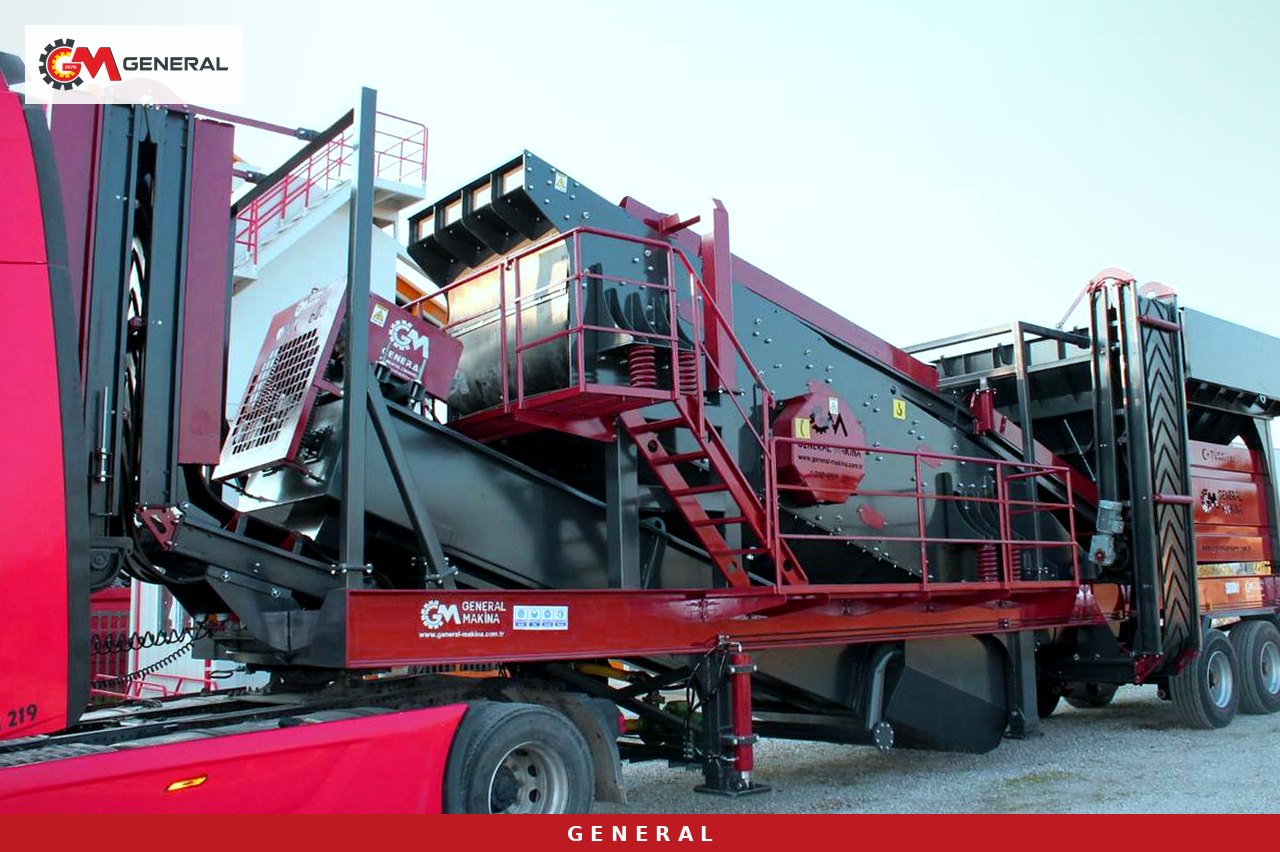
Commercial screening efficiency on a vibrating screen is 90-95%. Particles at 75-125% of the aperture lower efficiency, the slope is kept at 15-30°, and each additional deck cuts capacity by roughly 10%. To stop fractions spilling into each other, wire apertures should be selected at the order stage against the specification's grading curve. See vibrating screens for options; at high tonnage, bodies such as the 2000×6000 mm GNR 2060 are used.
Holding the settings on a hot, dusty site
Iraq's summer heat and dusty winds can make the settings achieved at commissioning drift within weeks. Belt tension, bearing temperatures and screen wire tension should be checked at the start of each shift. Dust suppression sprays, covered conveyors and frequent cleaning of generator air filters are measures that can be selected per project; we define them together with you at the quotation stage according to site conditions. On the wear side, cone liners are usually manganese steel, and high-chrome parts are considered for high-silica gravel. As liners wear the gap opens and the product starts coming out coarse, so regular gap measurement is part of setting discipline.
Two shipping routes are considered: by road through Türkiye to the northern border crossing, or by sea via the ports on the Gulf. The primary and secondary chassis of the GNR-MC110 are towed separately; route permits should be planned in advance using the dimensions on the product page. At remote quarries power comes from a generator; the kVA values in the table are the standard power unit of each model.
File to prepare before requesting a quote
- The project authority's aggregate specification and grading curve (wearing, binder and base courses separately)
- Los Angeles abrasion, Bond abrasion index and flakiness results on quarry samples
- Quarry type: limestone, dolomite, river gravel or hard rock; overburden and clay content
- Target hourly tonnage, daily operating hours and expected share of each fraction
- Power source (grid or generator), site access and shipping route
- Whether the plant stays put or relocates along the road alignment
Frequently asked questions
Can limestone chippings meet the specification without a cubicizer?
In most limestone a DMK secondary impactor gives cubical particles, and a separate shaper may not be needed. The result depends on the rock and the flakiness limit in the specification; a trial crush on samples before commissioning is the safest route.
Can 250 TPH be reached with a single unit?
On limestone the GNR-MC110, at 200-300 t/h, achieves it on one line. On hard, abrasive rock the General 944 with a cone second stage gives 120-180 t/h on its own, so either two parallel lines or a configuration with an extra stage is needed.
What warranty and certificates apply?
Our machines carry a 1-year warranty; wear parts are excluded. Production is ISO 9001 and CE certified. We have been manufacturing in Izmir since 1976, and the Middle East is among our export regions.
What determines the quoted amount?
The crusher combination, whether a shaping stage is included, the number of screen decks, the generator, dust measures and the shipping method are the main items. Send us the specification and test results and we will prepare a project-specific quotation.
Conclusion
Producing specification-grade asphalt chippings in Iraq is as much about setting the chosen model patiently, in flow order and with testing, as about choosing it: share the reduction at the jaw, choke-feed the second stage, send the cubicizer suitable feed and match screen apertures to the grading curve. Send us your specification and quarry sample results, and we will define the configuration that suits your rock and tonnage together. For a quote, reach us through our contact page.
Definitions of technical terms: Glossary