EN — English
 TR — Türkçe
 DE — Deutsch
 RU — Русский
 FR — Français
 ES — Español
 AR — العربية
 SR — Српски

Cutting Cost per Ton in a 200-300 TPH Aggregate Crushing Plant
In an aggregate crushing plant producing 200-300 TPH, cost per ton is shaped less by the purchase price than by the small decisions made every shift: whether the crusher mouth runs full or half empty, whether the blow bar alloy suits the rock, whether the fines leaving the bottom deck can actually be sold. At the quotation stage everyone looks at the capacity figure. Once the plant is running, the account follows a single ratio: total cost for the period divided by saleable tons. This article takes the numerator and the denominator of that ratio one at a time and uses the published specifications of real General models in the 200-300 TPH band to show which decision pushes cost in which direction. We give no prices; we give formulas and measuring points that you fill in with data from your own site.
The skeleton of the calculation: numerator, denominator, saleable tons
Cost per ton can be written on one line:
Cost per ton = (period share of investment + energy + wear parts + maintenance and downtime + labour and loading) ÷ saleable tons
The part most often overlooked is the denominator. Crushed tons on the weighbridge ticket and tons shipped to customers are not the same thing. Surplus 0-5 mm waiting in a stockpile, flaky chippings that fail the specification and oversize sent back to the crusher all carry cost but bring no revenue. The first task is therefore to match the product list to local demand. If there are few buyers for manufactured sand nearby, a crusher choice that raises the fines ratio looks like extra capacity on paper and returns as unsold stock in the accounts.
The second part of the denominator is utilisation. Any improvement made without measuring how many of the planned hours the plant actually spends crushing rock rests on guesswork. Writing the cause of each stoppage in the shift log (waiting for trucks, belt slip, liner change, generator fault, hopper blockage) is enough to find the largest item at the end of the month. In most quarries the item at the top is not the crusher but the loading routine that fails to bring rock to it on time.
How sensitive the ratio is: a hypothetical example
The figures below do not come from a real site; they were chosen only to show how the ratio behaves. Assume a plant has a monthly fixed cost of 40,000 units and a variable cost of 2 units per ton. With 40,000 saleable tons a month, cost per ton is 1 + 2 = 3 units. If the same plant cuts stoppages and reaches 50,000 saleable tons, the fixed share falls to 0.8 units and the total becomes 2.8 units. Cutting the variable cost by one tenth gives the same result. Raising saleable output is therefore as strong a lever as negotiating parts or fuel, and it is often cheaper to achieve.
Choosing the configuration: most of the cost is written at purchase
There is no single right model for a 200-300 TPH target. The abrasiveness of the rock and the number of years the plant will stay in one place decide the route. The table below places real configurations side by side, with values taken from the technical sheets on our product pages.
| Configuration | Capacity | Crusher arrangement | Feed / opening | Screen | Power |
|---|---|---|---|---|---|
| General 02 | 250-300 t/h | GPS 1413 primary impact | 1000 mm | 2000×5000 mm, 4 decks | 660 kVA |
| General 03 | 250-375 t/h | GPS 1415 primary impact | 900 mm | 2400×5000 mm, 4 decks | 750 kVA |
| 2 × General 944 (parallel) | 2 × 120-180 t/h | GPJ 90 jaw + GM430 cone (each unit) | 800 mm | 1600×5000 mm, 3 decks (each unit) | 2 × 550 kVA |
| Stationary line (sample layout) | project-specific | GNRK 110 jaw (200-350 t/h) + secondary cone | opening 1100×850 mm | GNR 2460, 2400×6000 mm | — |
Limestone: a single impact chassis
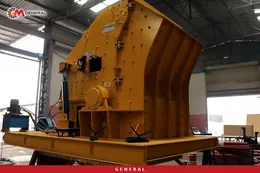
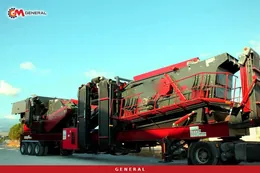
On low-abrasion limestone a single-chassis primary impact plant such as General 02 or General 03 lowers cost per ton by the simplest route. One crusher, one power unit and one crew; relocation and set-up are paid once. The primary impactor reduces the rock heavily in a single stage and produces cubical grains, which holds the selling price of concrete aggregate. The choice between the two models is also a cost question. The 1000 mm feed opening of General 02 accepts large blocks with less rock-breaker work. The 2400×5000 mm screen of General 03 adds screening area at the top of the band and lightens the recirculating load. The limit should be stated plainly: in rock with high free silica the impactor's bars wear out quickly and this layout stops being economical.
Basalt and granite: jaw plus cone
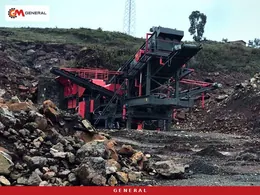
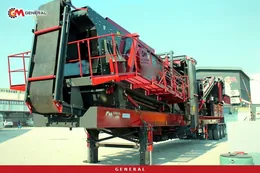
Hard, abrasive rock calls for a chain that crushes by compression. Two General 944 units running in parallel give 240-360 t/h in total, and each has a GM430 secondary cone behind its GPJ 90 primary jaw. In abrasive rock the mantle and concave of a cone crusher last far longer than the bars of an impactor. Two separate units bring one more advantage to the cost sheet: when one stops for a liner change the other keeps running, so saleable output never drops to zero. The price is two power units and more maintenance points. Other wheeled options are listed model by model on the mobile crushing and screening plants page.
When to move to a stationary line
If the quarry licence and reserve guarantee production at one spot for many years, stationary crushing and screening lines pull ahead on cost per ton. With no chassis transport limit, a larger feed opening and more screen area can be used; where grid power is available, generator fuel drops out of the calculation. On the other side, concrete foundations, steel structure and erection are added to the investment share. For the decision, put two numbers next to each other: how many years the reserve will last with this plant, and how many times a mobile plant would relocate in the same period.
Wear parts: life per ton instead of the invoice
The right measure for wear cost is not the price of a parts set but the tons crushed with it. Note the weighbridge counter at every change and divide the cost of the set by that tonnage. This single habit shows within a few changes why an alloy that looks cheap ends up expensive.
Matching the alloy to the silica in the rock
Wear is driven by the free quartz and silica content of the rock more than by its Mohs hardness. Austenitic manganese steel (Mn13, Mn18, Mn22) work-hardens at the surface under impact, which is why it is used for jaw plates and cone liners. High-chrome white iron suits blow bars in clean-fed, abrasive limestone, but it is brittle and can break when a bucket tooth or tramp iron enters the feed. Do not decide on the alloy before an abrasion test of a quarry sample. Which part exists for which crusher can be seen on the wear and spare parts page.
Grizzly pre-screening and a full crusher mouth
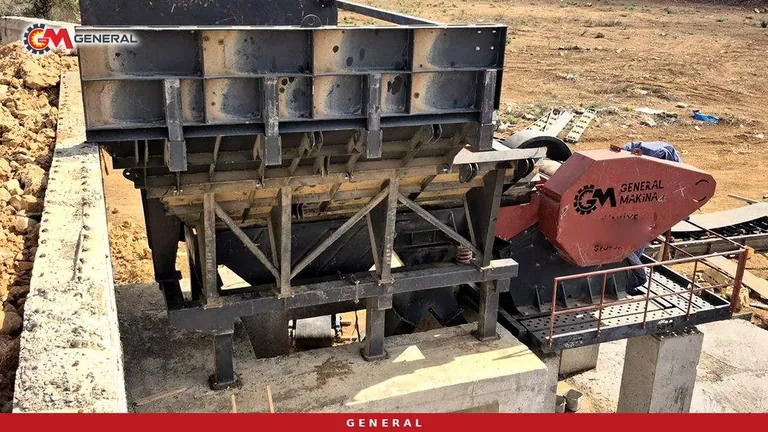
Fines and soil that do not need crushing wear the liners for nothing when they enter the crusher, and they take a share of capacity. A grizzly-type vibrating rock feeder sends this fraction past the crusher through its by-pass. GNR 110 fits the 200-300 TPH band (1100×4750 mm pan, 200-300 t/h, 2×7.5 kW); for higher tonnage and coarse blasted rock there is GNR 140 (350-600 t/h). The feeder's second job is to keep the crusher mouth choke-fed. A jaw or rotor running half empty uses the same energy, gives fewer tons and produces flakier grains.
Energy and downtime: measured kW, sequential start
The kVA figure on the technical sheet is the maximum the power unit can deliver, not what the plant draws every hour. To build the energy line correctly, measure the average kW under load and divide it by the saleable tons of the same hour; the result in kWh per ton can be compared directly. The motor also runs while the crusher idles, so idle minutes quietly inflate the energy line.
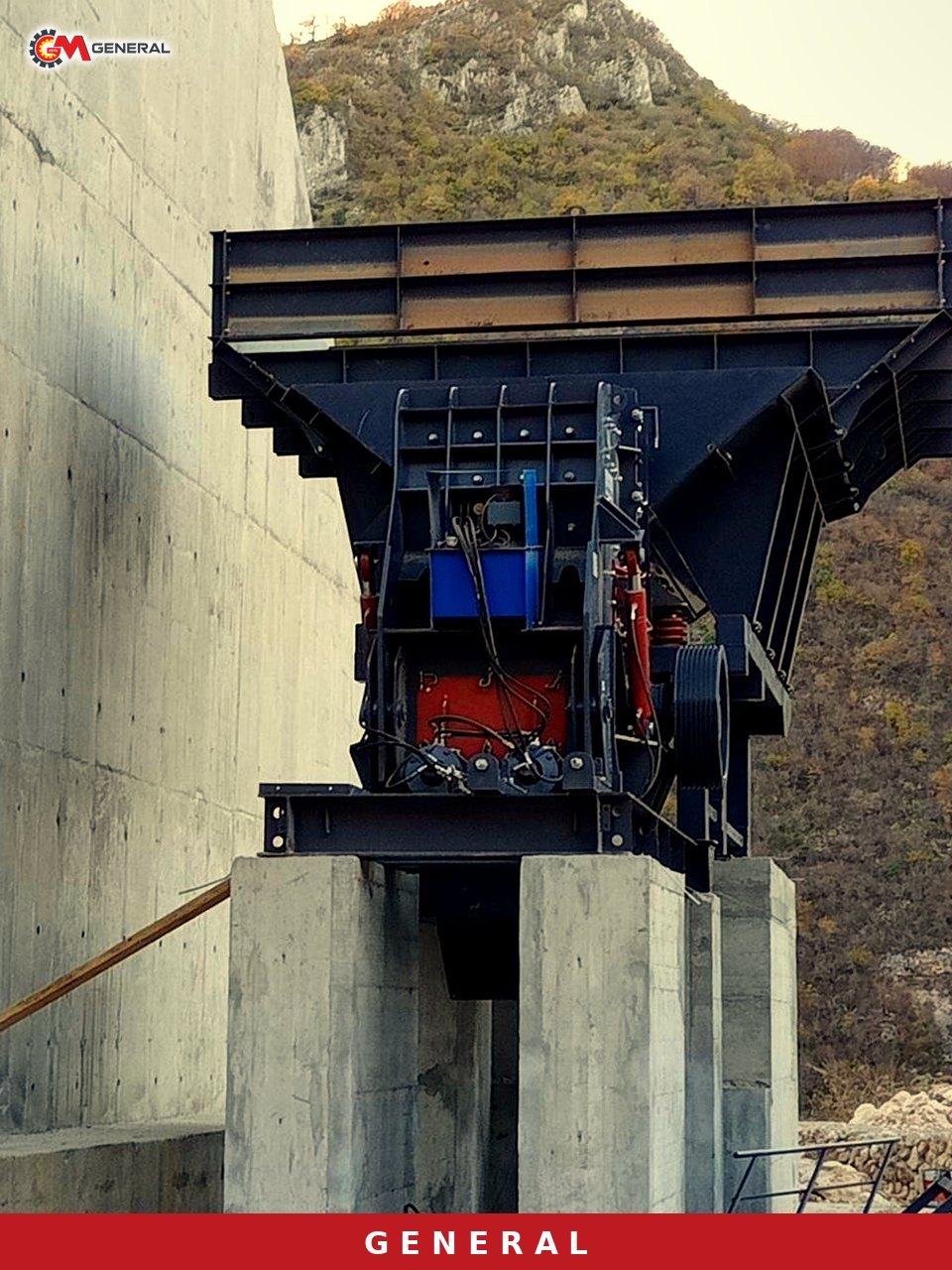
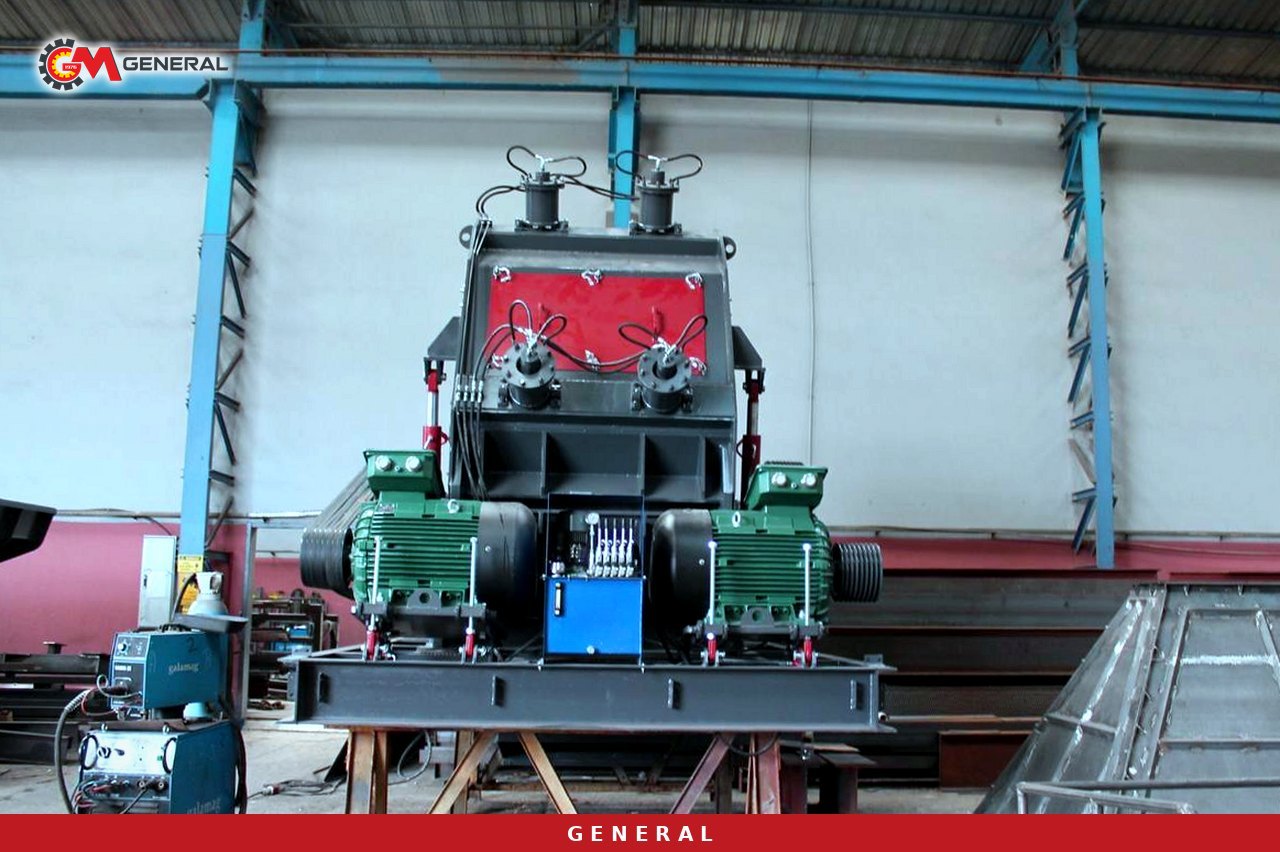
Automation does concrete work here. When crusher current approaches its threshold, the frequency drive slows the feeder and raises the feed again once current drops; overload trips and idle running both fall. The line starts in sequence from the stockpile belt back to the feeder, and when one machine stops every stage before it stops by itself, which prevents starts on loaded belts and blockages. A small choice on belts prevents long stoppages too: under an impact crusher, EP 125 four-ply belting is used instead of the standard EP 100. To try your own values line by line, use the operating cost calculator.
Checklist for a monthly cost review
- Record saleable tons separately from crushed tons and weigh the fractions waiting in stock every month.
- Total the stoppages in the shift log by cause and set the three largest causes as targets for the next month.
- Write down the weighbridge counter at every liner and bar change, then divide the set cost by the tons crushed.
- Track crusher current and feeder speed on the same chart; fluctuating current is a sign of uneven feeding.
- Inspect screen meshes weekly for holes and tears, and watch for a rising load on the return belt.
- Measure the average kW drawn under load and compare kWh per ton month by month.
- Keep truck and loader waiting time apart from crusher downtime; that is where the problem often sits.
Frequently asked questions
Does raising capacity always lower cost per ton?
No. If the extra tons can be sold, fixed cost is spread over more tons and the figure falls. If the extra goes into a fraction that waits in stock, or overloads the crusher and shortens liner life, the result turns the other way.
Which is more economical: an impact plant or a jaw and cone line?
It depends on the rock. On low-abrasion stone such as limestone, a single impact chassis delivers cubical product with less equipment. On basalt, granite and siliceous rock, the liner life advantage of a chain with a secondary cone usually outweighs the difference in initial investment. The decision needs a test result from a quarry sample.
How should I bring the investment into the cost per ton?
Take the machine and installation cost, add financing cost, and divide by the years you plan to use the plant; then spread each annual share over that year's saleable tons. This puts a cheap machine that stops often and a dearer one that runs steadily on the same scale.
What do the price and delivery time in a quotation depend on?
They depend on the chosen configuration, the number of screen decks, the power unit, conveyor lengths and the shipping method. That is why we prepare project-based quotations from rock type, target products and hourly tonnage rather than quoting a general figure. Our machines carry a 1-year warranty (wear parts excluded).
Closing and quotation
Lowering cost per ton does not depend on one miracle part: the right crusher arrangement for the rock, a choke-fed mouth, wear measured per ton and every stoppage on record. General Makina has built crushing, screening and washing plants in Izmir since 1976, and our products hold ISO 9001 and CE certification. Send us your rock type, target fractions and hourly tonnage, and we will work out together the configuration in the 200-300 TPH band that fits your site: contact page.
Definitions of technical terms: Glossary