EN — English
 TR — Türkçe
 DE — Deutsch
 RU — Русский
 FR — Français
 ES — Español
 AR — العربية
 SR — Српски

Azerbaijan Caspian Limestone Stone Crushing Plant 200-300 TPH
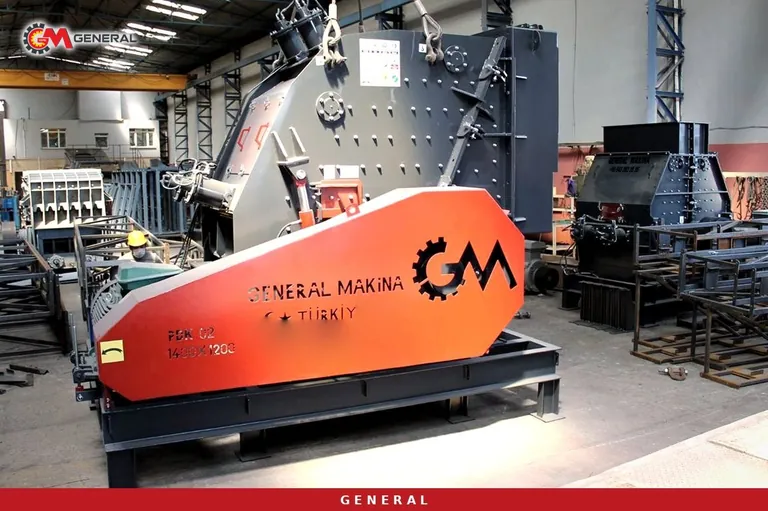
Quarries along the western shore of the Caspian Sea, around the Absheron Peninsula and down the coastal strip, share one raw material: limestone. Yet the word hides very different breaking behaviour. Pits close to the sea yield porous, shelly limestone that crumbles easily, while further inland the faces turn massive and in places dolomitic. An investor targeting 200-300 tonnes per hour has to translate that difference into the machine list first. Below we build such a line stage by stage from our catalogue values: which primary, which secondary, which screen, and what the Caspian wind, humidity and salty air add to the design.
Shelly coastal limestone or massive rock? The difference that drives crusher choice
Porous limestone on the coastal strip
Limestone with shell fragments has low compressive strength. It breaks readily in the crusher but produces more fines than expected, and part of those fines is a dust-and-clay mix. Left in the circuit, it blinds screen meshes and raises the fines content of concrete aggregate. With this kind of feed, the by-pass section of a vibrating grizzly feeder which diverts the dirty fraction before it ever reaches the crusher, matters as much as the crusher itself.
Massive limestone and dolomite inland
Denser limestone and dolomite give cubical particles in an impact crusher, and as long as abrasiveness stays low, blow bar life is predictable. Chert nodules, siliceous bands or sandstone interbeds change the picture. Our product data sets a clear limit: material with more than 10% silica or a Bond abrasion index above 0.15 consumes blow bars within hours, and the answer then is a jaw plus cone combination.
So take samples from at least two points of the face. Do not finalise a model until a laboratory has measured compressive strength, abrasion index and silica content. Confirm particle-shape and fines limits of the aggregate specification with the contracting authority or the tender documents.
What an impact circuit gains on limestone
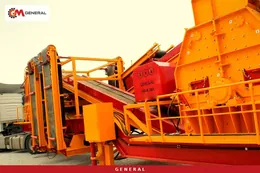
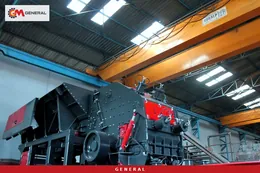
An impact crusher does not squeeze rock between two jaws; the blow bars on a horizontal rotor strike it and throw it against breaker plates. On limestone this has two concrete effects. The first is reduction ratio: the GNR PDK primary impact crusher generally works at 4:1-6:1 and can reach up to 20:1 on limestone in primary duty, a ratio no single jaw stage is expected to deliver. The second is shape: impact splits particles along their weak planes, so the product is cubical and meeting flakiness limits in concrete and asphalt specifications gets easier.
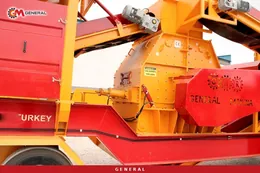
At the secondary stage, the GNR DMK secondary impact crusher applies the same principle with a smaller inlet and aprons set closer to the rotor; its typical reduction ratio is about 10:1. A primary-plus-secondary impact chain turns limestone into a wide product range, from 0-5 mm manufactured sand to 19-40 mm coarse chippings. If the specification demands a tighter sand grading, adding a vertical shaft impactor (VSI) at the end is a separate decision driven by the product list.
Matching models to the 200-300 TPH target
The core equipment that covers the target range is listed below, each figure with the model it belongs to. Values are manufacturer catalogue figures; real output on site depends on hardness, moisture, feed grading and the required product sizes. The wider range is shown in the crushers category.
| Stage | Model | Capacity (t/h) | Max. feed (mm) | Power | Note |
|---|---|---|---|---|---|
| Feeding | GNR 110 grizzly feeder | 200~300 | — | 2×7.5 kW | Pan 1100×4750 mm |
| Primary, stationary | GNR PDK02 | 200-300 | 900 | 200 kW | Rotor 1400×1200 mm |
| Primary with headroom | GNR PDK01 | 250-500 | 1000 | 315 kW | Rotor 1400×1500 mm |
| Secondary | GNR DMK03 | 250-300 | 800 | 250 kW | Rotor 1100×1500 mm |
| Secondary, large | GNR DMK05 | 250-500 | 800 | 500 kW | Rotor 1400×2000 mm |
| Mobile single unit | General 02 | 250-300 | 1000 | 660 kVA generator | GPS 1413 (PDK02) primary, 2000×5000 mm 4-deck screen |
| Mobile single unit | General 03 | 250-375 | 900 | 750 kVA generator | GPS 1415 primary, 2400×5000 mm 4-deck screen |
Stationary proposal: GNR 110 + PDK02 + DMK03
For a 200-300 TPH target, the stationary combination whose capacity bands fit best has three machines: the GNR 110 grizzly feeder (200~300 t/h), the GNR PDK02 primary impact crusher (200-300 t/h, 900 mm feed, 200 kW) and the GNR DMK03 secondary impact crusher (250-300 t/h, 250 kW). The DMK series accepts up to 800 mm, so a primary product well below that leaves the secondary comfortable working room. For a quarry that wants four fractions, the GNR 2060 (2000×6000 mm, 18.5 kW) or GNR 2460 (2400×6000 mm, 22 kW) conventional screens are candidates; screen size is calculated together with product sizes and recirculating load. The concrete-foundation version of this layout is covered under stationary crushing plants.
PDK01 for oversize blocks or growth plans
If blasted blocks often exceed 900 mm, or capacity is expected to grow within a few years, the GNR PDK01 (250-500 t/h, 1000 mm feed, 315 kW) is worth considering at the primary stage. It runs with margin above 300 t/h, but then the DMK03 may become the bottleneck. Once screen oversize returning to the crusher is added, a DMK05 (250-500 t/h, 500 kW) or a two-secondary layout should be on the table.
Wheeled mobile units for contractors who move between pits
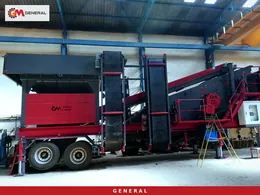
For contractors working several quarries or along a road alignment, the General 02 (250-300 t/h, 1000 mm inlet, GPS 1413 i.e. PDK02 primary, 660 kVA generator) and the General 03 (250-375 t/h, GPS 1415 primary, 900 mm feed, 750 kVA) combine feeding, crushing and four-deck screening on one chassis. Where grid power does not reach the pit, the built-in generator is decisive. For many years in a single quarry, the stationary line wins on product variety, maintenance access and the ease of adding stages later.
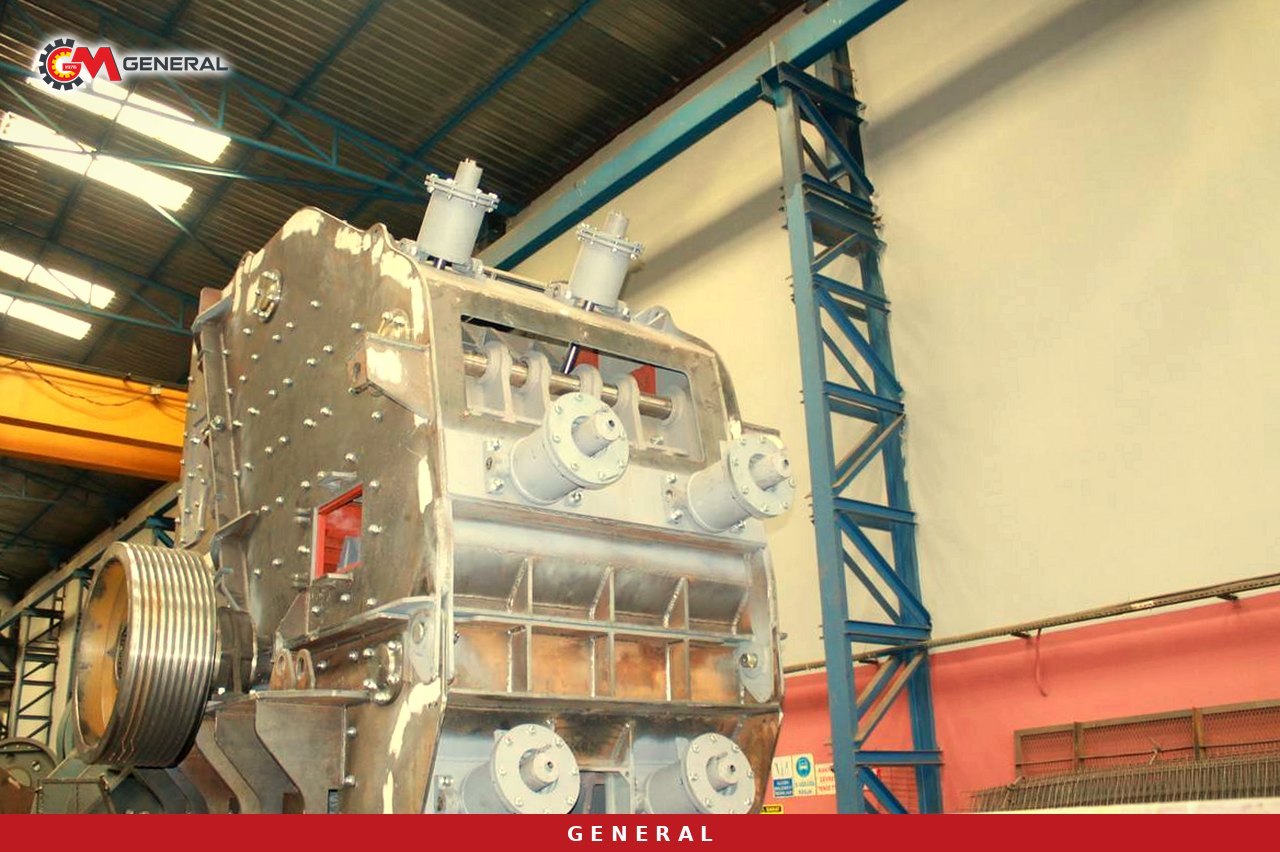
Site measures for the Caspian shoreline
Wind and fine limestone dust
The Absheron coast is known for frequent, strong winds. Open belt transfers and stockpile cones let that wind carry fine limestone dust a long way. Measures that can be selected per project include enclosed or semi-enclosed conveyors, water-spray dust suppression at transfer points, dust curtains at the crusher discharge, stockpiles placed according to the prevailing wind and shorter drop heights. Which of these are mandatory depends on the local environmental permit; confirm the conditions with the relevant authority.
Humid, salty air and corrosion
Humid, salt-laden air by the sea is hard on paint, bolted joints and electrical panels. At quotation stage, discuss the paint system, panel enclosure sealing, cable tray protection and the bearing lubrication plan explicitly. These are site-specific options, not standard equipment.
Wet, sticky feed
In the rainy winter months, clay-rich limestone can stick in hoppers and chutes. Choosing the grizzly by-pass gap for that material, and where needed considering a wobbler feeder with elliptical shafts for wet, clayey feed, cuts stoppages caused by blockages.
Shipping and erection
Heavy items such as the PDK housing travel on lowbed trailers; dimensions, weight and route permits should be settled with the haulier in advance. On the mobile side, the General 02 weighs about 76,000 kg and measures 4340×20600×4500 mm, figures to check early on roads with bridge and bend restrictions. A stationary line needs a concrete foundation and an erection area.
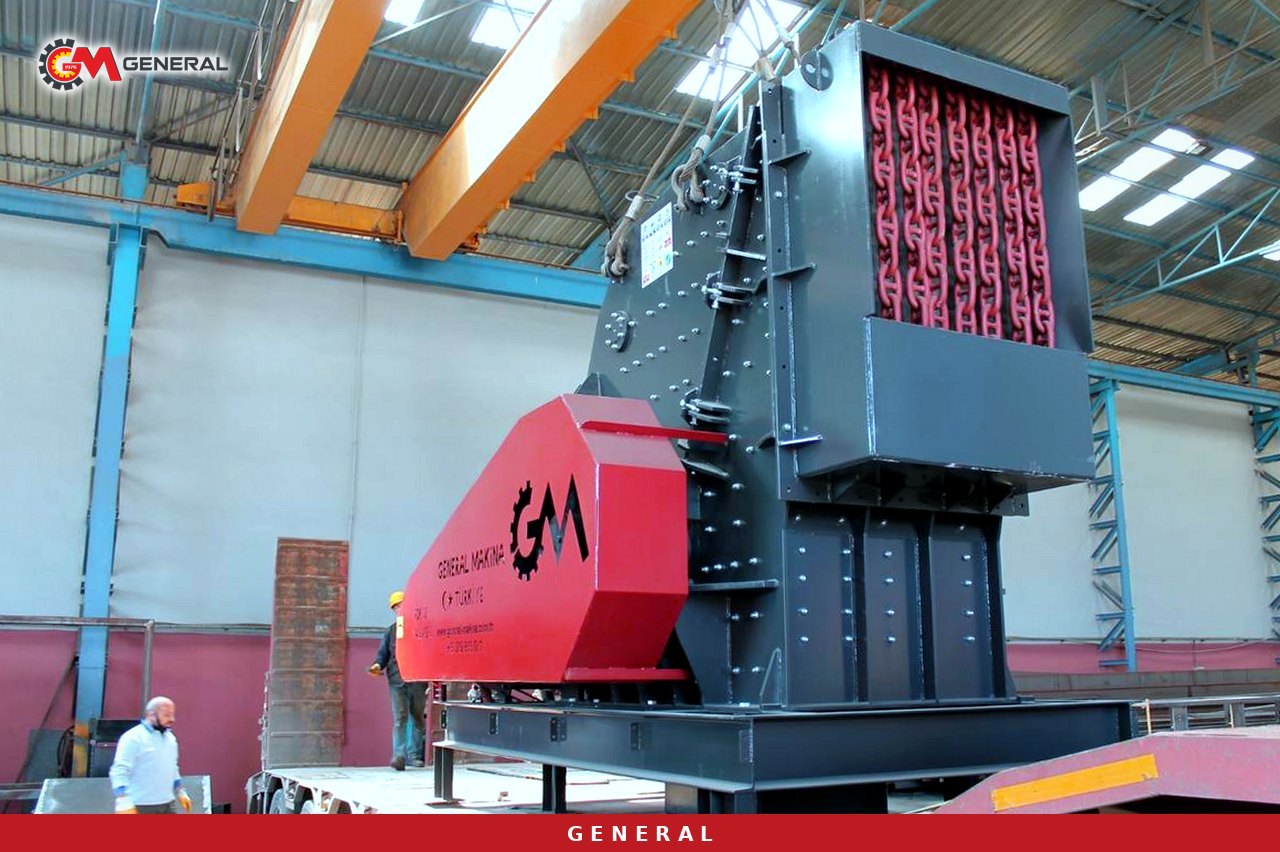
Blow bar alloy and wear cost per tonne
In an impact circuit the main operating cost items are blow bars and apron liners. On clean, clay-free limestone, high-chrome white iron (about 700-800 HB) gives long life. If the feed may carry tramp metal such as bucket teeth or drill bits, tough manganese or martensitic alloy is safer, because brittle high chrome can crack on large metal pieces. As silica rises, ceramic-insert MMC comes into play, lasting roughly 2-3 times longer than high chrome.
Compare alloys by cost per tonne, not by purchase price: wear cost per tonne = cost of one set of blow bars and liners ÷ total tonnes crushed with that set. Hypothetical example: a 100-unit set that crushes 50,000 t costs 0.002 units per tonne; a tougher 160-unit set that crushes 120,000 t comes to about 0.0013 units. The alloy that looks expensive also reduces change-out stoppages and can work out more economical overall.
The file to prepare before requesting a quotation
- Quarry location or nearest settlement, and the condition of the access road.
- Sample analysis from at least two points: compressive strength, Bond abrasion index, silica content.
- Largest block size after blasting and the soil/clay share in the run-of-mine.
- Required product fractions and the approximate share of each in total output.
- Hourly target (200, 250 or 300 t/h) and daily operating hours.
- Power source: grid connection or generator.
- Stationary or mobile, and how long the plant will stay on one site.
- Local permit conditions for dust, noise and water use.
The quotation is shaped by these inputs: model size, motor powers, number of screens and decks, conveyor lengths, generator needs, automation level and freight. General Makina has been manufacturing in Izmir since 1976; it holds ISO 9001 and CE certification, and machines carry a 1-year warranty excluding wear parts. The Turkic republics are among the regions we export to.
Frequently asked questions
Won't an impact crusher make too many fines from shelly limestone?
Porous rock does raise the fines share. That is why the dirty fraction is removed at the grizzly feeder, the apron setting is chosen for the product list, and surplus sand is stockpiled separately for fill or sub-base use.
Can a single primary crusher cover 300 TPH?
The PDK02 sits in the 200-300 t/h band. If the line will run near the upper limit all the time, or blocks arrive oversize, the PDK01 (250-500 t/h) leaves headroom.
Can limestone and dolomite run on the same line?
Yes, as long as abrasiveness stays low. Sections with siliceous bands should be tested separately and, if needed, processed in separate campaigns.
What warranty and certificates apply?
Machines carry a 1-year warranty excluding wear parts; production is certified to ISO 9001 and CE.
Conclusion
For 200-300 TPH of limestone on the Caspian coast, our core proposal is a stationary line of a GNR 110 feeder, a PDK02 primary and a DMK03 secondary impact crusher. With oversize blocks or growth plans the PDK01 steps in, and for work that moves between pits the General 02 or General 03. Send your sample results and product list through our contact page and we will draw up the flow sheet and quotation for your quarry together.
Definitions of technical terms: Glossary