EN — English
 TR — Türkçe
 DE — Deutsch
 RU — Русский
 FR — Français
 ES — Español
 AR — العربية
 SR — Српски

Nigeria Laterite & Hard Rock Crushing and Screening Plant 100-200 TPH
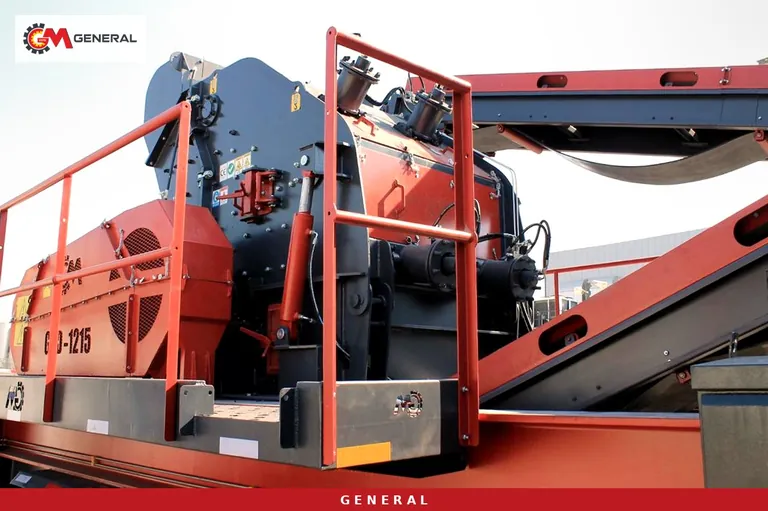
When a new quarry is opened in Nigeria, the first excavator bucket usually bites into a red-brown blanket rather than rock. That blanket is laterite: a tropically weathered soil enriched in iron and aluminium oxides that turns sticky in the rainy season and hardens into a dusty crust in the dry months. Beneath it lies hard, abrasive rock, granite, gneiss or, in some areas, basalt. For an investor targeting 100-200 TPH, the real question is therefore not "which crusher?" but "how do I separate these two very different materials and crush them in one line?". Below we walk through the right combination from feeder to secondary crusher for each site condition, using the actual model values published on our product pages.
Two opposite materials in one pit: laterite overburden and bedrock
Laterite and hard rock arrive at the crushing line with conflicting demands. One is full of clay and fines, its moisture swings with the season and it blinds screen decks. The other is dry and clean but high in silica, so it eats metal quickly. A single-purpose line can only be tuned to one of these behaviours; the other comes back as lost capacity or as a wear-parts bill.
What laterite does to a crushing line
On most sites laterite is not crushed at all, it goes straight into fill and sub-base. The trouble starts when stripping or blasting mixes the overburden with the bedrock. Every tonne of laterite that enters the crusher wastes crushing energy, packs into the jaw cavity and screen decks, and sticks to finished aggregate as a clay film. Some laterite horizons also contain hardened, iron-rich crust fragments; rather than being discarded with the fines, these can be crushed and blended into sub-base. Only a sample from your site tells you which case you are dealing with.
What granite, gneiss and basalt demand
Across much of Nigeria the basement rock is granite and gneiss, while basalt quarries are also found in areas such as the Jos Plateau. What these rocks share is abrasiveness. An impactor rotor wears fast in this stone, whereas jaw and cone crushers, which work by compression, break the same tonnage with far lower part consumption. We recommend establishing the abrasion and compressive strength values of a specific quarry by laboratory testing, not by assumption.
First link of the combination: removing laterite before the crusher
Trying to solve the laterite problem inside the crusher is expensive; the right place is the feed point. Feeder selection depends on how wet and sticky the overburden arrives at the plant.
Dry season, cleanly stripped rock: vibrating grizzly feeder
If the overburden can be stripped separately before blasting and the rock arrives dry, a vibrating grizzly feeder is enough. The GNR 90 model, 1000 mm wide and 3750 mm long, offers 140~210 TPH feed capacity with 2x4 kW motors. Its grizzly by-pass section takes fines and soil around the crusher, while oversize rock keeps the jaw mouth choke-fed. Dry laterite dust falls through these bars easily.
Rainy season, mixed feed: wobbler feeder
When laterite gets wet, static grizzly gaps clog (the effect known as blinding) and capacity drops at once. In this condition a wobbler feeder is the right choice: synchronised rotating elliptical disc shafts act as a moving grate, clean themselves because they never stop turning, and screen the sticky fines downward. The GWB1136 model is 1100 mm wide and 3600 mm long, runs on an 18.5 kW motor, offers 75-600 TPH feed capacity and accepts material up to 1500 mm. The lateritic fines leaving under the discs are stockpiled on a separate belt and can be used for fill.
Crushing stage: why jaw and cone work as a pair
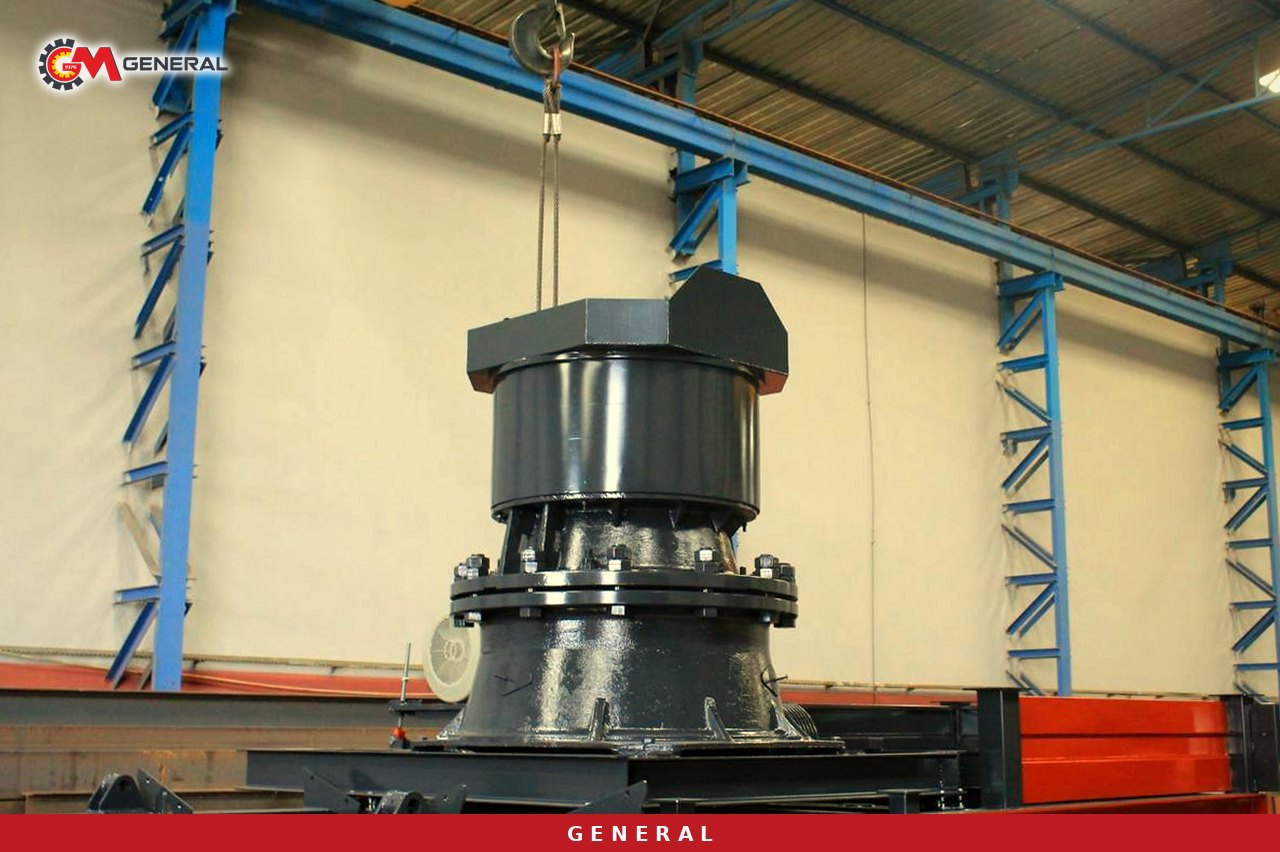
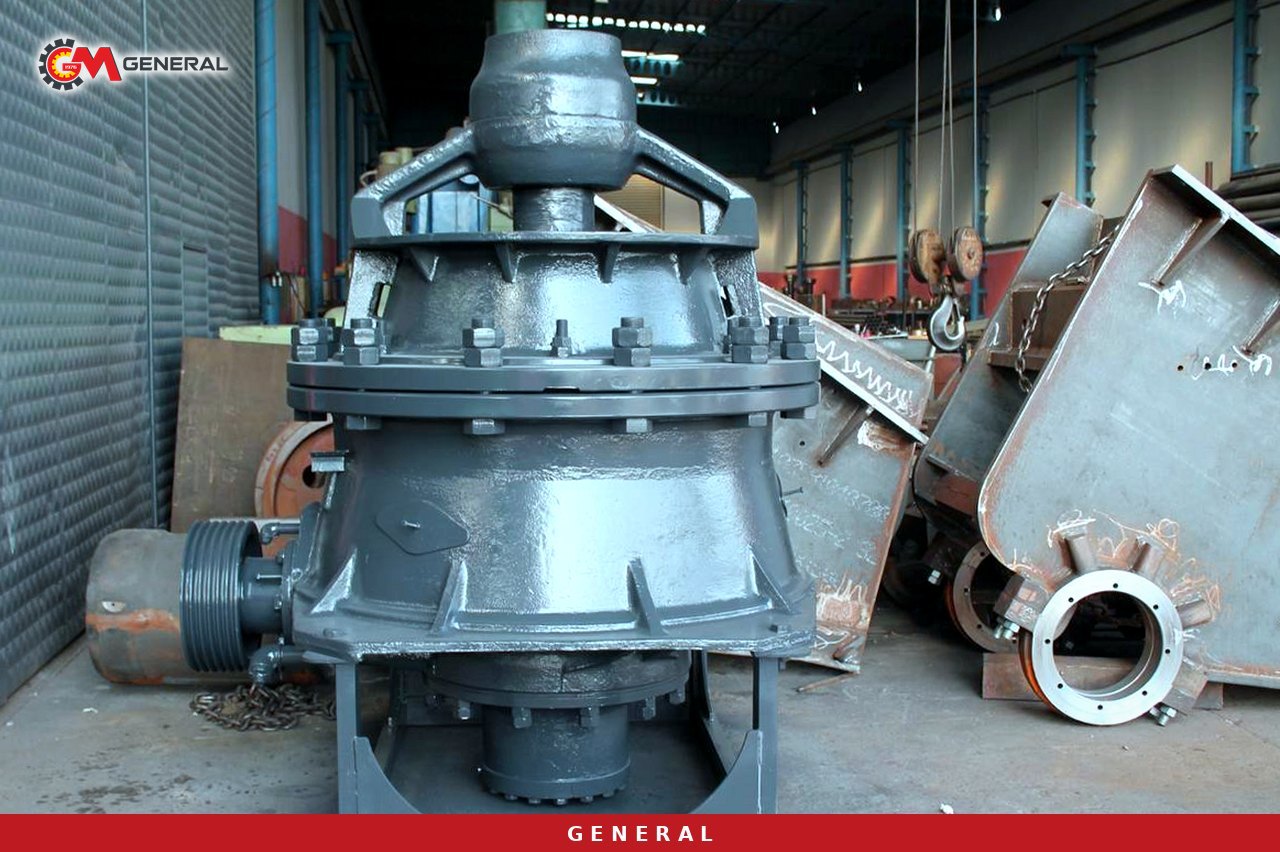
Hard rock that has passed pre-separation needs a two-stage chain. In the first stage a jaw crusher reduces large blocks by compression; in the GNRK series the jaw plates are austenitic manganese steel (Mn13/Mn18), which work-hardens under impact. In the second stage a cone crusher squeezes the particles from several directions with an eccentrically gyrating head and delivers cubical product. Mantle and concave liners are manganese steel; for high-silica rock a high-chrome liner option is worth evaluating.
Two sibling models of the same chassis size show the difference clearly. The General 950 pairs a GPJ 90 jaw with a DMK01 impact secondary and achieves high reduction, but in abrasive granite and gneiss its rotor parts need changing more often. The General 944 puts a GM430 cone behind the same GPJ 90 jaw. That is why, in Nigeria's hard-rock quarries, the choice between the two usually goes to the 944. An impact secondary stays more economical in soft, low-abrasion stone such as limestone.
The cone crusher has one sensitivity where laterite is concerned: clay-rich feed can pack in the cavity and overload the machine. Choosing a cone means taking pre-separation seriously; feeder and secondary decisions should never be made independently. That is the whole logic of the combination: laterite is removed up front, and the cleaned hard rock is crushed in two compression stages.
Three real set-ups for the 100-200 TPH range
The table below compares three approaches using values from our product pages. Figures that are set per project or not published are shown as "—".
| Set-up | Main machines | Capacity | Max. feed | Screening and products | Generator | Weight |
|---|---|---|---|---|---|---|
| A | General 944: GPJ 90 jaw + GM430 cone | 120-180 TPH | 800 mm | 1600×5000 mm three-deck horizontal screen; 0-5 / 5-12 / 12-19 mm | 550 kVA | 70,000 kg |
| B | Mobil 90: GPJ 90 jaw + washing screen + twin screw washer | 90-150 TPH | 800 mm | 1600×5000 mm 3/4-deck washing screen; 0-5 / 5-20 / 20-60 mm | 350 kVA | 45,000 kg |
| C | GWB1136 wobbler + GNR 90 mobile primary jaw unit + cone crusher + screen | 70-180 TPH (primary unit) | 0-1100 mm (primary unit) | — | — | 25,000 kg (primary unit only) |
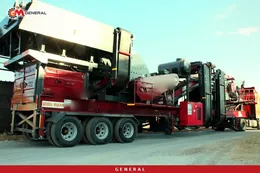
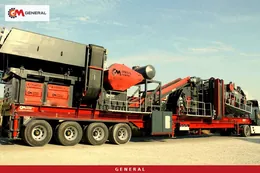
Set-up A: the General 944 carries a hopper with vibrating feeder, the GPJ 90 jaw, the GM430 cone and a 1600×5000 mm three-deck horizontal screen on a single wheeled chassis. If overburden is stripped beforehand and the target sits in the 120-180 TPH band, this is the simplest answer; it splits three fractions for concrete and asphalt work in one pass.
Set-up B: the Mobil 90 combines the GPJ 90 jaw with a washing screen and a 600×6000 mm twin fine-material screw washer on the same wheeled chassis. It is the right candidate when laterite arrives mixed into the rock and the clay film can only be removed from the aggregate surface with water. This plant has no second-stage crusher; a cone or impact secondary can be added ahead of it if needed.
Set-up C: a modular line made up of the GWB1136 wobbler feeder, the GNR 90 mobile primary unit with its GNRK 90 jaw, and a secondary cone crusher plus vibrating screen behind it. Separate units give flexibility on sites where the overburden is thick and the laterite share changes with the season. Cone and screen sizes are defined per project from samples and target fractions.
If the target approaches the top end of 200 TPH, plan two lines together instead of pushing one machine: a General 944 for clean hard rock and a Mobil 90 for laterite-contaminated material. Together they comfortably exceed that upper limit, and a maintenance day on one does not stop production entirely. You can compare other wheeled options on our mobile crushing plants page.
Season, dust and power on a Nigerian site
In the rainy season laterite holds water, slips on belts and turns to mud in stockpiles. Stockpile drainage, covered fines stockpiles and control of conveyor inclines should be written into the installation plan from day one. In the dry season the harmattan wind from the north raises airborne dust. Dust-suppression nozzles at crusher discharges, enclosed belt transfers and frequent checks of generator air filters are measures that can be selected per project.
At quarries far from the grid, power comes from generators. Our product pages list 550 kVA for the General 944, 350 kVA for the Mobil 90 and 600 kVA for the General 950. If two lines will run together, generator capacity, fuel logistics and the need for a standby unit must be calculated as one package.
Shipment usually goes by sea to the Lagos ports and then by road to site. The General 944 weighs 70,000 kg with dimensions of 4130×20350×4500 mm; the Mobil 90 weighs 45,000 kg at 3600×15700×4500 mm. Confirming bridges, bends and ground conditions from port to quarry with the haulier in advance is essential for a wheeled chassis to reach the site without trouble.
Site data to collect before requesting a quote
We build the right combination from field data, not at a desk. Adding the following to your enquiry shortens the process:
- Overburden thickness and whether laterite can be stripped separately from the bedrock.
- Bedrock type plus abrasion and compressive strength test results.
- Feed moisture in the rainy and dry seasons; separate samples from both seasons if possible.
- Largest block size after blasting (feed limit is 800 mm for both the General 944 and the Mobil 90).
- Required fractions and end use: concrete aggregate, asphalt chippings or road sub-base.
- Water source and flow rate if a washing set-up is being considered.
- Power source and actual daily operating hours.
- Transport route from port to site and ground conditions at the installation area.
If the aggregate is destined for a road or infrastructure project, confirm the grading, cleanliness and strength limits in the specification of the relevant authority; screen apertures are set to those limits when the order is placed.
Frequently asked questions
Can laterite be crushed directly and used as aggregate?
Soft, clay-rich laterite produces dust and lumps rather than aggregate when crushed; it is usually stockpiled separately for fill or sub-base. Hardened iron-rich crust fragments, however, can be crushed. The decision requires laboratory classification of a sample.
General 944 or General 950?
Both offer 120-180 TPH, an 800 mm feed and the same chassis size. In abrasive granite, gneiss and basalt, the 944 with its GM430 cone secondary has the edge on metal life; in soft limestone, the 950 with its DMK01 impact secondary is more economical.
What if clay sticks to the aggregate surface?
A dry screen cannot strip a clay film from the particles. For light contamination the Mobil 90's washing screen and twin screw washer are enough; for hard, plastic clay lumps a log washer taking 0-200 mm feed at 50-250 TPH can be added to the line.
What determines price and delivery time?
Price depends on the set-up type, number of units, generator and washing needs, screen decks and conveyor count, and the shipping method. Once you send your site data, a project-specific quotation and schedule are prepared.
Conclusion
For a laterite-covered hard-rock quarry in Nigeria, the right combination is the sum of three decisions: a feeder that removes laterite before the crusher, a jaw-and-cone chain that breaks hard rock with low wear, and dry or wet screening chosen by season. In the 100-200 TPH band the General 944 is the core candidate; with laterite-contaminated feed the Mobil 90 and a wobbler-fed modular line come into play. Manufacturing in İzmir since 1976, General Makina provides ISO 9001 and CE certified machines with a 1-year warranty (wear parts excluded). Send your sample results and capacity target via our contact page and we will finalise the configuration for your site together.
Definitions of technical terms: Glossary