EN — English
 TR — Türkçe
 DE — Deutsch
 RU — Русский
 FR — Français
 ES — Español
 AR — العربية
 SR — Српски

Crusher Distributorship and After-Sales Service Network Evaluation
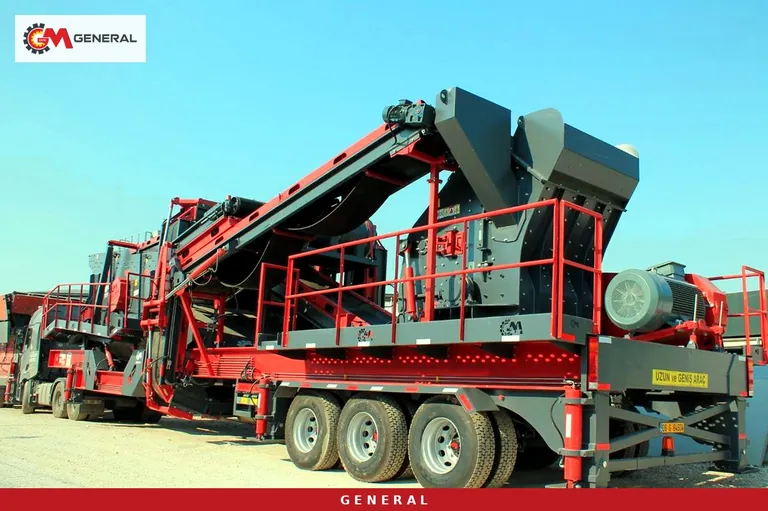
Crusher distributorship and after-sales service network evaluation is a process in which both parties sit the same exam. The candidate distributor measures the manufacturer's commitment on delivery, parts and training, while the manufacturer measures the candidate's service and financial capacity to carry a territory. Relationships built on a discount rate alone fall apart at the first major breakdown, because in crushing and screening the customer buys the service behind the machine as much as the machine.
What the relationship actually is
A distributorship is not a licence to sell; it is an undertaking. The distributor does more than sell in the territory: it answers demand, organises erection and commissioning, holds a parts stock, trains operators and maintenance technicians, gathers warranty claims and carries field feedback back to the factory. Every one of those tasks creates fixed cost. The first subject on the table is therefore not the discount but who owns which task. A figure agreed before the split of duties is settled means nothing.
The same clarity is owed from the factory side: lead times, standard configurations, the option list, the language of technical documentation and the way field support is requested must all be defined at the outset. Transparency about the way of working is the first source of trust between the parties, and the answer to how we work should be plain before any signature.
The two-sided question list
| Topic | What the candidate should ask | What the manufacturer should ask |
|---|---|---|
| Territory | Is it exclusive, and over which geography and which product lines | How many field crews and service vehicles will cover it |
| Target | How was the target derived and what follows if it is missed | Is there a sales team and market data to carry it |
| Stock | Who defines the minimum parts list to be held | How will stock financing be arranged |
| Training | How many people, where, in which language, how often | Will the trained technicians stay on the payroll |
| Warranty | Parts only, or parts plus labour, and how are claims processed | Is there a discipline of fault recording and reporting |
| Price | List price, discount tiers and notice period for price changes | What are the payment terms and the security structure |
| Brand | How may the brand and visual identity be used | Who approves local communication |
Maturity of the service network
Service capacity in a territory either exists or does not; the sentence "we will set it up" cannot be measured. To make the assessment concrete, a network can be read in four steps:
| Step | What is visible | Effect on the customer |
|---|---|---|
| Sales only | Warehouse and sales office, no technical staff | Every fault waits for a crew from the factory |
| Basic service | Mobile technician, stock of common wear parts | Routine maintenance covered, major faults outsourced |
| Full service | Workshop with welding and machining, broad stock | Most faults resolved inside the territory |
| Regional centre | Training room, pool of exchange units, field engineering | Downtime becomes predictable |
The step matters even more for tracked and wheeled units, since a machine moved from site to site needs adjustment and intervention more often than a fixed plant. A portfolio weighted towards mobile crushers should therefore require at least the basic service step from day one.
Clauses to look for in the agreement
A good distributorship agreement describes the bad day rather than the good one. The minimum headings are: term and renewal condition; the measurement period for the target and the graduated consequence of missing it; the notice period for price changes; the split of warranty between parts and labour; the process for returns and defective goods; rights of use for technical documentation and software; the scope and duration of any non-compete; buy-back terms for machines and parts held in stock on termination; and who honours running warranties after the agreement ends.
That last clause is the most frequently forgotten. When the agreement expires the customer in the field must not be left stranded; if the transfer of warranty is not written down, both parties share the loss of reputation.
Crusher distributorship and after-sales service network evaluation: year one
In a new territory the first twelve months go into building infrastructure rather than volume. A sensible sequence is: one reference installation, training and documentation built around that installation, then the minimum parts stock, and only then the second and third sales. When the order is reversed, and selling happens before stock and training exist, the first breakdown undoes the whole sales effort in that territory. Targets for the first year should therefore be written in installation and service indicators, not in tonnage of orders.
Over the longer run the regional relationship is managed as part of the procurement and supply chain: predictable order flow, predictable stock and predictable lead time feed one another.
The final step of any evaluation is to travel. No signature should follow before the candidate's warehouse, workshop and service vehicle have been seen, and before the factory and its parts store have been walked through. An hour on site delivers what months of correspondence cannot: whether the shelves really hold parts, which jobs the technicians complete on their own, and what earlier customers say when they are called.
Frequently asked questions
Is exclusivity essential
It is not, but it must be mutual. Wherever exclusivity is granted, the target and the service obligation are defined alongside it; exclusivity without obligation simply locks a territory.
How is the spare-part stock defined
By the installed base in the territory and its consumption rate. Wear parts and the electrical and hydraulic components that fail most often come first; rarely used large components can stay in the central store.
Is a project-based arrangement an alternative
Yes. Where service infrastructure does not yet exist, the parties begin project by project; the scope is widened once the first installations are complete and the technicians have been trained.
Definitions of technical terms: Glossary