EN — English
 TR — Türkçe
 DE — Deutsch
 RU — Русский
 FR — Français
 ES — Español
 AR — العربية
 SR — Српски

What Is Aggregate and How Is It Produced? The Role of Crushing and Screening Plants
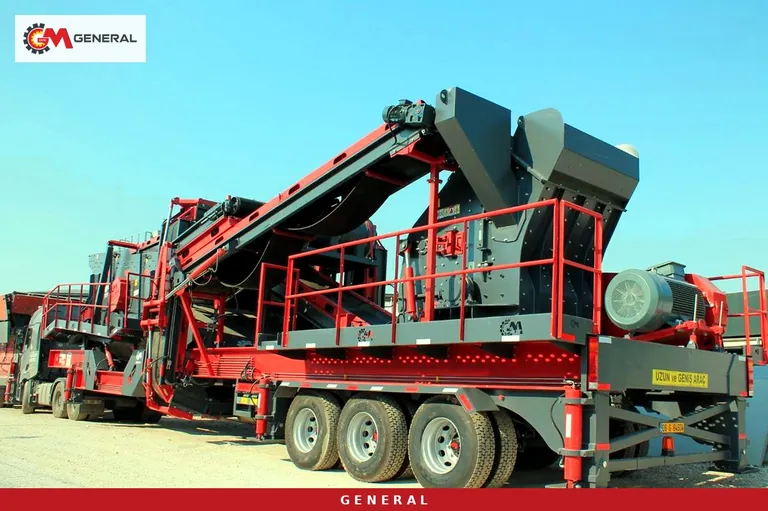
From the concrete batching plant to the highway site, the raw material that many industries rely on is produced by aggregate crushing plants. Before explaining why these machines matter so much, it helps to answer the basic question first, because it makes the rest of the topic far easier to follow: what is aggregate?
Defining aggregate
Put simply, aggregate is the material in which the minerals known as sand, gravel and crushed stone are found on their own or blended together as a single mass. Since it is the main input of so many industries, the way it is processed is of great importance. Construction, asphalt and concrete plants are among the fields where aggregate crushing and screening plants are used most heavily. With today's technology, aggregate processing involves two separate types.
These two types are natural aggregate and manufactured (artificial) aggregate. Below we look at each in turn: how it forms, where it is found and what it is used for.
Natural aggregate
Among the types of aggregate, the most widely preferred is this group of minerals offered by nature itself. It is obtained in a form that has broken down over time under the influence of natural conditions, weather and human activity. Sea shores are where it is extracted most intensively; stream beds and sand pits also count among the sources of natural aggregate.
Manufactured aggregate
Manufactured aggregate, by contrast, is a product obtained by bringing different materials together with mechanical equipment. For this purpose, various minerals are broken and reduced to the required sizes in the crushing and screening plants known as crushers.
How is manufactured aggregate produced in a crushing plant?
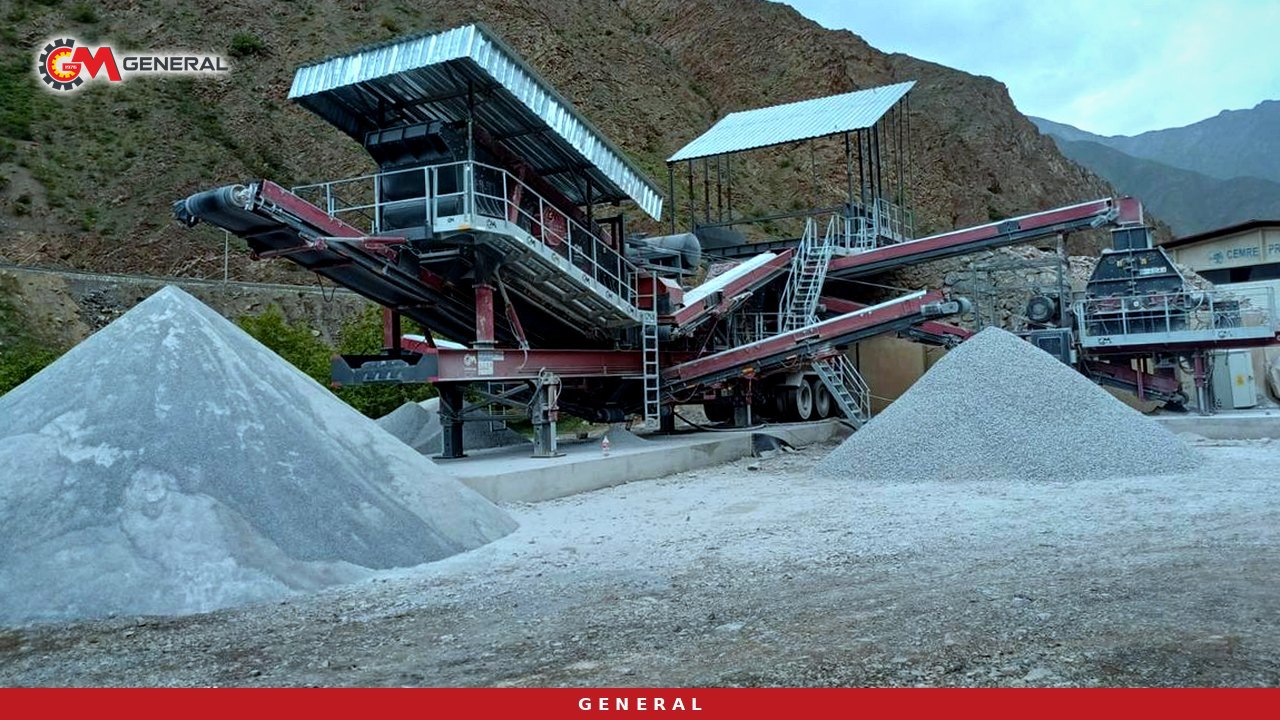
The large blocks arriving from the quarry are first reduced to a manageable size in the primary crusher. Secondary and, where needed, tertiary crushers then make the particles smaller and shape them, while screens separate the material into fractions such as sand, chippings and gravel. Oversize pieces that do not pass the screen go back to the crusher, so the line sends only the required sizes to the stockpile. Crusher type, number of stages and screen decks are chosen according to rock hardness and the fractions to be sold.
Which sectors use aggregate crushing plants?
Having seen how aggregate is obtained by natural and manufactured routes, the nature of the material is now clear. But for which sectors are aggregate crushing and screening plants indispensable? The industries these plants serve are often known only superficially, yet many sectors with very different activities build their work on aggregate:
- Concrete batching plants
- Railways
- Industrial facilities
- Hot-mix asphalt
- Surface dressing
- Pipelines
- Highway construction
- The construction sector
- Floor screeds and base layers
- Airport and dam construction
For most of these sectors a crushing and screening plant is not an option but a necessity, since the basic raw material is sand and gravel separated by size. This increasingly industrialised field keeps growing as operators demand higher-performance equipment.
The right plant for quality aggregate
Many companies aim to offer a better product by producing to ideal aggregate standards. What decides the outcome here is the plant itself: how good a process the raw material goes through depends entirely on the plant's design. The equipment chosen varies with the quality and size of the product required, and different types of aggregate crushing and screening plants can be built according to the size of the site.
A growing range of manufactured aggregates
Although there are two types, it is manufactured aggregate production that has come a long way in recent years. The synthetic materials developed today are widening the very definition of manufactured aggregate, and new formulas appear as the product range grows.
Besides aggregate produced for concrete plants, products known as lightweight aggregate, made with metallic aluminium powder and special soap-based agents, can also be used. For this reason, aggregate crushing and screening plants continue to develop, with a volume of work that reaches more sectors every year.
Details of our products and services are available in our digital catalogue.
Simply fill in the form so we can prepare a quotation suited to your needs as quickly as possible; our team will get in touch with you right away.
Definitions of technical terms: Glossary