 EN — English
 TR — Türkçe
 DE — Deutsch
 RU — Русский
 FR — Français
 ES — Español
 AR — العربية
 SR — Српски

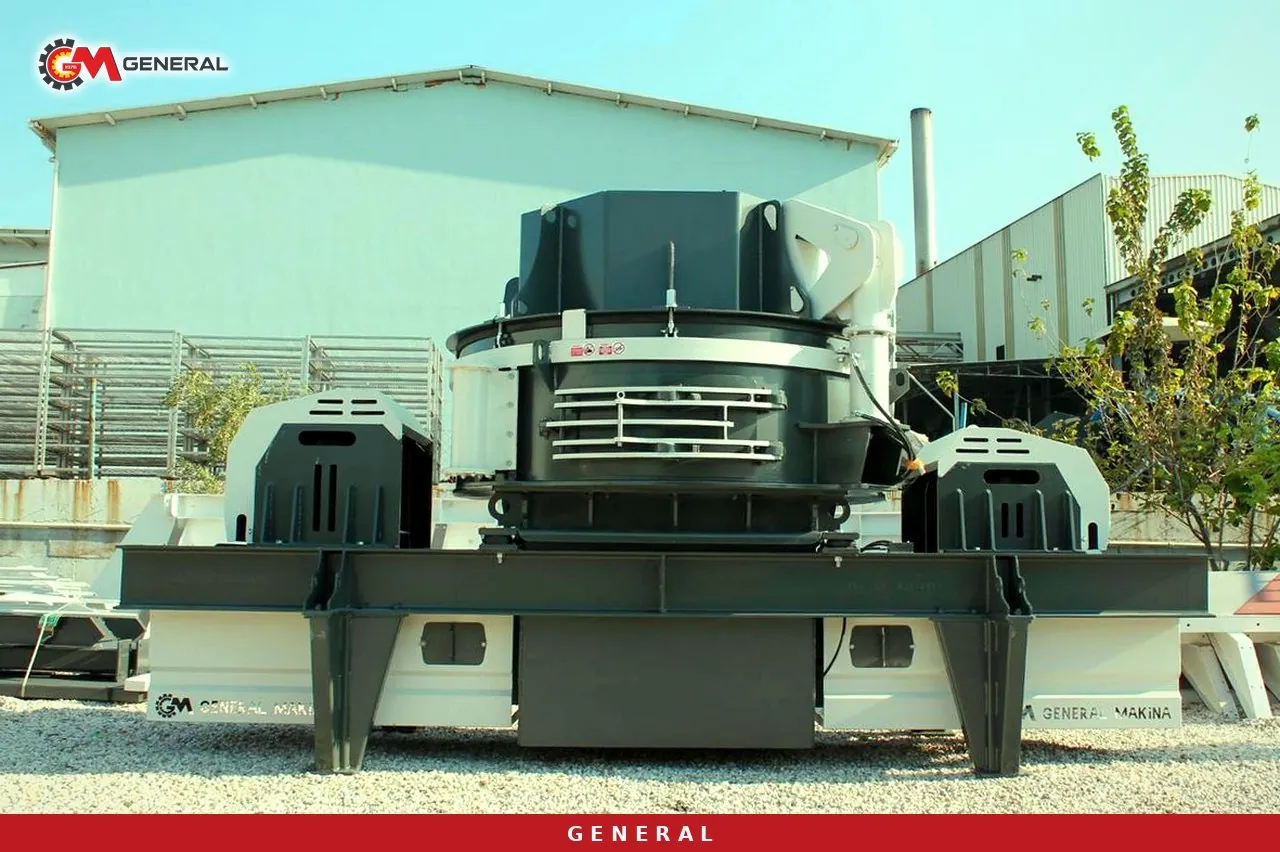
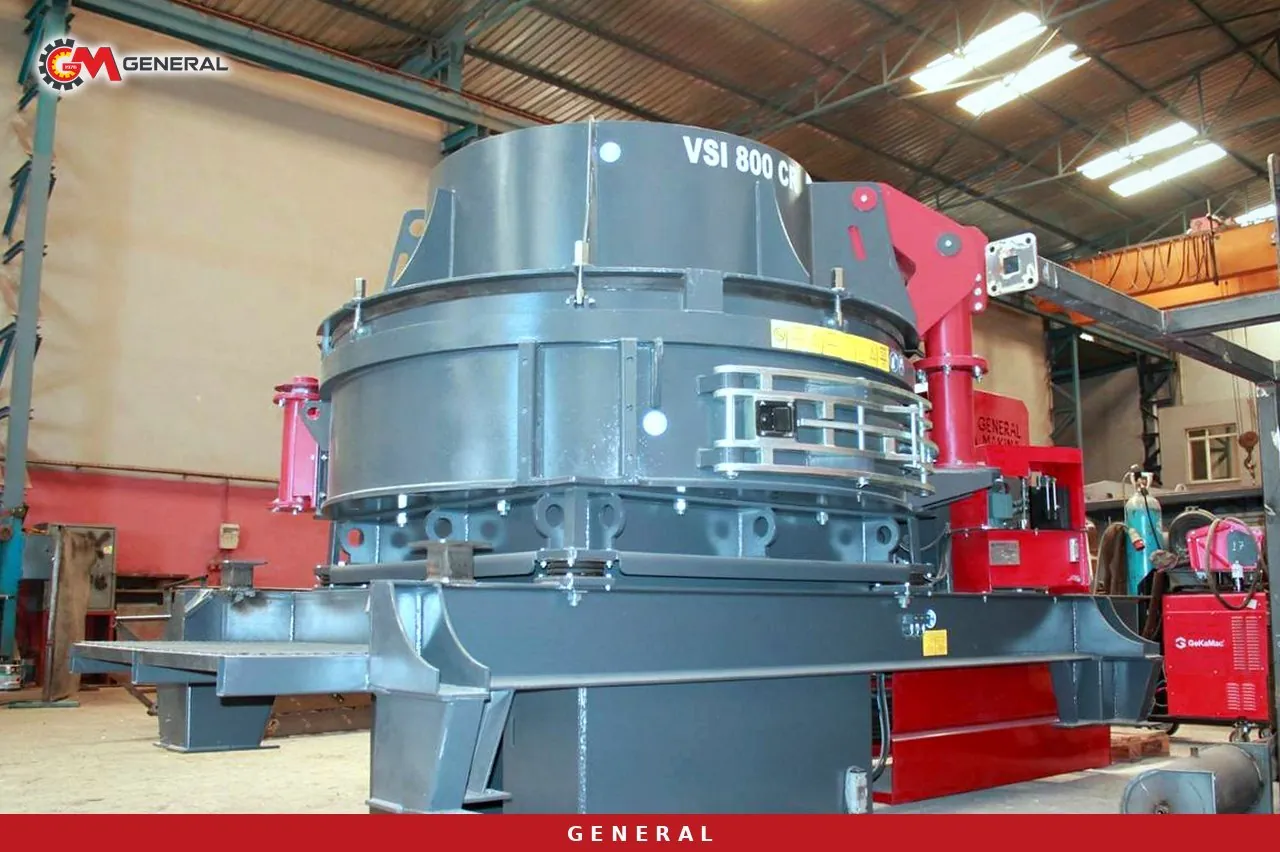
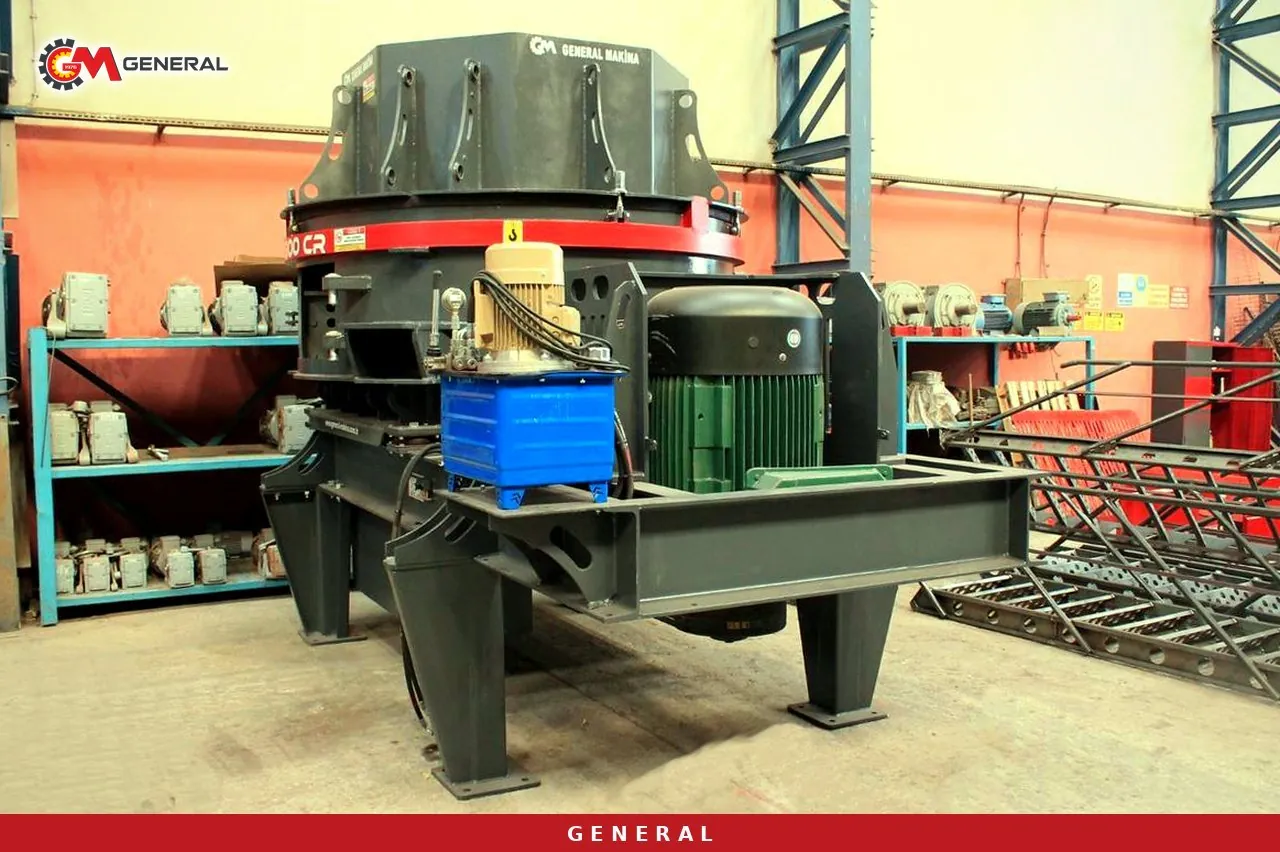
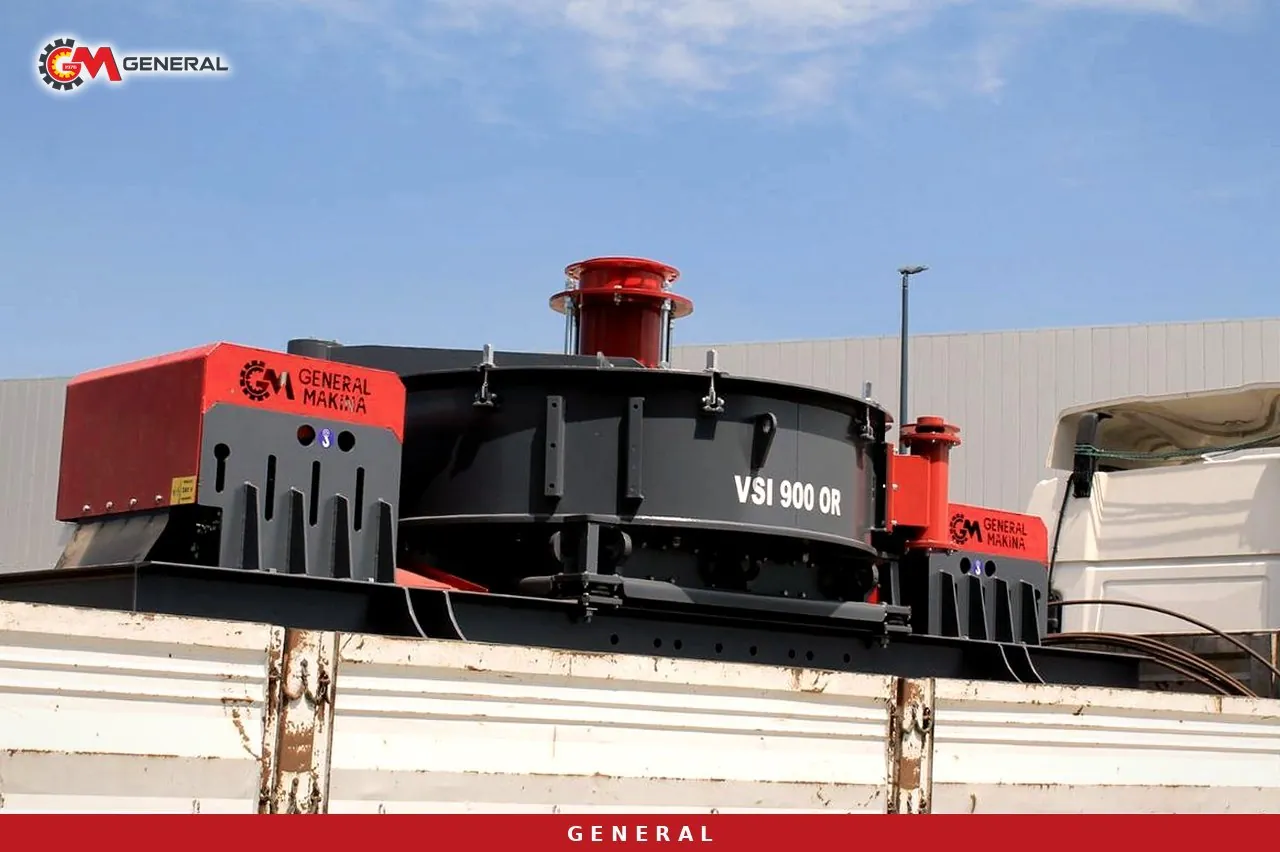
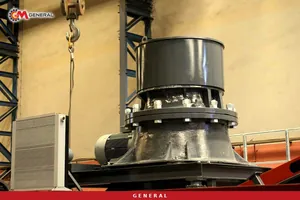
GNR Series VSI Crusher – The Final Stage in Manufactured Sand Production
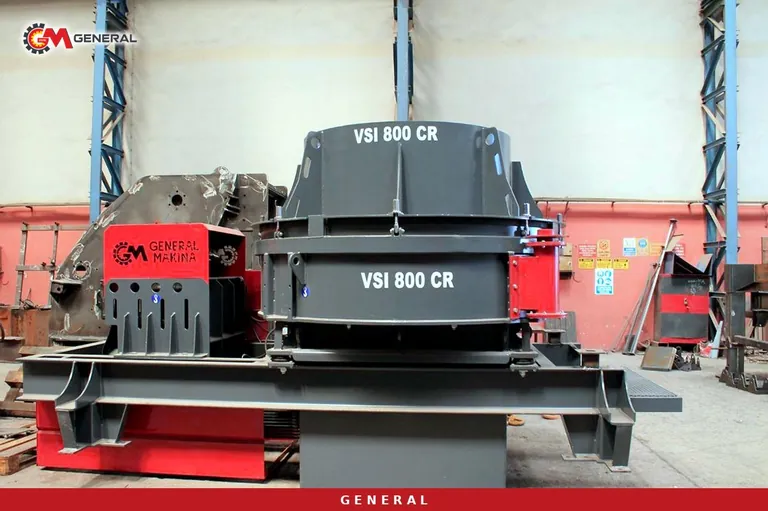
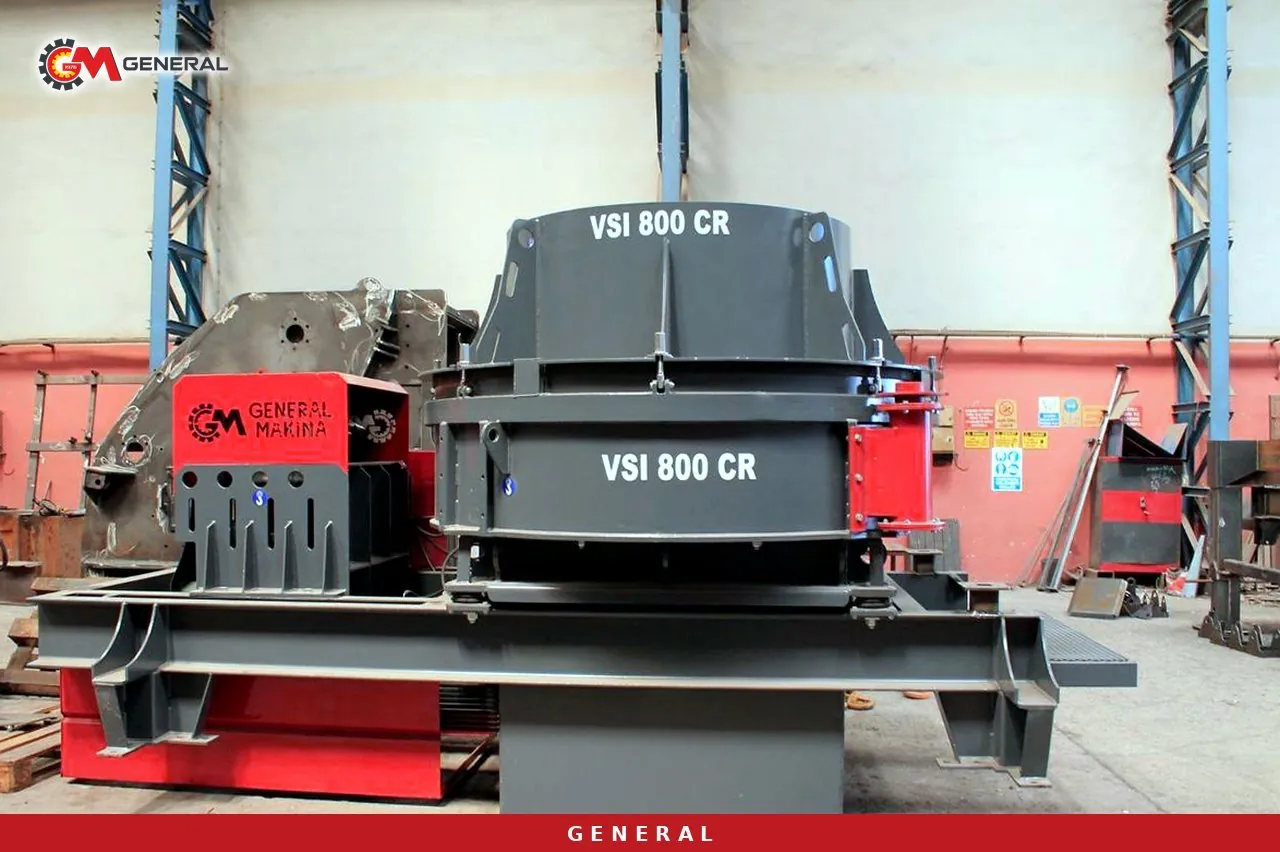
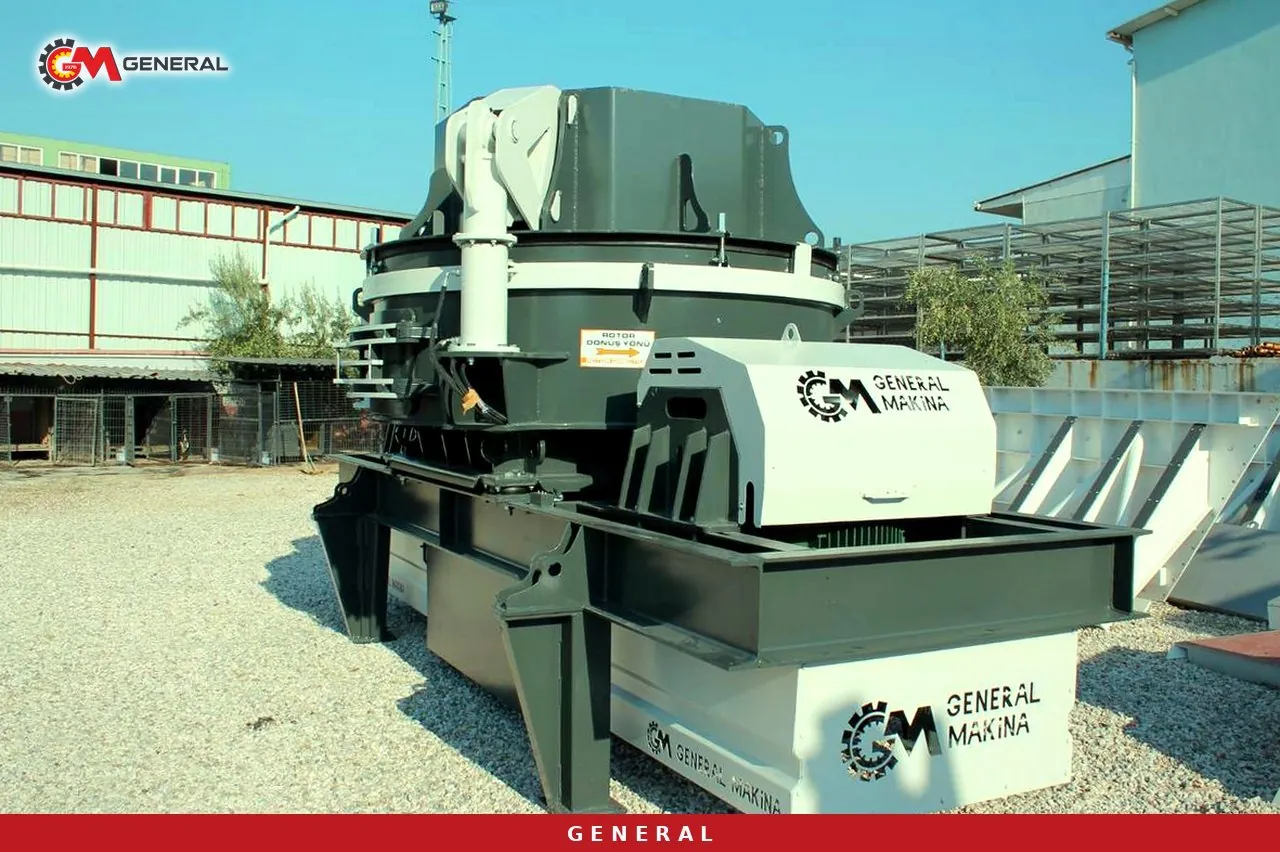
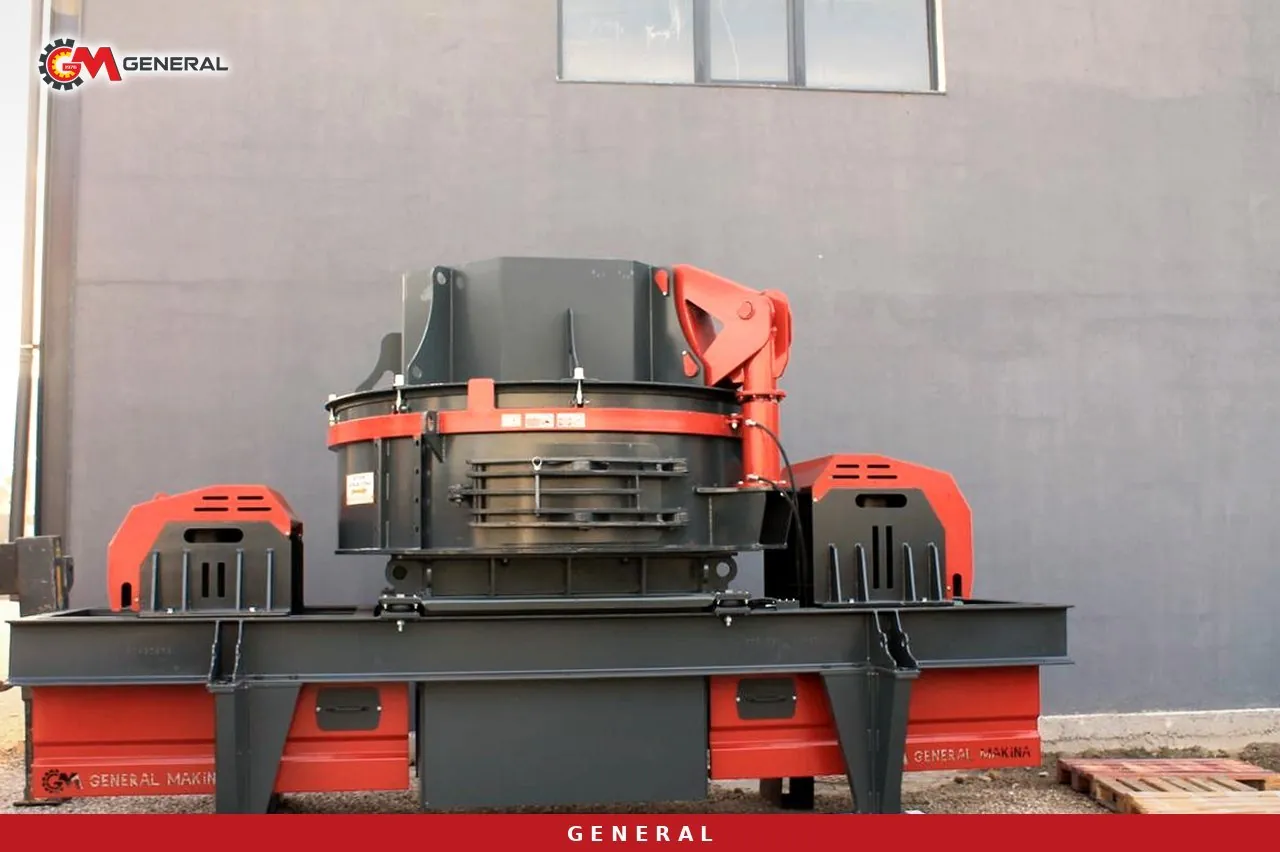
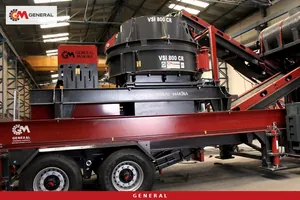
The cubical rather than angular particle that concrete and asphalt producers want from their aggregate is created in this machine. The GNR series vertical shaft impactor (VSI) accelerates material to high speed with a vertical rotor and breaks it by flinging it against an anvil or against its own rock bed (rock-on-rock). That makes it a shaping machine more than a reduction machine: its aim is outstanding cubicity and manufactured sand, and it delivers the most cubical product to meet the Flakiness Index requirements of concrete and asphalt.
For sand making and cubical aggregate, the VSI is the industry's standard answer; the rounded-edge particle shape required in concrete and asphalt aggregate is formed at this stage.
Model Table
| Model | Rotor (mm) | Max. feed (mm) | Capacity (tph) | Motor (kW) |
|---|---|---|---|---|
| GNR 700 | 700 | 25–35 | 45–135 | 90–132 |
| GNR 800 | 800 | 40–50 | 55–160 | 132–160 |
| GNR 900 | 900 | 50–55 | 80–210 | 2×200 |
How Does It Work?
The vertical rotor accelerates material up to about 80 m/s; breakage and shaping take place either in rock-on-rock (autogenous) mode or in anvil mode. Because it only accepts small feed (≤55 mm), it is the final-stage machine in a plant, after the cone or tertiary crusher. Its place in the line: tertiary/quaternary crushing plus shaping.
Where Does It Perform Best?
Its ideal task: producing manufactured sand and cubical fine aggregate from high-silica, abrasive material (granite, basalt, river gravel, slag). Since rock-on-rock mode keeps metal wear to a minimum, it outperforms a tertiary impactor on abrasive material. It also noticeably improves particle cubicity in limestone.
Reduction Ratio and Wear Cost (TCO)
A VSI is a shaping machine rather than a reduction machine; the net reduction ratio varies from project to project. The wearing parts are the rotor tips, wear plates and the anvil or bed. In rock-on-rock mode a "rock bed" takes the place of these parts and part life is extended on abrasive material. For high-silica material, ceramic or tungsten-carbide reinforced tips are used; the cost-per-tonne advantage shows most clearly in autogenous mode.
The vertical shaft impactor is the last link in the manufactured sand, washing and dewatering chain. We build this line from a single source, together with the washer and fine-material screen.
VSI Vertical Shaft Impactor – FAQ
What exactly does a VSI crusher do?
By shaping the material, it produces the most cubical fine aggregate and manufactured sand.
Should I choose a VSI or a tertiary impactor?
A VSI suits abrasive, high-silica material (it wears little in rock-on-rock mode); a tertiary impactor is better for low-abrasion material.
What does rock-on-rock mean?
The material is thrown against its own rock bed instead of a metal anvil, which extends the life of the wear parts.
Can its sand be used in concrete?
Yes. It meets flakiness and grading requirements, and fines and clay are removed by washing.
How can I get a quotation?
Send us your capacity and material details and we will prepare a tailored quotation and a complete plant solution.
Wear and spare parts: Spare & Wear Parts
Definitions of technical terms: Glossary
Video
Gallery

Similar Machines
Related Content
Related Searches
Request a Quote for This Product
Fill in the form and press the button; your request reaches us directly on WhatsApp together with the product details.
ISO 9001:2015 · CE · EAC · Since 1976
What information do we need for a quotation?
- Type and hardness of the material (limestone, basalt, granite, river gravel, etc.)
- Maximum feed size (mm)
- Required product sizes / fractions (e.g. 0-5, 5-12, 12-19 mm)
- Target capacity (t/h) and daily operating hours
- Whether grid electricity is available on site
- Installation country and city