EN — English
 TR — Türkçe
 DE — Deutsch
 RU — Русский
 FR — Français
 ES — Español
 AR — العربية
 SR — Српски

How a Micronized Calcite Grinding Plant Works: Pendulum Mill, Classifier and SCADA
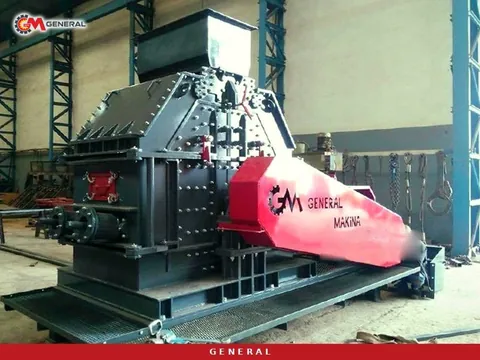
For many years we have designed and manufactured calcite production plants for our customers, and the machines we build in this field are the product of long engineering experience. Micronized calcite is used as a raw material in many sectors, from the paint industry to the production of plaster powder. The purpose and the industry for which the material is intended directly shape the design of the machine as well.
About the calcite mineral
Calcite is calcium carbonate with a crystalline structure and the chemical formula CaCO3. Its colour can range from transparent to white, from yellow to rustic green and to bluish shades. Its hardness value is 3 and its specific gravity is 2.71. When it comes into contact with cold, dilute hydrochloric acid it breaks down with strong effervescence, and it can easily be scratched with a knife. In water containing CO2 it dissolves to form Ca(HCO3)2.
Sectors where ground calcite is used
- Plastics sector (CaCO3)
- Paint and surface coatings (CaCO3)
- Production of construction chemicals (CaCO3)
- Paper sector (CaCO3)
- Glass sector (CaCO3)
- Gypsum sector (CaCO3)
How the plant flows
Material is taken into the line from the feed silos by a weigh belt, in a way that is integrated with the system. The pendulum (Raymond-type) mill then sends the ground material on to the turbo-dynamic classifiers.
With this arrangement, 3 different products can be obtained from the system. When dynamic classifiers are added to the line, the fineness of the final product can be reduced even further.
Automation runs through a SCADA system connected to a central computer. Thanks to the mimic diagram, settings on micronized calcite grinding machines can be changed instantly, and reporting and supervision can also be followed remotely.
Definitions of technical terms: Glossary